
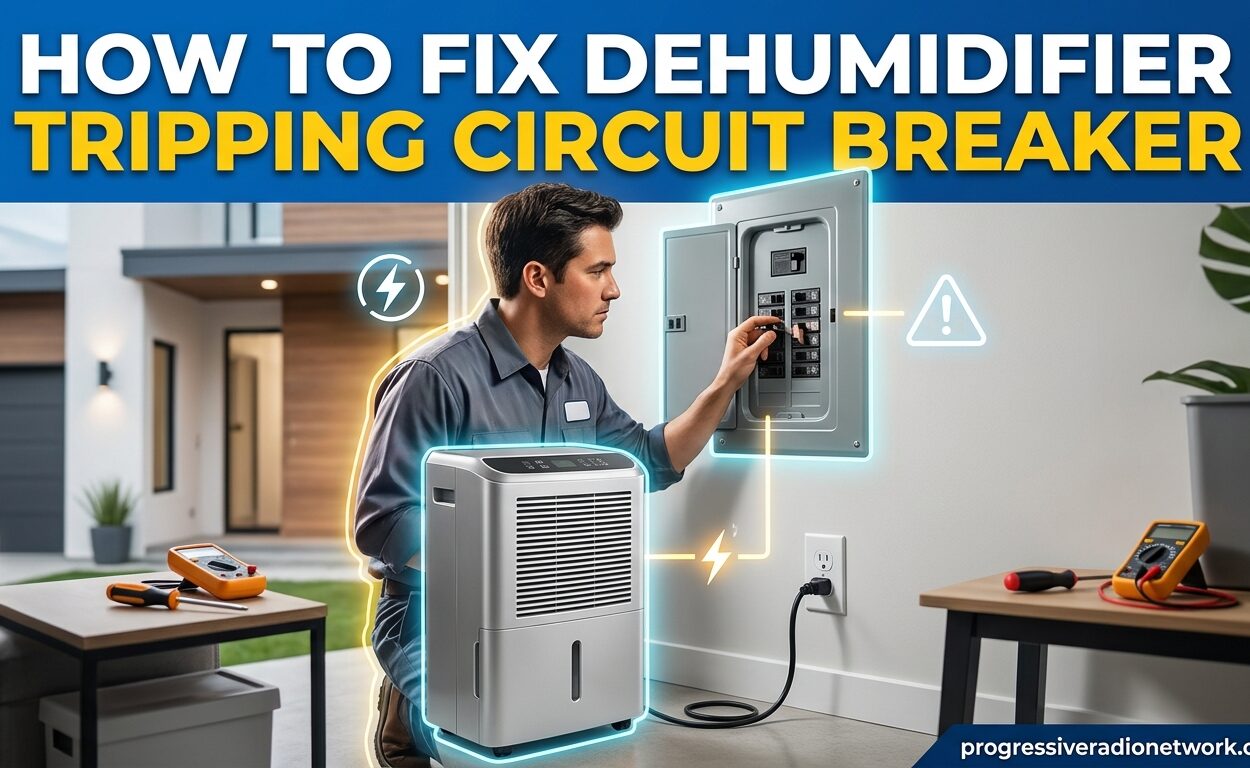
When your dehumidifier keeps tripping the circuit breaker, it’s not just frustrating – it’s a warning sign that something is wrong. I’ve seen this problem hundreds of times, and in most cases, the issue can be diagnosed and fixed with some basic troubleshooting. A dehumidifier tripping circuit breaker typically means the unit is drawing too much power, has a short circuit, or has a failing component.
Safety first: If your dehumidifier repeatedly trips your breaker, stop using it until you identify the cause. Continuous tripping can damage your home’s wiring and poses a fire risk.
Here are the quick steps I recommend:
1. Unplug the dehumidifier immediately
2. Check what else is on the same circuit
3. Inspect the power cord for damage
4. Test the unit in a different outlet
5. Call a professional if the breaker trips again
Let me walk you through exactly why this happens and how to fix it.
Dehumidifier Tripping Circuit Breaker: Common Causes
A dehumidifier tripping circuit breaker happens for five main reasons. Understanding which one applies to your situation will help you find the right fix faster.
Electrical overload is the most common cause. Your dehumidifier shares a circuit with other appliances, and when everything runs simultaneously, the total amp draw exceeds the breaker’s rating. Most home circuits are 15 amps, and a dehumidifier alone can draw 4-8 amps depending on size.
Short circuits occur when damaged wiring creates a path for electricity to flow where it shouldn’t. This causes a sudden spike in current that trips the breaker instantly. Frayed power cords, internal wire damage, or moisture intrusion can all cause shorts.
Compressor failure is another major culprit. When the compressor’s motor windings fail or the compressor seizes, it can draw excessive current or create a direct short to ground. This is especially common in units over 5 years old.
Fan motor problems can also cause tripping. A failing fan motor might draw too much power or seize completely, causing the breaker to trip when the dehumidifier tries to run.
GFCI/AFCI sensitivity is unique to modern electrical systems. These safety breakers detect tiny faults that standard breakers miss, and some dehumidifiers (especially older models) will trip GFCI and AFCI breakers even when working normally.
Understanding Circuit Breakers, GFCI, and AFCI
Before diving deeper into troubleshooting, it helps to understand what’s actually protecting your home. Circuit breakers are safety devices designed to prevent electrical fires by cutting power when current flow becomes dangerous.
Standard circuit breakers monitor current flow and trip when amperage exceeds their rating (typically 15 or 20 amps for residential circuits). They protect against overloads and short circuits but don’t detect ground faults.
GFCI breakers (Ground Fault Circuit Interrupter) detect tiny imbalances in current between the hot and neutral wires. If even 4-6 milliamps leak to ground, the GFCI trips instantly. This protects against electric shock in wet areas like bathrooms, kitchens, and basements where dehumidifiers are often used.
AFCI breakers (Arc Fault Circuit Interrupter) detect dangerous electrical arcs – sparks that occur when damaged wiring makes intermittent contact. AFCI breakers are now required in many living areas and bedrooms, and they’re particularly sensitive to the electrical noise produced by motors like those in dehumidifiers.
Here’s why this matters: your dehumidifier might trip an AFCI or GFCI breaker even when it’s working perfectly fine. The compressor’s startup can create electrical arcs that AFCI breakers interpret as dangerous. The motor’s normal operation might create tiny current imbalances that trip GFCI breakers.
Step 1: Check for Electrical Overload
The first thing I check when a dehumidifier tripping circuit breaker occurs is whether the circuit is overloaded. This is the easiest problem to fix and the most common cause.
Start by identifying what else is plugged into the same circuit. Turn off the breaker and test each outlet in your home to see which ones lost power. You’ll often find that your dehumidifier shares a circuit with laundry appliances, basement lighting, or other devices.
Calculate the total amp draw. A typical dehumidifier pulls 4-8 amps while running, but the compressor startup can spike to 20-30 amps for a fraction of a second. If you’re running other appliances on the same circuit, this startup surge can push the total over the breaker’s limit.
The fix: Plug your dehumidifier into an outlet on a different circuit, ideally one with minimal other loads. Even better, install a dedicated circuit for your dehumidifier. This ensures nothing else competes for power and eliminates overload-related tripping.
Test the unit by running it alone on the new circuit. If it runs without tripping, you’ve confirmed the circuit was overloaded. Consider having an electrician install a dedicated 15-amp circuit for permanent protection.
Step 2: Inspect Power Cord and Wiring
When electrical overload isn’t the issue, the next suspect is the power cord itself. I’ve found countless dehumidifier tripping circuit breaker cases caused by damaged power cords.
Examine the entire length of the power cord. Look for:
• Fraying or exposed wires
• Kinks or sharp bends
• Damage from pets or rodents
• Signs of overheating (discoloration, melting)
• Loose or damaged plug prongs
Pay special attention to where the cord enters the dehumidifier body. This stress point is where internal wire damage often occurs from years of bending and pulling.
The fix: If you find any damage, the power cord must be replaced. Don’t attempt to repair a frayed cord with tape – this is a fire hazard. Replacement cords are available for most major brands, or an appliance repair technician can install one for you.
Even if the cord looks fine, test the dehumidifier in a completely different outlet using an extension cord (temporarily). If it runs without tripping, the problem might be in your home’s wiring rather than the dehumidifier itself.
Step 3: Test Internal Components
If your dehumidifier still trips the breaker even on a dedicated circuit with a known-good power cord, the issue is likely internal. This is where things get more technical, but you can still do some basic diagnosis before calling a professional.
The compressor is the most common internal failure point. When a compressor fails or its windings short out, it can draw excessive current or create a direct short to ground. Compressors typically draw 3-7 times their normal running current during startup, so any weakness becomes apparent immediately.
The fan motor is another potential culprit. Like the compressor, a failing fan motor can draw too much power or seize completely. Most dehumidifiers won’t run if the fan isn’t working, but some models will attempt to start the compressor anyway, causing a trip.
Testing with a multimeter:
1. Unplug the dehumidifier and wait 5 minutes
2. Access the compressor terminals (usually covered by a panel on the back)
3. Set your multimeter to ohms/continuity
4. Test between each of the three compressor terminals
5. Normal readings: 2-10 ohms between terminals, infinite resistance to ground
If you get very low readings (near 0 ohms) between terminals, the windings are shorted. If you get any reading between a terminal and the metal compressor housing, you have a ground fault. Both mean the compressor needs replacement.
The fix: Compressor replacement is typically not cost-effective for residential dehumidifiers. The part alone costs $150-300, plus labor. For units over 5 years old, replacement is usually the smarter choice.
Step 4: Check Filters and Airflow
Sometimes a dehumidifier tripping circuit breaker isn’t an electrical problem at all – it’s an airflow problem. When filters clog and coils ice up, the compressor works harder and draws more power.
Remove and inspect your air filter. If it’s coated in dust and debris, clean it thoroughly or replace it. Clogged filters restrict airflow, causing the evaporator coils to ice up. This ice buildup forces the compressor to work harder to maintain the same level of dehumidification.
Check the coils behind the filter. If you see ice or frost buildup, turn off the unit and let it thaw completely. Clean the coils with a soft brush and vacuum to remove dust accumulation.
The fix: Clean or replace your air filter every 2-3 months during heavy use. Vacuum the coils annually to prevent dust buildup. This simple maintenance can prevent compressor strain and extend your unit’s life by years.
After cleaning, test the dehumidifier again. If it runs without tripping, you’ve solved the problem through better maintenance.
GFCI vs AFCI: Which Breaker is Tripping?
One of the most confusing aspects of dehumidifier tripping circuit breaker issues is that some units will trip GFCI or AFCI breakers even when they’re working perfectly. This isn’t necessarily a defect – it’s a compatibility issue.
GFCI tripping: Dehumidifiers contain motors and compressors that naturally create tiny electrical imbalances. Older models especially can trip GFCI breakers even when there’s no actual fault. If your dehumidifier trips a GFCI but works fine on a standard breaker, this is likely normal operation rather than a problem.
AFCI tripping: The electrical arcing that occurs when motors start and stop can trigger AFCI breakers. This is particularly common with dehumidifiers because the compressor cycles on and off frequently. Some brands are worse than others – Frigidaire and Whirlpool units from before 2020 are known AFCI trippers.
The fix: If your dehumidifier works fine on a standard breaker but trips GFCI/AFCI, you have a few options:
• Use a non-GFCI/non-AFCI outlet if permitted by local code
• Replace the dehumidifier with a newer model designed to be GFCI/AFCI compatible
• Install a dedicated circuit with a standard breaker (where code allows)
Never bypass or disable GFCI/AFCI protection – these devices save lives and are required by electrical code for good reason.
Repair vs Replace: Cost Analysis
When you’ve determined your dehumidifier has an internal failure, the big question is whether to repair or replace. Let me break down the economics.
Compressor replacement: $150-400 for parts plus $100-200 labor. Total: $250-600. Only worth it for premium units under 3 years old or commercial-grade dehumidifiers.
Fan motor replacement: $50-150 for parts plus $75-150 labor. Total: $125-300. Worth considering for units under 5 years old.
Control board replacement: $80-200 for parts plus $75-150 labor. Total: $155-350. Sometimes worth it, but board failures often indicate other problems.
New dehumidifier: $150-400 for residential models. Commercial units run $500-1500.
My recommendation: If your dehumidifier is over 5 years old and needs a major repair, replace it. Newer models are more energy-efficient, quieter, and designed to work with modern GFCI/AFCI breakers. Plus, you get a fresh warranty.
For units under 3 years old, repairs may be worth it – especially if it’s a minor component like a fan motor or control board. Get a quote first and compare it to the cost of a replacement.
Maintenance Tips to Prevent Future Trips
The best way to avoid dehumidifier tripping circuit breaker issues is prevention. Here’s what I recommend based on years of appliance repair experience.
Clean filters monthly during heavy use seasons. A dirty filter makes the compressor work harder and draw more power. Set a reminder on your phone – it takes less than 5 minutes and can prevent major problems.
Vacuum coils annually to remove dust buildup. Dust acts as insulation, making the system less efficient and causing the compressor to run longer. Use a soft brush attachment and be gentle around the fins.
Check the power cord every few months for damage. Catching fraying early prevents short circuits and saves you from unexpected breaker trips.
Use a dedicated circuit whenever possible. Even if your dehumidifier works on a shared circuit, giving it its own circuit prevents overload issues and extends the unit’s life.
Don’t oversize your dehumidifier. A unit that’s too large for your space will cycle on and off frequently, causing extra wear on the compressor and creating more electrical noise that can trip sensitive breakers.
When to Call a Professional
While many dehumidifier tripping circuit breaker issues can be diagnosed and fixed yourself, some situations require professional help. Here’s when I recommend calling an expert.
If you’ve tested everything above and the problem persists, there may be an issue with your home’s wiring rather than the dehumidifier. A licensed electrician can test your circuit for problems like voltage drops, high resistance connections, or undersized wiring.
Call a professional immediately if you notice:
• Burning smell when the dehumidifier runs
• Sparks or visible arcing anywhere
• Warm or discolored outlets
• Breaker that won’t stay reset even with nothing plugged in
These are signs of serious electrical problems that pose fire hazards. Don’t attempt further troubleshooting – call an electrician right away.
For internal component testing beyond basic continuity checks, or if you’re uncomfortable working with electricity, an appliance repair technician can safely diagnose the problem and give you an accurate repair quote.
Remember, electrical work can be dangerous. If you’re unsure about any step in this troubleshooting guide, it’s better to call a professional than risk injury or damage to your home.
FAQs
Can a dehumidifier overload a circuit?
Yes, a dehumidifier can overload a circuit, especially when sharing it with other appliances. Most residential dehumidifiers draw 4-8 amps while running, with startup surges reaching 20-30 amps. On a 15-amp circuit that also powers lights or other devices, this can easily exceed the breaker’s rating and cause tripping.
Will a dehumidifier trip a GFCI?
Yes, dehumidifiers can trip GFCI breakers even when working properly. The motors and compressors in dehumidifiers create tiny electrical imbalances that GFCI breakers interpret as ground faults. Older models are especially prone to this. If your dehumidifier trips GFCI but works on a standard breaker, this is typically normal operation rather than a defect.
What is the average lifespan of a dehumidifier?
The average dehumidifier lasts 5-10 years depending on usage, maintenance, and build quality. Budget models typically last 5-7 years, while premium units can reach 10+ years with proper care. Units used in damp basements or commercial settings may have shorter lifespans due to constant operation and harsher conditions.
Is it safe to keep using a dehumidifier that trips the breaker?
No, you should stop using a dehumidifier that repeatedly trips the circuit breaker until you identify and fix the cause. Continuous tripping indicates an electrical problem that could damage your home’s wiring, destroy the dehumidifier, or create a fire hazard. Unplug the unit immediately and troubleshoot or call a professional.
Why does my dehumidifier trip the breaker immediately?
A dehumidifier that trips the breaker immediately when turned on typically has a short circuit or ground fault. This is often caused by a damaged power cord, internal wiring failure, or compressor with shorted windings. The short creates a path of almost zero resistance, causing massive current flow that trips the breaker instantly. Stop using the unit and inspect the cord or call a technician.
Conclusion
Dehumidifier tripping circuit breaker problems are frustrating but usually solvable. Start with the basics – check for overloaded circuits, inspect the power cord, and test on a different outlet. If those don’t solve it, move to component testing and maintenance.
Most cases I see are either simple overload issues or dirty filters causing compressor strain. Regular maintenance prevents these problems and extends your unit’s life significantly. When internal components fail, use the repair vs replace guidelines to make a smart financial decision.
When in doubt, call a professional. Electrical problems can be dangerous, and the cost of a service call is cheap compared to fire damage or destroyed appliances. Stay safe, and your dehumidifier should give you years of reliable service.





Leave a Comment