
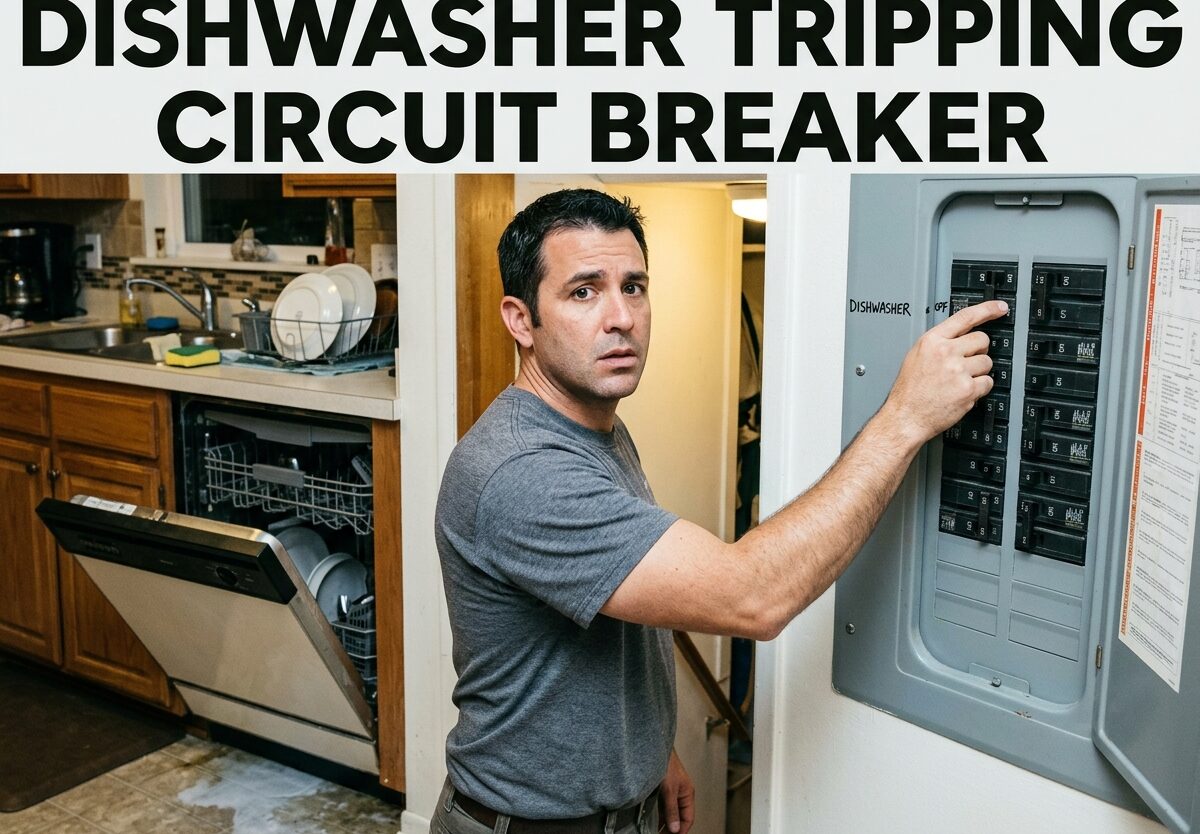
Your dishwasher keeps tripping the circuit breaker and you’re not sure why. This frustrating problem leaves you with dirty dishes and unanswered questions about what’s going wrong with your appliance. A dishwasher tripping circuit breaker is actually a safety response – your electrical system is protecting you from a potentially dangerous fault.
I’ve researched this issue extensively, pulling insights from electricians, appliance repair technicians, and real homeowners who’ve solved this problem themselves. In this guide, I’ll walk you through the seven most common causes and how to identify which one is affecting your dishwasher.
Safety First: Before You Start Troubleshooting
Working with electrical appliances requires caution. Before you do any testing or inspection, turn off the dishwasher at the circuit breaker panel. Never attempt to diagnose electrical problems while the breaker is still on.
If you’re not comfortable working with electricity or if you notice any burning smells, scorch marks, or visible damage to your wiring, call a licensed electrician immediately. Electrical faults can cause fires or serious injury.
Why Does My Dishwasher Keep Tripping My Breaker?
A dishwasher tripping circuit breaker happens when the appliance draws too much current or creates an electrical fault. The breaker interrupts the flow of electricity to prevent damage to your home’s wiring and protect against fire hazards. Understanding when the trip occurs can help identify the cause – whether it happens immediately upon starting, mid-cycle, or during the drying phase.
1. Heating Element Failure (Most Common Cause)
The heating element is responsible for warming the water during the wash cycle and drying dishes. Over time, this component can develop cracks or breaks in the heating coil, allowing electricity to arc to the metal frame of the dishwasher.
This creates a short circuit that instantly trips the breaker. The heating element problem typically shows up during the drying cycle when the element is activated, but it can also occur during the wash phase if the damage is severe.
Testing the heating element requires a multimeter. With power disconnected, disconnect the wires from the element and test for continuity. A good heating element typically reads between 10-50 ohms. If your meter shows infinite resistance or zero ohms, the element has failed and needs replacement.
2. Water Leakage Causing Ground Fault
Water and electricity don’t mix. If your dishwasher has developed a leak – even a small one – water can reach electrical components and create a path to ground, causing the breaker to trip.
Common leak sources include damaged door seals, loose hose connections, cracks in the tub, or a faulty water inlet valve. Water pooling at the bottom of the dishwasher or visible moisture around the base are telltale signs.
Inspect the door gasket for cracks or deformation. Check the water supply line and drain hose connections for tightness. If you find water where it shouldn’t be, repair the leak source first, then allow everything to dry completely before testing the dishwasher again.
3. Faulty Wiring and Connections
Loose or corroded electrical connections create resistance and heat, which can cause the breaker to trip. This is especially common in hard-wired dishwashers where wire nuts connect the house wiring to the dishwasher’s power cord.
One forum user reported solving their tripping issue by simply rewrapping the wires around the copper connectors and tightening the wire nuts properly. The connection had loosened over time, creating enough resistance to trip the breaker.
Check the junction box under the dishwasher (usually accessed from the front toe kick panel). Look for loose wire nuts, corroded wires, or signs of overheating like discoloration or melted insulation. Tighten all connections and replace any damaged wiring.
4. Door Latch and Switch Problems
The door latch assembly does more than keep the door closed – it also activates switches that tell the dishwasher when it’s safe to start. If the latch is misaligned or the switch is faulty, it can create electrical issues.
A damaged door latch might cause intermittent connections that trip the breaker. Test the door switch with your multimeter for continuity when the door is closed and open when released. No continuity in the closed position means the switch needs replacement.
5. Motor and Pump Failures
Your dishwasher has two main pumps – a wash pump that circulates water and a drain pump that removes dirty water. Either motor can fail and cause electrical problems.
A seized pump motor draws excessive current as it tries to turn, overloading the circuit. Debris like broken glass or food particles can jam the pump impeller, causing the motor to stall. Listen for humming sounds when the dishwasher should be pumping – this indicates a seized motor.
Test both pumps for proper resistance readings with your multimeter. Check for obstructions in the pump housing and remove any debris. If the motor windings have shorted, the pump assembly will need replacement.
6. Control Board Issues
The electronic control board is the brain of your dishwasher, coordinating all functions. When these boards fail, they can create short circuits that trip the breaker immediately upon power-up.
One common failure point is blown capacitors on the control board. A user on DIY Stack Exchange discovered their GE Profile dishwasher was tripping due to a capacitor that had arced to the transformer. Visual inspection of the control board may reveal bulging or leaking capacitors, burn marks, or other visible damage.
Control board failures are expensive to fix but might be worth it for newer, high-end dishwashers. For older units, replacement might make more financial sense.
7. Circuit Breaker and GFCI Problems
Sometimes the problem isn’t with the dishwasher at all – it’s with the electrical protection devices. Old breakers can become sensitive and trip prematurely, while GFCI outlets may be incompatible with certain dishwasher models.
Arc Fault Circuit Interrupters (AFCI breakers) are particularly sensitive to the motor start-up surges from dishwashers. Many homeowners report their dishwasher worked fine for years until an AFCI breaker was installed during an electrical upgrade.
If you suspect the breaker itself is faulty, have an electrician test it. Never attempt to replace a circuit breaker yourself – this is a job for a licensed professional who can ensure proper sizing and installation.
Step-by-Step Troubleshooting Guide
Follow this systematic approach to identify the cause of your dishwasher tripping circuit breaker:
Step 1: Note when the trip occurs. Immediate tripping upon startup suggests a short circuit or control board issue. Tripping mid-cycle points to the heating element or pumps. End-of-cycle tripping indicates the heating element.
Step 2: Check for visible leaks. Remove the bottom rack and inspect the tub floor for water pooling. Examine door seals and hose connections.
Step 3: Access the junction box. Remove the toe kick panel and inspect the wiring connections for looseness or corrosion.
Step 4: Test the heating element with a multimeter. Disconnect power, remove the element wires, and check for proper resistance.
Step 5: Test the door switch for proper operation. Check continuity in both open and closed positions.
Step 6: Inspect the control board for visible damage like blown capacitors or burn marks.
Step 7: If all components test properly, consult an electrician about your circuit breaker or GFCI outlet.
Circuit Requirements for Dishwashers
The National Electrical Code requires dishwashers to have a dedicated circuit in most installations. This means no other appliances should share the same breaker. Sharing a circuit can overload the breaker when both appliances run simultaneously.
GFCI protection for dishwashers has been debated. Some areas require it, while older installations may not have it. If you have a GFCI outlet that keeps tripping, the dishwasher might have a ground fault that needs addressing before the GFCI will allow operation.
When to Call a Professional
Some dishwasher tripping issues are DIY-friendly, while others require professional help. Call an appliance repair technician if: the control board needs replacement, you’re uncomfortable with electrical testing, the dishwasher is under warranty, or you’ve tried basic troubleshooting without success.
Contact a licensed electrician if: you need to replace the circuit breaker, you’re installing a new dedicated circuit, or you notice signs of electrical damage like burning smells or scorch marks.
FAQs
Why does my dishwasher keep tripping my breaker?
Your dishwasher keeps tripping the breaker due to an electrical fault. The most common causes are a faulty heating element with internal shorts, water leakage creating a ground fault, loose wiring connections, or a failing pump motor drawing excessive current.
What would cause a dishwasher to trip a breaker?
Seven main causes lead to dishwasher breaker trips: heating element failure (most common), water leakage reaching electrical components, faulty wire nut connections, defective door latch switches, seized pump motors, control board shorts, or overly sensitive breakers including AFCI types.
Can I plug my dishwasher into a GFCI outlet?
GFCI outlets are required for dishwashers in newer installations per NEC code, but they can cause nuisance tripping. If your GFCI keeps tripping, first check for actual ground faults like water leaks before assuming the outlet is incompatible.
Are dishwashers usually on their own breakers?
Yes, the National Electrical Code requires dishwashers to have a dedicated 15-amp or 20-amp circuit. This prevents overloading when the dishwasher runs alongside other kitchen appliances on the same circuit.
How to tell if a dishwasher circuit board is bad?
Signs of a bad control board include the dishwasher tripping immediately when powered on, unresponsive buttons, error codes on the display, or visible damage like bulging capacitors and burn marks on the board itself.
Is it dangerous to use a dishwasher that trips the breaker?
Yes, repeatedly resetting a tripping breaker without finding the cause is dangerous. The breaker is protecting you from a real electrical fault that could cause fire or shock. Always diagnose and fix the problem before continued use.
Conclusion
A dishwasher tripping circuit breaker is your home’s safety system working as intended – protecting you from electrical hazards. The most common culprits are heating element failure, water leaks, and faulty wiring connections. By following the troubleshooting steps in this guide, you can identify the cause and decide whether to repair it yourself or call in professional help.
Regular maintenance like cleaning filters, inspecting door seals, and checking for leaks can prevent many of these issues from developing. Addressing tripping problems promptly prevents further damage to your dishwasher and keeps your home safe from electrical hazards.




Leave a Comment