
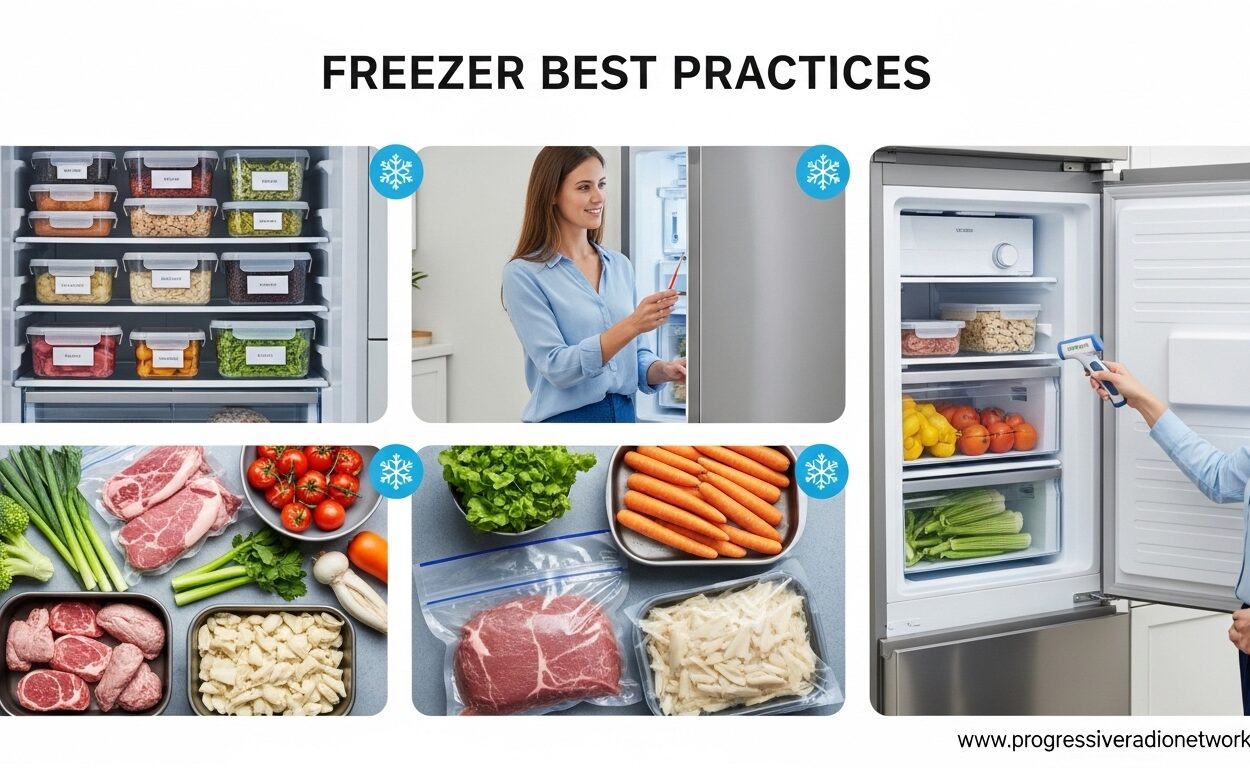
Having used freezers for decades in my home, I have learned that how you manage this appliance directly impacts food quality, waste, and your monthly energy bill. Freezer best practices are the proven methods that help you get the most out of your frozen storage while keeping food safe and flavorful.
In this guide, I will share everything I know about maintaining optimal freezer conditions, organizing your space efficiently, and avoiding the common mistakes that lead to freezer burn and wasted food. We will cover temperature control, proper packaging techniques, organization systems that actually work, and emergency planning for power outages.
Optimal Freezer Temperature Settings
The single most important setting on your freezer is the temperature. I always recommend keeping your freezer at exactly 0 degrees Fahrenheit (-18 Celsius). This is the sweet spot that the FDA and USDA recommend for safe long-term food storage.
Many people make the mistake of guessing their freezer temperature without verification. I strongly suggest investing in a separate freezer thermometer. The built-in dials on most freezers are notoriously inaccurate, sometimes off by 5 to 10 degrees. A simple $10 appliance thermometer gives you peace of mind and helps prevent food safety issues.
Check your thermometer monthly to ensure consistency. Temperature fluctuations occur when you add large amounts of room-temperature food, leave the door open too long, or experience power interruptions. If you notice consistent temperature swings, your freezer may need defrosting or have a mechanical issue that requires professional attention.
How to Organize Your Freezer Effectively
Organization makes or breaks your freezer experience. I have tested countless systems over the years, and the most effective approach combines categorization with accessibility. The goal is simple: know what you have, use what you have, and never lose food to the depths of a disorganized freezer.
Start by grouping similar items together. I use clear plastic bins to create distinct zones for meats, vegetables, prepared meals, and baked goods. These bins serve a dual purpose: they contain items that might otherwise shift and spill, and they make pulling out a complete category effortless. Many forum users recommend dollar store bins as an affordable alternative to expensive organizational systems.
Rotation matters enormously. I follow the oldest-at-top principle, placing newer purchases behind older items. This sounds simple but requires discipline. When I bring home groceries, I move everything forward and place new items at the back. Within a week, I notice the difference in food quality because nothing gets forgotten.
Flat freezing transformed my freezer efficiency. When I freeze items like burgers, chicken breasts, or cookies on a baking sheet first, they freeze individually flat. Later, I can stack them compactly without clumping. This method works so well that I now freeze items in single layers whenever possible before transferring them to containers.
For chest freezer owners, consider using milk crates or heavy-duty plastic containers as dividers. This creates vertical sections that prevent smaller items from sinking to the bottom where they become forgotten. Some users keep a whiteboard on top of their freezer, listing contents and dates for quick reference.
Food Storage Duration Guidelines
One of the most common questions I encounter is how long food can safely remain in the freezer. The answer varies significantly depending on the food type, and understanding these timelines prevents both waste and potential illness.
The 2-2-2 rule provides a helpful starting framework for fresh proteins. This means beef and pork maintain quality for approximately 2 months when properly wrapped, poultry for 2 months, and ground meats for 2 months. However, this represents optimal quality windows rather than safety limits. Technically, food remains safe indefinitely at 0 degrees Fahrenheit, but quality deteriorates noticeably after these periods.
Full cuts of beef can last 4 to 12 months without significant quality loss. Lamb and pork maintain quality for 4 to 6 months. Poultry, including whole birds, stays good for up to 12 months. Fish varies considerably: fatty fish like salmon degrade after 2 to 3 months, while lean fish can last 6 to 8 months.
Cooked dishes and prepared meals last 2 to 3 months in the freezer. Vegetables generally maintain quality for 8 to 12 months, though some like corn and peas may show flavor changes after 6 months. Fruits can remain frozen indefinitely if properly stored, though texture changes make them better suited for smoothies than fresh eating.
Keep a simple dating system. I write the date and contents on masking tape attached to every package before freezing. This small effort prevents the mystery-packages situation that plagues so many home freezers.
Proper Packaging to Prevent Freezer Burn
Freezer burn represents one of the most frustrating issues in home freezing. Those dry, discolored patches develop when air contacts food surfaces repeatedly. The good news is that freezer burn is entirely preventable with proper packaging technique.
Moisture represents the enemy of quality frozen food. Before freezing anything, remove as much air as possible from packaging. Vacuum sealers provide the best results, eliminating virtually all air from the equation. However, not everyone owns a vacuum sealer, and budget-friendly alternatives work well when used correctly.
For items without a vacuum sealer, press plastic wrap directly against the food surface before adding a second layer. Alternatively, double-bag items with the inner bag sealed as tightly as possible. The goal remains the same: minimize air contact with food surfaces.
Choose freezer-appropriate containers and bags. Regular sandwich bags tear easily and allow more air penetration than freezer-specific versions. Freezer-safe containers with tight-fitting lids work excellently for soups, stews, and liquid items. I keep a collection of various sizes ready so I can match container to food quantity precisely.
Label everything clearly. I include the food type and freeze date on every package. This practice costs nothing but prevents enormous frustration later. unmarked packages lead to forgotten food, and forgotten food leads to waste.
Defrosting Best Practices
Knowing how to defrost your freezer properly extends its lifespan and maintains efficiency. Frost accumulation of more than a quarter inch reduces cooling efficiency significantly, forcing your appliance to work harder and consume more energy.
Most modern freezers are frost-free, meaning they automatically cycle through defrost phases. However, even these units benefit from occasional manual defrosting to remove built-up ice. I recommend checking your freezer every 6 to 12 months for frost accumulation and scheduling a defrosting when you notice buildup exceeding a quarter inch.
The defrosting process is straightforward. First, empty your freezer completely, transferring items to coolers with ice packs if necessary. Next, turn off the freezer and prop the door open. Place towels around the base to absorb melting ice. For faster results, place a pot of hot water inside and close the door for 20 minutes. The steam accelerates ice melting considerably.
Never use sharp objects to chip away ice. This damages the interior lining and can puncturing cooling lines. Patience produces better results without risking costly repairs. Once ice melts completely, wipe the interior dry with a clean towel before restocking.
When restocking, allow food to cool to room temperature before placing it in the freezer. Adding hot food raises the internal temperature and forces the compressor to work overtime. This small consideration significantly impacts energy consumption over time.
Energy Efficiency Tips
Freezers rank among the most energy-intensive appliances in most homes, running constantly year-round. Implementing efficiency practices reduces your electricity bill while extending appliance life.
Contrary to popular belief, a completely empty freezer wastes energy. The appliance works harder to cool air each time the door opens, and cold air falls out when doors open. A freezer at 75 to 85 percent capacity maintains temperature most efficiently. If your freezer runs nearly empty, fill empty space with water containers or ice blocks to stabilize temperature.
Condenser coils require regular attention. Located either on the back of upright freezers or beneath chest freezers, these coils accumulate dust and pet hair over time. I clean my coils every 6 months using a vacuum brush attachment. This 10-minute task can reduce energy consumption by 5 to 10 percent.
Door seals deserve inspection regularly. Close your freezer door on a dollar bill; if the bill pulls out easily, your seal needs replacement. Worn seals allow cold air to escape constantly, forcing the compressor to run more frequently. Cleaning seals with warm soapy water removes residue that prevents proper sealing.
Placement matters for chest freezers. Avoid locating yours near heat sources like ovens, dishwashers, or direct sunlight. These external heat sources force your freezer to work significantly harder to maintain temperature.
Power Outage Emergency Planning
Power outages test every freezer owners preparation. Without electricity, a full freezer maintains safe temperatures for approximately 48 hours if kept closed. An empty freezer offers only about 24 hours of protection. Understanding this timeline helps you make smart decisions during emergencies.
The penny freezer trick provides a useful temperature indicator. Place a cup of water in your freezer and let it freeze completely. Once frozen, place a penny on top of the ice. If you find the penny at the bottom after an outage, your food likely thawed and refroze, meaning you should evaluate safety before consuming contents. If the penny remains on top, your food stayed frozen.
During extended outages, avoid opening freezer doors unnecessarily. Each opening allows cold air to escape and warm air to enter, accelerating temperature rise. Keep a supply of ice on hand for temporary cooling if needed. A full freezer stays cold longer than a partially empty one, which gives you additional margin during emergencies.
Consider building an emergency food supply that does not require freezing. Canned goods, peanut butter, crackers, and dried foods provide nutrition when freezers are inoperable. Prepping families should maintain a 72-hour supply of non-perishable foods as a standard practice.
Common Freezing Mistakes to Avoid
Learning from common errors prevents frustration and food waste. I have made most of these mistakes myself over the years, and understanding what to avoid saves you time, money, and disappointment.
Refreezing thawed food ranks among the most dangerous practices. When meat thaws, cell walls break down and moisture migrates. Refreezing causes additional cellular damage, resulting in textural quality loss and potential bacterial growth. If you must thaw meat and not use it immediately, cook it and then freeze the cooked product instead.
Overfilling your freezer blocks air circulation, which prevents even cooling and causes some items to warm slightly. Leave 2 to 3 inches of space between items and the freezer walls. This gap allows cold air to circulate freely, maintaining consistent temperatures throughout the cabinet.
Poor labeling costs more than you might expect. I have opened freezer containers expecting soup only to find unidentifiable frozen masses. This waste happens when we skip the simple step of marking containers clearly. Include contents and date on everything.
Freezing items at room temperature represents another common error. Hot food placed in freezers raises overall temperature and can cause surrounding items to partially thaw. Always cool food to room temperature or refrigerator-cold before freezing.
Finally, avoid freezing items in regular ice cube trays unless specifically intended. Standard trays often crack, leak, and transfer flavors between items. Use trays specifically designed for freezer use for ice and small portion freezing.
Frequently Asked Questions
Is meat still good after 5 years in the freezer?
Technically, meat frozen at 0 degrees Fahrenheit remains safe indefinitely according to the USDA. However, quality deteriorates significantly after 4 to 12 months depending on the cut. After 5 years, while technically safe if kept frozen solid, the texture and flavor will be severely compromised. For best quality, use stored meat within recommended timeframes.
What is the 2 2 2 rule for food?
The 2-2-2 rule is a general guideline for meat storage: beef and pork maintain quality for approximately 2 months, poultry for 2 months, and ground meats for 2 months. This represents optimal quality windows rather than safety limits. The rule helps households rotate their frozen meat inventory effectively.
What foods should you not freeze in the freezer?
Several foods do not freeze well: lettuce and other salad greens become mushy, raw eggs in shells can burst, fried foods lose crispiness, cream-based soups separate, and raw potatoes become grainy. Additionally, canned foods should never be frozen as the containers can burst. Cheese develops a crumbly texture when frozen.
Why put a penny in the freezer?
The penny freezer trick helps you detect if your freezer lost power long enough for food to thaw and refreeze. Place a frozen cup of water in your freezer with a penny on top. If you find the penny at the bottom after an extended power outage, the water thawed completely, indicating your food may have been compromised and should be checked before consuming.
What’s the best way to organize your freezer?
The most effective method uses clear bins to categorize items by type: meats, vegetables, prepared meals, and baked goods. Place older items at the front for rotation (oldest at top), freeze items flat in single layers first for easier stacking, and maintain a written inventory. For chest freezers, use dividers like milk crates to prevent small items from sinking to the bottom.
Conclusion
Freezer best practices come down to a few fundamental principles: maintain consistent temperature at 0 degrees Fahrenheit, organize systematically to prevent forgotten food, package carefully to prevent freezer burn, and stay diligent about rotation and labeling.
Implementing these practices takes some initial effort but pays dividends in reduced food waste, lower energy bills, and consistently high-quality frozen foods. Start with one or two changes and build from there. Within a few months, you will wonder how you managed without these simple systems.
Your freezer should serve as a reliable food preservation tool that works for your household rather than against it. With proper management, you can store quality food for months while maintaining safety and minimizing waste. Review your current practices today and identify one area for immediate improvement.

Leave a Comment