
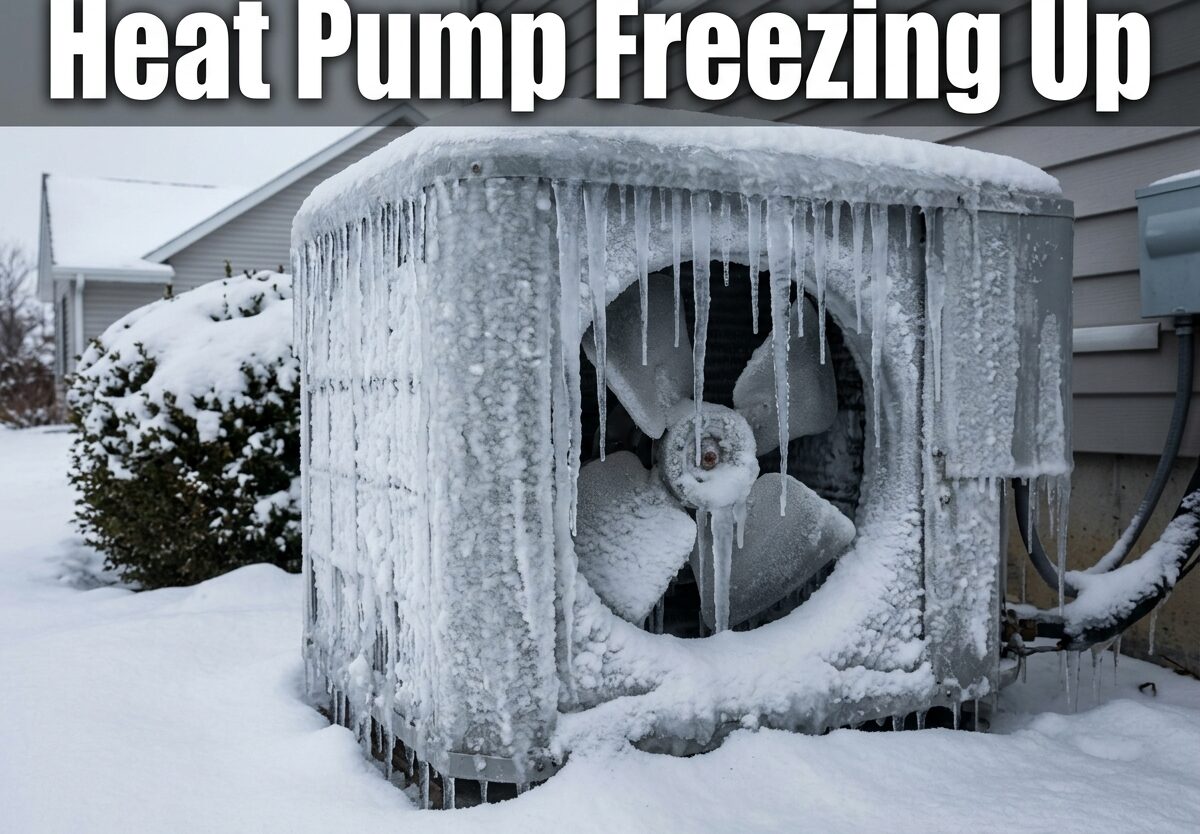
Seeing your heat pump freezing up can trigger immediate panic, especially during the coldest days of winter. Before you worry, here’s what you need to know: light frost on your outdoor unit is completely normal, but heavy ice buildup signals a problem that needs attention.
I’ve spent years helping homeowners understand their heating systems, and the confusion between normal frost and problematic ice is something I encounter constantly. This guide will walk you through exactly what’s happening, why it occurs, and what steps you should take when you notice your heat pump freezing up.
Why Heat Pumps Freeze Up
Heat pump freezing up happens because of how these systems work. Your heat pump extracts heat from outdoor air and moves it inside. Even when it feels cold outside, there’s still heat energy in the air that your system can capture.
When outdoor air passes over the cold coils, moisture in the air condenses and freezes. This is the same principle that causes frost to form on a cold soda can during summer. Some frost formation is simply physics at work.
How the Defrost Cycle Works
Your heat pump has a built-in solution for normal frost: the defrost cycle. Every 30-90 minutes, your system temporarily reverses operation to melt accumulated frost. You might notice the outdoor fan stops and the unit makes different sounds during this 10-15 minute cycle.
When your heat pump enters defrost mode, you’ll see “AUX heat” or “emergency heat” appear on your thermostat. This activates your backup heating to keep your home warm while the outdoor unit defrosts. It’s completely normal and indicates your system is working as designed.
Normal Frost vs. Problem Ice
The distinction between normal frost and problematic ice comes down to appearance and persistence. Normal frost appears as a thin, white layer that your defrost cycle clears within the usual timeframe. You might see it coating the coils lightly, but it shouldn’t look like a solid block of ice.
Problem ice is different. If you’re seeing thick, clear ice covering the entire unit, ice building up on the refrigerant lines, or ice that persists for hours, something is wrong. These are signs your heat pump freezing up has gone beyond normal operation and needs attention.
Common Causes of Heat Pump Freezing
Understanding why your heat pump freezes up helps you address the root cause. I’ve identified six primary culprits that cause the majority of freezing issues.
Low Refrigerant Levels
Low refrigerant is one of the most common causes of heat pump freezing up. When refrigerant levels drop, the pressure in the system decreases, which causes the temperature inside the coils to drop even further. This accelerates freezing and can cause thick ice to form quickly.
Refrigerant doesn’t get used up like fuel. If your levels are low, you have a leak that needs professional repair. Many homeowners I’ve worked with discovered their system was slowly losing refrigerant over months, causing progressively worse freezing each winter.
Airflow Restrictions
Your heat pump needs unrestricted airflow to function properly. I’ve seen countless units freezing up simply because air can’t circulate through the coils. The most common culprits are clogged air filters, blocked vents, or debris around the outdoor unit.
When airflow is restricted, the heat pump can’t transfer heat efficiently. The coils get colder than they should, causing any moisture to freeze rapidly. I recommend checking your air filter monthly and replacing it at least every 90 days, or more often if you have pets or allergies.
Faulty Defrost Components
The defrost cycle depends on several components working together: the defrost control board, defrost sensor, and reversing valve. When any of these fail, your heat pump can’t properly defrost itself.
A faulty defrost sensor might not detect frost accumulation. A malfunctioning control board might never trigger the defrost cycle. A stuck reversing valve could prevent the system from switching to defrost mode. These issues typically require professional diagnosis and repair.
Extreme Weather Conditions
Sometimes, heat pump freezing up is simply a result of extreme weather. Heavy snowfall can bury your outdoor unit. Ice storms can coat everything in thick ice. Prolonged temperatures below freezing with high humidity create ideal conditions for excessive frost.
During extreme weather, even a properly functioning heat pump might struggle. This is particularly true in regions that rarely see severe cold—your system might be undersized for unusual conditions. Clearing snow and ice from around the unit can help it operate more efficiently.
Dirty Coils
Dirt and debris on your outdoor coils act like insulation, preventing heat transfer. When the coils can’t absorb heat from the air, they get excessively cold and freeze quickly. I’ve seen units nearly covered in ice simply because leaves and grass clippings accumulated on the coils.
Annual maintenance should include cleaning the coils. You can gently spray water from the inside out to remove debris, but be careful not to bend the delicate aluminum fins. For heavily soiled units, professional cleaning is recommended.
Thermostat Issues
Your thermostat controls when the heat pump runs and when it enters defrost mode. If it’s malfunctioning or improperly configured, your system might not defrost when needed. Some homeowners accidentally set their thermostat to “emergency heat” mode, which bypasses the heat pump entirely and can cause confusion when the outdoor unit freezes.
Smart thermostats can sometimes lose communication with the heat pump, preventing proper defrost cycle initiation. If you suspect thermostat issues, try replacing the batteries first, then consider professional recalibration.
What to Do When Your Heat Pump Freezes Up
Discovering your heat pump frozen solid requires action, but the right action depends on the severity of the situation. Here’s my step-by-step approach based on years of field experience.
Immediate Steps to Take
First, turn off your heat pump at the thermostat. Running a frozen unit can cause compressor damage, which is expensive to repair. Switch your system to “emergency heat” or “AUX heat” mode to keep your home warm while you address the problem.
Next, check your air filter. If it’s clogged, replace it immediately. A dirty filter is one of the easiest fixes for heat pump freezing up, and I’ve seen this simple step solve the problem countless times.
Clear any visible debris from around the outdoor unit. Snow, leaves, and other obstructions should be removed to allow proper airflow. Maintain at least two feet of clearance around all sides of the unit.
Then, wait. Your heat pump may defrost on its own within 2-4 hours. If the ice is light and the weather isn’t extreme, simply giving the system time to thaw might be all that’s needed. Avoid the temptation to speed up the process in ways that could damage your unit.
Safe DIY Defrosting Techniques
If your heat pump hasn’t defrosted after several hours, you can try some safe techniques to help the process. One method I’ve used successfully is turning on the fan-only mode at the thermostat. This circulates air through the system without running the compressor, which can help melt light frost.
Some homeowners have discovered that briefly running the system in cooling mode for 10-15 minutes can defrost the outdoor unit quickly. This works because the outdoor unit becomes the condenser in cooling mode, generating heat that melts ice. However, this should only be done in mild weather and never in freezing conditions.
Never use sharp objects to chip away ice. The coils and fins are extremely delicate and easily damaged. Never pour hot or boiling water on a frozen unit—the rapid temperature change can crack components and the water will just refreeze in cold weather.
What NOT to Do
I’ve seen homeowners cause more damage trying to fix their frozen heat pump than the original freezing would have caused. Never use tools, ice picks, or sharp instruments to remove ice. You risk puncturing coils, damaging fins, and causing refrigerant leaks that are expensive to repair.
Avoid spraying water on your frozen unit when temperatures are below freezing. The water will freeze immediately, making the problem worse. Some chemicals and de-icing products can damage the aluminum fins and copper tubing, so stick to gentle methods.
Don’t ignore the problem and hope it goes away. Repeated freezing cycles can cause compressor failure, which is the most expensive component to replace. Addressing heat pump freezing up promptly can save you thousands in repair costs.
How to Prevent Heat Pump Freezing
Preventing your heat pump from freezing up is far easier than dealing with a frozen unit. Here are the proactive steps I recommend to keep your system running smoothly through winter.
Seasonal Maintenance Checklist
Before winter arrives, schedule professional maintenance. A technician will check refrigerant levels, test the defrost cycle, clean coils, and ensure all components are functioning properly. This annual service visit typically costs $100-200 but can prevent much more expensive repairs.
Change your air filter regularly—I recommend checking it monthly. A clean filter ensures proper airflow and is one of the simplest ways to prevent heat pump freezing up. Keep the area around your outdoor unit clear of leaves, grass clippings, and other debris throughout the year.
Inspect your unit visually each week during winter. Look for early signs of ice buildup and address issues before they become severe. Early intervention can prevent minor problems from becoming major repairs.
Climate-Specific Considerations
If you live in a region with harsh winters, consider installing a cold-climate heat pump designed for sub-zero operation. These systems have enhanced defrost capabilities and can maintain efficiency in temperatures as low as -15°F. They cost more upfront but can significantly reduce freezing issues in severe climates.
In areas with heavy snowfall, consider installing a snow shield or protective cover that can be placed over the unit during storms. Just remember to remove it before running the system—never operate your heat pump while it’s covered.
Homes in humid climates face different challenges. High humidity increases frost formation, so your defrost cycle will run more frequently. Ensuring proper drainage around the unit can help manage the additional meltwater your system produces.
Mini-Split Specific Tips
Mini-split heat pumps have unique considerations when it comes to freezing. The indoor wall units rarely freeze, but the outdoor condenser is just as susceptible to ice buildup as traditional systems.
Mini-splits often have less powerful defrost cycles than whole-home systems. If you notice frequent freezing, check that the outdoor unit is mounted level—uneven mounting can interfere with proper defrost operation. Ensure the condensate line isn’t frozen, as this can cause water to back up and freeze on the coils.
Some mini-split owners benefit from periodically running the system in fan-only mode to circulate air and prevent frost accumulation during very cold, humid nights.
When to Schedule Professional Service
Some heat pump freezing issues require professional attention. If your unit repeatedly freezes up even after you’ve addressed obvious issues like dirty filters, there’s likely an underlying mechanical problem that needs diagnosis.
Strange noises during operation, reduced heating capacity, or significantly higher energy bills are all signs that your system needs professional attention. A technician can perform specialized tests to check refrigerant levels, defrost sensor operation, and control board functionality.
If your system is under warranty, defrost-related repairs may be covered. However, neglecting the problem could void your warranty, so don’t wait too long to seek help. Most manufacturers consider repeated heat pump freezing up without repair to be neglect that could invalidate your coverage.
Frequently Asked Questions
How do I stop my heat pump from freezing up?
The best way to stop heat pump freezing is regular maintenance. Change air filters monthly, keep the outdoor unit clear of debris, and schedule annual professional service. If your unit repeatedly freezes, check refrigerant levels and defrost components—these are common culprits that require professional attention.
Can I force my heat pump to defrost?
Yes, you can force a defrost cycle by switching your thermostat to cooling mode for 10-15 minutes, but only in mild weather above freezing. This reverses the refrigerant flow and warms the outdoor coils. Never do this in freezing temperatures as it will cause more ice. The safest method is turning off the unit and waiting 2-4 hours for natural defrosting.
Why is my heat pump not defrosting in the winter?
Your heat pump may not defrost due to faulty components: a bad defrost sensor, failed control board, or stuck reversing valve. Low refrigerant can also prevent proper defrost cycle operation. These issues require professional diagnosis. If your unit never enters defrost mode and ice keeps building, you likely have a mechanical failure that needs repair.
How to remove ice from a heat pump in winter?
The safest way is to turn off the unit and let it defrost naturally over 2-4 hours. You can speed this up by turning on fan-only mode to circulate air. Never chip ice with tools or pour hot water on the unit—both can cause expensive damage. For severe ice buildup, contact a professional who can safely defrost and diagnose the underlying problem.
Is it normal for heat pump to freeze in winter?
Yes, light frost is completely normal and expected during winter operation. Your heat pump has an automatic defrost cycle that runs every 30-90 minutes to clear this frost. However, thick ice covering the unit or ice that persists for hours is not normal and indicates a problem with airflow, refrigerant, or defrost components that needs attention.
At what temperature do heat pumps stop working efficiently?
Most standard heat pumps maintain good efficiency down to about 25-30°F. Below this, efficiency gradually decreases. Cold-climate models can operate effectively down to -15°F. When temperatures drop below your system’s designed range, backup heat will run more frequently and you may notice increased frost formation, but this doesn’t mean your system is failing.
Conclusion
Heat pump freezing up is a common concern, but understanding the difference between normal frost and problematic ice is key to keeping your system running efficiently. Most freezing issues stem from airflow restrictions, low refrigerant, or faulty defrost components—all problems that can be addressed with proper maintenance and timely professional service.
Remember that light frost during winter operation is completely normal. Your heat pump’s defrost cycle is designed to handle this automatically. But if you’re seeing thick ice, repeated freezing, or ice that persists for hours, take action promptly to prevent more serious damage.
Regular filter changes, keeping the outdoor unit clear, and annual professional maintenance will prevent most freezing problems. When in doubt, it’s always better to call a professional than to risk causing damage with DIY attempts. Your heat pump is a significant investment, and proper care will keep it running efficiently for years to come.



Leave a Comment