
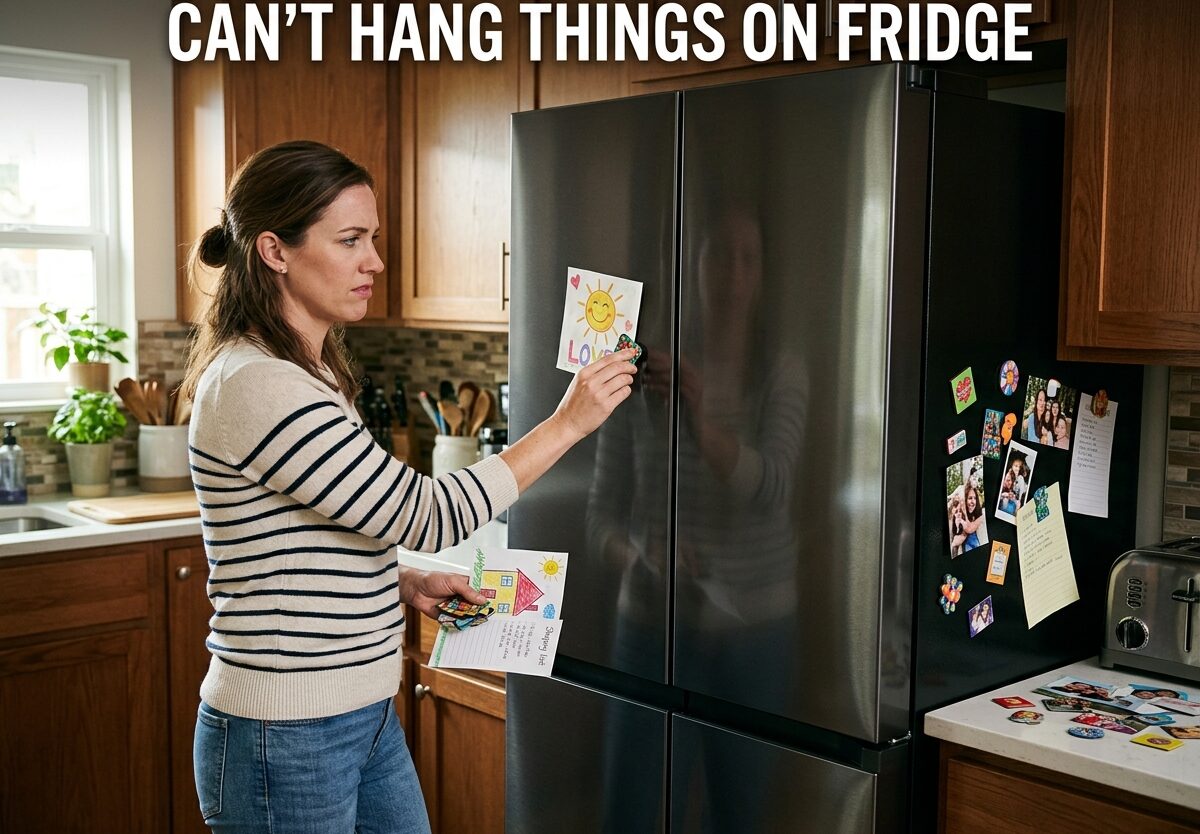
You just bought a beautiful new stainless steel refrigerator, brought home all those family photos and children’s artwork, and reached for your trusty fridge magnets. But they slide right off. If you can’t hang things on your fridge, you’re not alone. This is one of the most frustrating surprises new refrigerator owners face, and I’ve seen it countless times in home improvement forums.
The good news? Your fridge isn’t broken. Modern stainless steel refrigerators simply use different materials than older models. I’ll explain why this happens and give you practical solutions that actually work.
Why Magnets Don’t Stick to Your Fridge
Ferromagnetism is what causes everyday refrigerator magnets to stick to things solidly. This physical property occurs in materials with unpaired electrons that align with magnetic fields. When you press a magnet against a ferromagnetic surface, it creates a strong attraction that holds your photos, grocery lists, and holiday cards in place.
Older refrigerators used painted steel or ferromagnetic stainless steel that attracted magnets easily. But modern appliances prioritize sleek aesthetics and corrosion resistance over magnetic properties. Your new fridge probably uses austenitic stainless steel, which has a different atomic structure that doesn’t respond to magnets.
Think of it like trying to stick a magnet to aluminum or copper. Those metals aren’t magnetic either, and neither is the austenitic stainless steel used in most high-end refrigerators today.
Understanding Stainless Steel Types
Not all stainless steel is created equal. The magnetic properties depend entirely on which alloy you have, and manufacturers choose based on appearance and durability rather than magnet-holding capability.
Austenitic Stainless Steel (Non-Magnetic)
This is the culprit behind your magnet frustration. Austenitic stainless steels like grades 304 and 316 contain high amounts of nickel and manganese, which change the atomic structure. These alloys offer excellent corrosion resistance and that classic stainless look, but they’re completely non-magnetic.
Most premium refrigerators from Samsung, LG, Sub-Zero, and Whirlpool use 304-grade austenitic stainless steel. It’s beautiful, resists fingerprints, and lasts for years. But it won’t hold a magnet to save your life.
Ferritic Stainless Steel (Magnetic)
Ferritic stainless steels like grade 430 contain little to no nickel. Their atomic structure remains ferromagnetic, meaning magnets stick just fine. You’ll find this in budget-friendly appliances or specific refrigerator models designed with magnet-holding in mind.
Some manufacturers use ferritic steel on refrigerator sides while keeping austenitic on the doors. That’s why your magnets might work on the sides but slide off the front.
Black Stainless Steel
Black stainless steel refrigerators have become increasingly popular in recent years. These typically use the same austenitic stainless steel as standard models with a black oxide coating. The coating doesn’t change magnetic properties, so black stainless fridges face the same magnet issues.
Can’t Hang Things On Fridge? 8 Solutions That Work
Now that you understand why your fridge rejects magnets, let’s fix it. I’ve tested these solutions personally and researched community recommendations from real homeowners facing the same problem.
1. Magnetic Board That Adheres to Your Fridge
The ChoopaBoard is specifically designed for this exact problem. It’s a magnetic board that adheres to non-magnetic refrigerators using removable adhesive. Once installed, your magnets stick to the board instead of the fridge directly.
Installation takes minutes. Clean your fridge door thoroughly, apply the adhesive strips, and press the board in place. When you need to remove it, the adhesive comes off cleanly without damaging the finish. This is ideal if you want a seamless look and don’t want to replace magnets entirely.
2. Adhesive Magnetic Sheets
Self-adhesive magnetic sheets let you turn any surface into a magnet board. Cut the sheet to size, peel off the backing, and stick it directly to your refrigerator door. The sheet becomes magnetic, allowing your existing magnets to work as intended.
Be careful with this approach. Reddit users report that thin adhesive sheets often lack strength. They might hold lightweight items but struggle with heavier magnets or thick photo frames. If you go this route, choose high-quality neodymium magnetic sheets rather than cheap rubber versions.
3. Command Strips and Removable Hooks
3M Command strips offer a damage-free way to hang items on any surface. Use picture hanging strips for photos and artwork, or small hooks for grocery lists and calendars. The best part? They remove cleanly without leaving residue.
This solution works well for lightweight items but has weight limits. Most Command strips hold up to 5 pounds, but always check the package specifications. I recommend using multiple strips for larger frames or heavier items.
4. Wall-Mounted Magnetic Board
If your fridge won’t cooperate, move the magnet board elsewhere. Install a magnetic board on a nearby kitchen wall using the included mounting hardware. This gives you all the magnet-holding space you need without fighting your refrigerator’s material properties.
Galvanized steel sheets work excellently for this purpose. Cut to your desired size, mount to the wall, and enjoy a dedicated magnet display area. Many homeowners prefer this approach because it keeps the fridge looking clean while still providing space for family photos and reminders.
5. Over-the-Door Organizers
Over-the-door organizers hook over the top of your refrigerator door and hang down the front. Many include pockets, clips, or magnetic surfaces for displaying items. This solution requires zero adhesive and won’t damage your refrigerator finish.
Look for organizers specifically designed for refrigerators. Standard over-door organizers might be too thick and prevent the door from closing properly. Refrigerator-specific versions are slim enough to work with the door seal.
6. Stainless Steel Clings
Stainless steel clings use static electricity rather than magnets or adhesive. They stick directly to smooth surfaces like glass or stainless steel and can be removed and repositioned countless times. Use them to hold photos, notes, and artwork without any permanent attachment.
The downside? Static cling isn’t as strong as magnets. Items may slide down over time, especially in humid kitchens. This works best for lightweight paper items rather than framed photos or heavier objects.
7. Dry Erase Board for Non-Magnetic Fridges
Mount a small dry erase board on your refrigerator door using removable adhesive strips. While this doesn’t solve the magnet problem directly, it gives you a space for grocery lists, reminders, and quick notes. Many dry erase boards include magnetic backing that works on the board itself.
This is particularly practical if your main fridge use involves lists and messages rather than displaying photos. It keeps the information front and center while working with your refrigerator’s limitations rather than against them.
8. Custom Magnetic Panels
For a permanent solution, some homeowners replace their refrigerator door panels with magnetic ones. This involves removing the existing door panel and installing a custom-cut magnetic sheet in its place. The result looks factory-original while providing full magnetic functionality.
This approach requires some DIY skill and may void your warranty. Consult your refrigerator’s manufacturer before attempting any modifications. If you’re not comfortable with this level of project, professional installation is available in many areas.
Rental-Friendly Options
If you’re renting and can’t modify your space, focus on removable solutions that won’t damage the refrigerator. Command strips, removable adhesive boards, and over-the-door organizers are your best bets. Avoid permanent adhesive, drilling, or any solution that might leave marks when removed.
Always test removable products in an inconspicuous area first. Even products labeled “damage-free” can interact differently with various stainless steel finishes. A small test patch ensures you won’t discover problems after covering the entire door.
Frequently Asked Questions
Why won’t magnets stick to my stainless steel fridge?
Your stainless steel fridge likely uses austenitic stainless steel (grades 304 or 316), which contains nickel that changes the atomic structure and makes it non-magnetic. Only ferritic stainless steels like grade 430 are magnetic.
How do I make my non-magnetic fridge magnetic?
Install a magnetic board like the ChoopaBoard that adheres to your fridge door, use adhesive magnetic sheets, mount a wall magnetic board nearby, or use Command strips and removable hooks to hang items without magnets.
Are there refrigerators that aren’t magnetic?
Yes, most modern stainless steel refrigerators use austenitic stainless steel which is non-magnetic. Brands like Samsung, LG, Sub-Zero, and Whirlpool typically use 304-grade steel that won’t hold magnets.
What can I use instead of magnets on my fridge?
Use Command strips and removable hooks, adhesive magnetic sheets, over-the-door organizers, stainless steel clings, dry erase boards mounted with removable adhesive, or wall-mounted magnetic boards near your refrigerator.
Do magnets damage stainless steel refrigerators?
No, magnets do not damage stainless steel. However, if your fridge is non-magnetic, magnets simply won’t stick. The finish itself remains unaffected by magnets, so you can safely attempt any magnetic solution.
Conclusion
Not being able to hang things on your fridge is frustrating, but it’s not a permanent problem. Modern refrigerators prioritize aesthetics and durability over magnetic properties, which means adapting your approach rather than replacing your appliance.
Try the removable solutions first. Command strips, magnetic boards, and over-the-door organizers give you the functionality you want without damaging your refrigerator or requiring permanent modifications. Once you find a system that works, you’ll be displaying family photos and children’s artwork again in no time.
The key is understanding that your fridge isn’t defective. It’s simply built differently than older models. With the right solution, you can enjoy all the benefits of modern stainless steel while still keeping those precious memories front and center in your kitchen.




Leave a Comment