
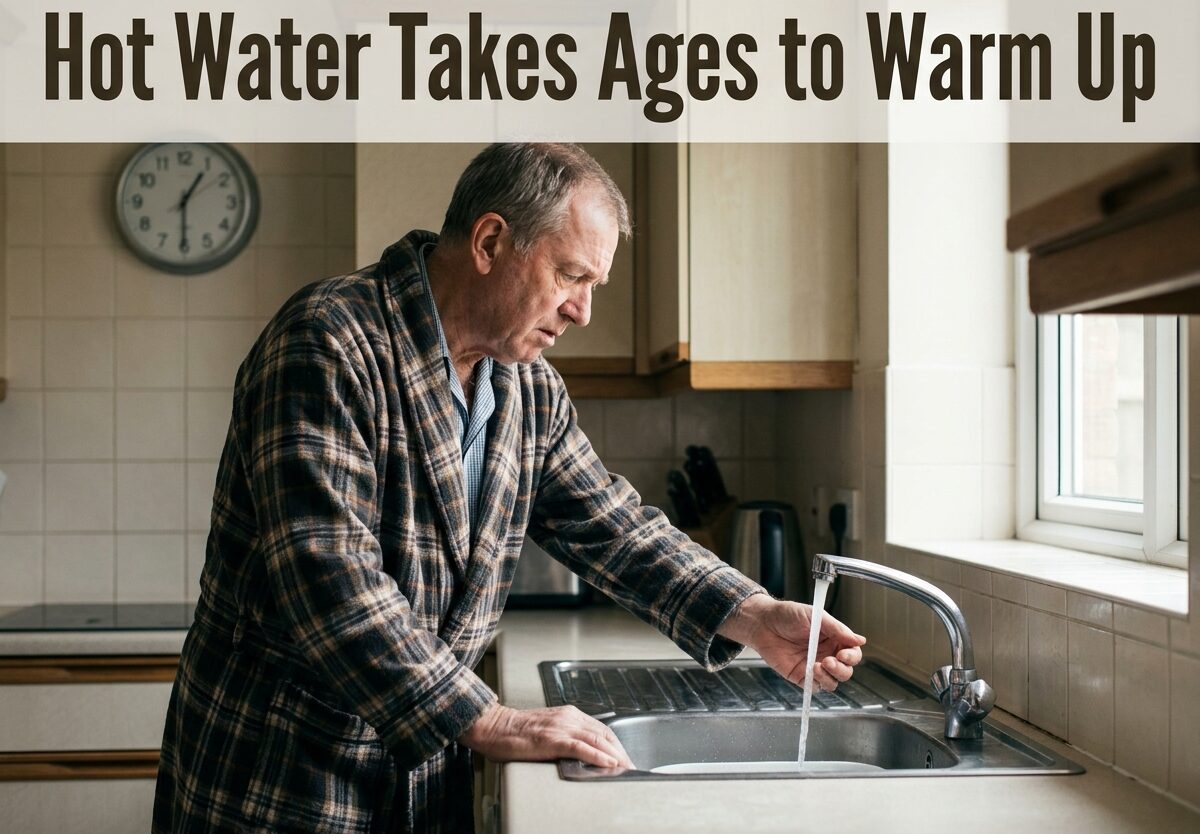
You turn on the shower, step in, and wait. And wait. Thirty seconds pass, then a minute, maybe even two. When hot water takes ages to warm up, it’s more than just frustrating—it’s wasting water, energy, and your time. The average household wastes 3-5 gallons every single time they wait for hot water to arrive, adding up to thousands of gallons per year.
The most common reason hot water takes ages to warm up is simple physics: the distance between your water heater and the faucet. But that’s not the only culprit. Sediment buildup, uninsulated pipes, aging equipment, and incorrect thermostat settings can all contribute to those long, cold waits.
I’ve researched the seven most common reasons your hot water takes ages to warm up, along with practical solutions you can implement today. Let’s dive in.
Distance From Water Heater: The #1 Culprit
The farther your water heater sits from the faucet or shower, the longer you’ll wait for hot water. It’s that simple. Every foot of pipe between the heater and your faucet contains cold water that must be pushed out before the hot water arrives.
In a typical home, water travels through pipes at 3-4 feet per second. If your water heater is in the basement and you’re showering on the second floor, that’s easily 50-80 feet of piping. You’re looking at 15-25 seconds of wait time minimum—even before accounting for other factors.
Homeowners with water heaters located in garages or basements often experience the longest waits, especially for upstairs bathrooms. The pipe distance creates a double problem: not only does cold water need to clear the lines, but the hot water loses heat as it travels through those cold pipes.
Sediment Buildup in Your Water Heater Tank
Over time, minerals naturally present in water—especially calcium and magnesium in hard water areas—settle at the bottom of your water heater tank. This sediment buildup creates a barrier between the heating element or burner and the water itself.
Think of it like trying to heat soup through a thick blanket. The sediment layer insulates the water from the heat source, forcing your water heater to work longer and harder to achieve the same temperature. In homes with hard water, sediment can accumulate as much as 1-2 inches per year.
A water heater with significant sediment buildup might still eventually deliver hot water, but the recovery time stretches dramatically. What once took 20 minutes now takes 45 minutes or longer between showers.
Uninsulated Pipes Losing Heat
Even after your water heater has done its job, hot water can lose significant heat as it travels through uninsulated pipes. This is especially problematic in colder climates or during winter months when pipes run through unheated spaces like basements, crawl spaces, or exterior walls.
Copper pipes, while excellent for water flow, conduct heat away from water surprisingly quickly. Uninsulated hot water pipes can lose 2-5 degrees of heat for every 10 feet of travel. That means 140°F water leaving your heater might arrive at your shower at a tepid 115°F if it’s traveling 50 feet through a cold basement.
The heat loss problem compounds the longer you wait. As hot water slowly moves through cold pipes, it transfers heat to the surrounding air and the pipe material itself. The pipes gradually warm up, but only after stealing significant heat from the water passing through them.
Water Heater Age and Efficiency Loss
Water heaters aren’t designed to last forever. Most tank-style units last 10-15 years with proper maintenance, but efficiency declines steadily throughout their lifespan. A water heater that’s 12+ years old may still be technically functional, but it’s likely working at 60-70% of its original capacity.
Several age-related issues can cause hot water to take ages to warm up. Heating elements degrade over time, burner assemblies become less efficient, and internal components wear out. The thermostat might also become less accurate, causing the heater to shut off before water reaches the target temperature.
If your water heater is approaching or has passed the 10-year mark, slow heating could signal that it’s nearing the end of its useful life. Replacement might be more cost-effective than repeated repairs.
Undersized Water Heater for Your Needs
A water heater that’s too small for your household’s needs will struggle to keep up with demand. The first shower might get hot water reasonably quickly, but subsequent showers face long waits as the heater struggles to recover.
Standard tank sizing guidelines suggest 30-40 gallons for 1-2 people, 40-50 gallons for 3-4 people, and 50+ gallons for 5+ people. However, these guidelines assume typical usage patterns. If your household runs multiple showers, does laundry, and runs the dishwasher simultaneously, you’ll need a larger tank or a tankless system.
An undersized heater creates a vicious cycle: it depletes its hot water supply quickly, then takes a long time to recover. This makes hot water take ages to warm up for the second or third person needing a shower during morning rush hour.
Thermostat Settings Too Low
Your water heater’s thermostat might be set lower than necessary, causing water to feel lukewarm rather than truly hot. Most manufacturers ship water heaters set to 120°F for safety and efficiency, but this temperature might feel insufficient, especially during winter months.
The recommended range for water heater thermostats is 120-140°F. At 120°F, you’ll need to use less cold water at the shower to achieve a comfortable temperature, which means more hot water flow and faster depletion. At 140°F, you’ll mix in more cold water, making your hot water supply last longer.
However, be cautious about setting temperatures above 140°F, which can create scalding risks. If you have young children or elderly household members, stay closer to the 120-125°F range.
Low Water Pressure Issues
Low water pressure extends the time it takes for hot water to reach your faucet. With reduced flow, water moves more slowly through pipes, giving it more time to lose heat along the journey and taking longer to clear cold water from the lines.
Several factors can cause low pressure: partially closed shut-off valves, clogged pipes, pressure regulator issues, or problems with the municipal water supply. Low pressure affects both hot and cold water, but it’s particularly noticeable with hot water because of the extended wait time.
If you notice low pressure throughout your home, the issue is likely at the main supply or pressure regulator. If it’s only affecting hot water, the problem could be at the water heater itself or specifically on the hot water piping.
Hot Water Takes Ages to Warm Up: Diagnostic Checklist
Before calling a professional, run through this quick diagnostic checklist to identify the most likely cause:
Step 1: Check how long the wait is at different faucets. If all faucets have similar wait times, the issue is likely at the water heater itself. If only distant faucets are slow, pipe distance is the primary factor.
Step 2: Test your water heater’s recovery time. Run a shower until hot water arrives, then wait 30 minutes and test again. If recovery takes longer than 30-40 minutes, your heater may be struggling with age or sediment.
Step 3: Check your water heater’s thermostat setting. It should be between 120-140°F. If it’s set below 120°F, try increasing it by 5-10 degrees.
Step 4: Look at your water heater’s age. If it’s 10+ years old, efficiency loss is likely contributing to slow heating. Consider replacement planning.
Step 5: Check for visible sediment buildup signs. If you hear rumbling or popping sounds from your water heater, that’s sediment. Flushing the tank might help significantly.
Quick Fixes You Can Do Today
Several solutions for slow hot water don’t require professional help or major expense. Pipe insulation is one of the most effective and affordable fixes. Foam pipe sleeves cost $1-2 per foot and are easy to install yourself. Insulating the first 10-15 feet of hot water pipe from your water heater can reduce heat loss by 30-40%.
Flushing your water heater to remove sediment is another DIY-friendly project. Attach a garden hose to the drain valve at the bottom of the tank and drain several gallons until the water runs clear. This should be done annually, but even a one-time flush on a neglected tank can improve performance noticeably.
Adjusting your thermostat to 130-135°F (if safe for your household) can make hot water arrive faster at the tap. The higher temperature means you’ll use more cold water to mix, effectively increasing your hot water capacity.
Long-Term Solutions: When to Upgrade
For persistent issues, more substantial solutions might be worth the investment. Hot water recirculating pumps keep hot water circulating through the pipes, providing instant hot water at all faucets. Installation costs $300-800 for a traditional system or $500-1,200 for a retrofit comfort pump that doesn’t require a dedicated return line.
Tankless water heaters eliminate the wait entirely by heating water on-demand. They’re more expensive upfront ($1,000-3,000 installed) but provide unlimited hot water and can last 20+ years. They’re especially ideal for homes where hot water takes ages to warm up due to distance.
If your water heater is over 12 years old and struggling, replacement might be the most cost-effective solution. New models are significantly more efficient, and proper sizing can eliminate the undersized heater problem entirely.
When to Call a Professional Plumber
Some situations definitely require professional expertise. If your water heater is leaking, making unusual noises, or showing signs of corrosion, call a plumber immediately. These symptoms can indicate impending failure that could cause water damage.
Low water pressure that affects the entire house warrants professional diagnosis. The issue might be at the main supply line, pressure regulator, or within your plumbing system—problems that require specialized equipment to identify and fix.
If you’re uncomfortable performing any DIY maintenance like flushing the water heater or working with gas lines (for gas heaters), there’s no shame in calling a professional. The $100-200 service call is far less expensive than emergency repairs from DIY mistakes.
Frequently Asked Questions
Why does my hot water take so long to warm up?
Hot water takes long to warm up primarily due to distance from the water heater. Cold water in the pipes must flow out before hot water arrives. Other common causes include sediment buildup in the tank, uninsulated pipes losing heat, aging water heater components, undersized tanks, low thermostat settings, and low water pressure. The farther your faucet is from the heater and the more heat loss occurs along the way, the longer you’ll wait.
Why does my hot water go cold after 5 minutes?
Hot water going cold after a few minutes typically indicates an undersized water heater or sediment buildup reducing efficiency. If your tank is too small for your household’s demand, it depletes quickly and can’t recover fast enough. Sediment accumulation acts as insulation between the heat source and water, drastically reducing heating capacity and recovery time. A failing heating element or burner can also cause this issue.
How long should you wait for hot water to warm up?
Normal wait times vary by distance from the water heater. For faucets within 20 feet, 10-15 seconds is typical. For distant bathrooms (50+ feet away), 30-60 seconds is normal. Wait times exceeding 60 seconds consistently indicate a problem. Factors affecting wait time include pipe distance, water pressure, pipe insulation, water heater efficiency, and ambient temperature around pipes. Winter months typically extend wait times due to colder pipes.
Why does my hot water only last 5 minutes in my shower?
Hot water running out quickly usually means your water heater is undersized for your needs or struggling with efficiency issues. Standard 40-50 gallon tanks typically provide 15-20 minutes of shower time. If you’re getting less than 10 minutes, check for sediment buildup, failing heating elements, or a tank that’s too small for your household. High-flow showerheads can also deplete hot water faster than low-flow alternatives.
How much water is wasted waiting for hot water?
The average household wastes 3-5 gallons of water every time they wait for hot water to arrive. With typical usage patterns, this amounts to 10,000-15,000 gallons per year wasted down the drain. At current water rates, that’s $50-150 annually in water costs alone, plus the energy cost to heat that water which is subsequently wasted. Multi-person households with distant bathrooms can waste even more.
Will insulating pipes help hot water arrive faster?
Yes, pipe insulation significantly improves hot water delivery speed and temperature. Uninsulated pipes can lose 2-5°F per 10 feet of travel in cold environments. Foam pipe sleeves ($1-2 per foot) reduce this heat loss by 30-40%, meaning hotter water arrives faster. Insulating the first 10-15 feet of hot water pipe from your water heater provides the most benefit. Insulation also keeps pipes warmer between uses, so subsequent hot water requests arrive even faster.
What temperature should my water heater be set to?
The recommended water heater temperature range is 120-140°F. Manufacturers typically set units to 120°F for safety and energy efficiency. If 120°F feels insufficient, increasing to 130-135°F can help. Never exceed 140°F due to scalding risks, especially in households with children or elderly members. Higher temperatures increase your effective hot water capacity because you mix in more cold water at the tap, but they also increase standby heat loss and energy costs.
Conclusion
When hot water takes ages to warm up, the culprit is usually a combination of factors rather than a single issue. Distance from the water heater, sediment buildup, uninsulated pipes, aging equipment, improper sizing, thermostat settings, and water pressure can all contribute to those frustrating waits.
The good news is that most of these problems have straightforward solutions. DIY fixes like pipe insulation and tank flushing can make noticeable improvements for under $100. For more serious issues, professional solutions like recirculating pumps or tankless water heaters can eliminate the wait entirely.
Start with the diagnostic checklist to identify your specific situation, then tackle the easiest fixes first. You might be surprised how quickly you can go from waiting minutes for hot water to enjoying nearly instant warmth at every faucet.
Leave a Comment