
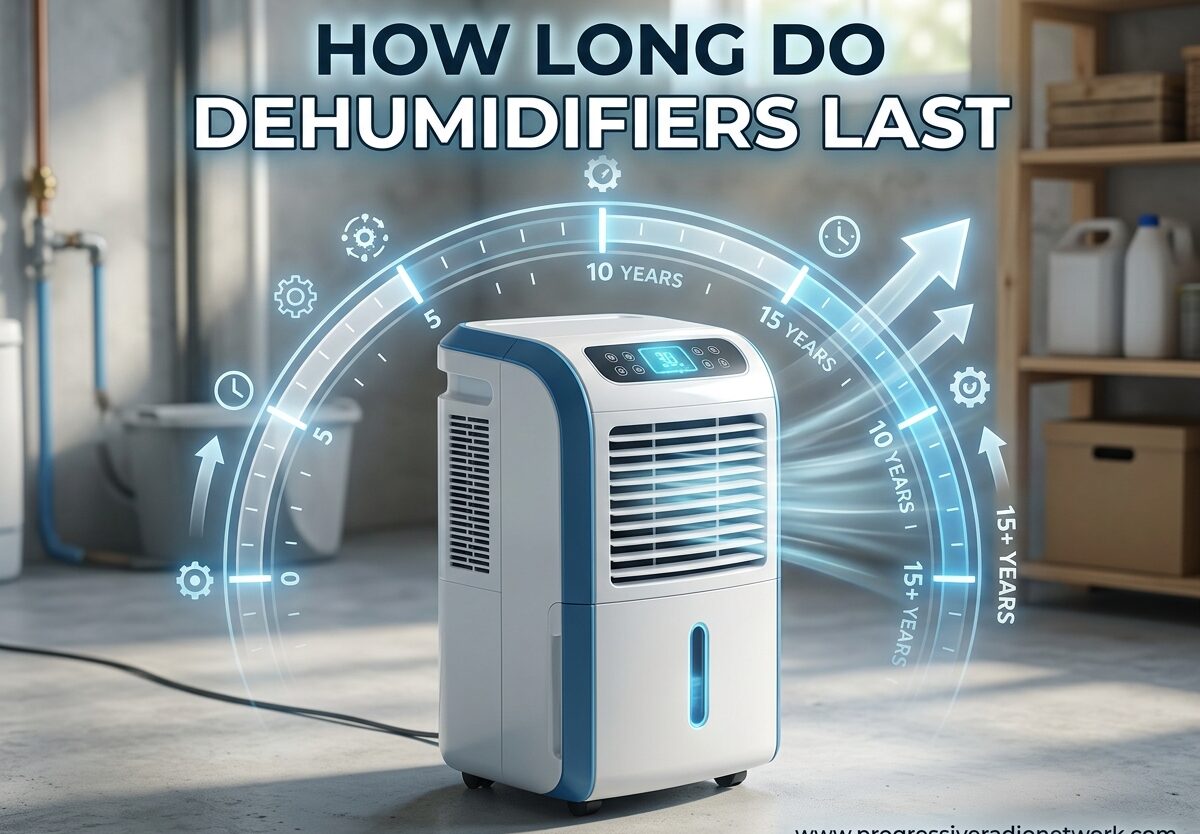
If you’ve invested in a dehumidifier to control moisture in your home, you’re probably wondering how long it will keep working effectively. The average dehumidifier lasts between 5 and 10 years, though I’ve seen some units quit after just 2 years while others keep running for 15+ years with proper care.
Understanding dehumidifier lifespan matters because these appliances cost anywhere from $150 to $500 or more, and replacing one every few years adds up quickly. I’ve researched real user experiences, manufacturer data, and expert insights to help you get the most years out of your unit.
In this guide, I’ll cover the real factors affecting longevity, practical maintenance tips that actually work, and the telltale signs it’s time to replace your dehumidifier before it fails completely.
How Long Do Dehumidifiers Last on Average?
The average dehumidifier lifespan is 5 to 10 years according to most manufacturers and the National Association of Home Builders. However, this range varies significantly based on how you use and maintain the unit.
Compressor-based dehumidifiers, which are the most common type for residential use, typically last 5-8 years with regular use. Desiccant dehumidifiers can last 8-10 years or longer because they have fewer moving parts and don’t rely on refrigerant systems that can fail over time.
From my research of real user experiences on Reddit and appliance forums, I found a clear pattern: consistently running units (24/7 operation) typically last about 3 years, while units used seasonally and given proper maintenance often reach the 8-10 year mark. Some users reported their older dehumidifiers lasting 15+ years, while many newer models seem to fail after just 1-3 years.
Whole-house dehumidifiers generally outlast portable units, often reaching 10-15 years because they’re built with commercial-grade components and don’t work as hard to remove moisture from a single space.
Key Factors That Affect Dehumidifier Lifespan
Several factors determine whether your dehumidifier will be a workhorse that lasts a decade or a disappointment that fails in a few years. Understanding these factors helps you make smarter decisions about usage and maintenance.
Usage Intensity – The single biggest factor affecting lifespan is how hard your dehumidifier works. Units running 24/7 in continuously damp basements typically fail within 3-4 years, while seasonal users who run their dehumidifiers only during humid months often get 8+ years of service. The compressor and components simply wear out faster under constant use.
Maintenance Quality – Regular maintenance dramatically extends lifespan. I’ve seen neglected units fail after 2 years while well-maintained identical models run for 10+ years. Dirty coils force the compressor to work harder, clogged filters restrict airflow, and ignoring warning signs leads to catastrophic failures.
Environmental Conditions – Your local climate matters immensely. Dehumidifiers in coastal areas with year-round humidity work much harder than those in seasonal climates. Extremely cold basements cause frost buildup on coils, triggering stress-inducing defrost cycles. Dusty environments clog filters faster, reducing efficiency and lifespan.
Build Quality and Brand – Premium brands like AprilAire and commercial-grade units typically offer 5-year warranties and are built with better components. Budget models from big-box stores often use cheaper compressors and thinner coils that fail sooner. Many users report that older dehumidifiers (pre-2015) were simply built better than newer models.
Type of Dehumidifier – Compressor units work well in warm conditions but struggle in cold temperatures, leading to premature wear. Desiccant models excel in colder environments and typically last longer due to simpler mechanical design. Whole-house units generally outlast portable models due to robust construction and less demanding duty cycles.
How to Extend Your Dehumidifier’s Lifespan
Getting maximum years from your dehumidifier isn’t complicated, but it does require consistent attention. These maintenance practices can easily double your unit’s lifespan.
Clean or Replace Filters Monthly – Dirty filters are the number one killer of dehumidifiers. When airflow is restricted, the compressor works harder and runs hotter, dramatically reducing its life. Clean washable filters with warm water and mild soap monthly, or replace disposable filters every 2-3 months depending on usage.
Keep Coils Clean – Dust and debris on evaporator and condenser coils reduce efficiency and strain the system. Vacuum the coils quarterly using a soft brush attachment, and use a coil cleaner spray annually to remove buildup that vacuuming can’t reach. This simple task alone can add years to your unit’s life.
Proper Placement Matters – Leave at least 12 inches of clearance around all sides for adequate airflow. Don’t place the unit against walls or in corners where intake air is restricted. Avoid placing it near heat sources or in direct sunlight, which makes the compressor work harder. Elevate the unit slightly if your floor tends to collect water.
Winter Storage Preparation – Many dehumidifiers fail during winter storage when unused. Before storing, clean the unit thoroughly, drain all water completely, and let it dry for 24-48 hours. Store in a climate-controlled space, not an unheated garage where freezing temperatures can damage internal components. Cover loosely to prevent dust accumulation.
Don’t Overwork the Unit – Size your dehumidifier appropriately for your space. An undersized unit running constantly will fail years before a properly sized unit cycling on and off. Consider using a humidistat setting of 50% rather than lower settings that force continuous operation.
Signs Your Dehumidifier Is Failing
Recognizing early warning signs allows you to plan for replacement rather than dealing with a sudden failure during peak humidity season. Watch for these indicators that your dehumidifier is nearing the end.
Reduced Moisture Removal – The most common sign is decreased performance. Your dehumidifier runs continuously but humidity levels stay high, or it seems to collect less water than usual despite similar conditions. This often indicates refrigerant loss, compressor wear, or coil problems.
Unusual Noises – Grinding, rattling, or squealing sounds typically signal bearing failure, loose components, or compressor problems. While some noise increase is normal with age, loud or new sounds often indicate impending failure within weeks or months.
Excessive Frost Buildup – Some frost on coils during cold weather is normal, but heavy ice formation indicates problems. This could mean low refrigerant, a failing defrost sensor, or restricted airflow. Chronic ice buildup damages the compressor and often signals the end is near.
Frequent Cycling – If your dehumidifier cycles on and off more frequently than usual (short cycling), it may indicate compressor problems, thermostat issues, or that the unit is struggling to maintain humidity settings. This puts additional stress on components and accelerates failure.
Leaks and Pump Failures – Water leaking from the unit often indicates a cracked reservoir, failed pump, or clogged drain hose. While pump replacements are sometimes possible, reservoir cracks and pump failures on older units often signal it’s time to replace rather than repair.
When Should You Replace Your Dehumidifier?
Deciding whether to repair or replace isn’t always straightforward, but certain factors make the decision clearer. I generally recommend replacement when your dehumidifier is over 7 years old and requires significant repairs.
The repair vs replace calculation changes based on the issue. Simple problems like blown capacitors or broken humidistats might be worth fixing, especially on newer units. However, compressor failures typically cost $200-400 to repair and usually aren’t worth it on dehumidifiers older than 5 years.
Energy efficiency is another consideration. Newer ENERGY STAR certified models can remove the same amount of moisture using 15-30% less electricity than older units. If your dehumidifier is more than 10 years old, the energy savings from upgrading might partially offset the replacement cost.
Check your warranty before making any decisions. Many premium brands like AprilAire offer 5-year warranties on parts and sometimes longer on sealed system components. If your unit fails during the warranty period, repair or replacement may be covered.
FAQs
How often should you replace a dehumidifier?
Most dehumidifiers need replacement every 5-10 years depending on usage and maintenance. Units running continuously in damp environments may only last 3-5 years, while seasonal units with proper care can last 10-15 years. Replace your dehumidifier when repair costs exceed 50% of a new unit’s price or when performance drops significantly despite maintenance.
Why do most dehumidifiers stop working?
Compressor failure is the leading cause of dehumidifier death, often due to running continuously in conditions that are too cold. Dirty coils and restricted airflow force the compressor to overwork and fail prematurely. Other common failures include refrigerant leaks, burnt capacitors, and failed defrost sensors. Regular maintenance dramatically reduces these problems.
Should you use a dehumidifier if you have COPD?
Yes, dehumidifiers can benefit people with COPD by maintaining optimal indoor humidity levels between 30-50%. Lower humidity reduces mold growth and dust mites, which are common respiratory irritants. However, consult your healthcare provider about specific humidity recommendations for your condition, as individual needs vary based on severity and other health factors.
Can I throw out an old dehumidifier?
Do not throw dehumidifiers in regular trash due to refrigerant and electronic components. Many municipalities require proper recycling through appliance recycling programs or hazardous waste facilities. Some retailers offer haul-away services when purchasing new units. Check with your local waste management facility for specific disposal requirements, as regulations vary by location.
Conclusion
Understanding how long do dehumidifiers last helps you make smarter purchasing and maintenance decisions. The 5-10 year average lifespan is achievable for most users, but reaching the upper end of that range requires attention to maintenance, proper usage, and recognizing warning signs early.
The key takeaways are clear: clean your filters monthly, keep coils free of debris, don’t run your unit continuously if possible, and store it properly during off-seasons. When your dehumidifier shows signs of failing and approaches the 7-10 year mark, replacement usually makes more sense than expensive repairs.
By following the maintenance tips in this guide and paying attention to your dehumidifier’s performance, you can maximize your investment and ensure reliable moisture control for years to come.




Leave a Comment