
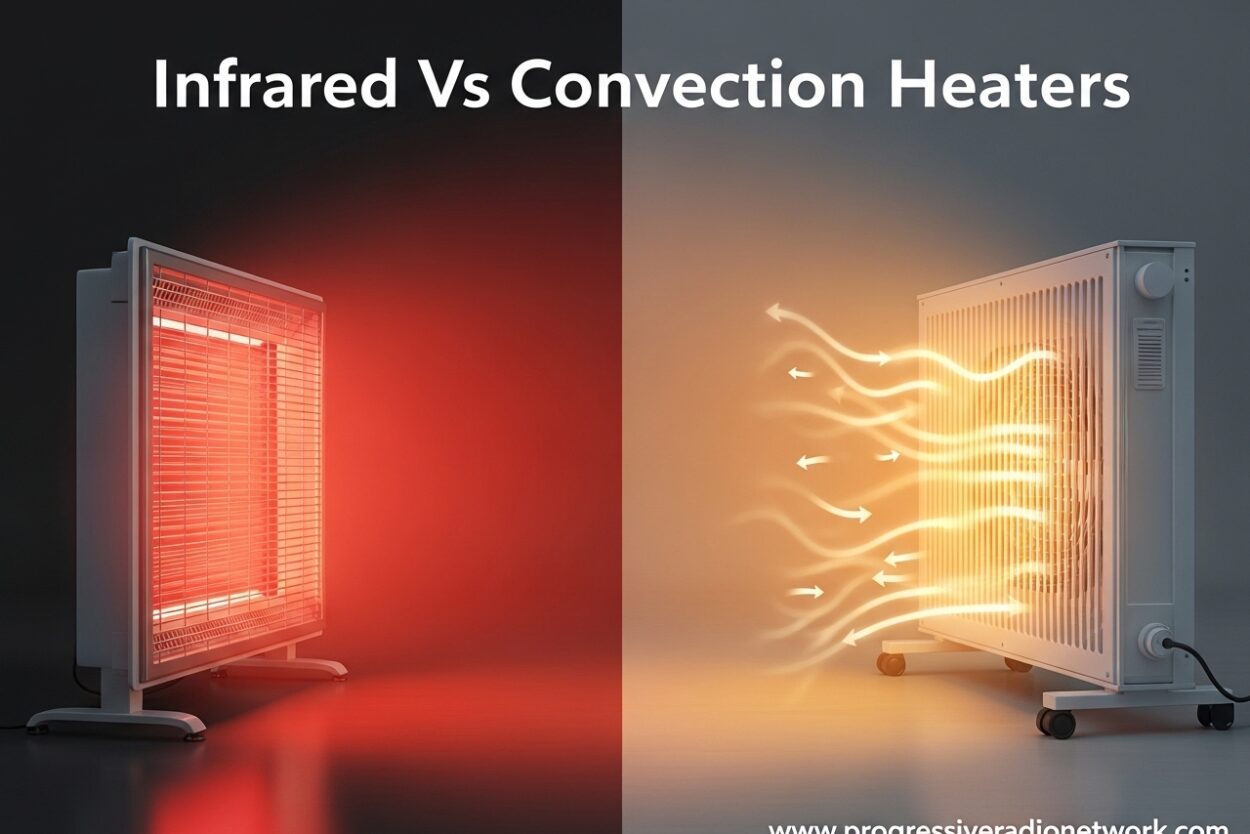
Choosing the right space heater can make a significant difference in your comfort and energy bills. The two most common heating technologies—infrared and convection—work in fundamentally different ways. Understanding these differences helps you select the best option for your specific situation.
Infrared heaters use electromagnetic radiation to warm objects and people directly. Convection heaters warm the air, which then circulates throughout the room. Each approach has distinct advantages depending on your heating needs, room conditions, and budget.
This infrared vs convection heaters comparison will help you understand the science behind each technology, compare their efficiency and costs, and determine which type suits your space better.
How Infrared Heaters Work
Infrared heaters operate on the same principle as the sun. They emit invisible electromagnetic waves that travel through the air until they strike a solid object. When these waves hit your skin, furniture, or walls, they convert to heat energy.
This direct heating method means you feel warmth almost instantly after turning on an infrared heater. The heat doesn’t depend on air temperature or movement. Instead, the waves transfer thermal energy directly to objects and people in their path.
Think of it like standing in sunlight on a cold day. The air might be freezing, but the sun’s rays make you feel warm. Infrared heaters create this same effect without any UV radiation.
Because infrared heaters don’t rely on air circulation, they work exceptionally well in drafty or poorly insulated spaces. The heat doesn’t get blown away by air currents or escape through cracks as easily as warm air from convection heaters.
How Convection Heaters Work
Convection heaters take a completely different approach. Instead of heating objects directly, they warm the air in a room. Most convection heaters use electric heating elements or coils that generate heat when electricity passes through them.
As the air near the heating element warms up, it becomes less dense and rises. Cooler air moves in to replace it, creating a continuous circulation pattern called a convection current. Some convection heaters include fans to accelerate this process and distribute heat more quickly.
This method gradually raises the ambient temperature of the entire room. The air absorbs heat from the heating element, carries it throughout the space, and transfers it to walls, furniture, and people through contact.
Convection heaters excel at maintaining consistent temperatures across larger, enclosed spaces. Once the air reaches your desired temperature, the heater cycles on and off to maintain that level, much like a central heating system.
Key Differences Between Infrared and Convection Heaters
When comparing infrared vs convection heaters, several critical factors affect your comfort and energy costs. Let’s break down the most important differences.
Heating Speed
Infrared heaters provide near-instant warmth. The electromagnetic waves begin transferring heat the moment you turn them on, making you feel warmer within minutes. This immediate response makes infrared ideal for quick comfort boosts.
Convection heaters require more time to warm a space. They must first heat the air, then circulate it throughout the room. Depending on room size, this process can take 15-30 minutes before you notice a significant temperature change.
Heating Pattern
Infrared heaters create directional heat zones. The warmth concentrates in the area where the heater is pointed. This focused heating works well for warming specific spots like a reading nook or desk area.
Convection heaters distribute heat more evenly throughout a room. The circulating air reaches corners and areas not in the direct line of sight, making them better for whole-room heating.
Air Quality Impact
Infrared heaters don’t affect air movement or quality. Since they don’t rely on fans or air circulation, they don’t stir up dust, allergens, or other particles. This makes them an excellent choice for people with allergies or respiratory sensitivities.
Convection heaters, especially models with fans, circulate air throughout the room. This movement can redistribute dust, pollen, and pet dander. However, they don’t produce emissions or reduce humidity levels.
Noise Level
Most infrared heaters operate silently since they don’t require fans. The only sound might be a slight click when the heating element cycles on or off.
Convection heaters with fans produce background noise during operation. Fanless convection models run quietly but may heat more slowly than their fan-assisted counterparts.
Efficiency in Different Conditions
Infrared heaters perform well in challenging environments. Drafty rooms, outdoor patios, and spaces with high ceilings don’t significantly reduce their effectiveness since they heat objects directly rather than air.
Convection heaters work best in well-insulated, enclosed spaces. Drafts and air leaks reduce their efficiency by allowing warm air to escape. High ceilings can also reduce effectiveness since warm air naturally rises above your living area.
Energy Efficiency and Operating Costs
When it comes to energy efficiency in the infrared vs convection heaters debate, the answer depends on how you use them. Both types convert electricity to heat at nearly 100% efficiency, but their operating costs differ based on usage patterns.
Infrared heaters often cost less to run for targeted heating because they only warm the objects and people you want heated. There’s no wasted energy heating empty space. If you’re sitting at a desk, an infrared heater can keep you comfortable without heating the entire room.
Convection heaters typically consume more energy for spot heating since they warm all the air in a space. However, for maintaining whole-room temperatures over extended periods, convection heating can be more efficient because once the air reaches your target temperature, the heater cycles less frequently.
Cost Calculation Example
How much does it cost to run a 1500 watt infrared heater for 24 hours? At the average U.S. electricity rate of approximately 15 cents per kilowatt-hour, a 1500W (1.5kW) heater running continuously costs about $5.40 per day.
The calculation is straightforward: 1.5 kW x 24 hours x 0.15 = $5.40. Most heaters don’t run continuously though. They cycle on and off to maintain temperature, which reduces actual costs by 30-50% depending on insulation and thermostat settings.
The same math applies to convection heaters of the same wattage. Both types cost essentially the same to run when operating at full power. The difference comes from how often each type needs to cycle to maintain your comfort level.
Which Heater Type Should You Choose?
Your choice between infrared and convection heaters depends on several factors specific to your situation. Consider these scenarios when making your decision.
Choose Infrared Heaters For:
- Drafty rooms: Direct heating isn’t affected by air leaks or poor insulation
- Targeted heating: Warming specific areas like a desk, reading spot, or seating area
- Quick warmth: When you need fast heat delivery rather than waiting for a room to warm up
- Outdoor or semi-outdoor spaces: Patios, garages, and workshops where air heating would be inefficient
- Allergy concerns: Silent operation without circulating dust or allergens
- Large open spaces: Areas where heating all the air would be impractical
- Supplemental heating: Adding warmth to a specific spot without raising the thermostat for the whole house
Choose Convection Heaters For:
- Whole-room heating: Maintaining consistent temperatures throughout bedrooms, living rooms, or offices
- Well-insulated spaces: Enclosed rooms where warm air won’t escape quickly
- Extended operation: Keeping a space warm for long periods where gradual, even heating is preferable
- Multiple occupants: Situations where several people are moving around the room rather than staying in one spot
- Background heating: Maintaining a baseline temperature in a room throughout the day
- Lower ceilings: Spaces where rising warm air will still be within the living area
Frequently Asked Questions
Which room heater is best for asthma patients?
Infrared heaters are generally better for asthma patients and those with respiratory sensitivities. Since they don’t circulate air, they don’t stir up dust, pollen, pet dander, or other allergens that can trigger asthma symptoms. Convection heaters with fans can redistribute these particles throughout the room, potentially worsening air quality for sensitive individuals. If you choose a convection heater, look for fanless models to minimize air circulation.
How much does it cost to run a 1500 watt infrared heater for 24 hours?
Running a 1500 watt infrared heater for 24 hours costs approximately $5.40 per day at the average U.S. electricity rate of 15 cents per kilowatt-hour. The calculation is 1.5 kW × 24 hours × $0.15/kWh = $5.40. In practice, costs are typically 30-50% lower because heaters cycle on and off to maintain temperature rather than running continuously. Your actual cost will vary based on your local electricity rates, how well the space is insulated, and what temperature setting you choose.
Is infrared heat good for neck pain?
Infrared heat can provide relief for neck pain and muscle stiffness. The deep-penetrating warmth increases blood flow to the affected area, which helps relax tense muscles and reduce discomfort. Many people find that the gentle, radiant heat from infrared heaters offers soothing comfort similar to a heating pad. While it shouldn’t replace medical treatment for chronic conditions, infrared heat can be a helpful complementary therapy for temporary muscle pain and tension.
What is the most efficient heater for one room?
For heating a single, well-insulated room, a convection heater is typically more efficient because it distributes heat evenly throughout the entire space. Once the room reaches your desired temperature, the heater cycles less frequently to maintain that level. However, if you only need to heat a specific area within the room rather than the entire space, an infrared heater will be more efficient since it focuses energy where you need it rather than wasting energy heating unused areas.
Do infrared heaters work in drafty rooms?
Yes, infrared heaters work exceptionally well in drafty rooms. Because they heat objects and people directly rather than warming the air, air currents don’t significantly affect their performance. While drafts might carry away some of the heat that has been absorbed by objects, the direct transfer of infrared energy to surfaces and people continues efficiently regardless of air movement. This makes infrared heaters ideal for older homes, rooms with poor insulation, or spaces with high ceilings where warm air would rise above the living area.
Which heater type is quieter?
Infrared heaters are typically quieter than convection heaters. Most infrared models operate without any fans, producing only a slight clicking sound when the heating element cycles on or off. Convection heaters that use fans create continuous background noise during operation, though the sound level is generally similar to a desktop fan. Fanless convection heaters are available and operate nearly silently, but they heat more slowly than fan-assisted models. If noise is a concern—for example, in a bedroom or office—infrared heaters are usually the better choice.
Conclusion
The infrared vs convection heaters comparison reveals that neither type is universally superior. Infrared heaters excel at providing quick, targeted warmth without circulating air, making them ideal for drafty spaces and allergy sufferers. Convection heaters work better for maintaining even temperatures throughout well-insulated rooms over extended periods.
When choosing between infrared and convection heaters, consider your specific needs: the room’s insulation, whether you need spot or whole-room heating, noise sensitivity, and any respiratory concerns. Both technologies can provide efficient, effective heating when matched to the right application. Understanding these differences ensures you select the heater that will keep you comfortable while minimizing energy costs.





Leave a Comment