
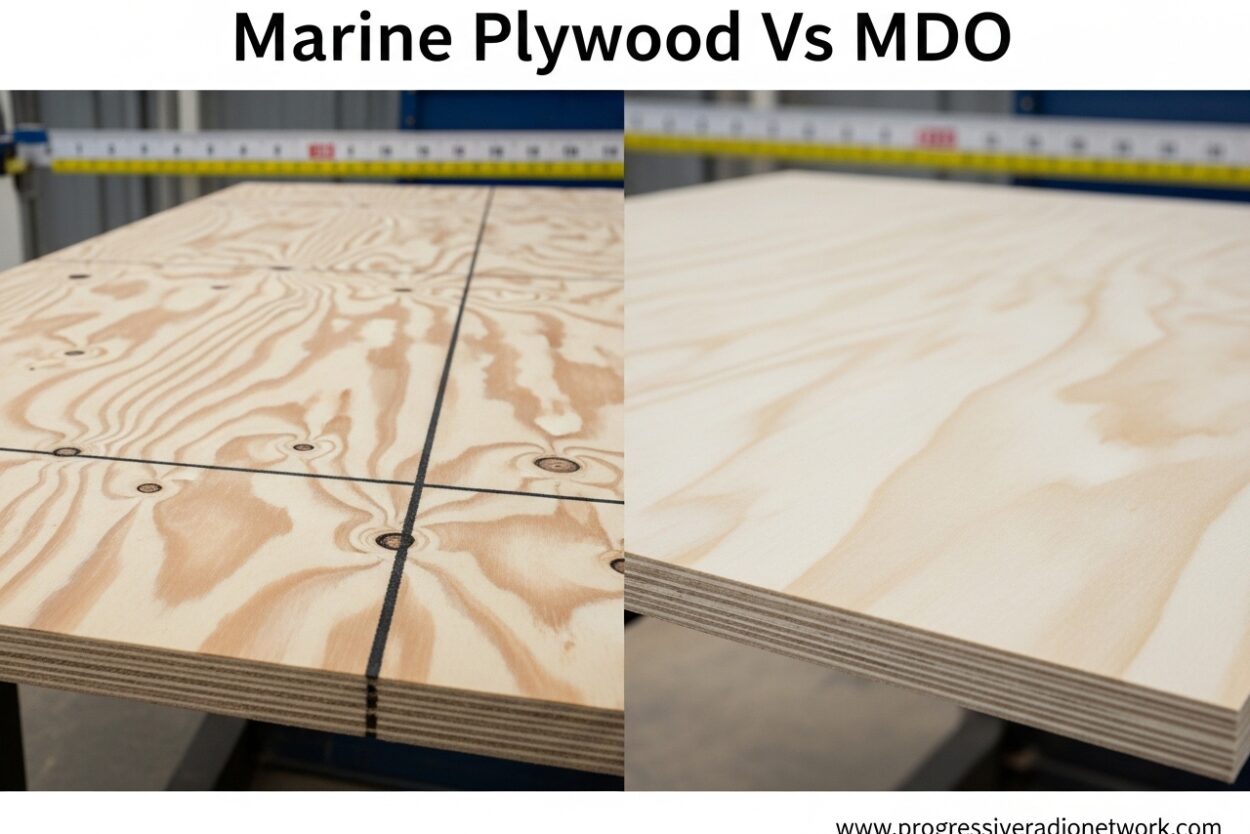
When you’re building a boat or tackling an outdoor project, choosing between marine plywood and MDO can make or break your results. I’ve spent years working with both materials, and the difference isn’t just about price—it’s about knowing which material will actually survive in your specific application.
Marine Plywood Vs MDO is a common debate because both materials claim water resistance, but they’re designed for completely different purposes. Marine plywood is built for structural strength in submerged conditions, while MDO excels at creating smooth, paintable surfaces for above-water applications.
In this guide, I’ll break down exactly when to use each material, backed by real-world testing and decades of boat-building experience.
Marine Plywood Vs Mdo: The Essential Differences
Before diving into the details, here’s the fundamental difference: marine plywood is designed to be submerged in water and still maintain structural integrity, while MDO (Medium Density Overlay) is engineered for above-water applications where a smooth, paintable surface matters more than maximum water resistance.
This distinction matters because choosing the wrong material can lead to premature failure, wasted money, and frustrating repairs down the road.
What Is Marine Plywood?
Marine plywood is a high-grade exterior plywood constructed with waterproof adhesive and void-free plies. Unlike standard plywood, marine-grade plywood uses Douglas fir or hardwood cores with no gaps or voids between layers, preventing water from penetrating and delaminating the material.
The key to marine plywood’s performance lies in its construction. Each layer is bonded with phenolic resin or marine-grade adhesive that won’t break down when exposed to moisture. This makes it ideal for structural components where water exposure is constant or unavoidable.
Marine plywood carries an exterior grade classification, meaning it’s designed for permanent exposure to weather. However, not all exterior plywood is marine-grade—the distinction matters significantly in wet environments.
Typical Marine Plywood Applications
- Boat transoms and engine beds
- Bulkheads and structural components
- Submerged deck areas
- Dock and pier construction
- Outdoor furniture in humid climates
What Is MDO (Medium Density Overlay)?
MDO is plywood with a smooth, resin-impregnated fiber overlay bonded to one or both faces. The overlay consists of phenolic resin-impregnated paper that’s bonded under heat and pressure, creating an extremely smooth, paint-ready surface that resists moisture penetration.
Here’s a critical distinction: MDO is NOT the same as MDF (Medium Density Fiberboard). MDF is a pressed fiberboard with no grain structure, while MDO is real plywood with a smooth overlay surface. This confusion leads to costly mistakes—MDF disintegrates when wet, while MDO performs well in marine applications.
The thermoset resin overlay creates a surface that’s virtually impermeable to water and provides an excellent painting surface. Unlike standard plywood, MDO won’t show grain patterns through paint, making it ideal for visible applications.
HDO vs MDO: What’s The Difference?
HDO (High Density Overlay) is similar to MDO but with a thicker, more durable overlay. HDO contains more resin and is designed for abrasive applications like concrete forms, while MDO offers a balance of durability and cost-effectiveness for marine and outdoor use.
Marine Plywood Vs Mdo: Direct Comparison
| Characteristic | Marine Plywood | MDO |
|---|---|---|
| Weight | Heavier baseline | 10-20% lighter |
| Cost | Premium pricing | ~40% cheaper |
| Water Resistance | Designed for submerged use | Above-water applications |
| Paintability | Grain may show through | No grain show-through |
| Surface Preparation | Sanding required | Paint-ready, no sanding |
| Best For | Structural, submerged | Cosmetic, above-water |
Weight Comparison: Which Is Lighter?
MDO weighs 10-20% less than marine plywood, which can make a significant difference in boat performance. For smaller boats or weight-sensitive applications, this reduction improves fuel efficiency and handling without compromising durability in above-water applications.
The weight difference comes from MDO’s construction—fewer voids and a resin overlay that’s less dense than the solid hardwood plies used in premium marine plywood. When you’re building a tender or retrofitting a deck, every pound matters.
Cost Comparison: Price Difference
MDO costs approximately 40% less than marine plywood, with some sources reporting MDO at roughly half the price of marine-grade panels. This significant price difference makes MDO attractive for larger projects where material costs add up quickly.
Typical pricing varies by region, but expect to pay a premium of $20-30 per sheet for marine plywood compared to MDO. For projects requiring multiple sheets, this difference can amount to hundreds of dollars in savings.
However, the cheaper option isn’t always the right choice—using MDO in a submerged application will cost more in the long run due to premature failure and replacement costs.
Water Resistance: Can They Handle Moisture?
Marine plywood is designed for continuous water exposure and can withstand submerged conditions when properly sealed with epoxy and maintained. The void-free construction and waterproof adhesive prevent delamination even when saturated.
MDO resists water effectively through its resin overlay surface, but it’s not intended for submerged applications. The overlay protects the plywood core from above-water exposure, rain, and splashing, but prolonged submersion will eventually penetrate to the core material.
For boat floors that get wet but don’t remain submerged, MDO performs excellently with proper edge sealing. For transoms, keels, or any component below the waterline, marine plywood is the only safe choice.
Paintability And Surface Finish
This is where MDO truly shines. The resin overlay creates a surface that accepts paint beautifully without grain show-through. No amount of sanding and filling on marine plywood can match the glass-smooth finish that MDO provides right out of the box.
Marine plywood requires extensive preparation for a smooth finish—filling grain, multiple sanding steps, and careful priming to prevent grain patterns from telegraphing through the paint. MDO eliminates this entire process, saving hours of labor and delivering superior cosmetic results.
For visible cabinetry, hatch covers, and interior boat components, MDO’s paintability makes it the clear winner. The smooth surface also accepts graphics and lettering exceptionally well, which is why MDO is popular for signs.
Strength And Durability
Marine plywood offers superior structural strength, particularly in shear and load-bearing applications. The solid core construction and thicker plies provide consistent strength throughout the panel, making it ideal for transoms, bulkheads, and engine beds where structural integrity is critical.
MDO provides adequate strength for non-structural applications but isn’t designed for high-load situations. The plywood core offers good strength, but the panel isn’t engineered for the same structural demands as marine-grade plywood.
When choosing between materials for a structural component, ask yourself: what happens if this fails? If failure means catastrophic damage or safety risks, marine plywood is the only responsible choice.
Best Applications For Each Material
Marine Plywood: Use For
- Boat transoms carrying engine loads
- Bulkheads and structural bulkhead reinforcement
- Submerged deck components
- Engine beds and stringers
- Keel and deadwood construction
- Applications with constant water exposure
MDO: Use For
- Boat floorboards and decking (above waterline)
- Hatch covers and companionway boards
- Cabinetry and interior panels
- Exterior signs and displays
- Concrete forms (reusable)
- Painted exterior projects
What NOT To Use Each Material For
Avoid marine plywood when paintability is your primary concern—the extra cost isn’t justified for cosmetic applications where MDO will outperform it. Avoid MDO for any structural component below the waterline or in high-load situations where failure isn’t an option.
Working With MDO: Special Considerations
Epoxy Bonding
MDO requires special preparation before epoxy bonding. The resin surface can have contamination that prevents proper adhesion. Clean the surface with solvent before sanding to remove any manufacturing residue, then sand thoroughly for maximum epoxy grip.
End Grain Sealing
Like all plywood, MDO requires careful end grain sealing. The overlay surface resists water, but exposed edges allow penetration. Seal all cut edges with epoxy or marine-grade sealer immediately after cutting to prevent moisture intrusion.
Screw Holding
MDO holds screws well in the plywood core, but the resin surface can cause screws to slip. Pre-drill and countersink for best results, especially near edges where the hard surface can cause splitting.
Real-World Durability: Historical Proof
Chris Craft used MDO extensively in their 1950s-60s lapstrake Sea Skiff line. Many of these boats remain operational today, proving MDO’s durability when properly maintained. This historical example demonstrates that MDO can provide decades of service in marine applications when used within its design parameters.
The key is proper application and maintenance. Chris Craft used MDO for above-water components and properly sealed all edges—a practice that remains essential today.
How To Choose: Decision Framework
When choosing between marine plywood and MDO, ask yourself these questions:
- Will this component be submerged? If yes, marine plywood is required.
- Is this a structural component? For high-load applications, choose marine plywood.
- Will the surface be visible and painted? MDO provides superior finish.
- Is weight a critical factor? MDO offers weight savings.
- What’s your budget? MDO costs significantly less for non-structural applications.
If you’re still unsure, err on the side of marine plywood for boat applications. The extra cost provides insurance against premature failure, and marine plywood can be used in applications where MDO would fail.
Frequently Asked Questions
Is MDO as strong as plywood?
MDO has comparable strength to standard plywood for non-structural applications, but marine plywood offers superior structural strength. MDO’s plywood core provides adequate strength for floorboards, cabinetry, and above-deck applications, but it should not be used for structural components like transoms or bulkheads where maximum strength is required.
What are the disadvantages of marine plywood?
Marine plywood costs 40% more than MDO, making it expensive for large projects. It’s heavier than MDO, which affects boat performance. The grain can show through paint, requiring extensive surface preparation. Marine plywood also requires careful sealing and maintenance to prevent delamination, adding to long-term upkeep.
How long will marine ply last outside?
Properly sealed and maintained marine plywood can last 15-25 years in outdoor applications. In marine environments with regular maintenance, some sources report 20+ years of service. The key factors are proper sealing of all edges, regular inspection, and prompt repair of any damage. Without proper maintenance, lifespan drops significantly.
Does MDO hold screws well?
Yes, MDO holds screws well in the plywood core, but the resin surface requires special handling. Pre-drill and countersink screws to prevent slipping, especially near edges where the hard surface can cause splitting. For best results, use slightly shorter screws than standard recommendations to avoid bottoming out in the dense resin layer.
Is MDO stronger than plywood?
MDO is not inherently stronger than standard plywood—the strength comes from the plywood core, not the overlay. MDO offers comparable strength to exterior-grade plywood but less strength than marine plywood in structural applications. The overlay adds surface durability and paintability, not structural strength.
Is MDO more expensive than plywood?
MDO costs slightly more than standard exterior plywood but significantly less than marine plywood—about 40% cheaper on average. Compared to softwood plywood, MDO costs roughly twice as much but provides superior water resistance and paintability that justifies the premium for outdoor and marine applications.
Conclusion
Marine Plywood Vs MDO isn’t about choosing the better material—it’s about choosing the right material for your specific application. Marine plywood provides unmatched structural strength and water resistance for submerged or high-load components. MDO offers superior paintability, weight savings, and cost efficiency for above-water, non-structural applications.
For boat transoms, bulkheads, and any component below the waterline, marine plywood is worth every penny. For floorboards, cabinetry, hatch covers, and cosmetic applications, MDO provides better results at lower cost with easier finishing.
Match the material to the application, seal all edges properly, and maintain your work regularly. Do that, and either material will provide years of reliable service in 2026 and beyond.






Leave a Comment