
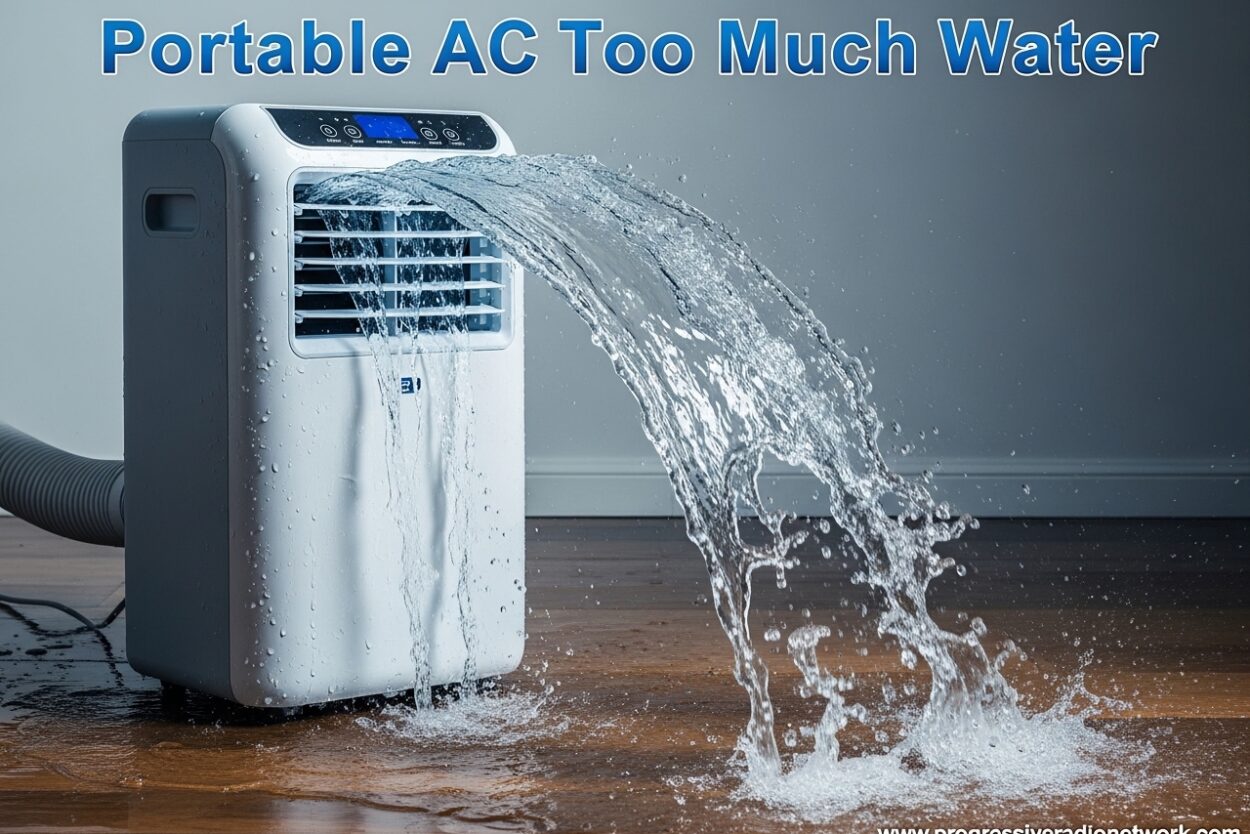
Dealing with a portable air conditioner that seems to produce endless amounts of water can be frustrating. You’re constantly emptying the tank, worrying about leaks, and wondering if something is actually wrong with your unit. I’ve been there myself – my portable AC used to fill up every two hours during humid summer days, leaving me questioning whether this behavior was normal.
The good news is that most portable AC water issues have simple explanations and straightforward fixes. In this guide, I’ll walk you through exactly how much water production is normal, why your unit might be producing excess water, and what you can do about it. Whether you’re seeing P1 error codes, dealing with leaks, or just tired of constant draining, you’ll find practical solutions here.
How Portable ACs Produce Water
Understanding why portable air conditioners produce water starts with understanding how they work. Portable ACs don’t just cool your air – they also remove moisture. This is actually a key part of what makes your home feel comfortable.
Here’s what happens: your portable AC pulls warm, humid air from your room and passes it over cold evaporator coils. Just like water droplets form on the outside of a cold glass on a hot day, the moisture in the air condenses on these cold coils. This liquid water then drips into a collection tank or drains away through a hose.
Modern portable ACs often feature “self-evaporating technology” that attempts to use some of this collected water to help cool the condenser coils. This can reduce but not eliminate the amount of water you need to drain manually. However, even self-evaporating units will still produce excess water in humid conditions.
How Much Water Is Normal?
Before we dive into problems, let’s establish what’s actually normal. A portable AC in typical conditions will produce anywhere from 5 to 20 gallons of water per day. That might sound like a lot, but remember – your AC is essentially working as a dehumidifier too.
The exact amount depends on several factors:
- Humidity level: Higher humidity means more water production. At 60-70% humidity, expect maximum water output.
- Temperature setting: Lower temperatures cause more condensation and more water.
- Room size: Larger rooms with more air volume contain more moisture to remove.
- Usage time: Running the AC longer naturally produces more accumulated water.
If your unit fills up every 1-2 hours on extremely humid days, that’s actually within normal range. However, if you’re draining it hourly even in moderate conditions, or if you notice changes from your unit’s previous behavior, there may be an underlying issue.
Portable AC Too Much Water: 6 Common Causes
When your portable air conditioner is producing more water than seems reasonable, one of these six causes is usually the culprit. Let me break down each one and what you can do about it.
1. High Humidity Levels
This is the most common cause of excess water production and actually indicates your AC is working properly. In very humid climates or during particularly muggy weather, your portable AC will remove more moisture from the air, resulting in more water in the tank.
High humidity isn’t a problem to solve – it’s your AC doing its job. However, you can reduce water production slightly by running a dehumidifier separately or setting your AC temperature a bit higher (72-78°F instead of the lowest setting).
2. Temperature Set Too Low
Setting your portable AC to the lowest temperature setting causes the evaporator coils to become extremely cold. While this does cool your room faster, it also causes maximum condensation – more cold coils means more water vapor turning into liquid.
The Reddit engineering community has confirmed that “the colder the coil is, the more water will condense.” Try raising your temperature setting by a few degrees. You’ll likely stay just as comfortable while reducing water production significantly.
3. Clogged or Kinked Drain Line
If your portable AC has a continuous drain hose connection but water is still accumulating in the tank, you likely have a clog or kink in the line. Even a partial blockage can dramatically slow drainage.
Inspect the drain hose for any visible kinks or sharp bends. Remove the hose and flush it with water to clear any algae or debris buildup. Some users have found corrupted drain channels inside the unit itself with debris accumulation – this requires opening the unit and carefully cleaning the internal drain path.
4. Dirty Air Filters
A clogged air filter restricts airflow to the evaporator coils. When airflow is reduced, two things happen: your AC works harder and runs longer to cool the room, and the coils can become abnormally cold. Both of these factors increase condensation and water production.
Clean or replace your air filter every 2-4 weeks during heavy use. This is one of the simplest maintenance tasks that can dramatically reduce water issues while also improving cooling efficiency and air quality.
5. Frozen Evaporator Coil
When the evaporator coil freezes up (usually due to restricted airflow or low refrigerant), ice forms on the coils. When the AC eventually cycles off and the ice melts, it releases a large amount of water all at once, overwhelming the drain system.
Signs of a frozen coil include reduced cooling performance, visible ice through the vents, and sudden large amounts of water when the unit turns off. If you suspect this issue, turn off the AC and let it thaw completely before addressing the root cause.
6. Oversized Unit (BTU Mismatch)
Using a portable AC with too many BTUs for your room size causes “short cycling” – the unit cools the space quickly then shuts off before completing a full cycle. This rapid on-off cycling can actually increase water production while reducing efficiency.
I’ve seen real examples like a 14,000 BTU unit in a 100 square foot room producing way too much water. For reference, you typically need about 8,000 BTUs for a 300-400 square foot room. If your unit is significantly oversized, consider using it in a larger space or accepting that excess water production is the trade-off.
How to Fix Portable AC Excess Water Production
Now that you know what’s causing the problem, let’s walk through the fixes. Work through these steps in order – from simplest to most complex.
Step 1: Check and Clean Your Filter
Remove the air filter and hold it up to light. If you can’t see through it clearly, it needs cleaning. Wash reusable filters with warm water and mild soap, then let dry completely before reinstalling. Replace disposable filters with new ones of the same type.
Step 2: Adjust Temperature Settings
Try setting your AC to 74-76°F instead of the lowest temperature. This simple change can reduce water production by 30-40% while keeping your room comfortable. Use the “auto” or “eco” mode if your unit has one – these modes optimize temperature and humidity balance.
Step 3: Inspect and Clear the Drain Line
Disconnect the drain hose (if using one) and flush it with water. Use a pipe cleaner or compressed air to dislodge any stubborn clogs. If you’re not using a continuous drain setup, consider adding one – this eliminates manual draining entirely in most cases.
Step 4: Level Your Unit Properly
Most portable ACs need to be level for proper drainage. Use a spirit level to check your unit and adjust the leveling feet accordingly. Some users find that placing the AC on a slight tilt toward the drain outlet improves drainage significantly.
Step 5: Address Airflow Issues
Ensure there’s at least 2-3 feet of clearance around all vents. Check that the window vent kit is properly sealed – air leaks here can affect cooling performance and cause the unit to run longer than necessary. Remove any obstructions near the intake or exhaust vents.
Step 6: Set Up Continuous Drainage
If you haven’t already, connect a drain hose to your unit’s outlet. Run the hose to a floor drain, outside window, or large container. Use a hose with an upward loop near the unit (creating a trap) to prevent backflow. This simple setup can eliminate 90% of water-related headaches.
Understanding Portable AC Error Codes for Water Issues
Modern portable ACs display specific error codes when water-related problems occur. Understanding these codes can save you time and frustration.
P1 Error Code: This is the most common water-related error and indicates the water tank is full or the drain system isn’t working. When you see P1, your AC will usually stop cooling until the issue is resolved. Simply drain the tank or check for drain blockages to clear this error.
FL Error Code: Similar to P1, this indicates a full tank condition. Some brands use FL instead of P1, but the solution is identical – drain the tank and check the drainage system.
If these error codes appear repeatedly after draining, you likely have a drain system malfunction or float switch issue that may require professional service.
Prevention and Maintenance Tips
Preventing water issues is easier than fixing them. Follow these maintenance practices to keep your portable AC running efficiently with minimal water-related problems.
Clean the Water Tank Monthly
Even if you use continuous drainage, clean the internal tank monthly. Use a mixture of water and mild bleach to prevent mold and algae growth – these organisms are the leading cause of stubborn drain clogs that few competitors discuss.
Replace Filters Regularly
Mark your calendar to check filters monthly during cooling season. A clean filter improves airflow, reduces water production, and extends your AC’s lifespan. Keep spare filters on hand so you never skip this essential maintenance.
Use Dehumidifier Mode When Possible
Many portable ACs have a dedicated dehumidifier or “dry” mode. This mode focuses on moisture removal with less cooling, which can be more energy-efficient on humid days when you don’t need maximum cooling.
Inspect Drain Hoses Seasonally
Check your drain hose for cracks, kinks, or algae buildup at the start of each cooling season. Replace hoses showing signs of wear – a cheap hose replacement now can prevent costly water damage later.
Maintain Proper Room Ventilation
Good ventilation reduces humidity naturally. Use exhaust fans in bathrooms and kitchens, and consider running a standalone dehumidifier in particularly damp spaces. Reducing ambient humidity means less work for your portable AC.
Keep the Unit Level and Stable
Verify your AC remains level after any cleaning or maintenance. Vibration during operation can gradually shift the unit position, affecting drainage performance over time.
When to Call a Professional
Most portable AC water issues are DIY-friendly, but some problems require professional expertise. Call a technician if you experience:
- Refrigerant leaks (indicated by hissing sounds, oil spots, or gradually reduced cooling)
- Electrical issues or tripped breakers when the unit runs
- Compressor problems (loud clicking, buzzing, or complete failure to cool)
- Recurring error codes that persist after troubleshooting
- Water leaking from the unit body rather than the drain system
These issues require specialized tools and knowledge beyond typical DIY capabilities. A professional repair often costs less than replacing the unit prematurely.
Frequently Asked Questions
Why does my portable AC fill up with water so fast?
Portable ACs fill quickly in high humidity when set to low temperatures. Expect 5-20 gallons daily in humid conditions. If filling hourly in moderate weather, check for dirty filters, clogged drains, or frozen coils causing excess condensation.
How often should I drain my portable AC?
In normal humidity, drain every 12-24 hours. In very humid conditions (60%+), you may need to drain every 1-2 hours. Using a continuous drain hose eliminates manual draining entirely.
Can I use a continuous drain hose on my portable AC?
Yes, most portable ACs support continuous drainage. Connect a hose to the drain outlet and run it to a floor drain or outside. Add an upward loop near the unit to prevent backflow.
Is it normal for my portable AC to leak water on the floor?
No, water leaking onto the floor indicates a problem. Causes include an overfull tank, cracked drain pan, clogged drain line, or improper unit leveling. Address the issue promptly to prevent water damage.
What is the 3 minute rule for air conditioners?
The 3 minute rule refers to waiting 3 minutes after your AC turns off before restarting it. This prevents compressor damage from pressure buildup. Most modern ACs have built-in delays that enforce this automatically.
Why is my portable AC not evaporating water like it should?
Self-evaporating units may fail to evaporate water when humidity is very high, the drain line is clogged, or the evaporator system is dirty. These units only reduce – not eliminate – water collection in humid conditions.
Conclusion
Dealing with a portable AC that produces too much water is annoying, but now you understand what’s happening and how to fix it. Remember that some water production is completely normal – your AC is removing humidity from your air, which is part of what makes your home comfortable.
The key takeaways: expect 5-20 gallons daily in humid conditions, clean your filters regularly, address drain clogs promptly, and consider setting up continuous drainage to eliminate manual emptying. Most importantly, don’t ignore recurring P1 or FL error codes – these are your AC’s way of telling you something needs attention.
With proper maintenance and the adjustments outlined in this guide, you can reduce excess water production and enjoy cool, comfortable air without the constant headache of tank management. Your portable AC too much water issue doesn’t have to ruin your summer – a few simple fixes can make a dramatic difference.



Leave a Comment