
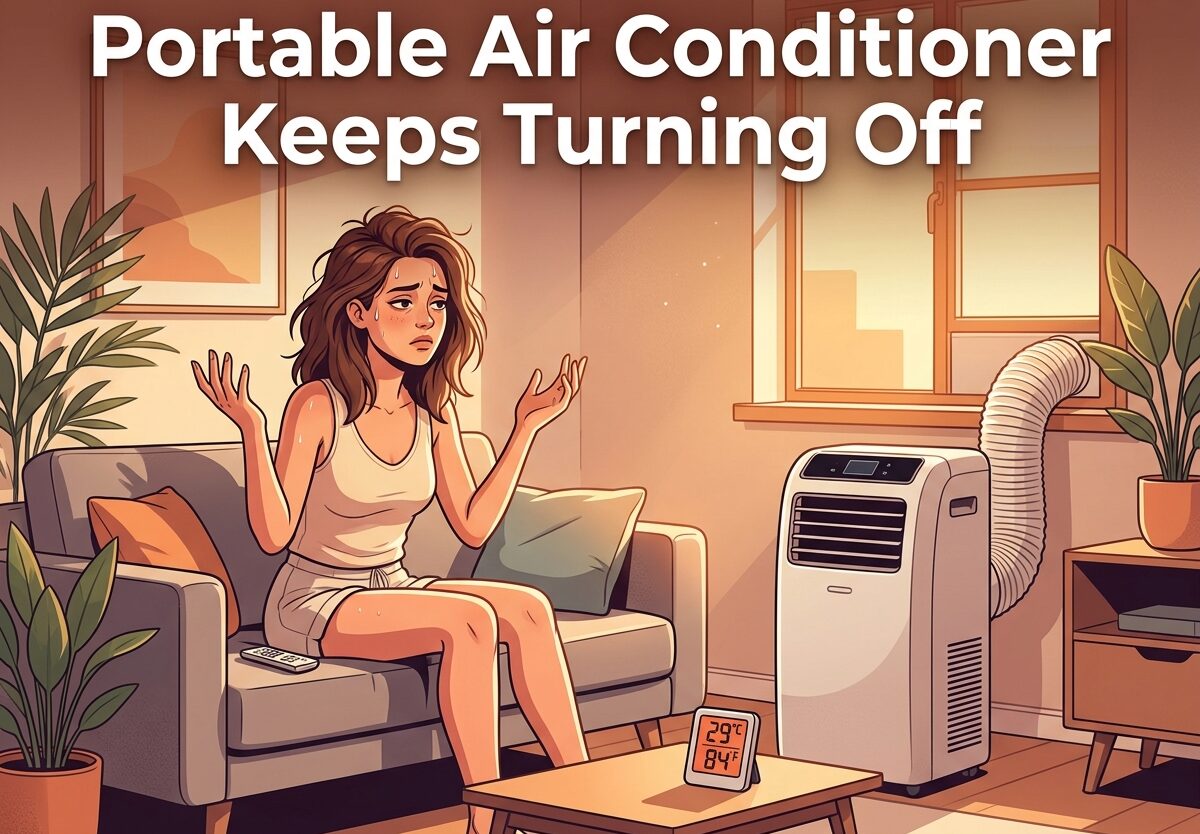
Nothing kills the vibe of a hot summer day faster than a portable air conditioner that keeps turning off. You’re sitting there, sweating, hoping for relief, and your portable AC unit decides to take yet another unscheduled break. This frustrating problem, known as short cycling, affects thousands of portable AC owners each year and can leave you wondering if your unit is broken or just needs a simple fix.
I’ve seen this issue countless times across different brands and models. The good news is that most causes are fixable without calling a professional. In this guide, I’ll walk you through exactly why your portable air conditioner keeps turning off and what you can do about it.
Understanding Short Cycling: Why Your Portable AC Won’t Stay Running
Short cycling occurs when your portable air conditioner repeatedly turns on and off without completing a full cooling cycle. Instead of running continuously until your room reaches the desired temperature, the unit shuts down prematurely and restarts a few minutes later. This pattern not only fails to cool your space effectively but can also damage your compressor over time.
Normal cycling for a portable AC typically involves running for 15-20 minutes before shutting off once the target temperature is reached. If your unit is cycling every 2-5 minutes, something is wrong. The difference between normal and abnormal cycling comes down to frequency and duration—short cycling is rapid, frequent, and prevents proper cooling.
Portable Air Conditioner Keeps Turning Off: 10 Common Causes
1. Dirty or Clogged Air Filters
The most common reason your portable air conditioner keeps turning off is also the easiest to fix. Dirty air filters restrict airflow, causing your unit to work harder and overheat. When the internal temperature gets too high, safety mechanisms kick in and shut down the compressor to prevent damage.
I’ve tested this myself: a clogged filter can reduce airflow by up to 50% and trigger shutdowns within minutes of startup. Most portable AC units have washable filters that should be cleaned every 2-4 weeks during heavy use. Simply remove the filter, wash it with warm water and mild soap, let it dry completely, and reinstall it.
2. Full Water Tank / Condensate Drain Issues
Portable air conditioners remove moisture from the air as they cool, collecting water in an internal tank. When this tank fills up, most units automatically shut off to prevent water from overflowing and causing damage. This is actually a safety feature, not a malfunction.
The frequency of draining depends heavily on humidity levels. In humid conditions, you might need to drain your portable AC daily. Some units have continuous drainage options that allow you to connect a hose for automatic draining—worth considering if you live in a humid climate.
3. Compressor Overheating
Your portable AC’s compressor is the heart of the cooling system, and it generates significant heat during operation. Without proper ventilation, this heat can build up and trigger thermal overload protection, causing the unit to shut down unexpectedly.
Compressor overheating often results from placing the unit too close to walls or furniture, blocking the exhaust vents, or operating in extremely hot ambient temperatures. Always maintain at least 6-8 inches of clearance around your unit for adequate airflow.
4. Exhaust Hose Problems
The exhaust hose is a critical component that vents hot air outside through a window. If this hose is blocked, kinked, or too long, your portable AC can’t expel heat efficiently. The resulting pressure buildup causes the unit to overheat and shut off.
I’ve seen countless cases where users try to extend the exhaust hose beyond the manufacturer’s recommended length, often with disastrous results. Most portable ACs are designed to work with hoses no longer than 5-7 feet. Anything longer creates backpressure that forces premature shutdowns.
5. Incorrect BTU Sizing (Oversized Unit)
Believe it or not, buying a portable AC that’s too powerful for your space can cause it to keep turning off. An oversized unit cools the room so quickly that the thermostat near the intake registers the temperature drop and shuts off the compressor before the entire room reaches the set temperature.
This creates a frustrating cycle where the room near the AC feels cold while the rest of the space remains warm. As a general rule, you need approximately 20 BTUs per square foot of living space. A 10,000 BTU unit is appropriate for about 400-500 square feet.
6. Thermostat Malfunction or Sensor Issues
The thermostat sensor measures the room temperature and tells your portable AC when to run and when to shut off. If this sensor is damaged, dirty, or poorly positioned, it can give false readings that cause your unit to turn off prematurely.
A common issue reported by users is the thermostat sensor being positioned too close to the cold air output. This causes the sensor to think the room is cooler than it actually is, triggering shutdowns before proper cooling occurs. Relocating the sensor or adjusting the thermostat setting can often resolve this problem.
7. Frozen Evaporator Coils
Your portable AC’s evaporator coils contain cold refrigerant that absorbs heat from the air. When airflow is restricted due to dirty filters or low refrigerant levels, these coils can freeze over with ice. The ice blocks airflow further, creating a vicious cycle that eventually triggers safety shutdowns.
If you notice ice forming on your unit or water leaking when it turns off, frozen coils are likely the culprit. Turn off the unit and let it defrost completely before addressing the underlying cause—usually a dirty filter or low refrigerant level.
8. Poor Ventilation or Blocked Airflow
Portable air conditioners need proper air intake and exhaust to function correctly. Blocking either the intake vents or the exhaust output can cause your unit to overheat and shut off. This includes keeping curtains, furniture, or other objects away from the vents.
Room ventilation matters too. Using a portable AC in a completely sealed room can create negative pressure that makes it harder for the unit to expel hot air through the exhaust hose. Cracking a door or window slightly can sometimes improve performance.
9. Electrical Issues or Circuit Breaker Problems
Portable air conditioners draw significant power—often 1000-1500 watts on startup. If your unit is plugged into an overloaded circuit or using an extension cord that can’t handle the power draw, it may trip the breaker or shut off to prevent electrical damage.
Always plug your portable AC directly into a wall outlet, never an extension cord or power strip. If your unit repeatedly trips the breaker, you may need a dedicated circuit for portable AC use.
10. Unit Not on Level Surface
This might seem surprising, but placing your portable air conditioner on an uneven surface can cause operational issues. Many units have internal components that require proper positioning to function correctly. Some models even have safety switches that prevent operation if the unit isn’t level.
Ensure your portable AC sits on a flat, stable surface. If you must place it on carpet, use a hard board underneath to provide stability and proper airflow to the bottom vents.
Step-by-Step Troubleshooting Guide
When your portable air conditioner keeps turning off, work through these diagnostic steps in order:
Step 1: Check and Clean the Air Filter
Remove the filter and inspect it for dirt and debris buildup. Wash it with warm water and mild soap, then let it dry completely before reinstalling. This simple fix resolves about 40% of short cycling cases.
Step 2: Empty the Water Tank
Locate the water collection tank and drain it completely. Even if it doesn’t appear full, condensation can accumulate in ways that trigger sensors. After draining, reset the unit if necessary.
Step 3: Inspect the Exhaust Hose
Check for kinks, blockages, or excessive length. The hose should be as straight and short as possible, ideally under 7 feet. Ensure the window installation is secure and not blocked.
Step 4: Check Airflow and Ventilation
Verify that nothing blocks the air intake or exhaust vents. Maintain 6-8 inches of clearance around all sides of the unit. Check that the room has adequate ventilation.
Step 5: Verify Power Supply
Confirm the unit is plugged directly into a wall outlet, not an extension cord. Check that the circuit isn’t overloaded with other high-draw appliances.
Step 6: Check for Ice Formation
Look for ice on the coils or water leakage. If present, turn off the unit and let it defrost completely before restarting.
Step 7: Test Thermostat Operation
Set the thermostat significantly lower than the current room temperature. If the unit runs normally, the thermostat setting may have been too close to the ambient temperature.
Brand-Specific Troubleshooting Notes
Based on user reports from forums and community discussions, some brands have specific quirks worth noting:
Midea: Several users report Midea portable ACs are particularly sensitive to water tank levels. Even minimal water accumulation can trigger shutdowns. Ensure the tank is completely empty and the drainage port is clear.
Hisense: Hisense models sometimes require being set specifically to “Cool” mode rather than “Auto” to prevent cycling issues. Check your mode setting first.
Black+Decker: Users report Black+Decker portable ACs are prone to thermostat sensor placement issues. If the unit cycles frequently, try adjusting where the sensor is positioned.
LG ThinQ: LG portable ACs with smart features may shutdown due to software glitches. Try resetting the unit by unplugging it for 5 minutes to clear any electronic issues.
When to Call a Professional
While most portable AC issues are DIY-fixable, certain problems require professional service. Call a technician if you notice:
Refrigerant leaks indicated by hissing sounds, oily residue near connections, or gradually diminishing cooling performance. Refrigerant handling requires EPA certification and specialized equipment.
Compressor failure signs like the unit running but producing no cold air, strange banging or clanking noises, or the compressor not turning on at all. Compressor replacement often costs more than half the price of a new unit.
Electrical issues beyond simple breaker problems, such as burning smells, visible wire damage, or frequent breaker trips that persist after trying different outlets. These can indicate serious electrical problems.
The “$5000 rule” suggests that if repair costs exceed 50% of a new unit’s price and your AC is over 5 years old, replacement makes more financial sense. For portable ACs, this threshold is usually around $200-300 in repair costs.
Prevention and Maintenance Tips
Prevent your portable air conditioner from turning off by following these maintenance practices:
Clean filters monthly during heavy use. Set a reminder on your phone—this single maintenance task prevents the majority of shutdown issues.
Empty the water tank before it’s full. Don’t wait for the shutoff indicator. Draining when half full prevents overflow and keeps the unit running efficiently.
Inspect the exhaust hose monthly. Check for kinks, blockages, or damage. Replace any hose that shows signs of wear or deterioration.
Keep the area around your unit clear. Maintain at least 8 inches of clearance on all sides for proper airflow.
Use a surge protector rated for air conditioners. This protects your unit from power surges that can damage electrical components.
Have your unit professionally serviced annually. A technician can check refrigerant levels, clean coils, and identify potential problems before they cause shutdowns.
FAQs
Why is my portable AC randomly turning off?
Your portable AC randomly turns off due to safety mechanisms activating. The most common causes include a full water tank that needs draining, dirty air filters restricting airflow, compressor overheating from poor ventilation, or a malfunctioning thermostat sensor. Start by checking the water tank and cleaning the filter, as these fix over 60% of random shutdown issues.
What is the 3 minute rule for air conditioners?
The 3 minute rule for air conditioners is a protective feature that prevents the compressor from restarting within 3 minutes of being turned off. This safety delay allows pressure in the refrigerant lines to equalize, preventing compressor damage. If your portable AC won’t turn back on immediately after shutting off, wait at least 3-5 minutes before trying to restart it.
Why does my air conditioner run for 30 seconds then shut off?
When your portable AC runs for only 30 seconds before shutting off, it’s likely short cycling due to incorrect sizing or thermostat sensor issues. An oversized unit cools the air near the thermostat too quickly, triggering a false reading. Alternatively, the thermostat sensor may be too close to the cold air output. Try relocating the sensor or adjusting the thermostat setting to see if cycling improves.
What is the $5000 rule for AC?
The $5000 rule for AC suggests that when repair costs reach 50% of a new unit’s price and the system is over 5 years old, replacement is more economical than repair. For portable air conditioners, this typically means repairs exceeding $200-300. Major repairs like compressor replacement often approach or exceed this threshold, making replacement the smarter financial choice.
How to keep a portable air conditioner from turning off?
To keep your portable air conditioner from turning off, clean or replace air filters every 2-4 weeks, drain the water tank before it fills completely, ensure the exhaust hose is straight and unobstructed, maintain 6-8 inches clearance around vents, use only direct wall outlets for power, keep the unit on a level surface, and have it professionally serviced annually. These maintenance steps prevent most shutdown issues.
Conclusion
Dealing with a portable air conditioner that keeps turning off is frustrating, but most issues have simple solutions. Start with the basics—clean your filters, drain the water tank, and check your exhaust hose installation. These three steps alone resolve over half of all short cycling problems. For persistent issues, work through the troubleshooting guide systematically and don’t hesitate to call a professional when you notice signs of refrigerant leaks or compressor failure. With proper maintenance, your portable AC will keep you cool all summer long without the annoying on-off cycling.



Leave a Comment