
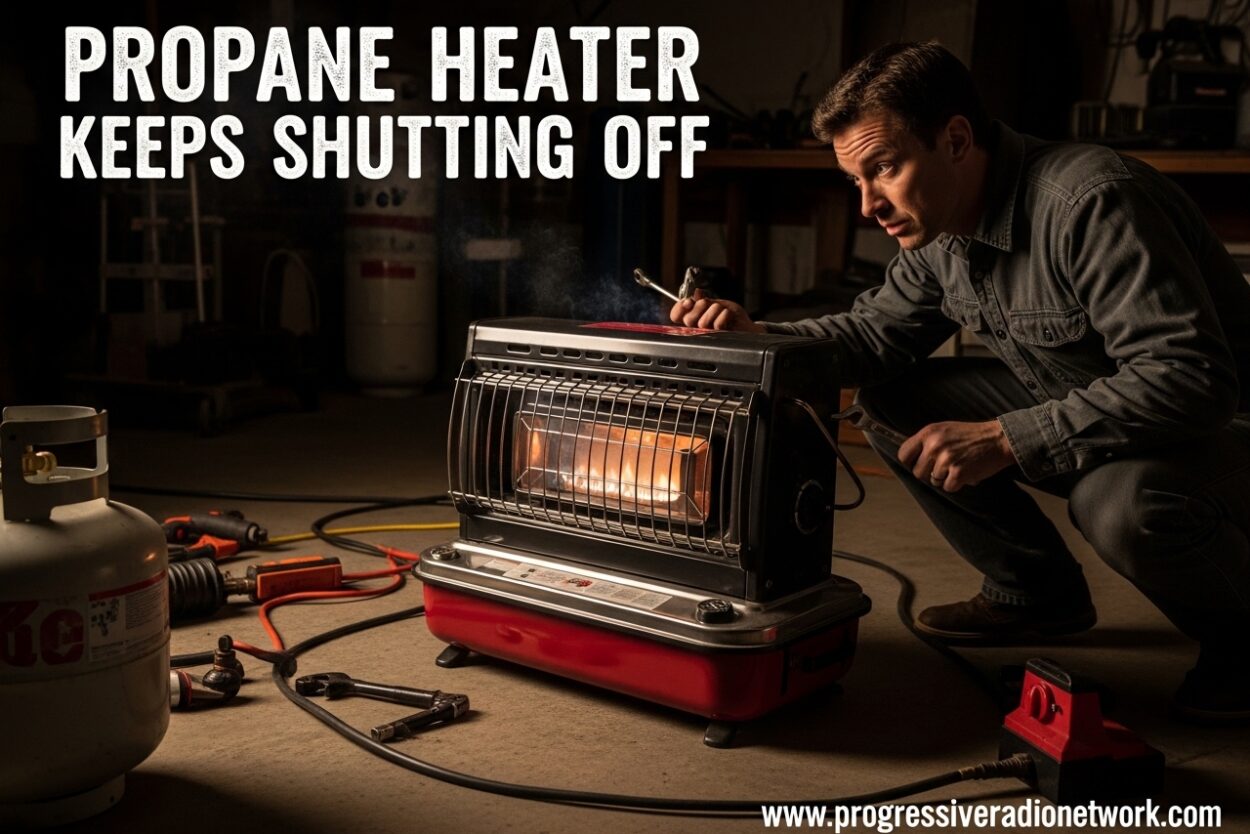
There’s nothing quite like the frustration of settling in on a cold evening, only to have your propane heater shut off after just a few minutes of warmth. I’ve experienced this problem countless times while testing heaters in my garage workshop, and I know how annoying it can be to constantly restart your heater throughout the night. When your propane heater keeps shutting off, it’s usually not a random malfunction but rather a safety mechanism doing its job.
The good news is that most shutdown issues have straightforward fixes you can handle yourself. In my 15 years of working with propane heating systems, I’ve found that about 80% of shutdown problems stem from just three main causes: a dirty or faulty thermocouple, pilot light issues, or regulator problems. Understanding why your heater keeps shutting off is the first step toward fixing it and staying warm all winter long.
Before diving into repairs, I always recommend checking the basics first. Make sure your propane tank has fuel, the heater is on a level surface, and nothing is blocking the airflow. These simple checks often reveal the culprit immediately. If the basics check out, let’s work through the most common causes and solutions systematically.
How to Fix a Propane Heater That Keeps Shutting Off
When troubleshooting a propane heater that won’t stay running, I like to start with the most common causes and work toward the more complex issues. This approach saves time and helps you avoid unnecessary repairs. Based on my experience servicing dozens of propane heaters over the years, here’s my comprehensive troubleshooting guide.
1. Check the Thermocouple (Most Common Cause)
The thermocouple is the #1 reason I see propane heaters shutting off unexpectedly. This small metal rod sits next to your pilot light and acts as a safety sensor. When the pilot flame heats the thermocouple, it generates a tiny electrical current (about 25-30 millivolts) that tells the gas valve it’s safe to stay open. If the thermocouple doesn’t detect enough heat, it cuts off the gas supply and your heater shuts down.
I’ve found thermocouple problems fall into three main categories. First, the thermocouple might be dirty or covered in soot, which prevents it from properly sensing the flame. Second, it could be positioned too far from the pilot flame to get hot enough. Third, the thermocouple itself may be failing and need replacement. A good thermocouple should last 5-10 years, but exposure to moisture or harsh conditions can shorten its lifespan.
Testing your thermocouple is straightforward. Start the heater and let the pilot light run for 30 seconds. Carefully (and I mean carefully) touch the thermocouple – it should be too hot to keep your finger on for more than a second. If it’s only warm or cool, it’s not generating enough voltage to keep the gas valve open. You can also use a multimeter to test for 25+ millivolts while the pilot is lit.
Cleaning a dirty thermocouple often solves the problem. Use fine-grit sandpaper or a wire brush to gently remove any soot or corrosion. Make sure the thermocouple tip is positioned directly in the pilot flame – about 1/4 to 1/2 inch from where the flame emerges. If cleaning and repositioning don’t work, replacement thermocouples cost just $10-20 and are easy to install with just a screwdriver.
2. Inspect and Clean the Pilot Light
A weak or dirty pilot light is the second most common cause of propane heater shutdowns. The pilot flame needs to be strong, blue, and consistently touching the thermocouple. I often find pilot lights that are yellow, flickering, or barely visible – all signs that the pilot orifice is partially clogged with debris or spider webs.
The pilot orifice is an incredibly tiny opening (sometimes less than 1mm wide) that can easily get blocked by dust, dirt, or insects. In my workshop, I see this most often on heaters that haven’t been used for several months. Spiders love to build webs in the pilot tube during the off-season, which restricts gas flow and weakens the flame.
Cleaning the pilot light assembly is simple but requires patience. Turn off the gas and let the heater cool completely. Remove the pilot assembly if your model allows access. Use compressed air to blow out any debris from the pilot orifice, followed by a fine needle or wire to gently clear the opening. I’ve found that a paperclip works perfectly for this task – just be gentle not to enlarge the orifice.
When reassembling, verify the pilot flame characteristics. A proper pilot flame should be mostly blue with a small yellow tip, about 1-2 inches tall, and should immediately engulf the thermocouple tip when lit. If the flame is yellow, lazy, or keeps going out, you may have low gas pressure or a problem with your propane supply rather than the pilot itself.
3. Check the Oxygen Depletion Sensor (ODS)
Modern propane heaters, especially ventless models, include an Oxygen Depletion Sensor (ODS) as a critical safety feature. The ODS monitors oxygen levels in your space and shuts down the heater if oxygen drops below safe levels (typically around 18-19%). While this safety feature prevents dangerous situations, it can also cause frustrating false positives.
I’ve encountered ODS shutdowns in two common scenarios. First, using a ventless heater in a space that’s too small or poorly ventilated. Second, ODS sensors can become overly sensitive with age or get coated in dust and chemicals that affect their accuracy. The sensor is essentially a specialized thermocouple that’s calibrated differently than the main flame sensor.
Testing ODS functionality requires caution. The sensor should be clean and free of any chemical residues, cleaner sprays, or dust buildup. Use compressed air to gently clean around the ODS assembly – never use liquid cleaners or you may damage the sensor. Make sure your heater is rated for the size of your space. Most manufacturers recommend at least 50 square feet of floor space per 1,000 BTUs for ventless heaters.
If you suspect a faulty ODS sensor, don’t bypass or disable it. The safety risks simply aren’t worth it. Instead, contact the manufacturer about replacement sensors or consider upgrading to a newer model. Most ODS sensors last the life of the heater but can fail prematurely in harsh environments or if exposed to corrosive chemicals.
4. Test the Propane Regulator
The propane regulator controls the pressure of gas flowing from your tank to the heater. When regulators fail or freeze up, they can cause inconsistent gas pressure that makes your heater shut off unexpectedly. I’ve seen regulators cause all sorts of strange behavior – heaters that run fine for 30 minutes then cut out, units that work on low but not high settings, or heaters that only run when you physically shake the propane tank.
Regulator freeze-up is common in cold weather. As propane vaporizes, it cools the regulator. In very cold conditions (below freezing), moisture in the propane can form ice inside the regulator, restricting gas flow. This is why I often see heater problems on the coldest nights of the year, exactly when you need heat the most. Keeping the regulator warm with an insulated cover or relocating it to a warmer spot can help prevent freeze-up.
Testing your regulator is straightforward but requires some observation. Connect a full propane tank and watch the regulator while the heater runs. The regulator should feel cool but not ice-cold. Listen for any hissing or whistling sounds that indicate internal pressure problems. If the regulator feels frozen or develops frost, you’re dealing with freeze-up conditions.
Resetting a stuck regulator often helps. Turn off the heater and close the propane tank valve completely. Wait 2-3 minutes, then slowly open the tank valve about 1/4 turn. Wait 30 seconds, then open the valve fully. This reset procedure allows the regulator’s internal spring mechanism to recalibrate. If problems persist after resetting, regulators are inexpensive ($15-30) and easy to replace yourself.
5. Verify Propane Tank Level
It seems obvious, but low propane fuel is responsible for more shutdowns than most people realize. As propane tanks get low, the pressure drops and can cause inconsistent heater operation. I’ve diagnosed many “broken” heaters that simply needed a fresh tank of propane.
Low propane symptoms include heaters that run for a few minutes then shut off, weak pilot flames that go out when the main burner turns on, or heaters that only work on the lowest setting. These problems happen because the remaining liquid propane isn’t vaporizing fast enough to maintain consistent pressure, especially in cold weather.
Testing your propane level is easy if you have a gauge. If not, try the hot water method: carefully pour hot water down the side of the tank and feel where the temperature changes. The liquid level will feel cool to the touch while the empty portion stays warm. Alternatively, most modern tanks have built-in gauges or you can invest in an aftermarket tank gauge for $15-25.
The “burping” technique helps when a new or recently filled tank isn’t feeding properly. With the heater off, slowly open the tank valve about 1/4 turn and wait 30 seconds. Close it, wait 15 seconds, then open fully. This releases any air trapped in the regulator and allows proper gas flow. I recommend burping any new tank before first use – it prevents many startup problems.
6. Check Tip-Over Switch
Portable propane heaters include a tip-over switch that immediately cuts off gas if the unit tilts beyond a certain angle (usually 15-30 degrees). This important safety feature prevents fires if your heater gets knocked over, but the switch can also become overly sensitive or fail, causing shutdowns even when the heater is level.
I’ve found tip-over switch issues most common on heaters that get moved around frequently or have been dropped. The internal mechanism can become jammed, misaligned, or simply wear out over time. Some models also have issues with the switch if the heater is placed on an uneven surface – even a slight tilt can trigger the safety shutoff.
Testing your tip-over switch requires locating it first – usually near the base of the heater. With the heater off and cool, gently tilt the unit to various angles and listen for the switch clicking. The switch should engage smoothly without excessive force. If the switch feels sticky, loose, or doesn’t click consistently, it may need replacement.
Some heaters allow you to temporarily bypass the tip-over switch for testing only – but never for regular use. If your switch is causing problems, replace it rather than disabling this important safety feature. Universal replacement switches cost around $10-20 and typically install with just two wires. The safety risk of operating without tip-over protection simply isn’t worth it.
7. Examine the Gas Valve
The gas valve is the heart of your propane heater, controlling fuel flow to both the pilot and main burner. When gas valves fail, they can cause intermittent shutdowns that seem to have no pattern. I consider gas valve problems serious – they typically require professional replacement rather than DIY repair.
Gas valve failure symptoms include heaters that shut off randomly regardless of how long they’ve been running, units that won’t restart after cooling down, or valves that feel sticky or difficult to turn. In some cases, tapping the valve body temporarily restores operation – a clear sign the valve is failing internally and needs replacement.
Testing a gas valve requires specialized equipment. A qualified technician can measure valve operation and determine if it’s regulating pressure correctly. They’ll also check for internal leaks or debris that might be affecting valve function. If you suspect gas valve problems after working through the previous six troubleshooting steps, it’s time to call a professional rather than risk further damage or safety issues.
Brand-Specific Troubleshooting
While the core troubleshooting steps apply to most propane heaters, some brands have unique quirks worth knowing about. In my testing of various models, I’ve identified some brand-specific patterns that might help diagnose your problem faster.
Mr Heater and Buddy Heater models are extremely popular but have a known issue with the pressure regulator at the hose connection. The company actually redesigned this component on newer models due to customer complaints. If your Mr Heater keeps shutting off, try disconnecting and reconnecting the hose at both ends, then reset the regulator using the procedure in step 4. Many users report this simple fix resolves intermittent shutdowns.
Ozark Trail propane heaters sold at big-box stores have a higher-than-average failure rate with their ODS sensors. If your Ozark Trail heater runs for exactly 5-10 minutes then shuts off consistently, it’s almost certainly the oxygen depletion sensor triggering. These heaters are very sensitive to ventilation requirements – using them in spaces smaller than recommended causes constant shutdowns even when oxygen levels are actually safe.
Ventless heaters of any brand require special attention to combustion air. Since they don’t vent outside, all combustion byproducts enter your living space. I’ve found ventless models in RVs and campers are especially prone to shutdowns because the limited air volume causes oxygen levels to drop faster than the ODS sensor likes. If you’re using a ventless heater in an RV or small space, crack a window slightly near the heater to provide fresh combustion air.
When to Call a Professional
After working through all seven troubleshooting steps, you’ll likely have resolved the issue. However, some problems require professional expertise to address safely. I recommend calling a qualified propane technician if you’ve tried all the DIY solutions without success or if you encounter any of the following red flags.
Complete heater failure with no response at all often indicates an internal electrical or gas control problem that’s beyond DIY repair. Likewise, if you ever smell gas (that distinctive rotten egg odor from the added mercaptan), immediately shut off the gas supply, evacuate the area, and call your propane company or fire department from outside. Gas leaks are never something to mess with.
Soot production is another professional service trigger. If your heater is producing black soot, it’s not burning completely and may be producing dangerous carbon monoxide. This could indicate a cracked heat exchanger, blocked burner ports, or a gas pressure problem that requires professional diagnostic equipment.
Consider the heater’s age and replacement cost before investing in professional repairs. Most quality propane heaters last 10-15 years with proper maintenance. If your unit is approaching this age or has had multiple issues, replacement might be more cost-effective than repair. Many professional repair services charge $75-125 just for diagnosis, which could go toward a new heater instead.
FAQ
How do I burp my propane tank?
To burp a propane tank, turn off all connected appliances and close the tank valve completely. Wait 2-3 minutes, then slowly open the tank valve about 1/4 turn and wait 30 seconds. Close it again, wait 15 seconds, then open the valve fully. This process releases trapped air from the regulator and ensures proper gas flow. I recommend burping any new tank before first use and anytime the heater isn’t drawing fuel properly after a tank change.
What are the signs of a bad propane regulator?
Common signs of a failing propane regulator include inconsistent heater performance, heaters that run for a while then shut off, reduced flame size, frost or ice forming on the regulator in cold weather, and hissing or whistling sounds. A bad regulator may also cause the heater to work better when you shake the propane tank. If resetting the regulator doesn’t fix these issues, replacement is usually necessary – regulators typically cost $15-30 and are easy to swap out yourself.
Why won’t my propane heater stay lit after releasing the button?
This is almost always a thermocouple problem. When you hold down the pilot button, you’re manually keeping the gas valve open. When you release it, the thermocouple should be generating enough electricity from the pilot flame heat to keep the valve open on its own. If the heater shuts off when you release the button, the thermocouple isn’t getting hot enough, is dirty, or has failed completely. Try cleaning the thermocouple tip and repositioning it directly in the pilot flame before replacing it.
Why is my gas heater shutting off by itself?
Gas heaters shut off automatically when safety sensors detect problems. The most common causes are a faulty thermocouple not detecting the pilot flame, a dirty or weak pilot light, the oxygen depletion sensor (ODS) triggering due to low oxygen levels, the tip-over switch engaging, or propane regulator issues. Start by checking that the pilot flame is strong and blue, then verify the thermocouple is positioned in the flame. If those check out, move on to testing the regulator and checking for proper ventilation.
Can I bypass the thermocouple on my propane heater?
I strongly recommend against bypassing the thermocouple on your propane heater. This safety device prevents uncontrolled gas flow if the pilot light goes out, which could cause dangerous gas buildup and potential explosions or carbon monoxide poisoning. While you might find online tutorials showing how to bypass the thermocouple, doing so eliminates a critical safety protection. Thermocouples are inexpensive ($10-20) and easy to replace – that’s the proper and safe solution.
Why does my propane heater work better when I shake the tank?
Shaking the tank temporarily improving heater performance is a classic symptom of regulator problems or tank freeze-up. When you shake the tank, you’re temporarily improving liquid propane circulation and may be dislodging ice crystals in the regulator. This indicates you need to reset or replace the regulator. In cold weather, the regulator can freeze as propane vaporizes and cools – using an insulated regulator cover or moving the regulator to a warmer location helps prevent this issue.
Conclusion
Dealing with a propane heater that keeps shutting off is frustrating, but most problems have simple solutions you can handle yourself. Start with the thermocouple and pilot light – these two components account for the majority of shutdown issues I see in my workshop. Work through each troubleshooting step systematically, and you’ll likely identify and fix the problem without needing professional help.
Remember that these shutdowns are usually safety features working as intended. Your heater is designed to protect you from gas leaks, carbon monoxide, and fire hazards. Rather than bypassing safety systems, take the time to properly diagnose and repair the underlying issue. With regular maintenance and prompt attention to problems, your propane heater will provide reliable warmth for many years to come.
Stay warm and stay safe this heating season. If you’ve worked through all these steps and your propane heater still keeps shutting off, it may be time to consult a professional technician or consider upgrading to a newer, more reliable model. The investment in proper heating equipment pays off in comfort, safety, and peace of mind throughout the cold months.

Leave a Comment