
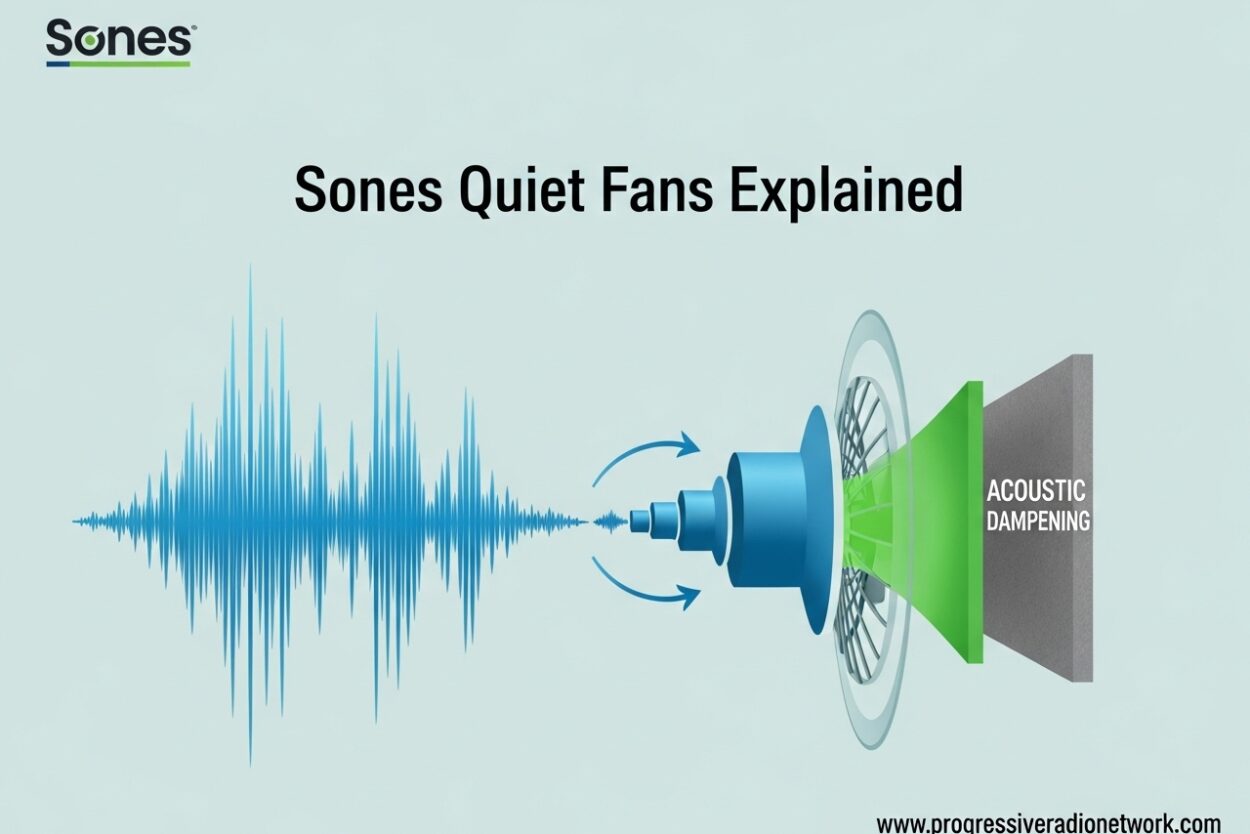
Have you ever stood in a hotel bathroom, cringing at the jet-engine roar of the exhaust fan? Or maybe you’ve avoided turning on your bathroom fan at home because it sounds like a tractor trailer parked in your house. Understanding sones quiet fans explained will help you avoid these noisy nightmares and choose ventilation that actually works without disrupting your peace.
In this guide, I’ll break down exactly what sone ratings mean, how to interpret them, and what noise level is right for your space. No confusing math, just practical information from someone who’s dealt with plenty of loud fans over the years.
What Are Sones?
A sone is a unit of measurement that describes how loud a fan sounds to the human ear. Unlike decibels, which measure sound intensity using a complex logarithmic scale, sones use a simple linear system that makes sense to regular people.
Here’s the beauty of sones: they’re designed to match how we actually hear sound. One sone represents the loudness of a quiet refrigerator humming in your kitchen. Two sones sounds exactly twice as loud as one sone. Four sones sounds twice as loud as two sones. This linear relationship makes it easy to understand exactly what you’re getting.
The sone scale was created specifically to help consumers understand sound levels without needing a physics degree. When you see a fan rated at 1.5 sones, you know it’s about 50% louder than that quiet refrigerator benchmark. A 4 sone fan? That’s four times as loud as the baseline.
Think of sones like volume on your phone. 50% volume is noticeably quieter than 100%, and the relationship makes intuitive sense. Sones work the same way for fan noise, giving you a clear picture of what to expect before you buy or install.
Sone Levels Explained: What Different Ratings Sound Like
Understanding sone ratings means relating them to sounds you already know. Let me walk you through the scale from ultra-quiet to shouldn’t-be-in-your-house loud.
0.3 to 0.9 Sones – Whisper Quiet
Fans in this range are nearly silent. At 0.3 sones, you’d need to put your ear right next to the fan to hear it working. These are ideal for master bathrooms, especially if the bathroom is near bedrooms. At 0.9 sones, the fan is audible but barely noticeable—like background music at a spa. Many users on forums report that 0.9 sone fans provide enough white noise for privacy without being disruptive.
1.0 to 1.5 Sones – Very Quiet
This is the sweet spot for most residential bathrooms. A 1 sone fan produces about as much noise as that quiet refrigerator I mentioned earlier. At 1.5 sones, you’ll hear the fan running, but it won’t interfere with conversation or sleep. One homeowner described their 1.5 sone fan as “audible without sounding like a jet engine”—which is exactly what you want.
2.0 to 2.5 Sones – Moderately Quiet
Fans in this range are still acceptable for guest bathrooms and utility rooms, but they’re definitely noticeable. At 2 sones, you’re looking at sound similar to a normal office environment—background white noise that doesn’t demand attention. Above 2.5 sones, the noise becomes more intrusive, like someone having a conversation in the room with you.
3.0 to 4.0 Sones – Noticeably Loud
We’re entering “cheap builder-grade” territory here. A 3 sone fan produces sound comparable to normal conversation volume—not something you want in a relaxing bathroom space. At 4 sones, you’re looking at television volume levels. Forum users consistently describe 4 sone fans as noticeably disruptive, with one person noting they’re “the kind of fans that make you avoid using the bathroom ventilation altogether.”
5.0 to 6.0+ Sones – Very Loud
These fans belong in commercial settings, not homes. At 5 sones, you’re experiencing noise like a busy restaurant. Six sones and above? That’s light traffic or city street noise. One frustrated homeowner measured their “whisper quiet” 0.3 sone fan and discovered it was actually running at 4 sones—a common problem when manufacturers exaggerate their specs or installation issues increase noise.
Sones vs Decibels: Understanding the Difference
Here’s where things get technical, but I’ll keep it simple. Decibels (dB) measure sound pressure using a logarithmic scale, meaning a 10 dB increase represents a tenfold increase in sound intensity. A 20 dB increase is 100 times more intense. This makes decibels great for scientific measurements but confusing for everyday understanding.
Sones measure perceived loudness, not sound pressure. This is crucial because our ears don’t hear linearly. A small increase in decibels might represent a massive jump in perceived loudness. Sones account for this human element, making them much more practical for shopping decisions.
The rough conversion works like this: 1 sone equals about 40 decibels. But remember, sones double when something sounds twice as loud, while decibels need to increase by about 10 dB for that same perceived doubling. This is why a fan that’s “only” 10 dB louder can actually sound twice as noisy in real life.
When you’re shopping, focus on sones for understanding how the fan will actually sound to you. Decibels have their place in technical specifications, but sones tell you what your ears will experience.
Why Sone Ratings Matter for Your Home
Here’s something most articles won’t tell you: loud bathroom fans often don’t get used. I’ve seen this countless times in renovation projects. Homeowners spend hundreds on premium ventilation, then avoid running it because the noise disrupts their morning routine or wakes up sleeping family members.
When fans don’t run, moisture builds up. That means mold, mildew, peeling paint, and eventually thousands in repairs. A quiet fan with a good sone rating encourages regular use, which protects your home investment. One forum user put it perfectly: “I finally installed a 1.2 sone fan and now I actually use it. My previous 4 sone fan? I’d rather have mold than listen to that racket.”
Sleep quality matters too. If your bathroom shares a wall with a bedroom, a loud fan becomes a nighttime disturbance. Quiet fans (under 1.5 sones) run without disrupting sleep, making them essential for master bathrooms and bathrooms near nurseries.
For people with sensory processing differences or autism, noise sensitivity makes sone ratings especially important. Several forum users mentioned preferring ultra-quiet fans (0.8-1.0 sones) to avoid overstimulation. On the flip side, some users actually want slightly louder fans for white noise and privacy—another reason understanding the sone scale helps you choose what’s right for YOUR needs.
Choosing the Right Sone Rating for Different Rooms
Master Bathrooms and Spa-Like Spaces
Aim for 0.3 to 1.0 sones. These rooms should promote relaxation, and loud ventilation kills the vibe instantly. If your master bath is connected to a sleeping area, stay under 0.9 sones to avoid disturbances during nighttime bathroom trips.
Guest and Family Bathrooms
1.0 to 1.5 sones works well here. These spaces see regular use but aren’t typically associated with relaxation. You’ll get effective ventilation without breaking the budget, as ultra-quiet fans do cost more.
Utility Rooms and Half-Baths
1.5 to 2.5 sones is acceptable. These rooms are transitional spaces where quiet operation is less critical. Save money here and invest in premium ventilation for the bathrooms where it matters.
Kitchen Range Hoods
Range hoods present a challenge because they need to move more air, which inherently creates more noise. Ultra-quiet models run 1-3 sones on low settings but can reach 5-7 sones on maximum power. For most home cooking, look for hoods under 4 sones at typical cooking speeds. Heavy-duty cooking might require higher CFM (and higher sones), but consider noise-reducing features like external motors or larger ductwork.
CFM vs Sones: The Tradeoff
Airflow (measured in cubic feet per minute or CFM) and noise are inversely related. Higher airflow usually means higher sone ratings. The key is finding the balance: enough CFM to effectively ventilate your space without excessive noise. Most bathrooms need 50-100 CFM depending on size. Choose the quietest fan that meets your CFM requirements, not necessarily the most powerful option.
How to Reduce Fan Noise Without Replacing Your Fan
Already stuck with a noisy fan? Before you rip it out, try these solutions that forum users have successfully implemented:
Install a Speed Control Switch
Speed controls (like those from Broan-NuTone) let you reduce fan noise by 80% while maintaining adequate airflow for most situations. One user noted, “I added a speed control to my builder-grade fan and can finally run it without feeling like I’m starting a lawnmower.” Just remember that reducing speed also reduces CFM, so ensure you’re still getting adequate ventilation.
Upgrade Your Ducting
Flexible ducting creates turbulence and noise. One forum member replaced their 3-inch flexible duct with 6-inch rigid ducting and reported “dramatic” noise reduction. Smooth, rigid ductwork allows air to flow with less resistance, reducing both noise and backpressure on the fan motor.
Check Installation Issues
Many “loud” fans are actually installed incorrectly. Loose mounting, unbalanced fan blades, or ducts that are too small can all increase noise beyond the rated sones. If your new fan sounds louder than advertised, verify the installation before blaming the manufacturer.
Frequently Asked Questions About Sones
Which is quieter, 2 sones or 3 sones?
2 sones is quieter than 3 sones. Because sones measure sound linearly, 2 sones is exactly 50% quieter than 4 sones and noticeably quieter than 3 sones. A 2 sone fan is comparable to a normal office environment, while 3 sones is closer to conversation level.
How many sones is considered a quiet bathroom fan?
A bathroom fan with 1.0 sones or less is considered very quiet and ideal for master bathrooms and spa-like spaces. Fans rated 1.5-2.0 sones are still quiet and suitable for most bathrooms. Anything above 2.5 sones becomes noticeably loud, while 4+ sone fans are comparable to television volume and may disrupt relaxation.
How loud are 7 sones?
A fan rated at 7 sones produces noise similar to light traffic or a busy restaurant. This is considered quite loud for residential applications and would be noticeable and potentially disruptive in most home settings.
Is 7 sones loud for a range hood?
Yes, 7 sones is considered loud for a range hood. While some noise is expected during high-power cooking, most homeowners prefer range hoods under 6 sones. Ultra-quiet models operate at 1-3 sones on low settings, while powerful models may reach 7+ sones on maximum speed.
Conclusion
Understanding sones quiet fans explained transforms how you shop for ventilation. Instead of relying on vague marketing terms like “whisper quiet” or “ultra-silent,” you now know exactly what those sone ratings mean and how they translate to real-world noise levels.
Remember the key points: 1 sone equals a quiet refrigerator, 2 sones sounds twice as loud, and anything above 2.5 sones becomes noticeably intrusive in a home setting. For most bathrooms, target 1-1.5 sones for the best balance of effective ventilation and peaceful operation.
Louder fans often go unused, leading to moisture problems and expensive repairs down the road. Investing in proper sone quiet fans now means protecting your home investment while ensuring your ventilation actually gets used when it should. After all, the quietest fan is the one you don’t notice—except for the absence of mold and moisture problems it helps prevent.





Leave a Comment