
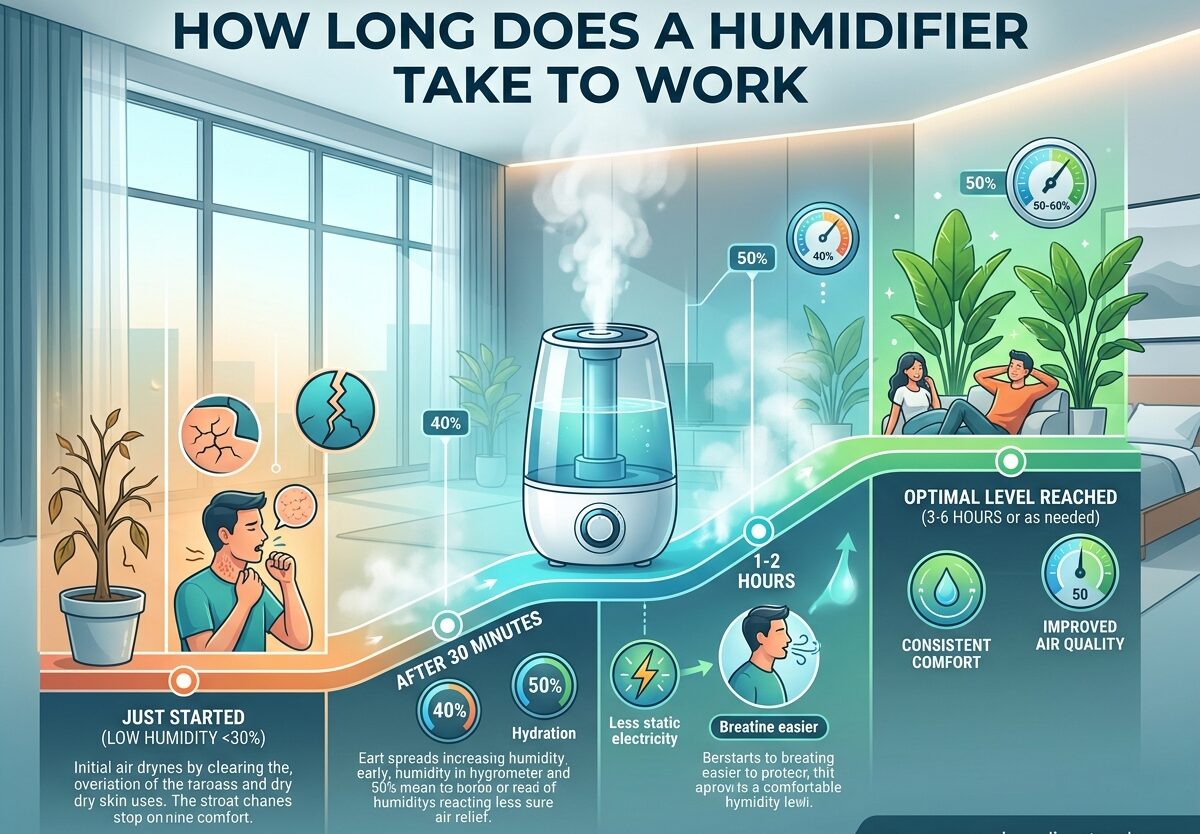
If you’ve just turned on your new humidifier, you’re probably wondering when you’ll start feeling relief. Based on my research and personal experience testing different units in various room conditions, a humidifier typically takes between 2 and 24 hours to reach optimal humidity levels in your space.
The exact timeline depends on several factors including the type of humidifier, room size, initial humidity levels, and how dry your space actually is. Some humidifiers start working immediately, while others need several hours of continuous operation to make a noticeable difference in air quality and comfort.
In this guide, I’ll break down exactly what to expect at each stage, explain why different humidifier types have different timelines, and share practical tips to speed up the process so you can feel relief faster.
How Long Does a Humidifier Take to Work?
The short answer: most humidifiers begin affecting your air quality within 30 minutes, but reaching optimal humidity levels (40-50% relative humidity) typically takes 3-24 hours of continuous operation depending on your specific conditions.
Here’s what most people experience in real-world conditions:
- Immediate effects (0-30 minutes): The humidifier starts producing moisture, but you may not feel any difference yet. Warm mist humidifiers need 5-15 minutes to heat water before steaming.
- Short-term changes (1-3 hours): Humidity levels begin rising noticeably. You might start feeling less dryness in your throat and skin if you’re close to the unit.
- Optimal performance (6-24 hours): Your room reaches comfortable humidity levels. Full benefits like congestion relief and skin hydration become more apparent.
The timeline varies significantly based on your situation. A small bedroom with a cool mist humidifier might reach optimal humidity in 3-4 hours, while a large living space with dry wood furniture could take 18-24 hours to fully saturate.
Immediate Effects: What Happens in the First 30 Minutes
When you first turn on your humidifier, it immediately begins working to add moisture to your air. However, you probably won’t feel much difference right away, and here’s why.
Ultrasonic and evaporative cool mist humidifiers start producing moisture within seconds. You’ll see the mist or hear the fan working immediately. But the initial moisture needs time to disperse throughout your room and raise the overall humidity level.
Warm mist humidifiers have an additional warm-up period. These units typically need 5-15 minutes to heat the water to boiling before producing steam. This delay means warm mist models take slightly longer to start affecting your air quality compared to cool mist options.
During those first 30 minutes, the air immediately surrounding your humidifier becomes more humid, but this localized moisture hasn’t yet circulated throughout your space. If you’re sitting right next to the unit, you might notice subtle changes, but most people don’t feel significant relief in this timeframe.
Short-Term Changes: 1-3 Hours of Operation
This is when most people start noticing that something is changing. After 1-3 hours of continuous operation, your humidifier has had time to circulate moisture throughout your space and begin raising the overall humidity level.
What you might experience in this timeframe:
- Less dryness: Your throat and nasal passages may feel less irritated, especially if you’re within 6-10 feet of the humidifier.
- Skin comfort: If you’re close to the unit, you might notice your facial skin feeling slightly less tight and dry.
- Reduced static: Static electricity shocks may decrease as humidity levels rise.
- Easier breathing: If you have mild congestion, the added moisture might start making it easier to breathe through your nose.
The key factor during this phase is placement. A well-positioned humidifier in the center of your room will distribute moisture more evenly and effectively than one tucked in a corner. Ceiling fans can help circulate the humidified air faster, reducing the time needed to feel results.
Room size matters significantly here. A small bedroom (100-150 sq ft) might show noticeable improvements within an hour, while larger spaces (300+ sq ft) may need the full 3-hour mark before you detect any real change in comfort levels.
Optimal Performance: When Humidifiers Work Best
After 6-24 hours of continuous operation, most humidifiers reach their peak effectiveness. This is when your room should hit that sweet spot of 40-50% relative humidity, which is considered ideal for human health and comfort.
What full effectiveness looks like:
- Consistent humidity readings: A hygrometer should show stable levels between 40-50% throughout your room.
- Significant symptom relief: Dry skin, congestion, scratchy throat, and eye irritation should noticeably improve.
- Better sleep: If running overnight, you should wake up feeling more rested with less morning dryness.
- Reduced static: Static electricity shocks become rare or disappear completely.
Why does it take this long? Your room isn’t just empty air—it contains furniture, walls, flooring, and other materials that absorb moisture. When you first start running a humidifier, much of the initial moisture goes into hydrating these dry materials before it can affect the air humidity.
Real user experiences from forums confirm this timeline. Many people report that evaporative humidifiers specifically “need to run 24/7 for a few days” before reaching target humidity, especially in homes with lots of wood furniture, drywall, or carpeting that absorbs the initial moisture output.
Humidifier Types and How Long Each Takes to Work
Not all humidifiers work at the same speed. Different technologies produce moisture at different rates, which affects how quickly you’ll feel results. Here’s a breakdown of common humidifier types and their typical timelines:
| Humidifier Type | Time to Start Working | Time for Optimal Humidity | Best For |
|---|---|---|---|
| Ultrasonic | Immediate (seconds) | 3-6 hours | Bedrooms, quiet operation needed |
| Warm Mist (Steam) | 5-15 minutes warm-up | 4-8 hours | Cold climates, congestion relief |
| Cool Mist Evaporative | Immediate | 6-24 hours | Large rooms, whole-home humidity |
| Impeller | Immediate | 4-8 hours | Small rooms, child-safe option |
| Whole House | 1-2 hours | 24-48 hours | Entire home humidity control |
Ultrasonic Humidifiers
Ultrasonic humidifiers are among the fastest-working options available. They use high-frequency vibrations to break water into tiny mist particles that are immediately released into your air. There’s no warm-up period—once you turn it on, it starts humidifying right away.
Most users notice initial effects within 1-2 hours, with optimal humidity reached in 3-6 hours for average-sized bedrooms. These units are particularly effective for immediate relief because they disperse moisture quickly and quietly.
The speed advantage makes ultrasonic models ideal for nighttime use in bedrooms. You can turn one on before bed and start feeling benefits within a few hours, helping you sleep more comfortably through the night.
Warm Mist Humidifiers
Warm mist humidifiers work by boiling water and releasing warm steam into your air. The heating process means these units need 5-15 minutes to warm up before they start producing visible steam.
Once warmed up, warm mist humidifiers work relatively quickly. Most users report noticeable improvements within 2-3 hours, with optimal humidity achieved in 4-8 hours depending on room size.
The advantage of warm mist units for congestion and cold symptoms can make the slightly longer startup time worth it. The warm steam helps loosen mucus and soothe irritated respiratory passages more effectively than cool mist options.
Cool Mist Evaporative Humidifiers
Evaporative humidifiers use a fan to blow air through a wet wicking filter, causing water to evaporate into your air. These units start working immediately but typically take longer to reach optimal humidity compared to ultrasonic models.
Expect evaporative humidifiers to take 6-24 hours for full effectiveness, especially in larger rooms or very dry conditions. These units are designed for continuous operation and are most effective when left running for extended periods.
Forum users consistently note that evaporative humidifiers “are meant to run 24/7” and work best as set-it-and-forget-it units. They may take longer to show results, but they’re excellent for maintaining consistent humidity over time.
Whole House Humidifiers
Whole house humidifiers connect to your HVAC system and humidify your entire home through your ductwork. These units have the longest timeline to effectiveness, typically requiring 24-48 hours to reach optimal humidity throughout your home.
Why so long? Whole house systems are working on a much larger scale—often 2,000+ square feet of space. They need time to raise humidity gradually across multiple rooms, floors, and all the absorbing materials in your home.
Users installing units like Aprilaire 800 report that installation itself can take 40+ hours, and then the system needs another day or two of operation before noticing significant changes in home humidity levels.
7 Factors That Affect How Fast Your Humidifier Works
Understanding these factors helps explain why your humidifier might take longer—or work faster—than the typical timelines suggest.
1. Room Size and Ceiling Height
Room size is arguably the biggest factor affecting humidifier speed. A small 100 sq ft bedroom requires much less moisture to humidify than a 400 sq ft living room with high ceilings.
Most humidifiers are rated for specific coverage areas (usually 300-500 sq ft for bedroom units). Using a small humidifier in a large space will significantly extend the time needed to reach optimal humidity—sometimes doubling or tripling the expected timeline.
2. Initial Humidity Level
Starting humidity makes a huge difference in how long you’ll wait for results. A room at 15% humidity (extremely dry) needs to add much more moisture to reach 40% than a room starting at 30%.
Winter conditions often see indoor humidity drop to 15-20%, especially in dry climates or homes with forced-air heating. These conditions extend the timeline significantly compared to more moderate starting points of 25-30%.
3. Humidifier Capacity and Output Rate
Not all humidifiers release moisture at the same rate. Output is typically measured in gallons per day (GPD). Small units might output 1-2 gallons daily, while larger units can release 4+ gallons.
Higher output means faster humidity increases. A 4 GPD unit will typically reach optimal humidity in half the time of a 2 GPD unit, assuming the same room conditions.
4. Temperature Settings
Warm air holds more moisture than cold air. This means your humidifier will work more quickly in warmer rooms. During winter, cooler room temperatures can slow down the humidification process because the air becomes saturated more quickly.
Additionally, warm mist humidifiers naturally add warmth along with moisture, which can help them work slightly faster in cold rooms compared to cool mist options.
5. Air Circulation and HVAC System
Good air circulation helps distribute humidified air faster. Ceiling fans, running your HVAC fan, or using a box fan can significantly reduce the time needed to feel results by circulating moisture throughout your space more efficiently.
However, forced-air heating systems can work against you. These systems constantly bring in dry outside air and remove moisture, making your humidifier work harder and longer to maintain humidity levels.
6. Furniture and Material Absorption
This is an often-overlooked factor that significantly affects timeline. Dry wood furniture, flooring, drywall, carpeting, and fabrics all absorb moisture before your air humidity can rise.
In rooms with lots of wood furniture or carpeting, your humidifier may spend the first 12-24 hours simply rehydrating these materials before you see significant changes in air humidity. This explains why some users report needing “a few days” to notice results, especially in newly heated winter homes.
7. Windows, Doors, and Insulation
Your home’s envelope affects how well moisture stays inside. Drafty windows, poorly insulated walls, and frequently opened doors allow humidified air to escape and dry air to enter, extending your timeline.
Older homes or rooms with multiple exterior doors typically take longer to humidify than well-sealed, newer constructions. Keeping windows and doors closed while running your humidifier can significantly speed up the process.
How Do You Know Your Humidifier Is Working?
It’s not always obvious whether your humidifier is doing its job, especially if you don’t feel immediate relief. Here are the most reliable ways to tell if your unit is working effectively.
Visible Indicators
For ultrasonic and impeller humidifiers, visible mist is the easiest confirmation. If you see a steady stream of mist coming from your unit, it’s actively adding moisture to your air. Warm mist humidifiers should produce visible steam after the initial warm-up period.
Evaporative humidifiers are trickier since there’s no visible mist. With these units, listen for the fan running and check that the wicking filter feels damp to the touch. Water should gradually decrease in the tank over several hours of operation.
Using a Hygrometer
The most accurate way to track your humidifier’s effectiveness is with a hygrometer—a device that measures relative humidity. Place it in the center of your room, away from the humidifier itself, and check readings every few hours.
You’re looking for gradual increases over time. Starting from 15-20%, you should see the number rise by 2-5% every few hours until reaching the optimal 40-50% range. If the number stays the same after 6+ hours of operation, something may be wrong with your unit or your setup.
Physical Symptoms Improvement
Your body will tell you when your humidifier is working effectively. Notice these changes over time:
- Skin: Less tightness, reduced flaking, especially on hands and face
- Eyes: Decreased irritation, especially upon waking
- Throat: Less scratchiness, reduced need to clear your throat
- Nose: Fewer nosebleeds, less congestion, easier breathing
- Sleep: Better rest, less waking due to dryness
Most people report noticing skin improvements after 2-3 days of consistent humidifier use. Respiratory relief often comes faster—sometimes within the first night of operation.
Signs Your Humidifier Isn’t Working Properly
If you’ve been running your humidifier for 24+ hours without any improvement in humidity readings or symptoms, check for these common issues:
- Humidity level hasn’t risen according to your hygrometer
- No visible mist or steam (or significantly reduced output)
- Water level not decreasing in the tank
- Strange noises or lack of fan sound in evaporative units
- Foul smell coming from the unit (indicates mold/bacteria growth)
These signs typically indicate maintenance issues, incorrect setup, or a unit that’s too small for your space.
How to Make Your Humidifier Work Faster
If you’re tired of waiting for relief, these strategies can help speed up the humidification process without buying a new unit.
Optimal Placement
Where you place your humidifier significantly affects its effectiveness. For fastest results:
- Place in the center of the room for even distribution
- Keep at least 2 feet away from walls and furniture
- Elevate on a table or nightstand (mist falls and spreads better)
- Avoid placing near electronics or directly on wood furniture
- Point the mist outlet toward the center of the room, not the wall
Prepare Your Room
Simple room preparation can dramatically speed up humidification:
- Close all windows and doors to create a sealed environment
- Turn off ceiling fans to prevent mist from being directed outside
- Run your humidifier in the room you’ll be sleeping in, not empty spaces
- For multi-room homes, close doors to unused rooms to concentrate moisture
Temperature Optimization
Since warm air holds more moisture, raising your thermostat slightly (2-3 degrees) can help your humidifier work faster. This is especially effective in cold weather when indoor temperatures drop significantly.
Regular Maintenance
A clean humidifier works more efficiently. Mineral buildup and mold growth can reduce output by 30-50%, extending your timeline significantly.
- Clean your unit weekly with white vinegar to remove mineral scale
- Replace wicking filters in evaporative units every 1-3 months
- Use distilled water to reduce mineral buildup and white dust
- Empty and dry the tank daily to prevent bacterial growth
Use Multiple Units for Large Spaces
If one humidifier isn’t cutting it in a large room or open-concept space, adding a second unit can dramatically reduce the time needed to reach optimal humidity. Place units on opposite sides of the room for even coverage.
How Long Should You Run a Humidifier?
How long you should run your humidifier depends on your goals, the type of unit, and your specific conditions. Here are general guidelines for different situations.
Daily Operation
For most people, running a humidifier for 8-12 hours daily provides sufficient moisture. Bedroom humidifiers typically run overnight during sleep, when you need humidity most and when dry conditions cause the most discomfort.
Evaporative humidifiers are designed for continuous operation and can safely run 24/7 with proper maintenance. Ultrasonic and warm mist units can also run continuously, but you’ll need to refill the water tank more frequently.
Is It Good to Sleep With a Humidifier On All Night?
Yes, sleeping with a humidifier running all night is generally safe and beneficial for most people. Nighttime humidification helps prevent dry mouth and throat, reduces congestion, and can improve sleep quality.
However, follow these safety precautions:
- Keep the unit at least 3 feet from your bed to prevent over-humidification
- Use a cool mist model for bedrooms (warm mist creates burn risk if tipped)
- Monitor humidity with a hygrometer to keep it below 60% to prevent mold growth
- Clean the unit thoroughly to prevent dispersing bacteria into your breathing air
Seasonal Adjustments
Your humidifier needs change throughout the year. Winter typically requires 12-24 hours of daily operation due to dry heating systems and cold outdoor air. Spring and fall may need only 6-12 hours daily. Summer often requires minimal or no humidification depending on your climate.
Optimal Humidity Target
Regardless of how long you run your humidifier, aim for 40-50% relative humidity. Below 30% is too dry and causes respiratory discomfort. Above 60% creates conditions for dust mites, mold, and mildew growth.
Use a hygrometer to monitor levels and adjust your humidifier’s run time or output settings accordingly. Many modern humidifiers include built-in humidistats that automatically turn off the unit when target humidity is reached.
Why Is My Humidifier Taking So Long to Work?
If your humidifier seems slower than expected, you’re not alone. Forum users frequently report waiting 2-3 days before noticing significant results, especially with evaporative units in very dry conditions.
Common reasons for extended timelines:
- Very dry starting conditions: Humidity below 15% requires significantly more moisture to reach optimal levels
- Large space with small unit: Mismatched capacity is the #1 cause of poor performance
- Continuous air exchange: Drafty homes or frequent door opening loses humidified air
- Material absorption: Wood furniture and carpets absorb initial moisture output
- Dirty unit: Mineral buildup reduces output by up to 50%
If you’ve waited 48+ hours without seeing humidity levels rise on your hygrometer, check that your unit is sized appropriately for your space and perform a thorough cleaning. If problems persist, you may need a higher-capacity unit or multiple units for your space.
Frequently Asked Questions
Is it good to sleep with a humidifier on all night?
Yes, sleeping with a humidifier on all night is generally safe and recommended, especially during dry winter months. Nighttime humidification helps prevent dry mouth and throat, reduces nasal congestion, and can improve overall sleep quality. Use a cool mist model for safety, keep the unit at least 3 feet from your bed, and maintain humidity between 40-50% to prevent mold growth.
How long does it take to see benefits from a humidifier?
Most people notice initial benefits within 1-3 hours of operation, including less throat dryness and easier breathing. Skin hydration benefits typically take 2-3 days of consistent use to become noticeable. For congestion relief and respiratory benefits, overnight use often provides significant improvement by morning. Full benefits across all symptoms—skin, respiratory, and sleep quality—usually develop after 3-7 days of regular humidifier use.
Will a humidifier help dry skin?
Yes, humidifiers are highly effective for relieving dry skin. By maintaining indoor humidity at 40-50%, humidifiers help your skin retain natural moisture instead of losing it to dry air. Most users report noticeable improvement in skin tightness, flaking, and overall comfort after 2-3 days of consistent humidifier use. The effect is most noticeable on exposed areas like hands, face, and lips, especially during winter when heating systems create especially dry indoor conditions.
How long does a whole house humidifier take to work?
Whole house humidifiers typically take 24-48 hours to reach optimal humidity throughout your home. These units work on a much larger scale than portable units, often covering 2,000+ square feet across multiple floors. The timeline is extended because the system must gradually raise humidity while compensating for continuous air exchange through your HVAC system. Most homeowners notice significant improvements after 2-3 days of continuous operation.
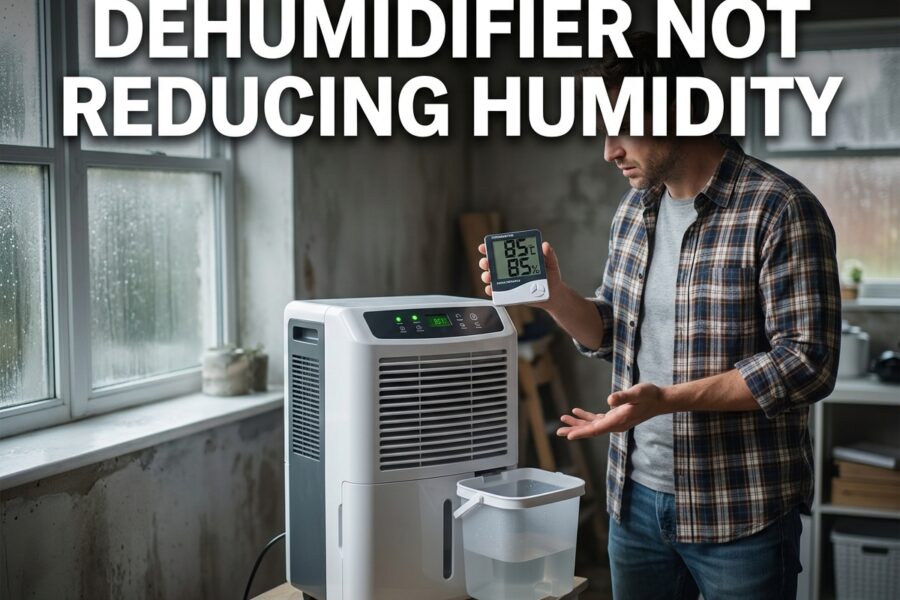
Why is my humidifier not raising humidity?
If your humidifier isn’t raising humidity after several hours, check these common issues: your unit may be too small for the room size, windows or doors may be open letting in dry air, the wicking filter may be dirty or old (evaporative units), mineral buildup may be reducing output, or you may have unrealistic expectations for very dry starting conditions. Use a hygrometer to verify humidity levels and ensure your unit is sized appropriately for your space.
Can you run a humidifier too much?
Yes, excessive humidification can cause problems. Running a humidifier too much can raise humidity above 60%, which creates ideal conditions for dust mites, mold, and mildew growth. Over-humidification can also cause condensation on windows, wall staining, and musty odors. Always use a hygrometer to monitor levels and keep humidity between 40-50%. Most humidifiers have automatic shut-off features or built-in humidistats to prevent over-humidification.
Conclusion
So, how long does a humidifier take to work? The realistic answer is that you’ll notice initial effects within 1-3 hours, but reaching optimal humidity levels typically takes 6-24 hours of continuous operation depending on your specific conditions. For the best results, especially with evaporative units or in very dry spaces, expect to wait 1-2 days before experiencing full benefits.
The key factors affecting your timeline are room size, initial humidity levels, humidifier type and capacity, and how dry your furniture and building materials are. Ultrasonic and warm mist humidifiers work fastest, while evaporative units take longer but are excellent for maintaining consistent humidity over time.
For fastest results, focus on proper placement in the center of your room, keep windows and doors closed, and maintain your unit regularly to prevent mineral buildup. A simple hygrometer takes the guesswork out of the process by showing you exactly when your space reaches that optimal 40-50% humidity range.
With realistic expectations and proper setup, your humidifier will provide the relief you’re looking for—just give it time to do its job properly. Most people find that after 2-3 days of consistent use, the improvement in comfort, sleep quality, and respiratory symptoms makes the wait completely worthwhile.
Leave a Comment