
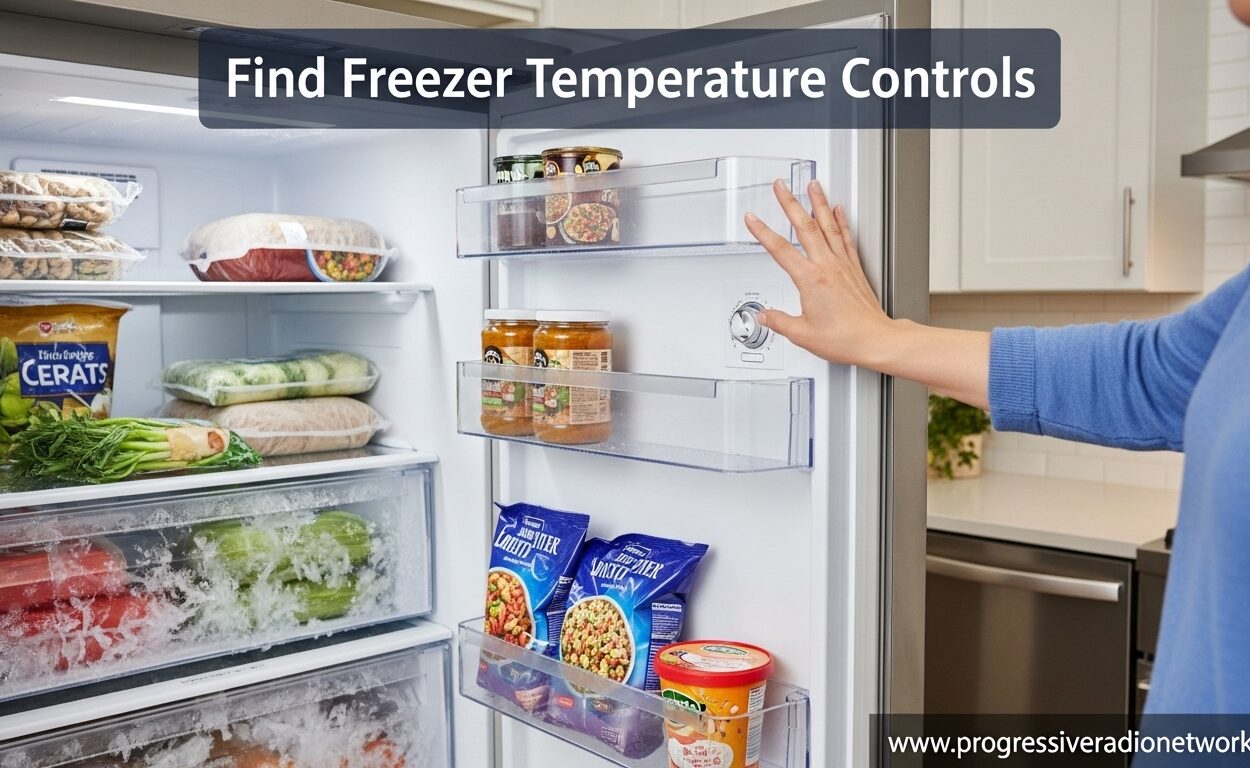
If you have ever stood in front of your refrigerator wondering where the temperature controls are hiding, you are not alone. Many homeowners struggle to find freezer temperature controls, especially with modern refrigerators featuring sleek designs and hidden interfaces. This guide will help you locate and understand your freezer temperature controls, regardless of what type of refrigerator you own.
Proper freezer temperature is essential for food safety and preventing freezer burn. The FDA recommends keeping freezers at 0 degrees Fahrenheit (-18 degrees Celsius) or below to maintain food quality and prevent bacteria growth. When you pair proper freezer temperature with proper freezer temperature settings and vacuum sealing, your food can last significantly longer.
Where to Find Freezer Temperature Controls
Freezer temperature controls can be located in several different places depending on your refrigerator’s design and age. The most common locations include the back of the fresh food compartment, near the top of the refrigerator interior, on the exterior dispenser panel, or directly inside the freezer compartment.
For side-by-side refrigerators manufactured after 1995, the temperature controls are typically located on the exterior dispenser panel on the freezer door. This digital display shows both refrigerator and freezer temperatures with touch pads for adjustment. On older side-by-side models and top-mount refrigerators, you will usually find the controls inside the fresh food compartment at the top back or on the side wall.
Bottom-freezer refrigerators often place controls inside the fresh food compartment, either on the upper rear wall or along the side. French door refrigerators typically feature digital controls on the interior door panel or on a display screen at the top of the refrigerator compartment. Some high-end models even have controls accessible through a smartphone app.
Chest freezers and standalone upright freezers have the most straightforward control placement. You will find the temperature dial or digital control panel on the front exterior or sometimes on the inside wall near the top. These controls usually operate independently without any refrigerator compartment to consider.
Find Freezer Temperature Controls: Understanding Different Control Types
Refrigerator manufacturers use different control interfaces that can confuse homeowners trying to adjust their freezer temperature. The three main types are digital control panels, dial controls, and knob systems. Each works differently but accomplishes the same goal of regulating your freezer’s internal temperature.
Digital control panels display the actual temperature in degrees Fahrenheit or Celsius. These are the most user-friendly because they show you exactly what temperature your freezer is set to reach. You simply press the plus or minus buttons to adjust the target temperature. Some advanced models even show the current actual temperature versus the set temperature.
Dial controls use a numbered system that typically ranges from 1 to 7 or 1 to 9. These numbers do not correspond to specific temperatures but rather relative coldness levels. Higher numbers mean colder temperatures. The confusion arises because different brands use different numbering systems, and the numbers do not directly translate to degrees.
Knob systems work similarly to dial controls but often feature a simple slider or rotating knob with markings like “Cold” to “Coldest” or similar designations. These are found on older refrigerator models and basic chest freezers. The knob typically clicks into place at different settings, with each position representing a different temperature level.
Some refrigerators use a dual-control system where one dial or button controls the refrigerator temperature and another controls the freezer. These can be particularly confusing because adjusting one compartment may affect the other. The freezer control typically regulates how much cold air enters the freezer, while the refrigerator control manages airflow between compartments.
Understanding Freezer Temperature Dial Settings
The numbered dial system confuses many refrigerator owners. When your freezer dial has numbers 1 through 7, what does each number actually mean? The important thing to understand is that these numbers represent relative coldness, not specific temperatures.
On a typical 1-7 scale, setting 1 is the warmest setting and setting 7 is the coldest. The factory setting is usually 4, which represents the midpoint. This factory setting is designed to maintain a safe freezing temperature around 0 degrees Fahrenheit under normal conditions. For most households, the factory setting works perfectly fine.
Some refrigerators use a 1-5 or 1-9 scale instead. On a 1-5 dial, the factory setting is typically 3. On a 1-9 scale, it is usually 5. Regardless of the total number of settings, the factory default is almost always the middle number. This middle position provides the best balance between energy efficiency and food preservation.
HVAC technicians and refrigeration experts generally recommend starting with the factory setting and only adjusting if necessary. If you notice ice cream staying too soft or freezer burn developing on your food, you may need to adjust to a colder setting. Conversely, if your freezer is running constantly or building excessive ice, a warmer setting might be appropriate.
One helpful guideline from appliance repair professionals is that setting 4 on a 1-7 dial typically maintains a safe freezing temperature for most foods. If you store mostly frozen vegetables and meats, the factory setting should suffice. For ice cream storage or long-term freezing, you might go one number colder. For minimal freezer use, you could go one number warmer to save energy.
Optimal Freezer Temperature Settings
The ideal freezer temperature is 0 degrees Fahrenheit (-18 degrees Celsius) according to food safety experts. This temperature is cold enough to keep food safe indefinitely while preserving quality. At 0 degrees Fahrenheit, bacterial growth stops completely, and enzyme activity that degrades food quality is significantly slowed.
Your freezer can safely be set anywhere between 0 degrees Fahrenheit and -10 degrees Fahrenheit. Temperatures below 0 degrees provide extra protection for long-term storage but use more energy. Many homeowners set their freezers around -5 degrees for a safety buffer, especially during summer months when the freezer works harder.
The refrigerator compartment should be kept between 35 degrees and 38 degrees Fahrenheit (1.7 to 3.3 degrees Celsius). This range is cold enough to keep food fresh but warm enough to prevent freezing. The relationship between refrigerator and freezer temperatures matters because they share the same cooling system in most units.
Using an appliance thermometer is the only way to know your actual freezer temperature. The dial numbers do not tell you the specific temperature, and digital displays show the target temperature rather than the actual temperature. Place a freezer thermometer in the center of the freezer compartment and check it after 24 hours to get an accurate reading.
How to Adjust Freezer Temperature Controls Step-by-Step
Adjusting your freezer temperature requires a careful approach and patience. Here is the proper method for adjusting freezer temperature controls on any refrigerator type:
Step 1: Locate your temperature controls using the guidelines above. Check whether you have digital controls, a dial system, or a knob control.
Step 2: If you have a dial or knob, note the current setting before making any changes. For digital controls, note the current temperature display.
Step 3: Make small adjustments. For dial controls, move just one number at a time. For digital controls, adjust by just 1-2 degrees at a time.
Step 4: Wait at least 24 hours before making another adjustment. This is the most important step that many people skip. Your freezer needs a full day to stabilize at the new setting before you can accurately judge whether further adjustment is needed.
Step 5: After 24 hours, check the temperature with an appliance thermometer. If you are still not at your target temperature, make another small adjustment and wait another 24 hours.
Step 6: Once you reach your desired temperature, mark the setting or note the digital display for future reference. This makes it easier to reset if someone accidentally changes the controls.
When adjusting dual-control refrigerators with separate refrigerator and freezer controls, change only one setting at a time. Adjust the freezer control first and wait 24 hours to see the effect before touching the refrigerator control. This prevents overcompensation and makes troubleshooting easier.
How to Check Your Freezer Temperature
The most accurate way to check your freezer temperature is with an appliance thermometer designed specifically for freezers. These inexpensive tools are available at most hardware stores and home goods retailers. Place the thermometer in the center of the freezer compartment, away from the walls and the door.
Leave the thermometer in place for at least 24 hours before checking. This gives it time to reach equilibrium with the freezer’s internal temperature. For the most accurate reading, check the temperature at the same time each day, as freezer temperatures can fluctuate slightly based on usage patterns and defrost cycles.
Digital refrigerator-freezer thermometers with remote sensors are even more convenient. These display the temperature on an external unit that sits outside your freezer, so you can monitor the temperature without opening the door and letting cold air escape. Some models even track high and low temperatures over time, alerting you if the temperature exceeds safe limits.
If you do not have a freezer thermometer, you can get a rough indication of temperature by checking certain foods. Ice cream should be firm but scoopable. If it is rock hard, your freezer may be too cold. If it is soft or melting, it is too warm. Frozen vegetables should be hard individually, not frozen together in a solid block, which indicates temperature fluctuations.
Troubleshooting Temperature Issues
Sometimes your freezer may not maintain the proper temperature even after adjusting the controls. If your freezer is too warm, first check that the door is sealing properly. Look for torn gaskets or debris preventing a tight seal. Ensure the freezer is not overfilled, as proper airflow is essential for temperature regulation.
If your freezer is running constantly but still not cold enough, the condenser coils may need cleaning. Dirty coils reduce cooling efficiency. You should also check that the freezer has adequate ventilation space around it. At least two inches of clearance on all sides allows proper heat dissipation.
For freezers that are too cold and building excessive ice, verify that the door closes completely and that the gasket seals tightly. A faulty door seal allows humid air to enter, causing frost buildup. Check that the temperature setting has not been accidentally changed to the coldest position.
If adjusting the controls produces no change in temperature after 48 hours, you may have a mechanical issue. Common problems include a malfunctioning thermostat, a defective defrost timer, or a failing compressor. These issues require professional repair. Before calling a technician, try resetting the controls by turning the unit off for 5 minutes, then restarting at the factory setting.
Certain environmental factors affect freezer performance. Freezers located in garages or unheated spaces may struggle in extreme temperatures. Most refrigerator-freezers are not designed to operate in ambient temperatures below 55 degrees Fahrenheit or above 110 degrees Fahrenheit. If your freezer is in such a location, consider moving it to a climate-controlled space.
Frequently Asked Questions
What number should my freezer be on 1 to 7?
The recommended setting for a 1-7 freezer dial is 4, which is the factory default and middle setting. This setting typically maintains a safe freezing temperature around 0 degrees Fahrenheit under normal conditions. Setting 4 provides the best balance between food preservation and energy efficiency for most households.
How do I know what temperature my freezer is at?
The only accurate way to know your freezer temperature is to use an appliance thermometer designed for freezers. Place it in the center of the freezer compartment away from walls and door, leave it for 24 hours, then check the reading. Digital displays show target temperature, not actual temperature, and dial numbers do not correspond to specific degrees.
Should I set my freezer to 3 or 4?
Setting 4 is recommended for most situations as it represents the standard factory setting designed to maintain safe freezing temperatures. Use setting 3 only if your freezer runs excessively or builds up ice quickly. Setting 4 provides a safety buffer that ensures food stays frozen even during normal usage patterns and door openings.
How do I reset my freezer control?
To reset freezer controls, first turn off the unit at the power source or unplug it for 5 minutes. Then restart the refrigerator and set the controls to the factory default position (usually the middle number on dials or the recommended temperature on digital displays). Wait 24 hours for the temperature to stabilize before assessing if further adjustment is needed.
What are signs of a failing refrigerator?
Signs of a failing refrigerator include food spoiling prematurely, excessive condensation inside the compartment, the unit running constantly without reaching proper temperature, unusual noises like clicking or buzzing, ice buildup in the freezer that does not respond to temperature adjustment, and visible frost on the back wall of the freezer compartment.
Where are freezer temperature controls located?
Freezer temperature controls are typically found in one of four locations: on the exterior dispenser panel (side-by-side models), at the back of the fresh food compartment near the top (top-freezer and bottom-freezer models), on the interior door panel (French door models), or on the front exterior (chest freezers and standalone upright freezers).
What temperature should a freezer be set at?
A freezer should be set at 0 degrees Fahrenheit (-18 degrees Celsius) according to food safety guidelines. This temperature stops bacterial growth completely and preserves food quality indefinitely. The acceptable range is 0 to -10 degrees Fahrenheit, with anything below 0 degrees providing extra protection for long-term food storage.
How long after adjusting freezer temperature will I notice a difference?
You should wait at least 24 hours after adjusting freezer temperature before assessing the results. Freezers need a full day to stabilize at the new setting and for the temperature to equalize throughout the compartment. Checking sooner may give inaccurate readings and lead to unnecessary additional adjustments.
Conclusion
Learning to find freezer temperature controls and adjust them properly is an essential skill for any homeowner. The key is understanding what type of control system your refrigerator uses and how to interpret its settings. Remember that factory defaults are designed to work for most situations, and small adjustments with 24-hour wait periods are the best approach.
Keep an appliance thermometer in your freezer to monitor actual temperature rather than relying on dial numbers or digital displays alone. This simple tool takes the guesswork out of freezer temperature management and ensures your food stays safe at the recommended 0 degrees Fahrenheit.
Whether you have a modern French door refrigerator with digital controls or a basic chest freezer with a simple dial, the principles remain the same. Start with the factory setting, monitor with a thermometer, and make small adjustments as needed. Your food will stay fresher longer, and you will avoid the common problems of freezer burn and food spoilage.

Leave a Comment