
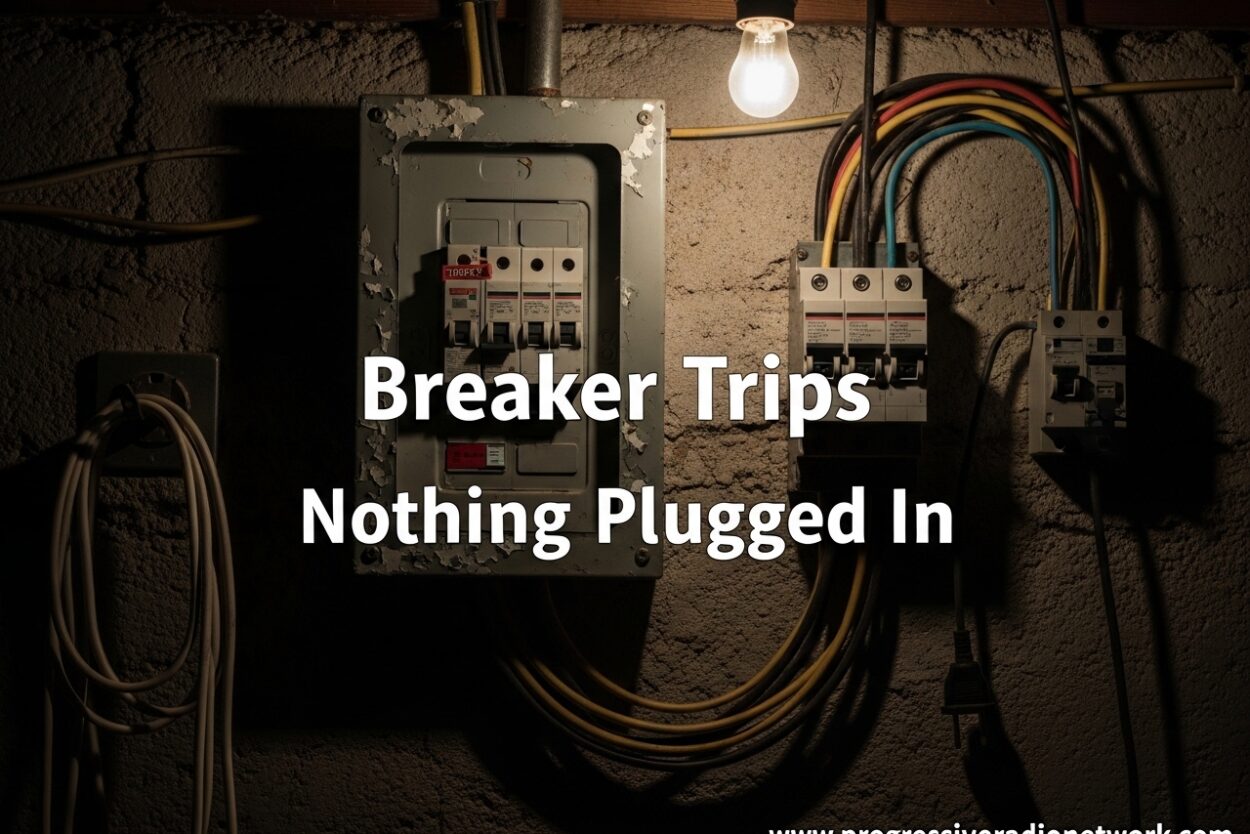
There’s nothing more frustrating than watching your circuit breaker trip when you’re certain nothing is plugged into that circuit. I’ve seen this confusion countless times – homeowners standing in front of their electrical panel, bewildered as the switch flips off again and again. The good news is that breaker trips with nothing plugged in always have a cause, even if it’s not immediately visible. Your breaker isn’t defective – it’s doing exactly what it’s designed to do.
Safety First: Before we dive in, remember that electrical work can be dangerous. If you ever smell burning, see smoke, or feel heat coming from your panel, stop immediately and call a licensed electrician.
How Circuit Breakers Actually Work
Understanding why your breaker trips with nothing plugged in starts with knowing how these devices protect your home. Modern circuit breakers use two separate protection mechanisms that work together to keep you safe.
Thermal Protection: Inside each breaker, you’ll find a bimetallic strip that bends when it heats up. This responds to sustained overloads – like plugging too many devices into one circuit. The heat causes the strip to bend and trip the breaker, cutting power before wires overheat.
Magnetic Protection: This is your short circuit defense. When current suddenly spikes (like when a hot wire touches a neutral or ground), an electromagnet instantly trips the breaker. This happens in milliseconds – fast enough to prevent fires and serious damage.
Here’s the thing – both protection types can trigger even when nothing appears to be drawing power. That’s because the problem isn’t always about what’s plugged in. Sometimes, the issue is hidden within your walls or electrical system itself.
Why Your Breaker Trips Nothing Plugged In
When your breaker trips with no visible devices connected, it means something is drawing current or creating a fault that you can’t see. Every circuit in your home has constant electrical potential, and various hidden factors can trigger a trip without any appliances involved.
Remember that some items in your home are hardwired – connected directly to your electrical system without a plug. These include smoke detectors, attic fans, bathroom exhaust fans, and even some appliances. They’re always drawing small amounts of power, and a fault in any of these systems can trip your breaker.
7 Common Causes of Mystery Breaker Trips
Based on my experience helping homeowners troubleshoot electrical issues, here are the most common reasons breakers trip when nothing appears to be plugged in:
1. Short Circuit in Hidden Wiring
A short circuit occurs when a hot wire touches a neutral wire or ground wire somewhere in your circuit. This creates a path of almost zero resistance, causing current to spike dramatically. The breaker’s magnetic protection responds instantly.
Short circuits often happen inside walls where wires run through staples or nails. Over time, vibrations and temperature changes can cause wire insulation to crack or wear away. Once the bare copper touches another wire or metal surface – pop goes the breaker.
Older homes with aluminum wiring (common in the 1960s and 1970s) are especially prone to this issue. Aluminum expands and contracts more than copper, leading to loose connections and increased fire risk.
2. Ground Fault from Moisture Intrusion
Water and electricity don’t mix. When moisture finds its way into your electrical system, it creates conductive paths that trigger ground fault protection. This is especially common in bathrooms, kitchens, laundry rooms, and outdoor circuits.
I’ve seen ground faults caused by leaky pipes, roof leaks, condensation, and even high humidity. Water can seep into outlet boxes, light fixtures, or junction boxes anywhere along the circuit path.
After heavy rains, homeowners often discover that outdoor circuits or circuits in exterior walls begin tripping. The moisture creates a path for electricity to flow to ground, which the breaker detects as a fault condition.
3. Loose Wire Connections at Outlets or Switches
Every outlet and switch in your home has wire connections that can loosen over time. When connections become loose, electricity can arc – jumping through the air between conductors. This arcing creates heat and erratic current flow that can trip breakers.
Loose connections often develop after years of thermal cycling. Each time current flows, wires heat up slightly and expand. When current stops, they cool and contract. This repeated movement can gradually loosen terminal screws and wire nuts.
Reddit users frequently report scenarios where breakers started tripping after using high-draw appliances like vacuums or space heaters. The vibration and current draw stressed an already-weak connection, causing it to fail.
4. Aging or Faulty Circuit Breaker
While less common than wiring issues, breakers themselves can fail after 15-20 years of service. The internal mechanisms wear out, and the breaker may become overly sensitive or trip randomly.
Signs of a failing breaker include unusual warmth at the breaker panel, a burnt plastic smell near the breaker, or a breaker that feels physically loose. Some breakers also develop a “nuisance tripping” problem where they trip at loads well below their rated capacity.
If your home still has its original electrical panel from the 1970s or earlier, consider having an electrician inspect it. Zinsco and Federal Pacific panels from that era have known safety issues.
5. Rodent or Pest Damage to Wires
This cause surprises many homeowners, but it’s more common than you’d think. Mice, rats, and squirrels love to chew on wire insulation. The materials used in wiring appeal to them, and once they start chewing, they expose bare conductors.
Rodent damage can happen anywhere – inside walls, in attics, in crawl spaces, or even in conduit. I’ve seen cases where a single mouse caused hundreds of dollars in damage by chewing through multiple circuits.
What makes rodent damage especially tricky is that it can be intermittent. The chewed wires might not touch each other constantly, leading to random, unpredictable breaker trips that seem to have no pattern.
6. GFCI/AFCI Breaker Sensitivity
Modern homes use specialized breakers that offer enhanced protection. Ground Fault Circuit Interrupter (GFCI) breakers and Arc Fault Circuit Interrupter (AFCI) breakers detect problems that standard breakers miss – but they can also trip more frequently.
GFCI Breakers: Required in bathrooms, kitchens, garages, and outdoor areas, these breakers detect current leaking to ground (which could happen through water or a person). They trip when they detect a leak as small as 5 milliamps – sensitive enough to save lives but also prone to nuisance trips from minor issues.
AFCI Breakers: Now required for most living areas, these detect dangerous arcing conditions that can cause fires. However, they can also be triggered by normal arcing from motor startup or even from appliances with brushed motors like vacuums.
If you have these specialized breakers, check if they’re the type with TEST buttons on them. Sometimes simply testing and resetting them can resolve minor issues that have accumulated.
7. Hardwired Appliances You Forgot About
Many homeowners forget that some appliances don’t use plugs at all. Your furnace, water heater, air conditioner, garbage disposal, dishwasher, and certain light fixtures are all hardwired directly to your electrical system.
I’ve been called to homes where the “mystery” tripping was caused by a failing water heater element, a seized furnace blower motor, or a leaking dishwasher that was slowly causing corrosion in its electrical connections.
Before assuming nothing is plugged in, make a mental walkthrough of every hardwired appliance on that circuit. Check your attic, basement, and crawl spaces for forgotten fixtures or equipment.
Step-by-Step Troubleshooting Guide
Ready to find out what’s causing your breaker trips? Follow this systematic approach to identify the problem safely:
Step 1: Document the Pattern
Before touching anything, note when the breaker trips. Does it happen immediately after you reset it? Does it trip at specific times of day? Does it correlate with weather events? This information is incredibly valuable for diagnosis.
Step 2: Turn Off the Main Breaker
Safety first – flip your main breaker to the OFF position before doing any inspection. This cuts power to the entire panel and allows you to work safely. If you’re uncomfortable with this step, it’s time to call a professional.
Step 3: Visually Inspect the Problem Breaker
Look for signs of burning, melted plastic, or discoloration around the breaker. Smell the area – a burnt plastic or ozone smell indicates serious problems. If you see any of these signs, do not attempt to reset the breaker again.
Step 4: Unplug Everything on the Circuit
Go to every outlet, switch, and fixture on the affected circuit. Unplug all devices, turn off all light switches, and note any hardwired appliances. This gives you a clean slate for testing.
Step 5: Reset and Wait
With everything disconnected, turn the main breaker back on, then reset the problem breaker. Wait at least 5-10 minutes. If it trips immediately with nothing connected, the problem is in the wiring itself or the breaker.
Step 6: Systematically Reconnect
If the breaker holds, start reconnecting items one at a time. Begin with light switches (turn them on), then plug in devices one by one. Wait between each addition to see if the breaker trips. This process of elimination will eventually reveal the culprit.
Step 7: Check GFCI Outlets
If your circuit has GFCI outlets, press the TEST button on each one, then reset them. Sometimes these devices develop internal faults that affect the entire circuit.
Warning Signs That Demand Immediate Attention
Some electrical issues are minor annoyances, but others indicate serious danger. If you notice any of these warning signs, stop troubleshooting immediately and call a licensed electrician:
- Burning smell or visible smoke: This indicates active arcing or overheating – a serious fire hazard
- Buzzing, crackling, or sizzling sounds: These sounds mean electricity is arcing where it shouldn’t
- Warm or hot outlets and switches: Heat buildup indicates excessive current flow or poor connections
- Breaker won’t stay reset: If the breaker trips immediately when you reset it, there’s an active short circuit
- Flickering or dimming lights: This can indicate voltage drops, loose connections, or failing wiring
- Discolored outlets or switch plates: Brown or black marks indicate overheating has occurred
From Reddit forums and electrical communities, the consensus is clear: if your breaker trips immediately after reset, do not keep trying to reset it. Each reset sends another surge of current through the fault, potentially worsening the damage or creating a fire hazard.
When to Call an Electrician
Some electrical problems are DIY-friendly, but others absolutely require professional help. Here’s when to pick up the phone rather than attempting repairs yourself:
Call an electrician if:
- The breaker trips immediately every time you reset it
- You’ve tried basic troubleshooting with no success
- Multiple breakers are tripping simultaneously
- Your home was built before 1970 and still has the original wiring
- You have aluminum wiring in your home
- You notice any of the warning signs listed above
- You simply don’t feel comfortable working with electricity
What should you expect to pay? Most electricians charge $75-150 for a service call just to diagnose the problem. The actual repair cost varies widely – a simple breaker replacement might run $150-250, while rewiring a circuit could cost $500-1500 depending on access and complexity.
Keep in mind that electrical work requires specific knowledge and experience. What looks simple on YouTube videos can be dangerous in practice. Licensed electricians complete years of apprenticeship and must pass rigorous exams for good reason.
Frequently Asked Questions
Why does my breaker keep tripping with nothing plugged in?
Your breaker trips with nothing plugged in because there’s a hidden fault in your electrical system. This could be a short circuit in the wiring, ground fault from moisture intrusion, loose connections, rodent damage, or a failing breaker. Even with no visible devices connected, your circuit always has electrical potential, and problems anywhere along the wire path can trigger the breaker’s protection mechanisms.
Is it a fire hazard if the breaker keeps tripping?
A tripping breaker is actually a safety device working correctly – it’s preventing potential fires. However, the underlying cause could be a fire hazard if ignored. Repeated tripping indicates an active problem like arcing, overheating, or short circuit. These conditions can generate heat and sparks that may cause fires. Don’t ignore repeated breaker trips, and never force a breaker to stay in the on position.
How do I find out what’s tripping my breaker?
Start by unplugging everything on the affected circuit and resetting the breaker. If it holds, reconnect items one at a time until the breaker trips again – that’s your culprit. If the breaker trips immediately with nothing connected, the problem is in the wiring itself or the breaker. Use process of elimination to narrow down which circuit, outlet, or device is causing the issue.
What are signs of electrical overload?
Signs of electrical overload include dimming or flickering lights when appliances turn on, warm or hot outlets and switches, buzzing sounds from outlets, frequent breaker trips, and a burning plastic smell. Overloads occur when too many devices draw power from one circuit. However, if nothing is plugged in and the breaker still trips, it’s likely a short circuit or ground fault rather than overload.
Can a bad breaker cause false trips?
Yes, circuit breakers can fail after 15-20 years and become overly sensitive. A failing breaker may trip at loads well below its rated capacity or trip randomly without any apparent cause. Signs of a bad breaker include unusual warmth at the panel, burnt plastic smell, physical looseness, or a breaker that won’t stay reset. If you suspect a bad breaker, have an electrician test and replace it.
Conclusion
When your breaker trips with nothing plugged in, it’s not a mystery – it’s a message from your electrical system that something needs attention. Whether it’s a short circuit, ground fault, loose connection, or aging breaker, the cause is there waiting to be found. Your breaker is doing its job by protecting you from potential fire hazards.
Start with the troubleshooting steps I’ve outlined, but know your limits. Electrical work isn’t something to learn through trial and error. If you’re unsure at any point, or if you notice any of the warning signs we discussed, call a licensed electrician. The cost of professional help is minimal compared to the potential cost of an electrical fire.
Most breaker trips nothing plugged in scenarios have simple explanations once you know where to look. Stay safe, be systematic in your troubleshooting, and don’t hesitate to seek professional help when you need it.



Leave a Comment