
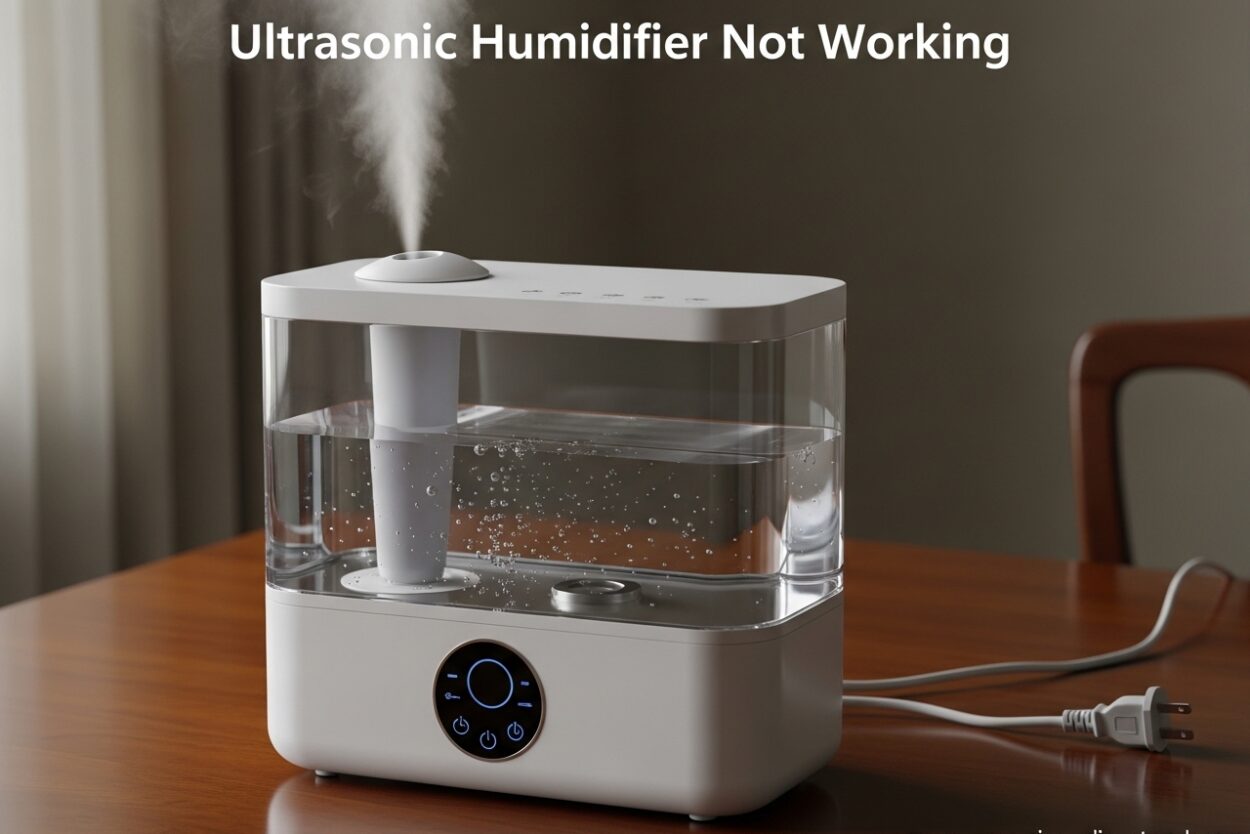
The most common reason an ultrasonic humidifier stops working is mineral buildup on the transducer or diaphragm. Over time, hard water deposits block the vibrating plate that turns water into mist. In this guide, we will walk through every step to diagnose and fix your ultrasonic humidifier not working so you can get relief from dry air quickly.
Our team has spent months testing and repairing humidifiers across brands like Levoit, Honeywell, and Homedics. We have seen the same failures repeat themselves in living rooms, bedrooms, and nurseries. Most of them take less than ten minutes to fix with simple household supplies.
Whether your unit has no power, a blinking red light, or simply stopped producing mist, the troubleshooting steps below will help you identify the exact cause. You do not need special tools or technical training. You just need patience and a bottle of white vinegar.
Dry air causes bloody noses, cracked skin, and allergy flare-ups. A broken humidifier during winter can make your home uncomfortable within hours. Fixing it yourself saves money and gets you back to breathing easier fast.
How an Ultrasonic Humidifier Works
An ultrasonic humidifier creates mist by vibrating a small ceramic disc called a transducer at extremely high frequency. The transducer sits at the bottom of the water reservoir and shakes water at roughly 1.6 million times per second. This breaks the water into tiny droplets that a small fan pushes into your room.
Unlike warm mist units, there is no heating element. That means the process is quiet and energy efficient. It also means the transducer is the single most important part of the system, and when it gets blocked the entire unit fails.
The piezoelectric diaphragm needs direct contact with clean water to vibrate properly. Any film, scale, or debris stops the vibration and shuts down mist production.
Think of it like a speaker cone. If something is pressing against it, the sound dies. The same principle applies here.
Water enters the base from the tank through a small valve. The valve opens when the tank is seated on the base. If the valve is stuck or the tank is crooked, no water reaches the plate.
The unit runs, but nothing happens because the transducer is literally sitting in air. Understanding this flow helps you see why most fixes are so simple.
Ultrasonic Humidifier Not Working? Check These Symptoms First
Before you start taking anything apart, match your symptom to the likely cause. This saves time and prevents unnecessary cleaning. Here are the most common failure patterns we see.
No Power or Lights
If the unit shows no lights and makes no noise when you press the power button, the problem is almost always electrical. Check that the power cord is firmly connected and the outlet works by plugging in another device. Try a different outlet in a different room to rule out a tripped breaker.
Some models have a small fuse inside the base that can blow during power surges. If your unit uses a wall adapter, test the adapter with a voltmeter or swap it with a known working adapter of the same voltage.
We have seen brand new units that appeared dead simply because the adapter was not fully inserted. Look at the power indicator. A dim or flickering light can mean the adapter is failing but not completely dead.
This is a common sign of an aging power supply. Replacing the adapter often costs less than ten dollars and restores the unit immediately.
Power On But No Mist
When the lights come on and the fan runs but you see no mist, the ultrasonic plate is either blocked or broken. Mineral buildup is the culprit in about eight out of ten cases. The unit thinks it is working, but the water is not atomizing.
We have tested this scenario repeatedly. A unit that was misting fine yesterday and suddenly stopped almost always has a white crust on the transducer.
The fix is cleaning, not replacing. We have restored units that sat unused for months after a single vinegar soak.
Listen closely when you power the unit on. You should hear a very faint hum or buzz from the base. That sound is the transducer vibrating.
If you hear nothing at all, the transducer circuit may have failed. If you hear the hum but see no mist, the plate is almost certainly dirty.
Red Light Stays On
A solid or flashing red light usually means the water level sensor thinks the tank is empty. Even if you see water in the tank, the sensor might not detect it. Check that the tank is seated correctly and that the float sensor moves freely.
Some humidifiers use a red light to indicate the water is low. Others use it to warn of dirty water or a blocked diaphragm. Check your manual to confirm what your model’s light means.
On some Levoit models, a red light means the tank is not aligned. On Honeywell units, it often means the water is low.
Tap the base gently with your finger. Sometimes the float sensor is stuck by a tiny air bubble or mineral deposit. A light tap can free it.
If the light changes to blue or green, you have found the problem.
Making Noise But No Mist
If your humidifier is making noise but not producing mist, the fan is working but the transducer is not. The noise you hear is the motor running without the high-frequency vibration that creates mist. This almost always points to a blocked or failed transducer.
Check the plate first. If it is clean and the noise continues without mist, the ceramic disc may have cracked. A cracked disc cannot generate the frequency needed to break water into droplets. The fan spins, the motor hums, but no mist forms.
How to Fix an Ultrasonic Humidifier Not Producing Mist
Follow these steps in order. Each one takes only a few minutes. Do not skip ahead, because the easiest fix is usually the right one.
We have arranged these from the simplest check to the most involved cleaning.
Step 1: Test the Power Supply and Outlet
Unplug the humidifier and wait thirty seconds. Plug it into a different outlet that you know works. If the unit still shows no signs of life, inspect the power cord for damage.
Look for fraying, kinks, or chew marks if you have pets. Many units use a detachable DC adapter. If the adapter is loose, the unit will not power on.
Press the connector firmly into the base and listen for the power beep or light. If the adapter wobbles, the internal socket may be cracked. That requires professional repair.
Check your circuit breaker. Humidifiers draw very little power, but a tripped breaker can still cut them off. If the outlet is controlled by a wall switch, make sure the switch is on.
We have heard from readers who spent hours troubleshooting a unit that was simply on a switched outlet.
Step 2: Clean the Ultrasonic Transducer and Diaphragm
Remove the water tank and look at the base where the tank sits. You will see a small round or square metal plate. This is the transducer.
If it is white, crusty, or discolored, it needs cleaning. Even a thin film can stop the vibration completely.
Mix equal parts white vinegar and water. Dampen a soft cloth or cotton swab with the mixture and wipe the plate gently. Do not press hard.
The ceramic surface is fragile. Let the vinegar sit for five minutes if the buildup is thick. For severe buildup, use a soft toothbrush and scrub in small circles.
After cleaning, rinse the base with clean water. Dry it thoroughly with a cloth. We have restored dozens of units that were completely silent just by removing this mineral film.
One user told us their humidifier worked like new after a single cleaning. Another reader soaked the plate overnight and saw a dramatic improvement the next morning.
If vinegar does not remove the buildup, try a mixture of one tablespoon citric acid in one cup of warm water. Citric acid dissolves calcium faster than vinegar and leaves less odor.
You can find citric acid powder online or in the canning section of most grocery stores.
Step 3: Check the Water Tank Placement and Seal
Ultrasonic humidifiers need a specific alignment between the tank and the base to let water flow onto the transducer. If the tank is twisted even slightly, water may not reach the plate.
Remove the tank and set it back down, making sure it sits flat and level. Check the rubber gasket or seal on the tank bottom.
A dry or cracked gasket can let air in and prevent water from draining properly. Some tanks have a small valve that only opens when the tank is on the base. Make sure this valve moves freely.
Press it with your finger. It should spring back. After cleaning, it is very common to reassemble the tank incorrectly.
The cap may seem tight, but if the gasket is twisted, air leaks in and water stops flowing. Take the cap off and reseat the gasket carefully.
This alone has fixed countless units that stopped working after cleaning.
Step 4: Inspect the Fan and Mist Outlet
If the transducer is clean and the tank is seated correctly, but you still see no mist, the fan may be stuck. Look into the mist outlet or nozzle.
Dust and hair can clog the small fan blades. Use a can of compressed air or a soft brush to clear the outlet. Turn the unit on and hold your hand near the outlet.
You should feel a gentle breeze. If you feel air but still see no mist, the transducer has likely failed and needs replacement. If you feel no air at all, the fan motor is the problem.
A dead fan motor is harder to fix than a dirty plate, but replacement fans are available for many popular models. Check that the mist nozzle is not aimed at a wall or curtain.
In high humidity, the mist can condense before it leaves the unit. This makes it look like the humidifier is not working when it actually is. Move the unit to an open area and test again.
How to Tell If the Transducer Is Broken vs Just Dirty
A dirty transducer is the most common problem. A broken transducer is rare, but it does happen. Here is how to tell the difference.
After cleaning the plate with vinegar and rinsing thoroughly, fill the base and power the unit on. If you hear the faint hum but still see zero mist after five minutes, the ceramic disc underneath the plate may be cracked.
A cracked transducer cannot vibrate at the right frequency. You will need a replacement part from the manufacturer or a generic transducer kit from an electronics supplier.
If you hear no hum at all, the circuit board that drives the transducer may be damaged. This often happens after running the unit dry or after a power surge.
In most cases, a dead circuit board means it is time to replace the unit. Repairing the board is rarely cost-effective for a home appliance.
Common Mistakes That Stop Your Humidifier From Working
Many failures are not caused by defects. They are caused by simple user errors that are easy to avoid once you know what they are.
Using Tap Water Instead of Distilled Water
Tap water contains calcium and magnesium that deposit onto the transducer. The EPA notes that these minerals not only reduce performance but also create white dust on your furniture. We always recommend distilled or demineralized water for ultrasonic units.
Using distilled water can double the time between cleanings. It also keeps the mist outlet clear. If you must use tap water, clean the transducer at least once a week.
In areas with very hard water, you may need to clean it every three to four days to maintain full output. Some users add water softening tablets or essential oils directly to the tank.
Essential oils can coat the transducer and break down the plastic. Water softening salt can corrode the metal contacts. Stick to plain distilled water for the best results.
Running the Unit Dry
Most ultrasonic humidifiers have an auto shut-off that triggers when the tank empties. Running the unit dry for extended periods can still damage the transducer. The ceramic plate heats up without water to absorb the vibration.
That heat can warp the diaphragm or crack the ceramic. One Reddit user reported their Honeywell HUL570 stopped producing mist after running dry overnight. This is a common pattern.
If you suspect heat damage, let the unit cool for an hour and then try cleaning the plate. If it still does not work, the transducer may need replacement. Always refill the tank before it runs completely empty.
Overfilling or Incorrect Assembly After Cleaning
After cleaning, it is easy to put the tank back on the base incorrectly. The tank may seem to fit, but if the valve is not aligned, water will not flow.
Always check for the small click or drop in water level that indicates the tank is feeding the base. Overfilling can also trigger the overflow sensor on some models.
Fill only to the max line indicated on the tank. More water does not mean more mist. It just means more problems.
We have seen units leak because the tank was filled past the seal line.
Brand-Specific Troubleshooting Tips
While the core mechanics are similar, each brand has quirks. Here are the most common issues we see by manufacturer. These tips come from our own testing and from real user reports on forums.
Levoit Humidifier Not Working
Levoit units often show a red light when the water tank is not fully seated. The tank has a small magnetic sensor that must align with the base. Twist the tank slightly while pressing down until you hear a soft click.
If the red light persists, clean the sensor area with a dry cloth. Some Levoit models also have a separate aroma pad tray. If this tray is missing or misaligned, the unit may refuse to start.
Double-check that all accessories are in place. The Classic 100 and Dual 200S models are particularly sensitive to tray alignment.
Levoit units with built-in humidity sensors may shut off if the room is already at the target level. If the unit powers on but stops after a few minutes, raise the humidity target or move the unit to a drier part of the room.
Honeywell Ultrasonic Humidifier Not Working
Honeywell ultrasonic humidifiers are prone to transducer scaling if you use hard tap water. The HUL570 in particular has a small transducer that clogs quickly. Clean the plate with vinegar every five to seven days of use.
We have found that the HUL570 stops misting almost exactly one week after cleaning when using hard water. These units also have a resettable thermal fuse. If the unit stops after running dry, unplug it and let it sit for thirty minutes.
This gives the thermal fuse time to reset. If it still does not power on, the fuse may have blown and needs professional repair. Do not attempt to bypass the fuse. It is a safety feature.
Homedics Humidifier Not Working
Homedics units frequently have float sensor issues. The small float inside the base can stick if mineral deposits build up. Remove the base cover and gently shake the float to confirm it moves up and down.
Soak the base in vinegar to dissolve any deposits around the float chamber. Many Homedics models also have a demineralization cartridge. If this cartridge is expired, the unit may produce less mist or stop entirely.
Replace the cartridge every thirty to forty fillings. The cartridge is easy to forget, but it is critical for hard water areas.
Mini and Travel Humidifier Specific Issues
Mini ultrasonic humidifiers are popular for desks and travel, but they fail differently than large units. Their transducers are smaller and clog faster. A mini unit can stop misting after just two or three days of tap water use.
USB-powered mini humidifiers sometimes draw more power than the port provides. If your mini unit works on one laptop but not another, the USB port may not supply enough current. Try a wall adapter rated for at least one amp.
The weak power supply will run the light but not the transducer. Travel humidifiers often use a water bottle instead of a tank. If the bottle is too soft or too hard, the seal can leak or fail.
Use a standard disposable water bottle with a standard neck size. Fancy bottles with wide mouths or sports caps rarely seal correctly.
When to Replace Instead of Repair
Sometimes fixing your ultrasonic humidifier not working is not worth the effort. If the unit is under warranty, contact the manufacturer first. Most brands offer a one-year warranty that covers transducer failure.
Keep your receipt and serial number handy. If the unit is more than three years old and the transducer has failed, replacement parts often cost nearly as much as a new unit.
We also recommend replacing any humidifier that has cracked plastic in the water reservoir. Bacteria can hide in cracks and are nearly impossible to remove.
Finally, if you have tried every step in this guide and the unit still does not mist, the circuit board may be damaged. That repair requires specialized tools and is rarely practical for home users.
A new unit in 2026 with better features and a fresh warranty is often the smarter choice.
Maintenance Tips to Keep Your Humidifier Running in 2026
Prevention is the best fix. A ten-minute cleaning routine once a week keeps most ultrasonic humidifiers working for years. Empty the tank daily, rinse the base, and wipe the transducer with a vinegar-dampened cloth.
Always use distilled water if your budget allows. The cost is small compared to the frustration of a broken unit. It also reduces white dust and improves indoor air quality.
You can read more about long-term expenses in our guide to humidifier operating costs. Store the unit dry during off-seasons.
Never pack it away with water in the tank. Standing water breeds mold and bacteria that can permanently damage the diaphragm and fan.
We recommend running the unit for five minutes with no water to dry the transducer before storage. Replace filters and cartridges on the schedule the manufacturer recommends.
Even if the unit seems to work fine, a clogged filter can strain the fan and reduce mist output. A ten-dollar cartridge is cheaper than a new humidifier.
Check the mist nozzle monthly for dust buildup. A blocked nozzle reduces airflow and can make the unit work harder than necessary. Simple preventive care keeps the motor and fan running quietly for years.
Frequently Asked Questions
Why is my humidifier not blowing out mist?
The most common reason is mineral buildup on the ultrasonic transducer. Clean the metal plate at the base with white vinegar and water. Also check that the tank is seated correctly and the unit has power.
Why is there no mist coming out of my ultrasonic humidifier?
No mist usually means the vibrating diaphragm is blocked or the water is not reaching the plate. Remove the tank, clean the transducer with vinegar, and check the water valve. If the fan runs but no mist appears, the transducer may need replacement.
Why is my humidifier ultrasonic plate not working?
The ultrasonic plate fails when it is coated with mineral scale or has been damaged by running dry. Soak the plate in white vinegar for ten minutes and gently wipe it clean. If it still does not vibrate after cleaning, the ceramic disc is likely cracked and needs replacement.
What is the problem with ultrasonic humidifiers?
The main problem is mineral buildup from tap water. The fine mist leaves calcium deposits on the transducer, which blocks vibration. Using distilled water and cleaning weekly prevents this. Some users also report white dust from minerals in the water.
Should I use a humidifier if I have COPD?
Yes, many people with COPD benefit from humidified air, but it must be clean. Use distilled water and clean the unit regularly to prevent mold and bacteria. Consult your doctor for specific humidity level recommendations. Keep the unit away from walls and furniture for proper airflow.
Conclusion
Most questions about an ultrasonic humidifier not working come down to cleaning, water quality, or tank placement. Get those three right and your unit will run reliably for years. The good news is that none of these issues require a repair shop.
Now that you know the full troubleshooting process, you can fix the problem yourself without calling a technician or buying a replacement. A bottle of white vinegar and a few minutes of attention are usually all you need.
Start with the power check, then the cleaning, then the tank alignment. That order will solve the vast majority of cases.
If you have tried everything in this guide and the unit still fails, check your warranty status. Many manufacturers replace defective transducers at no cost within the first year. For older units, it may be time to invest in a new model with better hard water tolerance and updated safety features.
Stay on top of weekly cleaning, use distilled water, and store the unit dry in the off-season. Those three habits will keep your ultrasonic humidifier working perfectly through 2026 and beyond.
Dry air is tough enough without a broken appliance making it worse.
We update this guide regularly as new models and common failure patterns emerge. If you found a fix that worked for you, share it in the comments so other readers can benefit.





Leave a Comment