
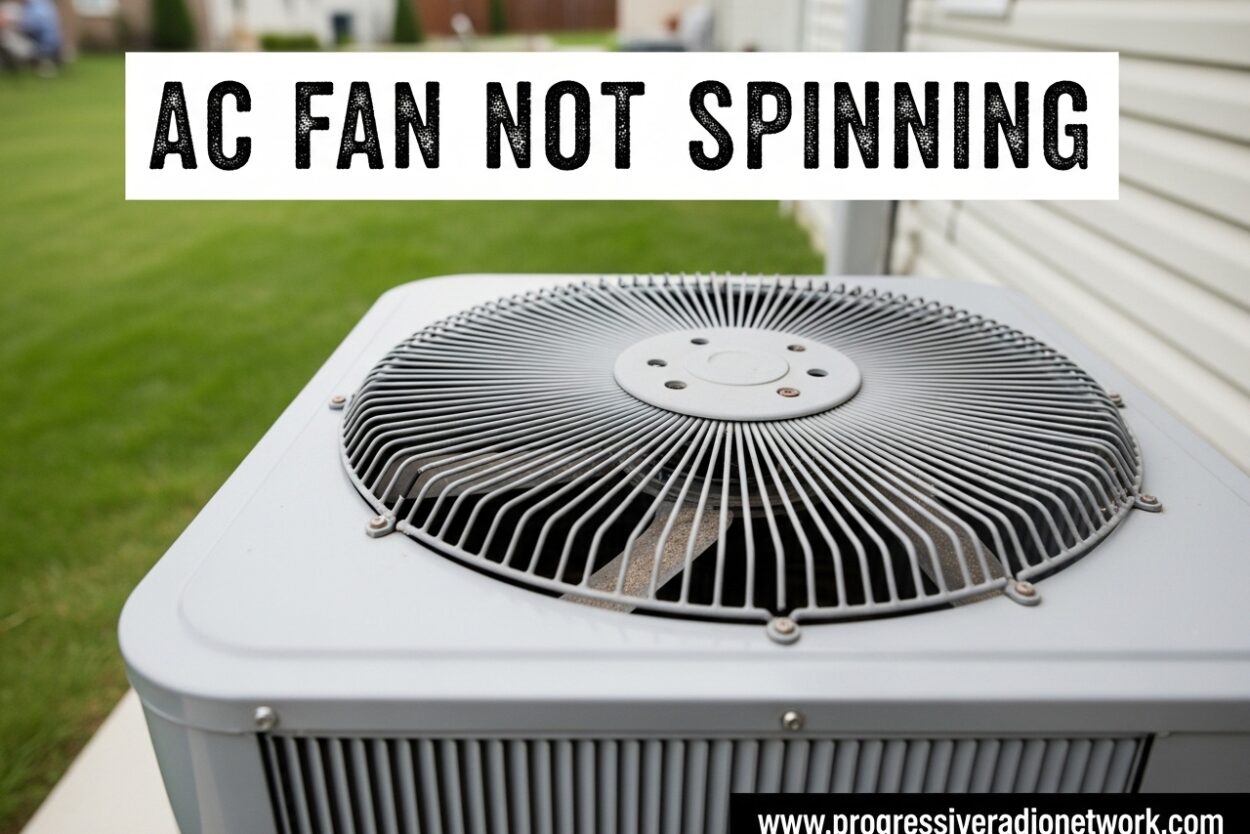
It’s 95 degrees outside and your AC is blowing warm air. You walk outside to check the unit and notice something concerning: the AC fan not spinning at all. Before you panic and call an expensive HVAC technician, know that this is one of the most common air conditioner problems homeowners face. In many cases, the fix is simple and affordable enough to handle yourself.
Your air conditioning system has two fans: the indoor blower that circulates air through your home, and the outdoor condenser fan that releases heat outside. When either fan stops working, your system can’t cool properly. More importantly, running your AC without a working fan can cause catastrophic compressor failure, leading to repairs costing thousands of dollars.
I’ve researched the most common causes, diagnostic techniques, and solutions for AC fan issues. This guide covers everything from simple fixes you can handle in minutes to situations where you definitely need professional help.
Safety First: Before You Troubleshoot
Before diving into any troubleshooting, I need to emphasize safety first. Your AC unit operates on 240 volts of electricity, which can be lethal if you’re not careful. Always turn off your AC at the thermostat before attempting any inspection or repair.
Next, head to your electrical panel and flip the breaker that powers your outdoor unit. This ensures no electricity is flowing to the condenser while you work. Never attempt to open the access panel on your outdoor unit unless you’ve confirmed the power is completely off.
Critical warning: Never run your air conditioner if the fan isn’t spinning. The compressor depends on the fan to remove heat. Without that airflow, the compressor can overheat and fail within minutes. A new compressor costs between $1,500 and $3,000, while fan repairs typically run $150-500. Turn off the AC immediately if you notice the fan not working.
The capacitor inside your unit can store an electrical charge even after power is disconnected. If you’re not comfortable working around electrical components, there’s no shame in calling a professional. Your safety is more important than saving a few dollars on a service call.
AC Fan Not Spinning: 8 Common Causes
1. Failed Run Capacitor (Most Common Cause)
The run capacitor is the number one reason for AC fan not spinning issues. This small cylindrical component provides the electrical boost needed to start the fan motor and keep it running efficiently. When it fails, the motor may hum but won’t have enough power to turn the blades.
Capacitors typically last 10-20 years but can fail prematurely due to heat, voltage fluctuations, or age. The good news is that replacing a capacitor is one of the most affordable AC repairs. A new capacitor costs $20-30, making this a popular DIY fix. Many homeowners report saving $200+ by replacing the capacitor themselves instead of calling a technician.
Signs of a bad capacitor include a swollen or bulging top (it should be flat), oil leaking from the casing, or visible burn marks. You can also perform the “stick test” (explained later) to confirm capacitor failure before buying replacement parts.
2. Tripped Circuit Breaker
A tripped breaker is one of the simplest causes to diagnose and fix. Your AC unit requires significant power to run, and electrical surges or overloaded circuits can trip the breaker. This is especially common during the first hot day of the season when your AC works harder than usual.
Check your electrical panel for any breakers in the middle position or labeled “OFF.” Flip the breaker fully to OFF, wait 30 seconds, then flip it back to ON. Listen for the outdoor unit to start within a few minutes.
If the breaker trips again immediately after resetting, don’t keep trying. This indicates a more serious electrical issue like a short circuit or ground fault that requires professional diagnosis. Repeatedly resetting a tripped breaker can damage your electrical system and create a fire hazard.
3. Thermostat Setting Issues
Sometimes the problem isn’t mechanical at all—it’s a simple setting issue. Your thermostat controls when the fan runs based on your settings. If the fan is set to “AUTO,” it only runs when the system is actively cooling. If set to “ON,” the fan runs continuously regardless of cooling cycles.
Check that your thermostat is set to “COOL” mode, not “HEAT” or “OFF.” The temperature setting should be at least 3-5 degrees below the current room temperature to trigger cooling. If your system has a delay feature (some wait 3-5 minutes before starting), you may need to wait after adjusting settings.
Some modern thermostats have lockout modes that prevent the system from running under certain conditions. Check your thermostat’s display for any error codes or warning messages. If you recently had a power outage, your thermostat may need to be reset or reprogrammed.
4. Bad Fan Motor
The fan motor itself can fail, though this is less common than capacitor issues. Motors typically fail due to worn bearings, overheating, or electrical winding failure. A failing motor may make grinding, squealing, or rattling noises before it completely stops working.
Motor replacement is significantly more expensive than capacitor replacement. A new condenser fan motor costs $150-400 for the part, plus $200-300 for professional installation. This repair requires specialized tools and HVAC knowledge, making it less suitable for DIY.
Symptoms of motor failure include the fan spinning very slowly, making unusual noises, or not spinning at all even when manually pushed. If you’ve ruled out capacitor problems and the motor still won’t run, the motor itself is likely the culprit.
5. Frozen Evaporator Coil
A frozen indoor coil can cause both fans to stop working properly. When the coil freezes, ice builds up and blocks airflow. Your system may sense the restriction and shut down the fan to prevent damage. This is often accompanied by reduced cooling output and visible ice on the refrigerant lines.
Common causes of frozen coils include dirty air filters (restricting airflow), low refrigerant levels, or running the AC when outdoor temperatures are too low (below 60 degrees). To fix this issue, turn off the AC and let the ice thaw completely—this can take several hours.
After thawing, replace your air filter if it’s dirty and run the system on fan-only mode for an hour to dry any remaining moisture. If the coil freezes again within a few days, you likely have a refrigerant leak that requires professional repair.
6. Debris Blocking Fan Blades
Outdoor condenser units can accumulate leaves, twigs, grass clippings, and other debris that physically block the fan blades from spinning. This is especially common during fall when leaves are dropping, or if your unit is located near vegetation.
Inspect the top of your outdoor unit through the grille. Look for visible obstructions preventing the fan from turning. Clear away any debris using your hands or a gentle stream of water from a hose. Never use a pressure washer, as this can bend the delicate fan fins and damage the unit.
Maintain at least 2-3 feet of clearance around your outdoor unit. Trim back any bushes or vegetation growing too close to the condenser. During autumn, consider covering the top of the unit with a breathable cover (not plastic) to prevent leaf buildup while still allowing airflow.
7. Contactor Relay Failure
The contactor is the electrical switch that controls power to your outdoor unit. When your thermostat calls for cooling, the contactor closes and sends 240 volts to the compressor and fan motor. Over time, the contactor’s electrical contacts can pit, weld together, or fail to make proper connection.
A failing contactor may cause the fan to not receive power even though everything else is working. You might hear a clicking sound when the AC tries to start, but the fan won’t spin. Some contactors fail gradually, causing intermittent operation before complete failure.
Contactor replacement costs $20-50 for the part and is moderately DIY-friendly if you’re comfortable working with electrical wiring. However, if you’re unsure about working with high-voltage components, this is best left to a professional.
8. Low Refrigerant or Compressor Issues
Low refrigerant levels can cause the compressor to overheat and trigger safety switches that shut down the entire outdoor unit, including the fan. This is usually accompanied by reduced cooling performance and hissing or bubbling sounds from the refrigerant lines.
Refrigerant leaks require professional repair. An HVAC technician will need to locate and fix the leak, then recharge the system with the correct amount of refrigerant. This typically costs $200-600 depending on the location and severity of the leak.
If the compressor itself is failing (internal mechanical problems), you may notice the fan trying to start but stopping, or the outdoor unit making loud banging or clanking noises. Compressor replacement is very expensive ($1,500-3,000) and may warrant considering a new AC unit if yours is older than 10 years.
Step-by-Step Troubleshooting Guide
Step 1: Verify Thermostat Settings
Start with the simplest checks first. Confirm your thermostat is set to COOL mode with the temperature at least 3-5 degrees below room temperature. Check that the fan setting is on AUTO or ON, not OFF. If your thermostat has batteries, check that they’re not dead and replace if needed.
Step 2: Check the Circuit Breaker
Locate your electrical panel and find the breaker labeled “AC,” “Air Conditioner,” or “Condenser.” If it’s in the middle position or OFF, flip it fully to OFF, wait 30 seconds, then flip it back to ON. Listen for the outdoor unit to start within 2-3 minutes. If it trips again, stop and call a professional.
Step 3: Inspect the Outdoor Unit
Walk outside and look at your condenser unit through the grille. Check for visible debris blocking the fan blades. Look for any obvious damage like bent fan blades or a crushed grille. Clear away any leaves or obstructions you can safely reach from outside the unit.
Step 4: Perform the Stick Test
After confirming power is on at the breaker and the thermostat is calling for cooling, carefully try to manually spin the fan blade with a long stick or screwdriver through the grille. Use extreme caution and never put your hand near the fan blades.
If the fan starts spinning when manually pushed and continues running on its own, this almost always indicates a bad capacitor. The motor works fine but can’t overcome the initial resistance without the capacitor’s electrical boost. If the fan won’t spin even when manually pushed, the motor itself has likely failed.
Step 5: Visual Capacitor Inspection
If you’re comfortable working safely around electrical components, shut off power to the unit and remove the access panel. Look for the capacitor—a cylindrical component usually located near the compressor. A healthy capacitor should have a flat top. If the top is bulging, domed, or leaking oil, the capacitor has failed and needs replacement.
Step 6: Call a Professional If Needed
If you’ve checked all the above and the fan still won’t spin, it’s time to call an HVAC technician. Motor replacement, refrigerant charging, and compressor repairs require specialized tools, training, and EPA certification for refrigerant handling.
When to Call a Professional HVAC Technician
While capacitor replacement and simple troubleshooting are within reach for many homeowners, some situations definitely require professional help. If you’re unsure at any point, there’s no shame in calling a technician—it’s better to pay for a service call than risk injury or cause more expensive damage.
Call a professional immediately if you smell burning plastic or electrical odors, see visible damage to the compressor or refrigerant lines, notice refrigerant leaking (hissing sound, oily residue), or if the AC fan not spinning is accompanied by the compressor making unusual noises. These are all signs of serious problems that require expert diagnosis.
Motor replacement is another job best left to professionals. The motor must be matched exactly to your unit’s specifications, and the replacement often requires brazing, electrical wiring, and precise alignment. A professional motor replacement typically costs $350-700 including parts and labor, but comes with a warranty and the peace of mind that it was done correctly.
Refrigerant-related issues legally require EPA Section 608 certification to handle. If you suspect low refrigerant or a leak, don’t attempt to add refrigerant yourself. Improper refrigerant charging can damage your compressor and reduce efficiency. A professional can locate and repair leaks, then recharge the system to factory specifications.
Preventing Future AC Fan Problems
The best way to deal with AC fan not spinning issues is to prevent them from happening in the first place. Regular maintenance can extend the life of your components and help you catch small problems before they become expensive repairs.
Replace your air filter every 1-3 months depending on usage and filter type. A dirty filter restricts airflow, which can cause the evaporator coil to freeze and puts extra strain on the entire system. Keep at least 2-3 feet of clearance around your outdoor unit free from vegetation, debris, and stored items.
Consider scheduling annual professional maintenance in the spring before peak cooling season. A technician will clean the coils, check refrigerant levels, test capacitor performance, and identify potential problems before they cause breakdowns. Many HVAC companies offer maintenance plans that provide priority scheduling and discounts on repairs.
During the off-season, cover your outdoor unit with a breathable cover to protect it from debris while still allowing airflow. Never use plastic or non-breathable materials, as these can trap moisture and accelerate corrosion.
Frequently Asked Questions
Why is my AC running but the fan not spinning?
When your AC is running but the fan isn’t spinning, the most common cause is a failed run capacitor. The capacitor provides the electrical boost needed to start the fan motor. Other causes include a tripped breaker, bad fan motor, or debris blocking the blades. A humming sound without fan movement almost always indicates capacitor failure.
Should I turn off my AC if the fan isn’t spinning?
Yes, immediately turn off your AC if the fan isn’t spinning. Running your AC without a working fan can cause the compressor to overheat and fail within minutes. A compressor replacement costs $1,500-3,000, while fan repairs typically cost $150-500. Turn off the AC at the thermostat and do not attempt to run it until the fan issue is resolved.
How do I reset my outside AC fan?
Start by turning off the AC at the thermostat. Flip the breaker for your outdoor unit to OFF, wait 30 seconds, then flip it back to ON. Wait 3-5 minutes before turning the thermostat back on to allow the system to equalize. If this doesn’t work, check for debris blocking the fan or a failed capacitor. Some systems have a reset button near the outdoor unit—press it after shutting off power.
How to tell if a fan motor or capacitor is bad?
The stick test is the easiest way to tell the difference. With the AC on, carefully try to manually spin the fan blade with a stick through the grille. If the fan starts spinning and keeps running, it’s a bad capacitor (common, $20-30 fix). If the fan won’t spin even when manually pushed, the motor has failed (expensive, professional repair). Visual signs of a bad capacitor include bulging top, oil leaks, or burn marks.
What is the 3 minute rule for AC?
The 3-minute rule means waiting at least 3-5 minutes after shutting off your AC before restarting it. This allows the refrigerant pressures in the system to equalize. Restarting too quickly can cause the compressor to overheat and fail. Most modern AC units have built-in delay timers that enforce this rule automatically. If you manually cycled the power, wait the full 3-5 minutes before turning the thermostat back on.
Why is my AC compressor not turning on but the fan is running?
This is the reverse problem of a fan not spinning and usually indicates a compressor issue. Possible causes include a failed start capacitor for the compressor, bad compressor overload protector, low refrigerant causing a lockout, or a failed compressor itself. The compressor may also be shutting down due to high pressure from a dirty condenser coil. This typically requires professional diagnosis and repair.
Can I run my AC without the outside fan?
No, never run your AC without the outside fan working. The outdoor condenser fan is responsible for releasing the heat absorbed from your home. Without it, the compressor will rapidly overheat and can fail within minutes. Compressor replacement costs $1,500-3,000. Turn off the AC immediately and address the fan problem before attempting to run the system again.
How much does it cost to replace an AC fan capacitor?
A replacement run capacitor costs $20-40 for the part at most hardware stores or online retailers. Professional replacement typically costs $150-300 including the service call. This makes capacitor replacement one of the most cost-effective AC repairs and a popular DIY project. If you’re comfortable working safely with electrical components, you can save $100+ by replacing it yourself. Always match the microfarad (MFD) rating and voltage exactly.
Conclusion
Dealing with AC fan not spinning issues is frustrating, especially during hot weather. The good news is that most problems are solvable without breaking the bank. Start with the basics: check your thermostat, verify the breaker hasn’t tripped, and clear any debris around the outdoor unit.
Remember that capacitor failure is by far the most common cause, affecting an estimated 60% of cases where the AC fan not spinning is the symptom. If your fan hums but won’t spin, or if it starts when manually pushed with a stick, the capacitor is likely the culprit. At $20-40 for the part, this is an affordable repair that many homeowners can handle themselves with proper safety precautions.
The most important takeaway: never run your AC with a non-functioning fan. The compressor depends on that fan to remove heat, and running without it can cause thousands of dollars in damage within minutes. When in doubt, turn off the AC and call a professional. Your comfort isn’t worth risking a $2,000 compressor replacement.
By following this troubleshooting guide and performing regular maintenance, you can extend the life of your AC system and avoid many common fan problems. Stay cool, stay safe, and don’t hesitate to seek professional help when needed.



Leave a Comment