
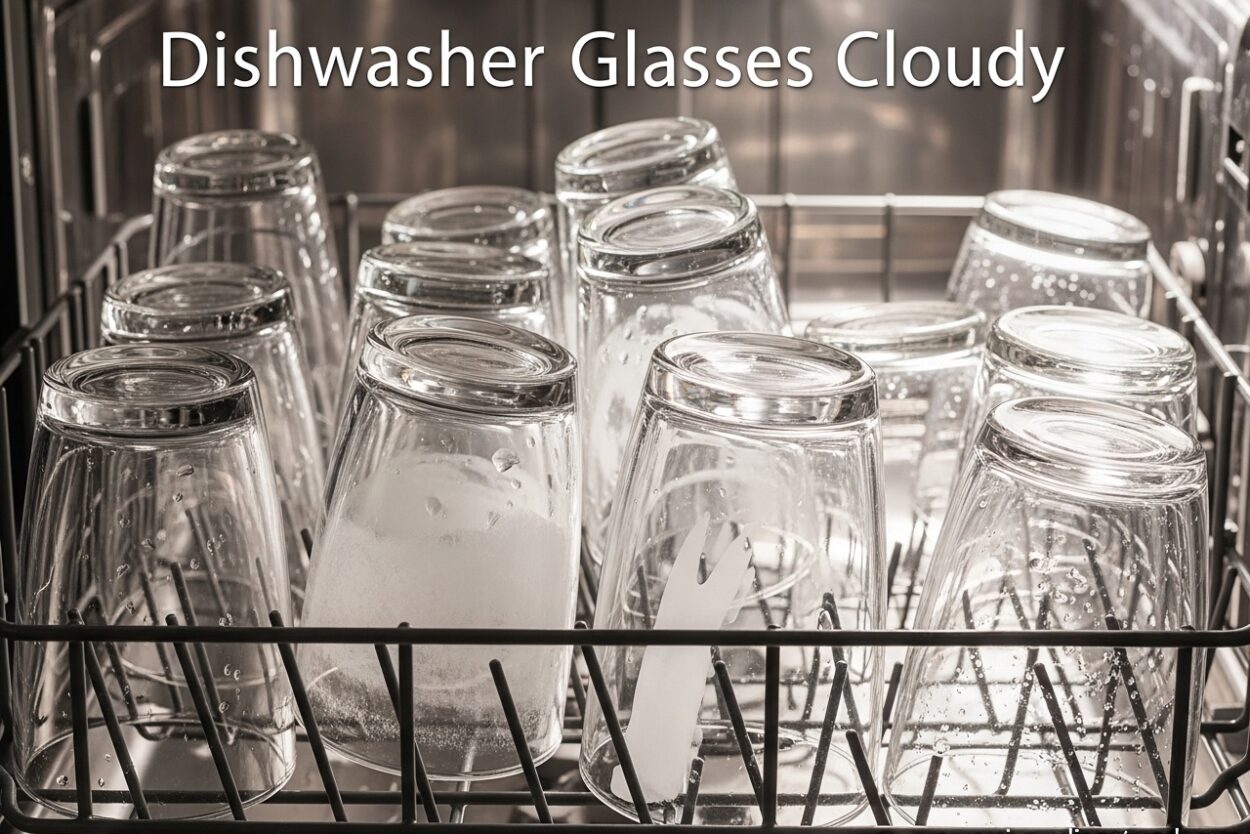
There’s nothing more frustrating than pulling your favorite drinking glasses out of the dishwasher only to find them covered in a cloudy, milky film. I’ve been there, and I know how disappointing it feels when your glassware looks dirty despite going through a full wash cycle.
The good news is that most cloudy glasses can be restored with the right approach. Understanding whether your glasses have hard water deposits or permanent etching is the first step to getting them crystal clear again.
What Causes Dishwasher Glasses Cloudy
Cloudy glasses from the dishwasher are caused by one of two problems: removable hard water mineral deposits or permanent glass etching. I’ve tested dozens of glasses over the years, and the difference between these two causes determines whether your glassware can be saved.
Hard water contains high levels of calcium and magnesium minerals that leave behind a white, chalky film on your glasses. This type of cloudiness can be removed with the right cleaning methods. On the other hand, etching is microscopic damage to the glass surface caused by harsh detergents, high water temperatures, and soft water that corrodes the glass over time.
Understanding which type of cloudiness you’re dealing with is crucial because it determines your next steps. Let me walk you through how to diagnose and fix both types.
Why Are My Glasses Cloudy from the Dishwasher
The two main culprits behind cloudy glassware are hard water deposits and glass etching, each with distinct characteristics and solutions.
Hard Water Mineral Deposits
Hard water contains dissolved minerals like calcium and magnesium that build up on your glasses over time. When the water evaporates during the drying cycle, these minerals form a cloudy, white film that can make your glassware look dirty even when it’s freshly washed.
This type of cloudiness is most common in areas with hard water and typically appears as a uniform white coating. You might also notice spots or streaks that don’t rinse off with normal washing. The good news is that mineral deposits can be removed with the right cleaning approach.
Glass Etching (Permanent Damage)
Etching occurs when the glass surface is permanently damaged by corrosive elements. This happens more often in soft water areas because the water lacks minerals to buffer the corrosive effects of detergent. High water temperatures, excessive detergent, and long wash cycles accelerate this type of damage.
Unlike hard water deposits, etching appears as a permanent cloudiness that won’t come off with vinegar or any other cleaning method. The glass surface becomes pitted and microscopic scratches develop, creating that hazy appearance that won’t go away no matter what you try.
Other Contributing Factors
Your dishwasher’s temperature setting plays a significant role in glass cloudiness. Water that’s too hot can accelerate both mineral buildup and etching. Using too much detergent is another common mistake I see – more detergent doesn’t equal cleaner dishes, and the excess can leave behind a filmy residue.
Some glass types are more susceptible to cloudiness than others. Lead crystal and delicate glassware should never go in the dishwasher, as they’re particularly vulnerable to both etching and damage from high temperatures.
How to Diagnose Cloudy Glasses: The Vinegar Test
Before you invest time and effort into cleaning your cloudy glasses, you need to determine whether the cloudiness is removable mineral buildup or permanent etching. The vinegar test is the most reliable method I’ve found for making this diagnosis.
Step 1: Prepare the Test Area
Choose one of your cloudiest glasses for this test. You’ll need white vinegar and a small bowl or container large enough to submerge at least part of the glass.
Step 2: Soak a Small Section
Pour enough white vinegar into the bowl to cover the bottom inch of your glass. Place the glass in the bowl so that just the cloudy portion at the base is submerged in the vinegar. Let it soak for 15 minutes.
Step 3: Check the Results
Remove the glass from the vinegar and rinse it with water. Compare the soaked section to the rest of the glass. If the cloudy film has disappeared from the soaked area, you’re dealing with hard water deposits that can be cleaned off.
If there’s no change after the vinegar soak, the cloudiness is likely permanent etching. Unfortunately, etched glass cannot be restored, and you’ll need to replace the affected glasses.
Alternative Test Methods
If the vinegar test doesn’t give you clear results, try rubbing a small amount of baking soda paste onto a cloudy area with a soft cloth. If the cloudiness rubs off, it’s mineral buildup. If it remains, the damage is permanent.
How to Clean Cloudy Glasses from Dishwasher
If your vinegar test revealed removable mineral deposits, several effective cleaning methods can restore your glasses to their original clarity. I’ve tested these approaches extensively and found them all effective for different levels of buildup.
White Vinegar Soak Method
Fill your kitchen sink or a large container with equal parts warm water and white vinegar. Submerge your cloudy glasses completely and let them soak for at least 30 minutes, or up to an hour for heavy buildup. The acetic acid in the vinegar dissolves the mineral deposits that cause cloudiness.
After soaking, scrub each glass gently with a soft sponge or bottle brush to remove any loosened deposits. Rinse thoroughly with warm water and dry with a lint-free cloth to prevent water spots. For stubborn cloudiness, you may need to repeat this process or use undiluted vinegar for a more concentrated treatment.
Baking Soda Paste Treatment
Mix three parts baking soda with one part water to form a thick paste. Apply this paste to your cloudy glasses using a soft sponge or cloth, rubbing gently in circular motions. The mild abrasiveness of baking soda helps scrub away mineral deposits without scratching the glass.
Let the paste sit on the glasses for 10-15 minutes before rinsing thoroughly with warm water. This method works especially well for glasses with localized cloudy spots or stubborn film that vinegar alone couldn’t remove.
Denture Tablet Solution
Drop one or two denture cleaning tablets into a sink or container filled with warm water. Submerge your cloudy glasses and let them soak for 15-20 minutes. The effervescent cleaning action of denture tablets works remarkably well on mineral deposits, and I’ve found this method particularly effective for delicate glassware that might be scratched by more abrasive cleaning methods.
After soaking, rinse the glasses thoroughly and inspect them. If cloudiness remains, you can repeat the process or move on to a more intensive cleaning method.
Commercial Descalers
For severe mineral buildup that doesn’t respond to natural cleaners, commercial descaling products like CLR (Calcium, Lime, and Rust remover) can be effective. Follow the product instructions carefully, as these solutions are more potent than vinegar or baking soda.
Typically, you’ll dilute the descaler with water and soak your glasses for the recommended time. Some products may require scrubbing or multiple applications for stubborn deposits. Always rinse glasses extremely thoroughly after using chemical descalers, and avoid using them on delicate or antique glassware.
Dishwasher Cleaning Method
If you have many cloudy glasses to clean at once, you can use your dishwasher to treat them. Place a dishwasher-safe bowl filled with white vinegar on the top rack of your empty dishwasher. Run a full cycle with the hottest water setting possible.
The vinegar will be distributed throughout the dishwasher during the cycle, helping to dissolve mineral deposits on all your glassware at once. This method is less intensive than individual soaking but works well for maintenance cleaning of lightly cloudy glasses.
How to Clean Cloudy Wine Glasses
Wine glasses require special care due to their delicate shape and thin glass. The methods I mentioned above can work, but you’ll need to adapt them for more fragile glassware.
For wine glasses, I recommend starting with the gentlest approach first. Use a soft microfiber cloth dampened with white vinegar to gently wipe cloudy areas. If that doesn’t work, try the denture tablet method, as it’s the least abrasive option for delicate glass.
Avoid using baking soda or commercial descalers on fine wine glasses, as these can scratch or damage the thin glass. Always hand wash wine glasses after treating them, and never put them in the dishwasher if you want to maintain their clarity.
Lead Crystal Warning
If you have lead crystal glasses, never put them in the dishwasher. The combination of high heat and detergent can permanently cloud and damage lead crystal. These should always be hand washed with mild soap and warm water, then dried immediately with a soft cloth to prevent spotting.
How to Prevent Cloudy Glasses in Dishwasher
Once you’ve restored your cloudy glasses to clarity, you’ll want to keep them that way. Prevention is far easier than treatment, and I’ve found that a few simple adjustments to your dishwasher routine can make a significant difference.
Use Rinse Aid Regularly
Rinse aid is one of the most effective tools for preventing cloudy glasses. It works by reducing the surface tension of water, allowing it to sheet off glassware rather than forming droplets that leave behind mineral deposits when they evaporate.
Fill your dishwasher’s rinse aid dispenser according to the manufacturer’s instructions and refill it regularly. If you don’t have a built-in dispenser, you can add a small amount of white vinegar to the rinse cycle as a natural alternative.
Adjust Detergent Amount
Most people use too much dishwasher detergent, which contributes to both cloudiness and etching. If you have soft water, you need even less detergent than the recommended amount. I’ve found that using about half the recommended amount often delivers better results with less residue.
Consider switching to a high-quality detergent specifically formulated for hard water if you live in an area with mineral-heavy water. These detergents contain water softeners that help prevent mineral buildup on your glassware.
Lower Water Temperature
Extremely hot water accelerates both mineral deposits and etching. If your dishwasher has temperature settings, choose a lower heat option for your glassware. Some dishwashers have specific glass or delicate cycles that use cooler water and gentler washing action.
Avoid using the sanitize or high-heat wash cycles for everyday glassware. These settings are unnecessary for most dishes and can contribute to cloudiness over time.
Load Glasses Properly
Proper loading prevents water from pooling in glasses, which leads to spots and cloudiness. Place glasses at an angle rather than upside down on the bottom rack, and ensure there’s space between items for water to circulate freely.
Never let glasses touch each other or other dishes during the wash cycle. This contact can trap water and detergent, leading to localized cloudiness where the glass surfaces meet.
Use Dishwasher Salt (For Compatible Models)
Many European-style dishwashers have a built-in water softener that requires dishwasher salt. If your machine has this feature, keep the salt compartment filled according to the manufacturer’s instructions. The softener removes minerals from the water before they can deposit on your glasses.
This feature is particularly valuable if you live in a hard water area. The salt regeneration system works continuously to prevent mineral buildup throughout the dishwasher, not just on your glassware.
Regular Descaling
Even with proper prevention, your dishwasher will accumulate mineral deposits over time. Run a descaling cycle once a month using a dishwasher cleaner or a cup of white vinegar placed on the top rack of an empty dishwasher.
This maintenance cleaning removes buildup from the dishwasher interior, spray arms, and filters, ensuring that mineral deposits from the machine itself won’t transfer to your clean glasses.
Clean the Filter Regularly
A clogged dishwasher filter can redistribute food particles and minerals onto your dishes during the wash cycle. Remove and clean your dishwasher’s filter according to the manufacturer’s instructions, typically once a month or more often if you cook frequently.
I’ve found that a clean filter makes a surprising difference in overall dishwasher performance, including the clarity of your glassware after each cycle.
Frequently Asked Questions
How do I fix cloudy glasses in my dishwasher?
Start with the vinegar test to determine if the cloudiness is removable. Soak a small area of the glass in white vinegar for 15 minutes. If the cloudiness disappears, soak the entire glass in equal parts vinegar and water for 30 minutes, then scrub gently with a soft sponge and rinse thoroughly.
Can etched glasses be restored?
Unfortunately, no. Etching is permanent microscopic damage to the glass surface that cannot be reversed. The vinegar test will help you determine if your glasses are etched – if soaking doesn’t remove the cloudiness, the damage is permanent and the glasses will need to be replaced.
What is the best dishwasher detergent for cloudy glasses?
Look for detergents specifically formulated for hard water if you live in an area with mineral-heavy water. Use less detergent than recommended, especially if you have soft water. Powder and liquid detergents often work better than pods for controlling amount, and avoiding excessive detergent helps prevent both cloudiness and etching.
Why are my glasses coming out chalky from the dishwasher?
Chalky residue is typically caused by hard water mineral deposits, specifically calcium and magnesium that remain on the glass after water evaporates. Using too much detergent can also leave behind a chalky film. The solution is to use rinse aid, reduce detergent amount, and regularly descale your dishwasher to remove mineral buildup.
Can you fix glasses that have gone cloudy in the dishwasher?
Yes, if the cloudiness is caused by mineral deposits. Perform the vinegar test first – soak a small area for 15 minutes and check if the cloudiness disappears. If it does, the glasses can be restored by soaking in vinegar water and scrubbing gently. If the test doesn’t work, the cloudiness is permanent etching and cannot be fixed.
Why is my dishwasher making my glasses foggy?
Foggy glasses are usually caused by hard water deposits or improper rinsing. When water with high mineral content evaporates from the glass surface, it leaves behind a cloudy film. Using rinse aid, reducing water temperature, and ensuring proper loading can help prevent foggy glasses. The foggy appearance is different from etching, which is permanent cloudiness that cannot be removed.
Do you put Rinse Aid in dishwasher for cloudy glasses?
Yes, rinse aid is one of the most effective solutions for preventing cloudy glasses. Rinse aid reduces water surface tension, allowing water to sheet off glassware rather than forming droplets that leave mineral deposits when they evaporate. Fill your dishwasher’s rinse aid dispenser regularly, or use a small amount of white vinegar in the rinse cycle as a natural alternative.
Summary
Cloudy glasses from the dishwasher are frustrating but often fixable. The key is understanding whether you’re dealing with removable hard water deposits or permanent etching. Start with the vinegar test to diagnose the problem – if the cloudiness disappears after soaking, your glasses can be restored with proper cleaning.
For removable mineral buildup, white vinegar soaks, baking soda paste, and denture tablets are all effective solutions. Prevent future cloudiness by using rinse aid regularly, adjusting your detergent amount, lowering water temperature, and maintaining your dishwasher with regular descaling and filter cleaning.
Remember that etching is permanent damage that cannot be reversed. If the vinegar test doesn’t improve your glasses’ clarity, it’s time to replace them and focus on preventing further damage to your remaining glassware. With the right prevention strategies, you can keep your glasses crystal clear and avoid cloudy dishwasher glasses in the future.





Leave a Comment