
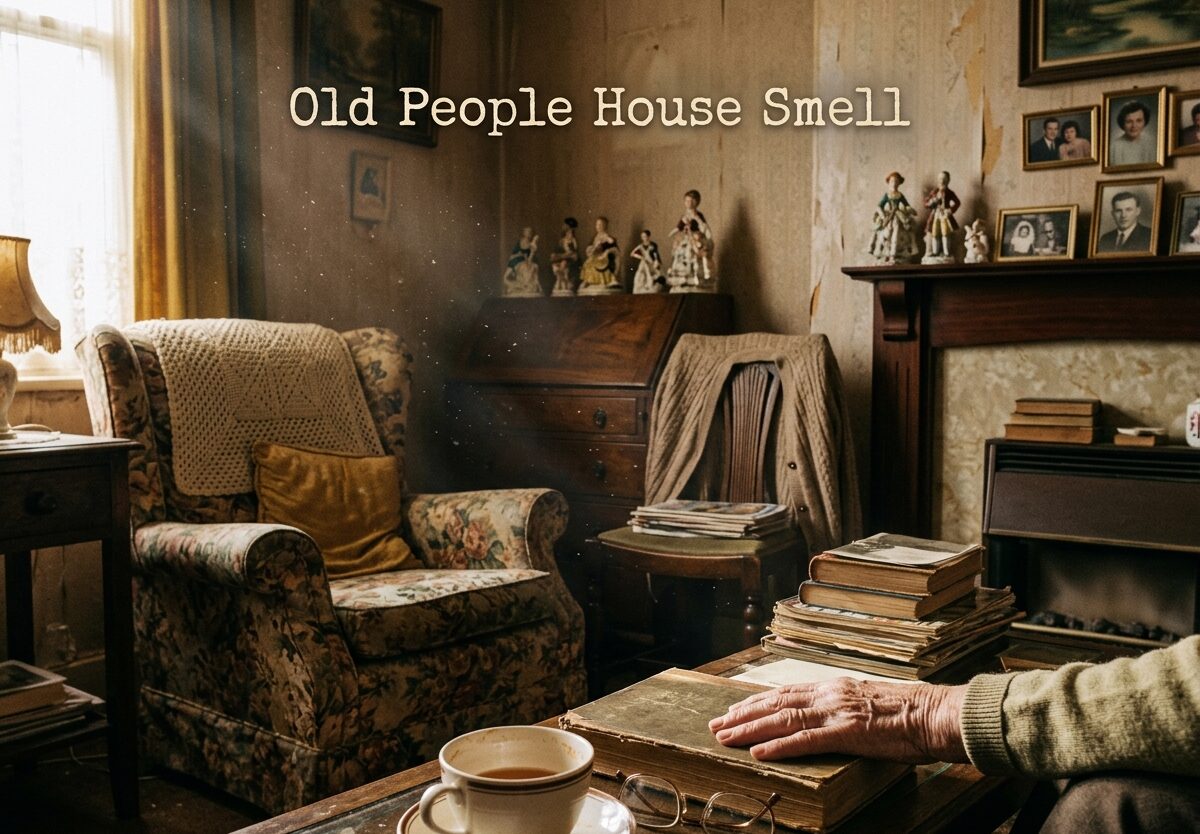
If you’ve walked into an older person’s home and noticed a distinctive, musty odor, you’re not alone. This characteristic scent is so common that it has a name in Japanese culture (kareishu), and scientists have studied it extensively. Old people house smell is real, it has a biological cause, and it’s not about poor hygiene.
The distinctive odor comes from a chemical compound called 2-nonenal, which our skin produces more of as we age. This compound clings to everything – skin, clothing, furniture, curtains, and walls. Understanding what causes this smell is the first step toward effectively managing it with dignity and respect.
What Is Old People House Smell?
Old people house smell is a distinctive odor often described as musty, grassy, or slightly greasy. It’s not unpleasant in a offensive way, but it has a characteristic scent that many people recognize immediately. The smell permeates homes where elderly individuals live, settling into fabrics, furniture, and even walls.
What makes this odor unique is its persistence. Regular cleaning often doesn’t eliminate it completely because the compound causing it is water-insoluble and bonds with surfaces. Many family caregivers report feeling frustrated when deep cleaning doesn’t remove the smell from their parent’s home.
This odor is different from other household smells. Unlike mold or mildew, which have a dank or earthy quality, old people house smell has a sweeter, more grassy character. Unlike urine or incontinence odors, which are sharp and ammonia-like, nonenal has a milder but stubborn presence.
Many people describe it as similar to the smell of old books or antique stores, but with a distinct note that’s hard to place. Some compare it to cucumbers or melons that have started to turn, others to old cardboard or newsprint.
The Science Behind Nonenal and Aging
The scientific explanation for old people house smell begins with a compound called 2-nonenal. This chemical is an aldehyde that forms when omega-7 unsaturated fatty acids in our skin oxidize. As we age, our skin produces more of these fatty acids, and our body’s antioxidant defenses weaken, allowing more oxidation to occur.
Research published in the Journal of Investigative Dermatology confirmed that 2-nonenal production increases significantly after age 40. The compound becomes more pronounced in the 70s and beyond. This is why old people house smell is more common in homes of seniors in their later years.
What makes 2-nonenal particularly challenging is that it’s water-insoluble. This means it doesn’t wash away easily with plain water. It clings to skin cells, clothing fibers, and household surfaces. The compound is also relatively stable, which means it persists for long periods once it accumulates.
Our skin’s chemistry changes as we age in several ways that contribute to odor. Sebaceous glands produce different oil compositions, sweat gland activity changes, and skin turnover slows down. All these factors create an environment where 2-nonenal can accumulate and persist.
Hormonal changes during aging also play a role. The decline in estrogen and testosterone affects how our bodies process and eliminate various compounds through the skin. This hormonal shift can intensify the production of certain odor-causing substances.
Why Old People House Smell Is Not About Poor Hygiene
One of the most important things to understand is that old people house smell is not a sign of poor hygiene or lack of cleanliness. This is a biological process that happens regardless of how often someone bathes or how clean they keep their home. Many elderly individuals bathe daily and maintain immaculate homes, yet still have this characteristic odor.
The compound 2-nonenal is produced within the body and released through the skin continuously. It’s not caused by dirt or bacteria – it’s a natural byproduct of aging skin chemistry. Blaming elderly individuals for this smell is not only unfair but also counterproductive to finding solutions.
Many caregivers feel embarrassed about the smell in their elderly parent’s home. They worry that visitors will judge their caregiving or assume their parent doesn’t take care of themselves. This shame can prevent families from addressing the issue openly and effectively.
Understanding that this is a natural biological process helps change the conversation. Instead of framing it as a hygiene problem, we can approach it as a normal aspect of aging that can be managed with the right strategies and products.
Other Factors That Contribute to Elderly Home Odors
While 2-nonenal is the primary cause of old people house smell, several other factors can contribute to odors in elderly homes. Understanding these additional causes can help you address the complete picture and develop more effective solutions.
Medications are a significant factor. Many older adults take multiple prescriptions, and some medications can cause changes in body odor or be excreted through sweat and breath. Drugs for blood pressure, heart conditions, and neurological issues can all affect how someone smells. These odors can accumulate in homes over time.
Reduced mobility plays a role too. When seniors have difficulty moving around, they may open windows less frequently, clean less thoroughly, and have trouble with laundry. This can lead to stagnant air and dust accumulation, which compounds odor problems. Regular cleaning routines become more challenging with mobility limitations.
Incontinence issues, when present, add another layer of odor challenges. Even with careful management, accidents can happen and odors can linger in carpets, furniture, and bedding. These issues require specific cleaning approaches beyond standard household cleaning.
Ventilation problems are common in older homes. Many elderly individuals keep windows closed for security reasons or due to difficulty opening them. Poor air circulation allows odors to concentrate and settle into fabrics and surfaces. Modern homes are also built more tightly, reducing natural air exchange.
Diet can influence body odor as well. Some foods strong in sulfur compounds, like garlic and onions, can affect how people smell. Dehydration, which is more common in older adults, can concentrate waste products in sweat, potentially affecting odor. Medication side effects might also cause dry mouth, which changes breath odor.
How to Get Rid of Old People Smell in Your House
Eliminating old people house smell requires a multi-pronged approach. Because 2-nonenal is water-insoluble and clings to surfaces, you’ll need strategies that break down the compound and prevent it from accumulating again. Here’s a comprehensive approach:
Step 1: Improve ventilation immediately. Open windows daily to create cross-ventilation, even in winter. Use box fans and ceiling fans to keep air moving. Consider installing exhaust fans in key areas if you don’t have them. Fresh air circulation is one of the most effective odor fighters.
Step 2: Deep clean all fabrics. This includes curtains, upholstery, bedding, and clothing. Wash items in the hottest water safe for the fabric, adding white vinegar to the rinse cycle. Vinegar helps neutralize odors that regular detergent misses. For items that can’t be washed, steam cleaning can be effective.
Step 3: Address carpets and rugs professionally or rent a steam cleaner. Carpet fibers trap odors effectively, and surface cleaning isn’t enough. Use enzyme-based cleaners specifically designed to break down organic compounds. These cleaners contain beneficial bacteria that consume odor-causing molecules.
Step 4: Clean walls and surfaces with a solution designed to cut through grease and oils. 2-nonenal has a slightly oily quality that allows it to adhere to walls and woodwork. Use a degreasing cleaner or a solution of vinegar and baking soda. Pay special attention to areas near beds and favorite chairs where seniors spend the most time.
Step 5: Place odor absorbers throughout the home. Activated charcoal bags, baking soda in open containers, and specialized odor-absorbing gels can all help pull odors from the air. Replace these regularly as they become saturated. Place them in closets, under furniture, and in corners.
Step 6: Consider an air purifier with a HEPA filter and activated carbon layer. The HEPA filter captures particles, while the carbon absorbs odors and volatile organic compounds. Run it continuously, especially in rooms where the elderly person spends the most time. This can make a significant difference in air quality.
Personal Hygiene Tips for Elderly Individuals
While old people house smell isn’t caused by poor hygiene, proper personal care can help manage it. The key is approaching this topic with compassion and respect. Many elderly individuals feel sensitive about hygiene discussions, so frame suggestions positively.
Bathing with the right products matters. Regular soap doesn’t effectively break down 2-nonenal. Japanese researchers found that soaps containing persimmon extract are particularly effective at neutralizing nonenal. Look for persimmon-based body washes or add a few drops of persimmon extract to regular bath products.
Fragrance-free products are often better than heavily scented ones. Strong fragrances can mix with existing odors and create an unpleasant combination. Instead, focus on thorough cleaning with gentle, fragrance-free soaps and deodorants designed for sensitive skin.
Exfoliating gently a few times a week can help remove the skin cells where 2-nonenal accumulates. Use a soft brush or washcloth, not harsh scrubs that might damage aging skin. This helps remove the surface layer where odor compounds concentrate.
Clothing choices make a difference too. Natural fibers like cotton and wool absorb less odor than synthetic materials. Wash clothes after each wearing if possible, using vinegar in the rinse cycle. Sun-drying clothes when weather permits helps – UV rays naturally kill bacteria and help break down odors.
When discussing hygiene with elderly loved ones, use “I” statements and focus on comfort rather than criticism. Instead of “You smell bad,” try “I’ve read that there are special products that help us feel fresher as we age – would you like to try some?” Offer to shop for products together or make it a shared activity.
Natural Remedies for Eliminating Old People House Smell
Natural solutions can be surprisingly effective against old people house smell, and many caregivers have found success with simple home remedies. These approaches are often gentler than harsh chemicals and safer for homes with seniors who may have respiratory sensitivities.
White vinegar is one of the most versatile odor fighters. Place bowls of vinegar in rooms overnight to absorb odors, then discard in the morning. Add vinegar to laundry cycles, use it for cleaning surfaces, and put it in a spray bottle for quick freshening. The vinegar smell dissipates quickly, taking other odors with it.
Baking soda absorbs odors effectively. Sprinkle it on carpets before vacuuming, place open containers in closets and drawers, and use it when cleaning upholstery. For stubborn odors in furniture, sprinkle baking soda, let it sit overnight, then vacuum thoroughly.
Activated charcoal bags are another natural option. These contain highly porous charcoal that traps odors and moisture. Place them in areas where odors concentrate, like near beds, in closets, and in bathrooms. Recharge them in sunlight periodically, and replace every few months.
Houseplants can help improve air quality naturally. NASA’s Clean Air Study found that certain plants effectively remove volatile organic compounds from indoor air. Snake plants, spider plants, peace lilies, and English ivy are all good choices. While plants alone won’t eliminate old people house smell, they contribute to overall air quality improvement.
Essential oils can mask odors while providing aromatherapy benefits. Lemon, lavender, eucalyptus, and tea tree oils all have purifying properties. Use in diffusers, add to cleaning solutions, or place a few drops on cotton balls in strategic locations. However, be cautious with strong scents around seniors who may have scent sensitivities.
When Odor Might Indicate a Health Problem
While old people house smell is normal, certain odors can signal health issues that need medical attention. It’s important to recognize the difference between normal aging-related odors and those that might indicate illness.
A sweet or fruity odor on the breath can indicate diabetes, particularly if it smells like acetone or nail polish remover. This occurs when blood sugar levels are very high and the body breaks down fat for energy instead of sugar.
A strong ammonia-like urine odor might signal dehydration or urinary tract infection, both common in older adults. Increased urination frequency combined with strong odor warrants medical evaluation.
Foul-smelling wounds or skin that breaks down can indicate infection. This is particularly important for seniors with limited mobility who may develop pressure sores. Any area of skin that looks red, swollen, or has an unusual smell should be examined by a healthcare provider.
Sudden changes in body odor, especially if accompanied by other symptoms, should prompt a doctor’s visit. Medication side effects, metabolic changes, or undiagnosed conditions can all affect how someone smells. When in doubt, consult a healthcare professional.
FAQs
How do I keep my house from smelling like old people?
Open windows daily for cross-ventilation, use air purifiers with HEPA and carbon filters, deep clean fabrics regularly with vinegar in the rinse cycle, place activated charcoal bags around the home, and use enzyme-based cleaners on carpets. Wash walls with degreasing solutions, and address moisture issues promptly.
What causes grandma house smell?
Grandma house smell is primarily caused by 2-nonenal, a chemical compound that skin produces more of as people age. As omega-7 unsaturated fatty acids in skin oxidize, they form this water-insoluble compound that clings to skin, clothing, and household surfaces, creating a distinctive musty, grassy odor.
How to get rid of old grandma smell?
Wash all fabrics including curtains and upholstery with vinegar added to the rinse cycle. Steam clean carpets with enzyme-based cleaners. Clean walls with degreasing solutions. Improve ventilation daily, use air purifiers, and place odor absorbers like activated charcoal and baking soda throughout the home. Consider persimmon-based soaps for personal care.
What do old folks’ homes smell like?
Old folks’ homes typically have a distinctive musty, slightly grassy odor that some describe as similar to old books, cucumber melon, or newsprint. The smell is not unpleasant in an offensive way but has a sweet, stale quality that’s immediately recognizable and tends to linger in fabrics and furnishings.
What soap gets rid of old person smell?
Persimmon-based soaps are specifically designed to neutralize 2-nonenal, the compound responsible for old person smell. Japanese research found that persimmon extract effectively breaks down this odor-causing chemical. Look for body washes containing persimmon extract, or use gentle fragrance-free soaps with exfoliation to remove surface skin cells where odors accumulate.
What do nursing homes use to eliminate odors?
Nursing homes typically use a combination of commercial air purifiers with HEPA and carbon filtration, enzyme-based cleaning products that break down organic compounds, ozone generators in unoccupied rooms, and specialized odor-neutralizing sprays. They also emphasize excellent ventilation, frequent fabric washing with odor-eliminating additives, and strict cleaning protocols.
What age does old person smell start?
Old person smell typically begins around age 40 when 2-nonenal production starts increasing, but it becomes more noticeable in the 70s and beyond. The compound accumulates gradually over decades, which is why it’s more pronounced in elderly individuals. Genetics, diet, and overall health can influence when and how strongly someone develops this characteristic odor.
Conclusion
Old people house smell is a natural biological phenomenon caused by 2-nonenal, a compound that increases as our skin ages. Understanding this science helps us approach the topic with compassion rather than judgment. While the odor can be stubborn, it’s manageable with the right strategies.
Effective solutions include improving ventilation, deep cleaning fabrics with vinegar, using enzyme-based cleaners on carpets, incorporating persimmon-based products for personal care, and placing natural odor absorbers throughout the home. Air purifiers with carbon filtration can make a significant difference in air quality.
Most importantly, remember that this is a normal part of aging, not a reflection on anyone’s cleanliness or worth. With patience, understanding, and consistent effort, old people house smell can be effectively managed while preserving dignity and respect for our elderly loved ones.


Leave a Comment