
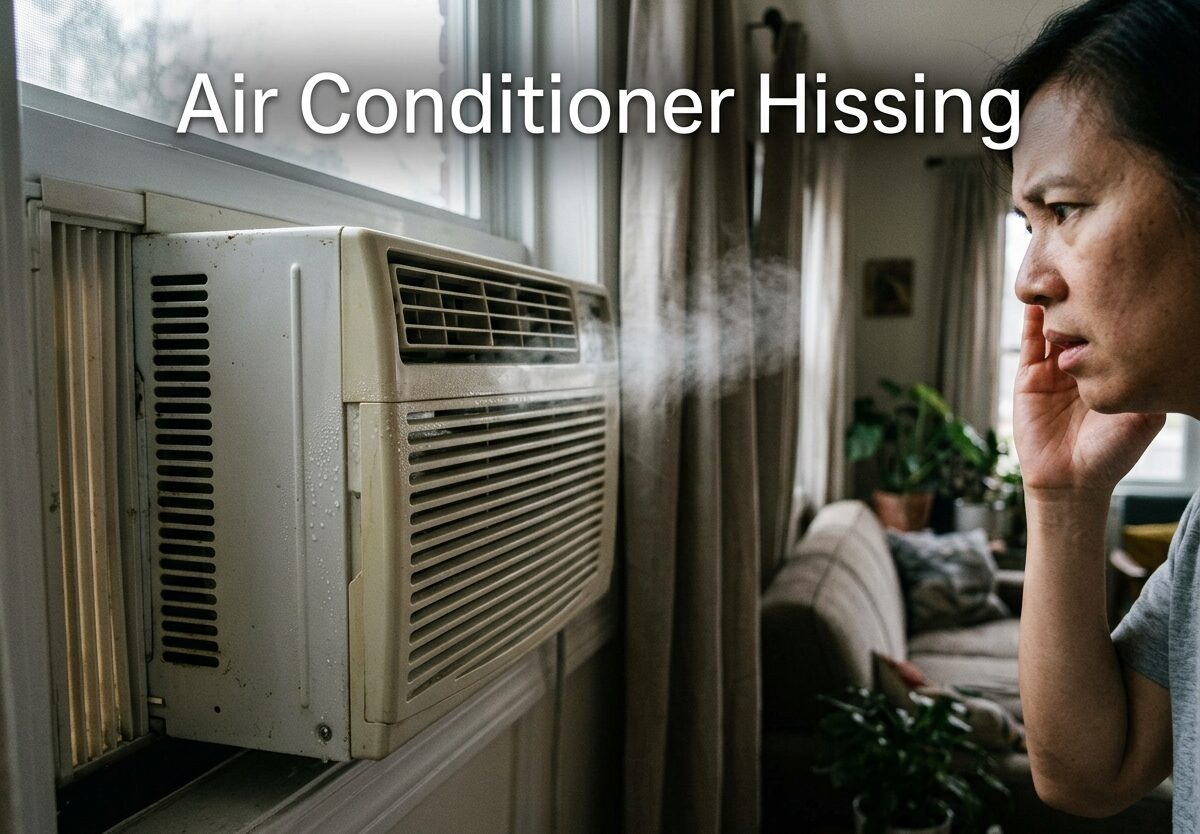
If you hear air conditioner hissing coming from your HVAC system, you’re right to be concerned. That hissing noise typically signals a problem that needs attention. Let me walk you through what causes this sound, when it’s dangerous, and what steps you should take.
Safety first: If your air conditioner is making a loud or continuous hissing sound, turn off the unit immediately. A hissing AC can indicate refrigerant leaks or high-pressure issues that may damage your system or pose safety risks.
Why Is My Air Conditioner Hissing?
Air conditioner hissing usually indicates one of these five issues:
- Refrigerant leak – The most common cause, where pressurized coolant escapes through holes or cracks in your system
- High compressor pressure – Excess pressure buildup in the compressor that releases as a hissing sound
- Leaking ductwork – Air escaping through gaps or loose connections in your ducts
- Expansion valve problems – A malfunctioning valve that regulates refrigerant flow
- Reversing valve issues – Specific to heat pumps, when the switching valve develops problems
Understanding which type of AC hissing noise you’re experiencing helps determine the severity and right solution.
Refrigerant Leaks: The Most Common Culprit
When your air conditioner is hissing, a refrigerant leak is the most likely cause. Your AC system relies on pressurized refrigerant to absorb heat from your home. When this refrigerant escapes through a leak, you’ll hear that telltale hissing sound as pressurized gas releases.
Leaks typically occur in the copper tubing lines that connect your indoor and outdoor units. These lines, called the line set, can develop holes from corrosion, vibration over time, or faulty brazing connections from the original installation. Small leaks might only lose a small amount of refrigerant, while larger leaks can drain your system quickly.
Signs of a refrigerant leak beyond air conditioner hissing include:
- Ice buildup on the refrigerant lines or outdoor unit
- Warm air blowing from your vents instead of cool air
- Higher energy bills as your system runs longer trying to cool
- AC cycles on and off more frequently than usual
A refrigerant leak requires professional repair. HVAC technicians use specialized tools to detect leaks, repair the damaged section, and recharge your system with the correct amount of refrigerant. Ignoring a leak can lead to compressor failure – a much more expensive problem.
High Compressor Pressure Issues
Your air conditioner compressor operates at high pressure – typically around 500 psi on the high side. Sometimes pressure builds up excessively and releases as a hissing sound. This air conditioner hissing can happen when the compressor first starts up, which is normal for 10-15 seconds.
Normal startup hissing sounds like:
- Lasts only 10-15 seconds when the compressor kicks on
- Occurs before the indoor blower starts pushing air
- Happens consistently when the AC cycles on
- Is relatively quiet compared to problem hissing
Abnormal compressor pressure hissing sounds like:
- Continuous hissing that doesn’t stop after startup
- Loud, high-pitched whistling or screeching
- Accompanied by banging or clanking noises
- Happens randomly during operation, not just at startup
If you hear continuous hissing from your compressor, high pressure might indicate a clogged filter, dirty condenser coils, or a failing compressor. These issues restrict refrigerant flow and cause dangerous pressure buildup. Turn off your AC and call a professional – compressor replacement is one of the most expensive AC repairs.
Leaking or Loose Ductwork
Sometimes air conditioner hissing isn’t coming from the unit itself but from your ductwork. When ducts have gaps, loose connections, or holes, pressurized air escapes and creates hissing sounds. You’ll typically notice this hissing from AC vents specifically.
Leaky ducts cause several problems:
- Reduced cooling efficiency as conditioned air escapes into unused spaces
- Higher energy bills from wasted cooling
- Uneven temperatures throughout your home
- Hissing, whistling, or whooshing sounds from vents or register openings
You can sometimes detect duct leaks yourself by feeling around duct joints and register connections for air movement while the system runs. Visible gaps, disconnected sections, or crushed ducts need professional sealing or replacement. Properly sealed ductwork improves efficiency and eliminates those annoying hissing sounds.
Expansion Valve Problems
The expansion valve regulates refrigerant flow into your evaporator coil. When this valve malfunctions or becomes clogged, it can create hissing sounds as refrigerant struggles to pass through. You’ll typically hear this air conditioner hissing from the indoor unit or air handler.
Symptoms of a failing expansion valve include:
- Hissing sound from the indoor unit during operation
- Frost or ice buildup specifically on the evaporator coil
- AC running continuously without reaching the set temperature
- Temperature fluctuations or inconsistent cooling
Expansion valve problems require a technician to diagnose and replace the faulty component. The part itself isn’t overly expensive, but the repair requires proper refrigerant recovery and recharging.
Heat Pump Reversing Valve Issues
If you have a heat pump system, air conditioner hissing might come from the reversing valve. This valve switches your system between heating and cooling modes. When it starts failing, you may hear hissing during mode changes or even during normal operation.
Reversing valve problems typically show up as:
- Hissing when the system switches between heating and cooling
- System stuck in one mode and not switching properly
- Reduced heating or cooling performance
- Refrigerant leaks around the valve body
Unfortunately, reversing valve replacement is a complex repair that often costs as much as compressor replacement. A qualified technician can determine if the valve can be repaired or needs complete replacement.
Window AC Unit Hissing
Window air conditioner hissing has some unique causes compared to central AC systems. Since window units contain all components in one box, the hissing often comes from internal issues rather than ductwork.
Common causes of window AC hissing include:
- Refrigerant leaks from the internal coils (most common)
- Fan blade hitting the casing or internal components
- Loose mounting allowing vibration and noise
- Damaged or worn seals around the unit
- Compressor issues similar to central AC systems
Window units are often more cost-effective to replace than repair if they’re several years old. However, newer units might still be worth fixing, especially if the issue is minor like a loose fan or mounting problem.
AC Hissing When Turned Off
Hearing air conditioner hissing when the unit is turned off can be puzzling, but it actually has a logical explanation. When your AC shuts off, pressure equalizes throughout the system. This pressure balancing can create brief hissing sounds as refrigerant moves between high and low sides.
Normal off-cycle hissing:
- lasts only a few seconds after shutdown
- Occurs immediately when the compressor stops
- Is relatively quiet and short-lived
- Happens consistently when turning off the unit
Concerning off-cycle hissing:
- Continuous hissing that continues for minutes after shutdown
- Loud hissing accompanied by bubbling or gurgling sounds
- Occurs randomly, not just when turning off the unit
- Accompanied by refrigerant odor or visible leaks
Continuous hissing when off might indicate a significant refrigerant leak that allows pressure to escape constantly. If you notice this pattern, turn off the unit and schedule professional service before running it again.
Normal vs Abnormal Hissing: What’s the Difference?
Not all air conditioner hissing indicates a problem. Knowing what’s normal helps you avoid unnecessary service calls while recognizing when real issues exist.
| Characteristic | Normal Hissing | Abnormal Hissing |
|---|---|---|
| Duration | 10-15 seconds at startup or shutdown | Continuous during operation |
| Loudness | Quiet, subtle sound | Loud, noticeable from across the room |
| Timing | Predictable at cycle start/end | Random or intermittent during operation |
| Other sounds | Just the brief hiss | Accompanied by bubbling, banging, or screeching |
If your air conditioner hissing falls into the abnormal column, it’s time to investigate further or call a professional.
When to Call a Professional
Some air conditioner hissing issues require professional expertise. Call a qualified HVAC technician if you notice:
- Continuous hissing that doesn’t stop after startup
- Hissing accompanied by warm air from vents
- Ice buildup anywhere on your system
- Loud screeching, banging, or grinding noises along with hissing
- Visible refrigerant leaks (oily residue on lines or connections)
- Hissing that started after a previous repair attempt
- Your AC is blowing warm air or not cooling properly
Professional AC repair typically includes leak detection using electronic sniffers or UV dye, pressure testing to find the leak source, repair or replacement of damaged components, and proper refrigerant recharging. Most repairs take 2-4 hours depending on complexity.
Don’t attempt to repair refrigerant leaks yourself. Refrigerant handling requires EPA certification and specialized equipment. DIY repairs can be dangerous to you and damaging to your system.
The $5000 HVAC Rule: Repair or Replace?
When facing expensive air conditioner repairs, the $5000 HVAC rule helps decide between repairing or replacing. Here’s how it works: multiply the repair cost by the age of your unit in years. If the total exceeds $5000, replacement usually makes more financial sense.
For example, a 10-year-old AC unit needing a $600 repair: $600 x 10 = $6000. Since this exceeds $5000, replacing the unit would be the smarter long-term investment. A newer unit might justify more repairs before reaching that threshold.
Consider also that newer AC units offer better efficiency, which can reduce your energy bills. If your current unit is over 10-12 years old and facing a major repair like compressor replacement, replacement often provides better return on investment.
Preventive Maintenance Tips
You can prevent many causes of air conditioner hissing through regular maintenance. Here’s what I recommend:
- Change your air filter every 1-3 months depending on usage and household factors
- Schedule annual professional maintenance before cooling season begins
- Keep the outdoor unit clear of debris, leaves, and vegetation
- Clean debris from condenser coils gently with a garden hose
- Check visible duct connections for gaps or disconnected sections
- Address unusual sounds promptly rather than waiting for complete failure
Regular maintenance costs far less than major repairs and extends your system’s lifespan. Most HVAC companies offer maintenance plans that include priority scheduling and discounts on repairs.
Frequently Asked Questions
Why does my AC make a hissing sound?
AC hissing usually indicates a refrigerant leak, excessive compressor pressure, or air escaping through gaps in ductwork. The sound occurs when pressurized refrigerant or air escapes through a small opening. While brief hissing at startup is normal, continuous hissing typically signals a problem requiring professional attention.
Should I turn off my AC if it’s making noise?
Yes, you should turn off your AC if you hear loud or continuous hissing. This sound often indicates a refrigerant leak or dangerous pressure buildup. Running the system with these issues can cause compressor failure or other damage. Turn off the unit and call a professional technician to diagnose the problem before running it again.
What is the $5000 rule for HVAC?
The $5000 rule helps decide between AC repair or replacement. Multiply the repair cost by your unit’s age in years. If the total exceeds $5000, replacement typically makes better financial sense. For example, a 10-year-old unit needing a $600 repair ($600 x 10 = $6000) should probably be replaced rather than repaired.
What does a blown AC compressor sound like?
A failing or blown compressor typically makes loud banging, clanking, or grinding noises rather than just hissing. You might also hear high-pitched screeching or the compressor struggling to start. Complete compressor failure often results in the outdoor unit running but the fan not spinning or no cooling happening at all.
Can I use my AC if it’s hissing?
Brief hissing at startup (10-15 seconds) is normal and safe. However, continuous hissing during operation indicates a problem that could damage your system. You should turn off the AC if the hissing is loud, continuous, or accompanied by warm air, ice buildup, or other unusual sounds. Run the system only after a professional has inspected it.
Conclusion
Air conditioner hissing demands attention but doesn’t always mean disaster. Brief hissing at startup or shutdown is normal as pressure equalizes in the system. But continuous hissing during operation typically signals a refrigerant leak, high compressor pressure, or ductwork problem that needs professional repair.
When you notice unusual sounds from your AC, start with basic checks like replacing a clogged air filter and clearing debris from the outdoor unit. If the hissing continues, turn off the unit and call a qualified HVAC technician. Prompt attention to air conditioner hissing prevents more expensive damage and keeps your cooling system running efficiently through the hottest months.
Remember that regular maintenance prevents most causes of AC hissing. Schedule annual service, change filters regularly, and address unusual sounds promptly. Your air conditioner will thank you with reliable, quiet cooling for years to come.

Leave a Comment