
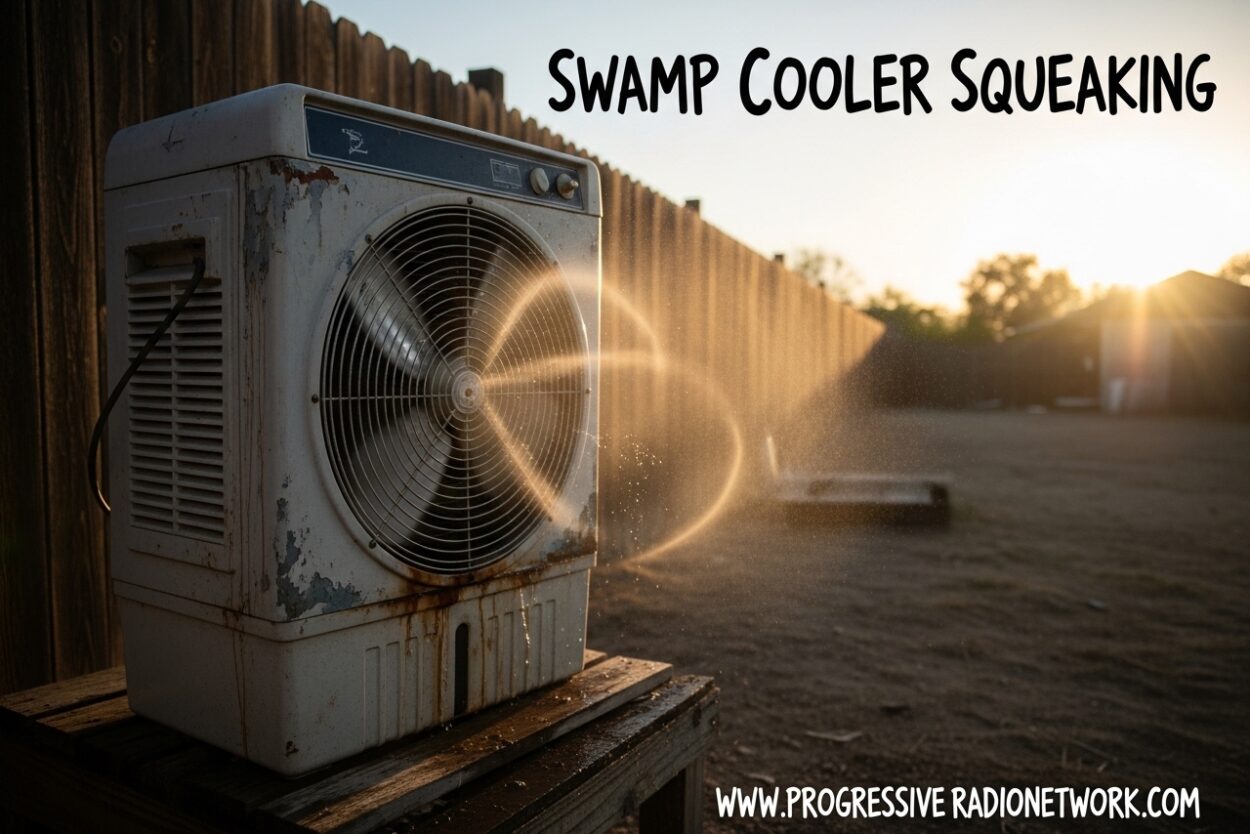
That persistent squeaking sound coming from your swamp cooler isn’t just annoying – it’s a warning sign that something needs attention. I’ve dealt with enough noisy evaporative coolers over the years to know that catching these issues early can save you from costly repairs down the road.
A swamp cooler squeaking is usually caused by a loose or worn fan belt, dry motor bearings, or worn pillow block bearings that need lubrication. These components work together to pull air through wet cooling pads, and when friction builds up from lack of maintenance, you’ll hear that telltale squeak.
In this guide, I’ll walk you through exactly how to diagnose what’s causing the noise, how to fix it yourself, and when it’s time to call a professional. Most swamp cooler squeaking issues can be resolved in under an hour with basic tools and the right lubricant.
What Causes a Swamp Cooler to Squeak?
Swamp cooler squeaking typically stems from three main issues: fan belt problems, dry bearings, or motor wear. Let me break down each cause so you can identify what’s happening with your unit.
Fan belt issues are the most common culprit. Over time, the rubber belt that connects the motor to the blower wheel can stretch, crack, or become glazed. When the belt slips against the pulley, it creates that high-pitched squealing sound, especially when the cooler first starts up.
Dry bearings are another frequent cause. Your swamp cooler has pillow block bearings that support the drive shaft and blower wheel. These bearings need regular oiling with lightweight oil like Zoom Spout oiler or #10 motor oil. When they run dry, metal-on-metal contact produces squeaking or grinding noises.
Motor problems can also cause squeaking, though this is more serious. If the motor’s internal bearings are failing, you might hear squealing that gets worse over time. Two-speed motors sometimes fail on high speed while still working on low – a common scenario reported by many homeowners.
Water pump noise is less common but worth mentioning. A failing pump can make a grinding or whining sound, though this is usually different from the typical bearing or belt squeak.
How to Diagnose the Source of the Squeak
Before you start taking things apart, let’s pinpoint exactly what’s making the noise. This diagnosis will save you time and prevent unnecessary parts replacement.
Listen to when the squeak happens: If the squeak occurs right at startup then disappears as the unit runs, it’s likely a belt issue. If the squeaking continues or gets worse the longer the cooler runs, you’re probably dealing with dry bearings or a failing motor.
Check the sound quality: A high-pitched squeal or screech usually points to the belt. Lower-pitched squeaking or grinding sounds typically indicate bearing problems. Rattling might suggest loose components like panels or screws.
Test the motor speeds: If you have a two-speed motor, run it on both settings. If the squeak only happens on high speed but not low speed, the motor’s high-speed winding or bearings may be failing. This is a clear sign the motor needs attention soon.
Visual inspection: With the unit off, look for obvious signs like a cracked belt, oil leaks around the bearings, or excessive belt slack. These visual clues can confirm your audio diagnosis.
Safety First – Before You Start
Before attempting any swamp cooler repair, you need to take proper safety precautions. I can’t stress this enough – swamp coolers involve electricity and water, a potentially dangerous combination.
Turn off the power at the breaker panel, not just at the thermostat. Swamp coolers have dedicated circuits, and you want to be absolutely certain no electricity is flowing to the unit before you touch anything.
Shut off the water supply to prevent any accidental flooding while you’re working. The water line is usually located near the unit or at the main shut-off valve.
Wait for the motor to cool if the cooler was recently running. Swamp cooler motors can get quite hot, and you don’t want to risk burns while handling components.
Use proper ladder safety if you have a roof-mounted unit. Ensure your ladder is stable and consider having someone hold it for you. Roof work can be dangerous, especially if you’re not comfortable with heights.
Wear protective gear including gloves and safety glasses. Cooling pads can shed debris, and there may be rust or sharp edges inside the unit housing.
Fan Belt Problems – The Most Common Cause
Fan belt issues account for the majority of swamp cooler squeaking complaints I’ve encountered. The good news is that belt problems are usually the easiest and cheapest to fix.
Check belt tension first: A loose belt is the most common cause of squeaking. You should be able to press down on the belt midway between pulleys and feel about half an inch of give. If it’s looser than that, the belt is slipping and causing the squeal.
Inspect the belt condition: Look for cracks, fraying, glazing (shiny spots), or uneven wear. Any of these signs mean the belt needs replacement. A belt in good condition should have a uniform matte finish and no visible damage.
Adjust belt tension: If the belt is in good shape but loose, you can tighten it by loosening the motor mounting bolts and moving the motor away from the blower wheel. This increases tension on the belt. Tighten the mounting bolts securely once you achieve proper tension.
Replace a worn belt: If the belt shows signs of wear, replacement is straightforward. Note the belt size printed on the side (it’s usually a part number like A48 or similar). Remove the old belt by loosening the motor and sliding it off the pulleys. Install the new belt, adjust tension, and you’re done.
Quick temporary fix: Some homeowners report that spraying a small amount of water on the belt while it’s running can temporarily stop the squeak by increasing grip. This isn’t a permanent solution, but it can confirm belt issues and buy you time until you can make proper repairs.
How to Oil Swamp Cooler Bearings – Step by Step
Dry bearings are the second most common cause of swamp cooler squeaking. Proper lubrication is essential for smooth operation and bearing longevity. Here’s exactly how to oil your swamp cooler bearings.
Step 1: Locate the oil ports. Your swamp cooler has pillow block bearings that support the drive shaft on both sides. These bearings have small oil ports or cups – usually located on top or on the side of the bearing housing. You may need to remove a protective cover to access them.
Step 2: Choose the right oil. This is critical – use ONLY lightweight non-detergent motor oil specifically designed for swamp coolers. Zoom Spout Oiler oiler or #10 motor oil are the industry standards. Do NOT use WD-40, 3-in-One oil, or vegetable oil – these will gum up the bearings and make the problem worse.
Step 3: Clean the area. Before adding new oil, wipe away any dirt, debris, or old oil residue around the oil ports. This prevents contaminants from entering the bearing housing.
Step 4: Add fresh oil. Using the spout on your oil container, add oil slowly to each bearing port. You’ll typically need 10-15 drops per bearing. The oil should seep into the bearing housing – don’t overfill it. If there’s an oil reservoir, fill it to the indicated level.
Step 5: Distribute the oil. After adding oil, manually rotate the blower wheel a few times to help distribute the lubricant throughout the bearing. This ensures even coating of all internal surfaces.
Step 6: Check for leaks. Wipe away any excess oil and check for dripping. A small amount of oil may drip initially, but excessive leaking could indicate a seal problem.
Step 7: Test operation. Restore power and run the cooler briefly. Listen for the squeak – it should disappear immediately if dry bearings were the cause. If the squeak persists, the bearings may be worn beyond what lubrication can fix.
Maintenance schedule: For optimal performance, oil your swamp cooler bearings at least once per cooling season, or monthly in heavy-use areas. This simple maintenance task can extend bearing life by years.
Motor and Water Pump Problems
When belt and bearing issues don’t explain the squeaking, you may be dealing with motor or water pump problems. These are more serious and often require professional attention.
Motor bearing failure: If the squeak comes directly from the motor housing itself, the motor’s internal bearings may be wearing out. Unlike pillow block bearings, motor bearings aren’t designed to be serviced – they’re sealed units. When they fail, the entire motor typically needs replacement.
Two-speed motor issues: Many swamp coolers use two-speed motors for flexibility. A common failure pattern is the high speed winding failing while low speed still works. If your cooler squeaks only on high speed, the motor is likely failing and should be replaced soon before complete failure occurs.
Motor shaft problems: Sometimes the motor shaft can become bent or develop a flat spot where the belt rides. This creates irregular belt movement and squeaking. Inspect the shaft for wear patterns or visible damage.
Water pump noise: The water pump that circulates water to the cooling pads can fail and make noise. However, pump noise is usually more of a grinding or whining sound rather than a squeak. If you suspect pump issues, check for proper water flow and listen to the pump independently of the main motor.
Electrical humming: A humming sound (different from squeaking) can indicate electrical issues with the motor capacitor or winding problems. This is usually accompanied by the motor struggling to start or running sluggishly.
When to Repair vs Replace – Decision Guide
Not every squeaking swamp cooler is worth fixing. Here’s how to decide whether DIY repair, professional repair, or replacement makes the most sense for your situation.
DIY repair is appropriate when: The issue is clearly a loose or worn belt, or dry bearings that just need lubrication. These fixes cost under $30 in parts and take less than an hour. If you’re comfortable with basic tools, these are perfect DIY projects.
Professional repair makes sense when: The motor is failing but the unit is otherwise in good condition. A professional motor replacement typically costs $200-400 including labor, which is much less than a new cooler installation. Consider this option for units less than 10 years old.
Replacement is better when: Your swamp cooler is over 15 years old, has had multiple repairs, or shows signs of extensive rust and corrosion. New units are more efficient and may qualify for rebates in some areas. A complete replacement costs $800-2000 depending on size and installation complexity.
Consider efficiency upgrades: If you’re replacing an older unit, newer models often include better thermostatic controls, more efficient motors, and improved pad designs. These can significantly reduce water and electricity usage.
Get multiple quotes: If you’re leaning toward professional repair or replacement, always get at least three quotes from licensed HVAC contractors. Prices can vary significantly, and some may offer seasonal discounts.
Seasonal Maintenance to Prevent Future Squeaking
The best way to deal with swamp cooler squeaking is to prevent it from happening in the first place. Regular maintenance is the key to quiet, efficient operation year after year.
Spring startup checklist: Before cooling season begins, inspect the belt for cracks and replace if needed. Oil both pillow block bearings with fresh Zoom Spout oil. Clean the water reservoir and check the pump operation. Inspect cooling pads and replace if mineral buildup is excessive.
Monthly during season: Check belt tension monthly, as new belts can stretch initially. Listen for any unusual sounds developing. Inspect for water leaks and check that the water level is appropriate. Clean the cooling pads if you notice reduced airflow or efficiency.
End-of-season shutdown: At the end of cooling season, drain the water reservoir completely. Clean and dry all components to prevent mold growth. Remove and inspect the belt – replace if showing wear. Clean the bearings and add fresh oil to prevent corrosion during the off-season. Cover the unit to protect it from winter weather.
Pad replacement schedule: Aspen pads typically last one season, while synthetic media pads can last 3-5 years. Worn, brittle pads not only reduce efficiency but can also allow debris into the blower area, potentially causing noise issues.
Professional maintenance: Consider scheduling annual professional maintenance, especially for roof-mounted units that are difficult to access safely. An HVAC technician can spot developing issues before they become expensive problems.
FAQ
Why is my swamp cooler making a squeaking sound?
Swamp cooler squeaking is typically caused by a loose or worn fan belt slipping on the pulley, dry pillow block bearings that need lubrication, or failing motor bearings. The most common cause is belt issues, especially if the squeak happens at startup then stops. Dry bearings are the second most common cause and can be fixed by adding #10 motor oil or Zoom Spout oil to the bearing ports.
Why is my swamp cooler making a humming noise?
A humming sound from your swamp cooler usually indicates an electrical issue rather than a mechanical one. This could be a failing motor capacitor, bad motor winding, or the motor struggling to start due to bearing resistance. Humming is different from squeaking and often means the motor isn’t receiving proper power or has internal electrical problems. This typically requires professional diagnosis and repair.
Why are swamp cooler bearings failing so quickly?
Swamp cooler bearings can fail prematurely due to lack of regular lubrication, using the wrong type of oil, or environmental exposure. Never use WD-40 or vegetable oil on swamp cooler bearings – only use lightweight non-detergent motor oil like #10 oil or Zoom Spout oiler. Roof-mounted units exposed to direct sun and extreme weather may require more frequent oiling. Bearings typically last 5-10 years with proper maintenance but can fail in 1-2 years if neglected.
How to make a swamp cooler stop squeaking?
To fix a squeaky swamp cooler, first turn off power and inspect the fan belt. If the belt is loose, adjust the motor to increase tension. If the belt is cracked or glazed, replace it. If the belt looks good, oil the pillow block bearings with 10-15 drops of Zoom Spout oil or #10 motor oil in each bearing port. Manually rotate the blower wheel to distribute the oil, then test the unit. If squeaking persists after these steps, the motor bearings may be failing and require professional replacement.
How to quiet a swamp cooler?
To quiet a noisy swamp cooler, start by tightening all panel screws and mounting bolts to eliminate rattling. Check and adjust belt tension if needed. Lubricate bearings with proper swamp cooler oil. Replace worn or cracked belts. Inspect the blower wheel for debris buildup and clean thoroughly. Ensure the unit is mounted securely to reduce vibration. For persistent noise issues, consider upgrading to a newer model with improved motor and bearing design, or consult an HVAC professional to check for bent shafts or worn motor mounts.
How often should you oil swamp cooler bearings?
Swamp cooler bearings should be oiled at least once per cooling season, ideally before startup after winter storage. In heavy-use areas or hot climates, monthly oiling during the operating season is recommended. Roof-mounted units exposed to extreme weather may benefit from more frequent lubrication. Always use lightweight non-detergent motor oil specifically designed for swamp coolers, such as Zoom Spout oiler or #10 motor oil. Each bearing typically needs 10-15 drops per oiling session. Regular oiling can extend bearing life from 2 years to over 10 years.
Conclusion
Swamp cooler squeaking is almost always fixable if you catch it early. The majority of squeaking issues come from loose or worn fan belts and dry pillow block bearings – both problems you can diagnose and fix yourself with basic tools and the right lubricant. Remember to always use Zoom Spout oil or #10 motor oil specifically designed for swamp coolers, never WD-40 or household oils.
Regular maintenance is the key to preventing swamp cooler squeaking from returning. Oil those bearings at least once per season, check belt tension monthly, and perform a thorough inspection before each cooling season begins. These simple steps can extend the life of your evaporative cooler by years and keep it running quietly and efficiently.
If you’ve tried belt adjustment and bearing lubrication but the squeaking persists, it may be time to call a professional. Motor bearing failure or two-speed motor issues typically require professional repair or replacement. When deciding between repair and replacement, consider the age of your unit – anything over 15 years old might be better replaced with a more efficient model.
Don’t let swamp cooler squeaking drive you crazy all summer. With this guide, you have everything you need to diagnose the problem, fix it yourself, or know when it’s time to call in a professional. Your ears (and your neighbors) will thank you.

Leave a Comment