
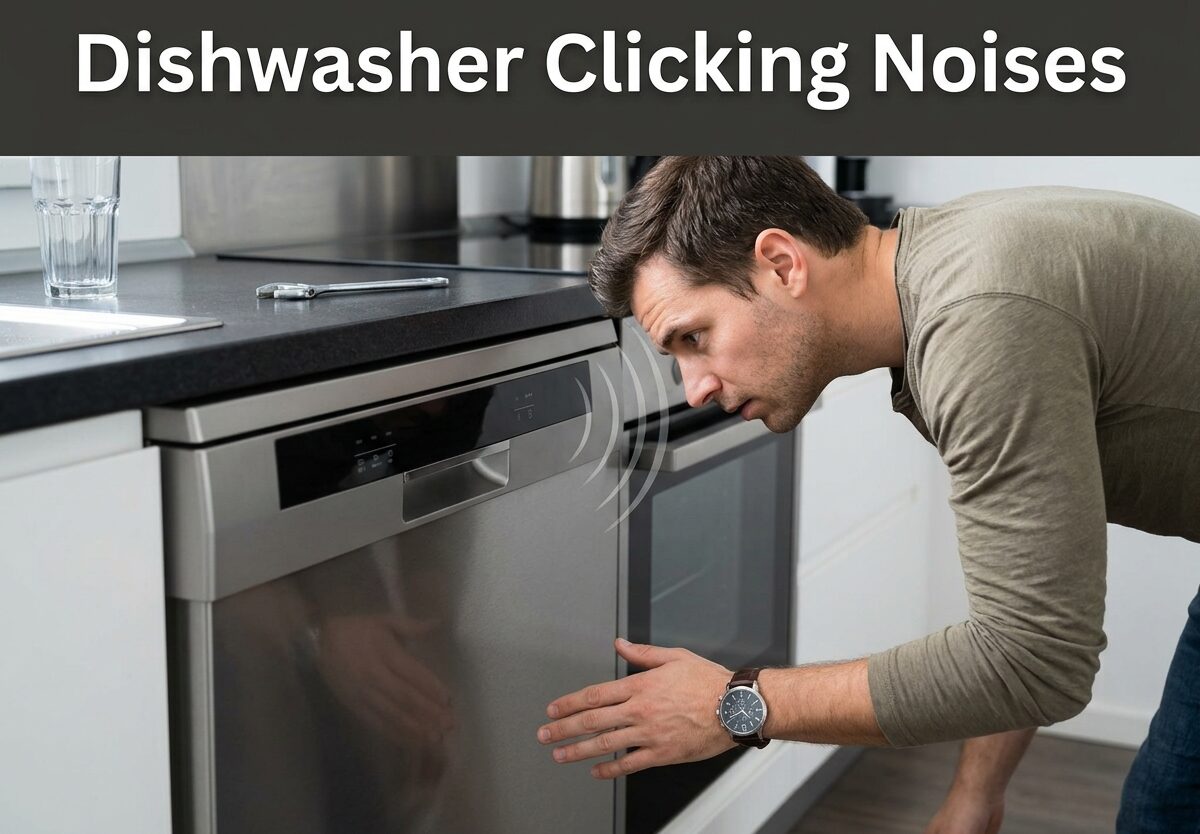
Hearing unusual sounds from your appliance can be concerning. Dishwasher clicking noises are one of the most common sounds that homeowners notice, triggering questions about whether something is wrong. Understanding these sounds helps distinguish between normal operation and potential problems that need attention.
Most dishwasher clicking noises are completely normal. Your dishwasher uses various mechanical and electrical components that naturally produce clicking sounds during operation. However, certain types of clicking can indicate issues that require troubleshooting or professional repair.
Dishwasher Clicking Noises: What’s Normal and What’s Not
Normal clicking sounds are typically brief and occur at specific points during the wash cycle. You might hear a single click when the detergent dispenser opens, or clicking sounds as the timer advances through different cycles. These sounds usually last just a second or two and happen periodically throughout the wash.
Abnormal clicking tends to be more persistent or rhythmic. If you notice continuous clicking that doesn’t stop, clicking that occurs when the dishwasher isn’t running, or clicking accompanied by other unusual sounds, this may indicate a problem. The volume matters too—louder clicking that seems to be getting worse over time deserves investigation.
Common Causes of Dishwasher Clicking Noises
Detergent Dispenser Mechanism
The detergent dispenser is the most common source of normal clicking sounds. When your dishwasher reaches the appropriate cycle point, a solenoid activates to release the detergent door. This creates a distinct click that happens once per wash cycle. Some dishwashers also have a separate rinse aid dispenser that produces a similar clicking sound.
Control Panel and Timer Switching
Older dishwasher models with mechanical timers produce clicking sounds as the timer advances through different phases of the wash cycle. Newer models with electronic controls also make clicking sounds as relays switch to activate different components. These clicking sounds typically occur multiple times throughout the cycle as the dishwasher transitions between wash, rinse, and drain phases.
Drain Pump Operation
The drain pump contains a small motor that may produce clicking sounds, especially when starting or stopping. Some drain pumps use a solenoid-controlled valve that creates a clicking sound when opening or closing. Occasional clicking from the drain area during drain cycles is usually normal, but continuous clicking may indicate a failing pump motor.
Water Inlet Valve Solenoid
The water inlet valve controls water flow into your dishwasher. This valve uses a solenoid that creates a clicking sound when opening and closing. You’ll typically hear this clicking at the beginning of the cycle when the dishwasher fills with water. If the clicking becomes very frequent or continuous, the valve may be failing.
Spray Arm Rotation Issues
Spray arms rotate during the wash cycle to distribute water. If a spray arm hits something in the dishwasher rack, it can create a rhythmic clicking or thumping sound. This often happens when large utensils or dishes extend into the spray arm’s path. Lower spray arms are particularly susceptible to this issue.
Circulation Pump Problems
The circulation pump is responsible for pushing water through the spray arms. Problems with this pump can produce clicking sounds, especially if there’s debris in the pump or if the pump bearings are failing. Clicking from the circulation pump often accompanies other symptoms like poor cleaning performance.
When Clicking Indicates a Problem
While some clicking is normal, certain patterns indicate issues that need attention. Continuous clicking that occurs throughout the entire cycle, rather than at specific intervals, often points to a component failure. Clicking that’s accompanied by grinding, squealing, or banging sounds suggests multiple problems.
If your dishwasher makes clicking noises but won’t start, this indicates a control board or timer issue. The clicking means electrical signals are being sent, but something is preventing the cycle from initiating. Similarly, clicking combined with poor cleaning performance often points to circulation pump or spray arm problems.
New clicking sounds that develop suddenly are worth investigating. Even if the dishwasher appears to work fine, a new clicking sound may indicate a component that’s beginning to fail. Catching these issues early can prevent more expensive repairs down the road.
DIY Troubleshooting Steps for Clicking Noises
Step 1: Identify When the Clicking Occurs
Pay attention to when you hear the clicking sounds during the wash cycle. Clicking at the beginning typically relates to water inlet or filling issues. Clicking during the main wash often comes from the circulation pump or spray arms. Clicking near the end of the cycle usually relates to draining or detergent dispenser operation. Knowing when the clicking happens helps narrow down the source.
Step 2: Check for Spray Arm Obstruction
Open the dishwasher and visually inspect both the upper and lower spray arms. Look for any dishes, utensils, or other items that might be interfering with spray arm rotation. Manually rotate each spray arm to ensure it moves freely. Remove any obstructions and run a test cycle to see if the clicking persists.
Step 3: Inspect the Detergent Dispenser
Check the detergent dispenser area for any visible damage or obstruction. Make sure the dispenser door opens and closes smoothly. Run a cycle with the dishwasher empty to hear if the clicking occurs at the expected time during the wash. This helps confirm whether the detergent dispenser is the source of the sound.
Step 4: Listen for Drain Pump Issues
During the drain portion of the cycle, listen carefully to where the clicking originates. If it’s coming from the bottom front of the dishwasher, the drain pump is likely the source. Check for debris in the drain filter and remove any obstructions. If clicking persists after cleaning the filter, the drain pump may need replacement.
Step 5: Check Water Supply Connections
Ensure the water supply valve is fully open and that the water line isn’t kinked or damaged. Sometimes water pressure issues can cause the water inlet valve to make unusual clicking sounds as it struggles to open properly. Verify that water flows freely into the dishwasher when it’s filling.
Brand-Specific Clicking Issues
Different dishwasher brands have unique characteristics when it comes to clicking sounds. Understanding these brand-specific patterns can help determine whether your dishwasher’s sounds are normal.
Whirlpool dishwashers typically produce clicking sounds from the electronic control board as it advances through cycles. These models may also have a distinctive click when the detergent dispenser releases. Whirlpool models with the 1-hour wash cycle often produce more frequent clicking sounds due to the accelerated cycle timing.
Bosch dishwashers are known for being relatively quiet, so any clicking sounds tend to be more noticeable. Bosch models often have a testing phase at the start of the cycle that produces clicking sounds. The drain pump in Bosch dishwashers may produce clicking during draining, which is normal for this brand.
Samsung dishwashers with electronic controls produce relay clicking sounds as different components activate. Some Samsung models have a unique detergent dispenser mechanism that creates a double-click sound. The digital inverter motor in some Samsung models may produce soft clicking during operation, which is normal.
Frigidaire dishwashers often have more pronounced clicking sounds from their drain pumps. The water inlet valve in Frigidaire models can produce louder clicking compared to other brands. Some Frigidaire models also have a rinse aid dispenser that creates a separate clicking sound during the rinse cycle.
When to Call a Professional
Some clicking issues require professional repair. If the clicking is accompanied by other concerning symptoms like water leaks, error codes on the display, or complete failure to operate, professional service is warranted. Additionally, any electrical issues like sparking, burning smells, or tripped breakers require immediate professional attention.
Complex repairs involving the control board, circulation pump, or internal wiring are best left to qualified appliance repair technicians. These components require specialized knowledge and tools to service safely. Attempting these repairs yourself could result in further damage or safety hazards.
Consider the age of your dishwasher when deciding whether to repair or replace. If your dishwasher is more than 8-10 years old and requires expensive repairs, replacement may be more cost-effective. A professional can assess your specific situation and provide recommendations based on your dishwasher’s condition and the cost of repairs.
Safety should always come first when troubleshooting dishwasher issues. Before attempting any DIY repairs, always disconnect the dishwasher from power and water supply. If you’re unsure about any aspect of troubleshooting, it’s better to call a professional rather than risk injury or further damage to your appliance.
FAQs
Why is my dishwasher making a clicking sound?
Dishwasher clicking sounds are usually normal and occur when the detergent dispenser opens, the timer advances cycles, or the water inlet valve activates. Most clicking happens briefly at specific points during the wash cycle and is nothing to worry about.
What is the average lifespan of a dishwasher?
The average dishwasher lasts between 9-12 years with proper maintenance. Factors affecting lifespan include usage frequency, water quality, and how well the appliance is maintained. Regular cleaning and addressing unusual sounds promptly can extend your dishwasher’s life.
Why is my dishwasher clicking but not starting?
Clicking without starting typically indicates a control board or timer issue. The clicking means electrical signals are being sent, but something prevents the cycle from initiating. This could be a failed component, a door latch problem, or an issue with the electronic controls that needs professional diagnosis.
How to know if a dishwasher is dying?
Signs of a failing dishwasher include unusually loud noises, poor cleaning performance, water leaks, frequent error codes, longer cycle times, and increased water or energy bills. If your dishwasher needs multiple repairs per year or is over 10 years old, replacement may be more cost-effective than continued repairs.
Is a noisy dishwasher an urgent issue?
Not all dishwasher noises are urgent. Normal sounds like clicking, humming, and swishing are part of regular operation. However, loud grinding, metal-on-metal sounds, banging, or high-pitched squealing indicate urgent problems that need immediate attention. These sounds suggest component failure that could cause further damage if ignored.
What does a clicking detergent dispenser sound like?
A normal detergent dispenser produces a single, sharp click when it opens to release detergent. This typically happens 15-30 minutes into the wash cycle. Some dishwashers have a separate rinse aid dispenser that creates a similar clicking sound during the rinse phase. Both sounds are brief and occur only once per cycle.
Can hard water cause clicking noises in dishwashers?
Hard water doesn’t directly cause clicking sounds, but it can lead to mineral buildup in components like the water inlet valve and spray arms. Over time, this buildup can cause these parts to work harder and produce unusual noises. Regular cleaning with a dishwasher cleaner can help prevent these issues.
Conclusion: Understanding Your Dishwasher’s Clicking Noises
Dishwasher clicking noises are a normal part of operation for most models. Brief clicks that occur at specific points during the cycle typically come from the detergent dispenser, timer advancement, or component switching. These sounds indicate your dishwasher is working as designed.
Pay attention to changes in clicking patterns, volume, or frequency. Sudden, loud, or continuous clicking combined with other symptoms warrants investigation. The DIY troubleshooting steps outlined above can help identify common issues, but don’t hesitate to call a professional for complex problems or electrical concerns.
Regular maintenance helps prevent many clicking noise issues. Clean your dishwasher monthly, check for spray arm obstructions, and address unusual sounds promptly. Understanding your dishwasher’s normal sounds helps you quickly identify when something changes, allowing you to address problems early and extend your appliance’s lifespan.



Leave a Comment