
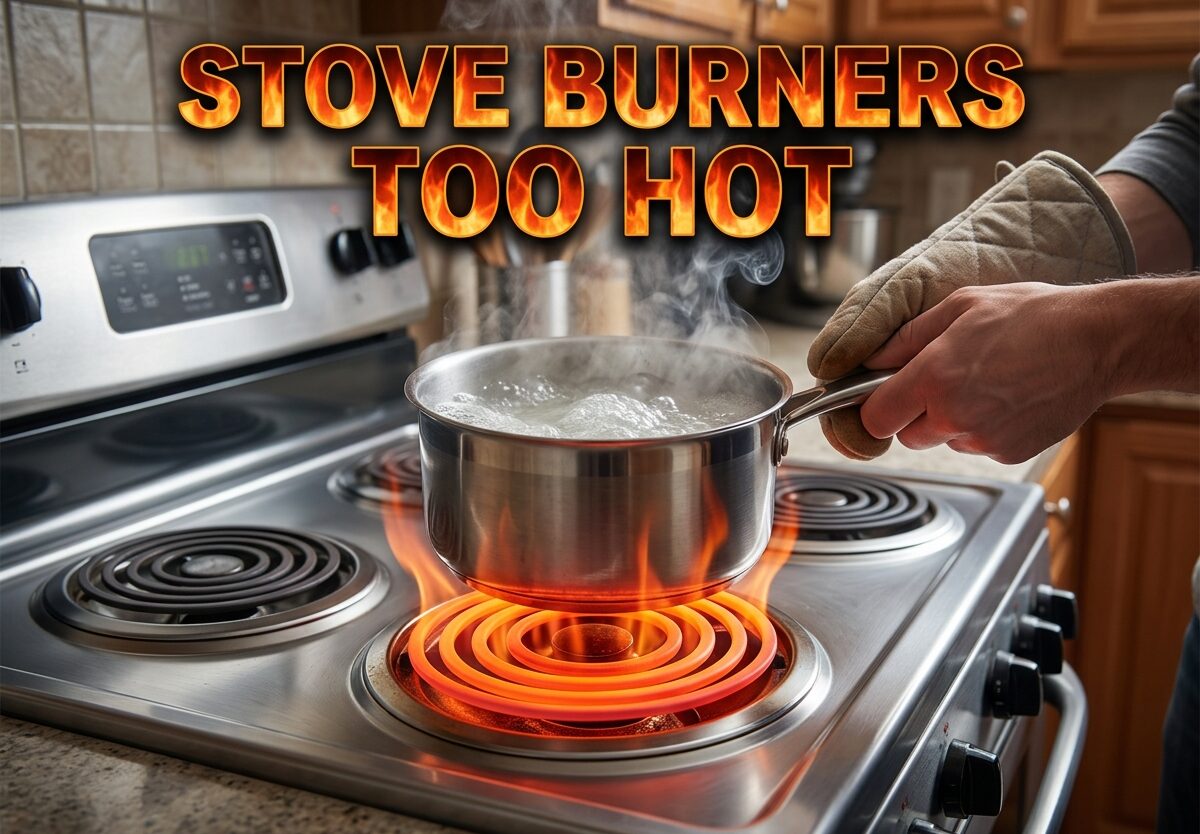
When your stove burners are too hot, even on the lowest setting, cooking becomes nearly impossible. I’ve seen this issue countless times – food burns, water boils furiously when it should simmer, and that constant worry about safety keeps you from using your stove properly. This problem affects both electric and gas stoves, though the causes differ significantly between them.
Based on my research across appliance repair forums and manufacturer resources, I’ll walk you through exactly why stove burners get too hot and what you can do about it. Safety comes first with this issue, as overheating burners can pose genuine fire hazards if left unaddressed.
Understanding Stove Burner Temperature Issues
Before diving into repairs, it’s important to understand what normal burner behavior looks like. Electric stove burners naturally cycle on and off to maintain temperature – you’ll see them glow red and then dim as they regulate heat. This cycling is completely normal. What’s not normal is when a burner stays bright red continuously or becomes uncontrollably hot even on the lowest setting.
Gas stoves behave differently. The flame should adjust smoothly from low to high settings. A properly functioning gas stove maintains a small, steady blue flame on low – not a roaring flame that boils everything instantly.
When stove burners are too hot, you’ll notice specific symptoms. Food burns no matter how carefully you watch it. Soups that should simmer instead boil violently. The smoke alarm becomes your regular dinner companion. On electric stoves, the burner may glow bright red even on setting 1 or 2. Gas stoves might produce flames that seem uncontrollable or produce yellow-tipped flames instead of clean blue ones.
Why Electric Stove Burners Get Too Hot
Electric stove burners rely on a component called the infinite switch (sometimes called a simmerstat) to regulate temperature. This switch controls power flow to the burner element, cycling it on and off to maintain your selected heat level. When the infinite switch fails, that’s when stove burners become too hot.
The most common failure mode involves the internal contacts welding together. This creates a continuous power path to the burner, effectively disabling temperature regulation. The burner receives full power regardless of your knob setting, which explains why it stays red hot even on the lowest setting.
I’ve seen this issue frequently reported across Samsung, GE, and Whirlpool electric ranges. Some Samsung owners have even discovered a temporary workaround – turn the knob on, pause briefly, then adjust to your desired setting. This sometimes resets whatever glitch is causing the problem, but it’s not a permanent fix.
Beyond the infinite switch, electric stoves can develop overheating issues from control board failures. Modern stoves use electronic control boards that interpret knob positions and signal switches accordingly. When these boards malfunction, they might send incorrect signals or fail to regulate power properly. This typically affects all burners simultaneously rather than just one.
Defective temperature sensors can also contribute to the problem. These sensors monitor burner heat and feedback to the control system. A faulty sensor might report incorrect temperatures, causing the system to overcompensate with excessive heat.
Why Gas Stove Burners Get Too Hot
Gas stove burners operate on completely different principles, so when they’re too hot, the causes relate to fuel delivery and combustion rather than electrical switches. The most common culprit is the air shutter adjustment.
Gas burners need the right mixture of air and fuel for proper combustion. The air shutter controls this mixture. When it’s adjusted incorrectly – typically allowing too much air – the flame burns hotter and more aggressively than intended. This often produces a roaring sound and yellow-tipped flames instead of clean blue ones.
Clogged burner ports create another common issue. Over time, food debris, grease, and mineral deposits accumulate in the small holes where gas escapes. These partial blockages disrupt proper flame distribution and can cause irregular, intense heating patterns rather than the gentle low flame you expect.
The gas pressure regulator plays a crucial role as well. This component maintains consistent gas pressure to the burners. When it fails, pressure can become excessive, delivering more fuel than the burner is designed to handle. This results in flames that are larger and hotter than normal at every setting.
Sometimes the issue stems from incorrect gas type conversion. If your stove was converted from natural gas to propane (or vice versa) and the conversion wasn’t done properly, the burner orifices might be the wrong size. This mismatch causes significant overheating because the stove isn’t optimized for the fuel type it’s receiving.
Burner cap alignment matters more than most people realize. These caps sit on top of the burner base and help distribute flame evenly. When misaligned or damaged, they disrupt the intended flame pattern and can cause localized hot spots or uneven heating that feels like excessive heat.
Step-by-Step Troubleshooting Guide
Before attempting any repairs, follow these diagnostic steps to identify exactly what’s causing your stove burners to be too hot. Always start with safety first – if you smell gas or see any signs of electrical arcing, stop immediately and call a professional.
For Electric Stoves:
Start by testing each burner individually. Turn on the problematic burner to its lowest setting and observe the heating pattern. Does it glow bright red and stay red continuously? Does it cycle on and off normally? Compare its behavior to a functioning burner on the same stove.
Next, check if the issue affects just one burner or multiple burners. A single problematic burner usually indicates a bad infinite switch specific to that burner. Multiple burners having the same issue suggests a control board problem affecting the entire system.
Listen for any unusual sounds – clicking, buzzing, or humming can indicate electrical issues. Pay attention to whether the knob feels different when turned – loose knobs or ones that don’t click into position clearly might signal switch problems.
For advanced troubleshooting, you would need a multimeter to test the infinite switch for continuity. However, given the safety risks involved with electrical testing, I recommend leaving this step to qualified technicians unless you have specific electrical training.
For Gas Stoves:
Begin by examining the flame color and characteristics. A proper gas flame should be mostly blue with a small yellow tip. Yellow flames larger than a quarter inch, orange flames, or flames that produce soot indicate combustion problems.
Check the burner ports for visible blockages. Use a flashlight to look closely at the small holes where gas emerges. Any visible debris or discoloration suggests cleaning is needed.
Inspect the burner caps to ensure they’re properly seated and aligned. Remove each cap and check the underside for damage or excessive buildup. Misaligned caps are an easy fix that often resolves overheating issues.
Listen to the flame sound – a gentle hissing is normal, but a roaring sound suggests too much air in the mixture. This points directly to air shutter adjustment issues.
Check if you’ve recently had the stove converted between gas types or if it’s a new installation. Either scenario increases the likelihood of incorrect orifice sizing or regulator problems.
Repair Options: DIY vs Professional
Deciding whether to tackle stove repairs yourself or call a professional depends on several factors. Let me break down what’s realistically manageable for most homeowners versus what requires professional expertise.
Safe DIY Repairs:
For gas stoves, cleaning burner ports is definitely a DIY-friendly task. Use a soft brush, compressed air, or a needle to gently clear debris from the burner holes. Realigning burner caps is equally simple – just ensure they sit flat and level on the burner base.
Minor air shutter adjustments on gas stoves can sometimes be done by homeowners, but only if you’re comfortable working with gas appliances and can clearly identify the adjustment screw. Make tiny adjustments and test after each change.
For electric stoves, the DIY options are more limited due to the electrical risks involved. Simply cleaning the burner surface and ensuring proper cookware contact is about as far as most homeowners should go.
When to Call a Professional:
Any repair involving electrical components on an electric stove should be handled by a qualified appliance repair technician. This includes infinite switch replacement, control board repairs, and any wiring work. The combination of high voltage and high current makes these repairs genuinely dangerous for untrained individuals.
Gas stove repairs involving the pressure regulator, gas line connections, or complete air shutter adjustments should also be left to professionals. Gas leaks can have catastrophic consequences, and proper pressure testing requires specialized equipment.
If your stove is relatively new and still under warranty, attempting DIY repairs will likely void that coverage. Contact the manufacturer or your retailer for warranty service instead.
Cost Considerations:
Professional infinite switch replacement typically runs between $150-300 including parts and labor. Control board repairs can cost $200-400 or more. Gas stove regulator replacement ranges from $200-350. These costs vary significantly by location and stove model.
Compare these repair costs against the price of a new stove, especially if your appliance is already 10-15 years old and experiencing multiple issues. Sometimes replacement makes more financial sense than repair.
Critical Safety Warnings
When stove burners are too hot, this isn’t just an inconvenience – it’s a legitimate safety concern. I want to emphasize several critical safety points before we conclude.
Fire hazard is real with overheating burners. If you cannot reliably control the temperature, the risk of grease fires, ignition of nearby materials, or cookware damage increases significantly. Don’t use a burner that cannot be regulated properly.
For electric stoves, a burner that won’t turn off or stays continuously on high heat indicates a serious electrical fault. This can damage the stove’s internal wiring and potentially create shock hazards or electrical fires. If a burner won’t turn off when you rotate the knob to off, shut off the stove at the circuit breaker immediately.
Gas stoves present additional risks. Improper combustion can produce carbon monoxide, especially if flames are yellow and sooty. Ensure you have working carbon monoxide detectors in your kitchen. Any smell of gas means you should stop using the stove immediately, ventilate the area, and contact your gas company or emergency services.
Don’t ignore the problem hoping it will resolve itself. Burner temperature issues rarely improve without intervention. Delaying repair risks further damage to your stove and increases safety hazards.
Preventive Maintenance Tips
Once you’ve resolved the immediate issue, these maintenance practices can help prevent future problems with stove burners becoming too hot.
For electric stoves, avoid running burners on the highest setting for extended periods. This excessive heat can stress the infinite switch and shorten its lifespan. Use appropriate cookware sizes that match the burner diameter – oversized or undersized pans create heating imbalances.
For gas stoves, clean burner ports regularly as part of your kitchen cleaning routine. Even weekly wiping can prevent the gradual buildup that eventually causes blockages. Check burner cap alignment periodically after cleaning.
Address any temperature issues promptly when they first appear. Small problems with switches or regulators typically worsen over time and can sometimes cascade into additional failures if ignored.
Consider scheduling professional maintenance every few years, especially for gas stoves. Technicians can spot developing issues before they become serious problems and can perform precise adjustments that keep your stove operating safely.
Temporary Cooking Workarounds
While waiting for repairs, you’ll need alternative cooking methods. Here are some practical solutions that have worked for others facing stove burner issues.
Use other burners that function normally. Many people find that only one burner develops the overheating problem while others work fine. Rearrange your cooking to use the functioning burners exclusively.
Small countertop appliances can fill the gap. Electric skillets, slow cookers, rice cookers, and hot plates offer precise temperature control that your malfunctioning stove cannot provide. Many people find they prefer these alternatives for certain types of cooking even after their stove is repaired.
Oven cooking remains unaffected by most burner issues. If your oven works properly, focus on baked, roasted, and broiled dishes until repairs are complete.
For gas stove users, some find that using a flame tamer or heat diffuser plate between the burner and cookware can help moderate excessive heat. This isn’t a permanent solution but can make the stove usable in the short term.
FAQs
What causes my stove burner to get too hot?
For electric stoves, a faulty infinite switch with welded contacts is the most common cause. This creates continuous power flow to the burner regardless of the knob setting. Gas stoves typically have issues with air shutter adjustment, clogged burner ports, or gas pressure regulator problems that cause excessive heat output.
How do I know if my infinite switch is bad?
Signs of a bad infinite switch include the burner staying bright red continuously without cycling off, the burner responding incorrectly to knob position changes, or the burner not turning off at all. If only one burner has issues while others work normally, this typically indicates a bad infinite switch specific to that burner.
Why is my stove burner not regulating temperature?
Temperature regulation failure happens when the component controlling heat output malfunctions. In electric stoves, this is usually the infinite switch or electronic control board. In gas stoves, improper air-to-fuel mixture, clogged burner ports, or regulator failure prevents proper flame adjustment. The burner effectively becomes stuck on high heat regardless of your settings.
Is a red hot stove burner dangerous?
Yes, a continuously red hot burner can be dangerous. It poses fire hazards, especially if flammable materials are nearby. The excessive heat can damage cookware, cause food to burn and smoke, and in electric stoves, indicates potential electrical faults that could worsen. If a burner won’t turn off or stays continuously red, stop using it and address the issue promptly.
Can I fix stove burners that are too hot myself?
Simple fixes like cleaning gas burner ports and realigning burner caps are safe DIY tasks. However, most repairs involving electrical components or gas system adjustments should be handled by professionals due to safety risks. Electric stove repairs involve high voltage, and gas stove repairs risk leaks if done incorrectly. When in doubt, professional service is the safer choice.
Conclusion
Stove burners that are too hot transform your kitchen from a place of creativity into a source of frustration and genuine worry. Whether you’re dealing with an electric stove with a faulty infinite switch or a gas stove with air mixture problems, the core issue is the same – you’ve lost precise control over cooking heat.
Understanding the specific cause based on your stove type is the first step toward resolution. Electric stove issues typically stem from switch failures or control board problems, while gas stoves usually have issues related to air mixture, pressure, or burner condition.
Safety should always guide your decisions about DIY versus professional repair. When in doubt, professional service is the wise choice – the cost is far less than the potential consequences of improper repair.
Most importantly, don’t ignore overheating burners. Address the issue promptly to protect your home, preserve your cookware, and get back to enjoying the cooking experience without constant worry about excessive heat.

Leave a Comment