
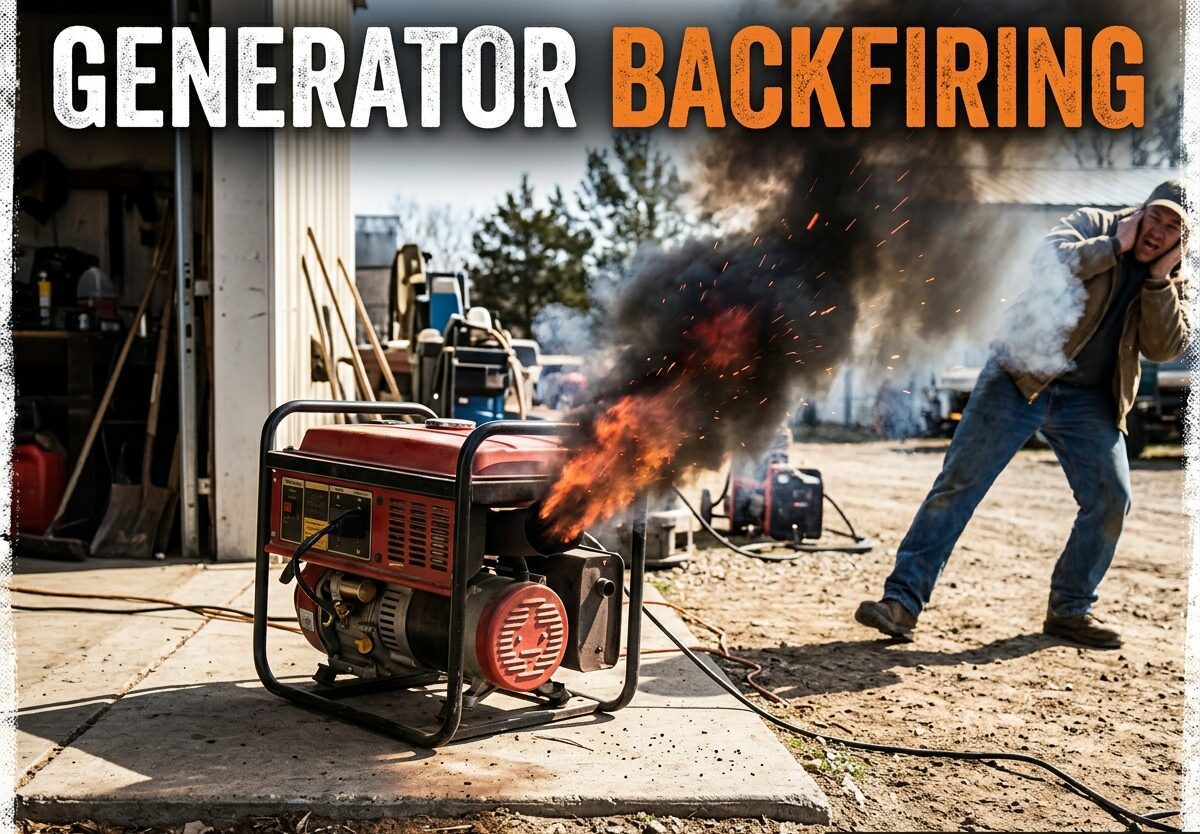
If you’ve ever been startled by a loud pop or bang from your generator, you’re not alone. Generator backfiring is a common issue that affects portable and standby generators of all brands. Whether you’re relying on your generator for home backup power, camping, or job site use, that sudden backfiring sound can be alarming and confusing.
The good news is that most generator backfiring issues have identifiable causes and straightforward fixes. Understanding what’s happening inside your engine and knowing how to diagnose the problem can save you time, money, and frustration. In some cases, what seems like a major problem might just need a simple adjustment or basic maintenance.
In this comprehensive troubleshooting guide, I’ll walk you through everything you need to know about generator backfiring. We’ll cover the common causes, how to identify whether your generator is backfiring through the carburetor or exhaust, and step-by-step solutions to get your generator running smoothly again.
What is Generator Backfiring?
Generator backfiring occurs when fuel ignites at the wrong time or in the wrong place within your engine. Instead of burning smoothly inside the combustion chamber during the power stroke, the fuel-air mixture escapes into the intake or exhaust system and explodes there, creating that characteristic loud pop or bang.
This happens because combustion is supposed to be carefully timed. The spark plug fires at the precise moment when the piston is in the right position, creating controlled power that drives your generator. When this timing is off, or when the fuel mixture isn’t right, combustion can happen early or late, or fuel can accumulate where it shouldn’t.
The result is that sudden, often startling explosion outside the combustion chamber. Sometimes you’ll see flames shoot from the exhaust or carburetor, accompanied by smoke or the smell of unburnt fuel. While it might look dramatic, backfiring is your generator’s way of telling you something isn’t working correctly.
Signs and Symptoms of Generator Backfiring
Recognizing generator backfiring is usually straightforward, but the symptoms can vary depending on what’s causing the problem. The most obvious sign is that loud popping or banging sound, which can range from a mild pop to a startling bang that makes you jump.
When your generator backfires through the exhaust, you’ll typically hear the sound from the muffler area and might see flames or smoke coming from the exhaust pipe. This often happens when shutting down the generator or when it’s under load. Backfiring through the carburetor produces a similar sound but comes from the air intake area, and you might notice fuel spray or smoke near the carburetor.
Other symptoms often accompany the backfiring itself. Your generator might run rough, sputter, or surge. It could struggle to start or die unexpectedly after running for a while. You might notice reduced power output, difficulty maintaining a load, or excessive fuel consumption. These symptoms all point to underlying issues that need attention.
Common Causes of Generator Backfiring
Understanding what causes generator backfiring helps you diagnose and fix the problem faster. Based on years of generator repair experience and forum discussions from frustrated generator owners, these are the most common culprits.
Carburetor Issues – The carburetor is responsible for mixing air and fuel in the right proportion. When it’s dirty, clogged, or out of adjustment, you can get either a lean mixture (too much air, not enough fuel) or a rich mixture (too much fuel, not enough air). Both conditions can cause backfiring, though they typically produce different symptoms. Lean mixtures often cause backfiring through the exhaust, while rich mixtures more commonly cause backfiring through the carburetor.
Spark Plug Problems – A faulty spark plug is one of the easiest problems to fix but frequently causes backfiring. Spark plugs can become fouled with carbon deposits, the gap can widen beyond specifications, or the electrode can wear down. When the spark plug isn’t firing properly, unburnt fuel accumulates in the exhaust system, where it eventually explodes and causes that backfiring sound.
Ignition Timing Issues – If the spark plug fires at the wrong time, combustion won’t happen when it should. This can be caused by a sheared flywheel key, which throws off the timing between the crankshaft and the ignition system. Timing issues are more common after your generator has experienced a sudden stop or has been worked on recently.
Valve Adjustment Problems – Your generator’s valves need to open and close at precise times with the correct clearance. When valves are too tight or too loose, they won’t seal properly, which allows fuel to escape into the exhaust or intake where it can ignite unexpectedly. Valve issues tend to develop gradually as generators age and components wear.
Fuel Quality and Age – Old or contaminated fuel is a leading cause of generator problems. Gasoline begins to degrade within 30 days and can leave varnish and gum deposits that clog your carburetor. Ethanol in fuel attracts moisture, leading to water contamination that affects combustion. Using stale fuel is one of the quickest ways to cause backfiring and other engine problems.
Air Filter Restrictions – A clogged air filter starves your engine of air, creating a rich fuel mixture. While most generators run fine with slightly rich mixtures, severely restricted airflow can cause excessive fuel accumulation and backfiring through the carburetor. This is especially common after generators have been stored without proper preparation.
Backfire Through Carb vs Backfire Through Exhaust
Distinguishing between backfire through the carburetor and backfire through the exhaust is crucial for proper diagnosis. While both produce similar sounds and can be alarming, they point to different underlying problems and require different approaches to fix.
Backfire through the carburetor indicates a rich fuel condition or intake valve problems. You’ll hear the pop from the air filter area, might see fuel spray, and often notice black smoke. This typically means too much fuel is entering the engine or the intake valve isn’t closing properly, allowing fuel to escape into the intake manifold where it ignites.
Backfire through the exhaust usually signals a lean fuel condition or exhaust valve issues. The sound comes from the muffler, you might see flames from the exhaust pipe, and the exhaust often smells of unburnt fuel. This happens when unburnt fuel accumulates in the exhaust system due to incomplete combustion or an exhaust valve that isn’t sealing properly.
The diagnostic approach differs significantly. Carburetor backfires often require checking the choke operation, cleaning the carburetor, or addressing intake valve clearance. Exhaust backfires typically need attention to the fuel mixture, spark plug condition, or exhaust valve adjustment. Understanding which type you’re experiencing narrows down the troubleshooting process considerably.
Step-by-Step Troubleshooting Guide
Before diving into repairs, follow this systematic approach to identify the specific cause of your generator backfiring. This methodical process saves time and helps you avoid replacing parts unnecessarily.
Safety First – Before troubleshooting, ensure your generator is on a flat surface, turned off, and has had time to cool. Remove the spark plug wire to prevent accidental starting. Work in a well-ventilated area away from open flames, as you’ll be working with fuel.
Check the Basics – Start with the simplest things first. Check your oil level using the dipstick – low oil can cause engine issues that might seem like backfiring. Inspect the air filter; if it’s clogged with dirt and debris, clean or replace it. Look for obvious fuel leaks or loose connections that could be affecting fuel delivery.
Listen and Observe – If you can safely start the generator, pay attention to when the backfiring occurs. Does it happen during startup, while running, or when shutting down? Does it backfire consistently or intermittently? These patterns provide valuable clues. Backfiring during startup often points to fuel delivery issues, while shutdown backfiring might indicate valve problems.
Test the Choke – If your generator has a manual choke, try starting it with varying choke positions. If it runs better with the choke partially closed, you likely have a lean fuel condition. If it runs worse, you might be dealing with a rich mixture or ignition problem.
Inspect the Spark Plug – Remove the spark plug and examine its condition. A healthy spark plug should have a light tan or grayish color. Black, sooty deposits indicate a rich mixture, while white or blistered electrodes suggest a lean condition or overheating. Check the gap with a feeler gauge and replace the plug if it’s worn or fouled.
Evaluate Fuel Condition – Smell your fuel. If it has a stale odor or looks darker than fresh gasoline, drain the tank and carburetor bowl. Old fuel is a leading cause of generator problems, and using fresh fuel eliminates this possibility immediately.
How to Fix Generator Backfiring
Once you’ve identified the likely cause, these targeted fixes will resolve most generator backfiring issues. Work through these solutions systematically, addressing the most probable causes first.
Clean or Rebuild the Carburetor – If you suspect carburetor issues, start by cleaning it. Remove the carburetor bowl and spray carburetor cleaner through all passages, especially the pilot jet and main jet, which commonly clog. Use compressed air to blow out debris. If cleaning doesn’t resolve the problem, consider a carburetor rebuild kit or replacement, especially if your generator is older or has sat unused for extended periods.
Replace the Spark Plug – Spark plugs are inexpensive and easy to replace. Use the manufacturer’s recommended spark plug type and gap setting. This simple fix resolves many backfiring issues and should be part of your regular maintenance routine anyway.
Adjust Valve Clearance – If your generator has adjustable valves, check the clearances using a feeler gauge. Most portable generators have intake valve clearance around 0.004-0.006 inches and exhaust clearance around 0.006-0.008 inches, but always consult your manual for exact specifications. Adjusting valves requires some mechanical skill but is well within the capabilities of most DIYers.
Check the Flywheel Key – If you’ve recently worked on your generator or it stopped suddenly, the flywheel key might have sheared. This requires removing the flywheel to inspect, which is more advanced. If the key is damaged, it must be replaced with an OEM part to restore proper ignition timing.
Address Fuel System Issues – Beyond the carburetor, check your fuel filter for clogs and inspect fuel lines for cracks or restrictions. Replace any suspect components and always use fresh fuel with a fuel stabilizer if your generator will sit unused for more than 30 days.
Safety Concerns and Prevention
Generator backfiring isn’t just annoying – it can pose real safety risks. Flames shooting from the exhaust can ignite nearby materials, and repeated backfiring can damage engine components including valves, pistons, and the muffler. I’ve seen users spend hundreds of dollars on repairs after ignoring backfiring for too long.
The best approach is preventive maintenance. Run your generator monthly under load to keep fuel fresh and components lubricated. Use fuel stabilizer during storage and change oil according to the manufacturer’s schedule. Clean or replace air filters regularly and keep the area around your generator free from debris that could be ignited by backfire flames.
When storing your generator for the season, either drain the fuel completely or add a high-quality stabilizer and run the engine long enough to distribute treated fuel through the entire system. This prevents the gum and varnish buildup that leads to carburetor problems and subsequent backfiring.
If you’ve tried these solutions and your generator continues to backfire, it might be time to seek professional help. Complex issues like internal engine damage or advanced electrical problems require specialized tools and expertise. Sometimes investing in professional diagnosis saves money in the long run compared to trial-and-error parts replacement.
FAQs
What causes a generator to backfire?
Generator backfiring is caused by improper fuel combustion, typically due to carburetor issues creating lean or rich fuel mixtures, faulty spark plugs, incorrect ignition timing, or valve adjustment problems. Old fuel and clogged air filters are also common culprits that disrupt the precise combustion timing needed for smooth generator operation.
Why does my generator sound like it’s popping?
That popping sound is fuel exploding outside the combustion chamber. When your generator backfires, unburnt fuel accumulates in the exhaust or intake system and ignites there instead of in the cylinder. The result is that characteristic pop or bang you hear, often accompanied by flames or smoke from the exhaust or carburetor area.
Does backfire mean rich or lean?
It depends on where the backfire occurs. Backfiring through the carburetor typically indicates a rich fuel mixture (too much fuel, not enough air) or intake valve problems. Backfiring through the exhaust usually signals a lean fuel mixture (too much air, not enough fuel) or exhaust valve issues. Listening to where the sound originates helps diagnose the fuel mixture problem.
Does a backfire damage an engine?
Yes, repeated generator backfiring can cause serious engine damage over time. Backfiring puts excessive stress on valves, pistons, and connecting rods. Flames from backfires can damage the muffler and nearby components. The shock from violent backfires can even crack engine blocks or damage internal components. Addressing backfiring promptly prevents costly repairs and extends your generator’s lifespan.
Conclusion
Generator backfiring doesn’t have to be a mystery or a major repair bill. By understanding what causes backfiring and following a systematic troubleshooting approach, you can diagnose and fix most issues yourself. Start with the basics – check your spark plug, evaluate your fuel condition, and inspect the air filter before moving to more complex repairs like carburetor cleaning or valve adjustment.
Remember that preventive maintenance is your best defense against generator backfiring. Run your generator regularly, use fresh fuel with stabilizer, and follow the manufacturer’s maintenance schedule. These simple habits prevent most backfiring issues before they start.
If you’ve worked through these steps and your generator continues to backfire, don’t hesitate to seek professional help. Some problems require specialized tools and expertise that go beyond DIY repairs. Addressing generator backfiring promptly protects your investment and ensures reliable power when you need it most.






Leave a Comment