
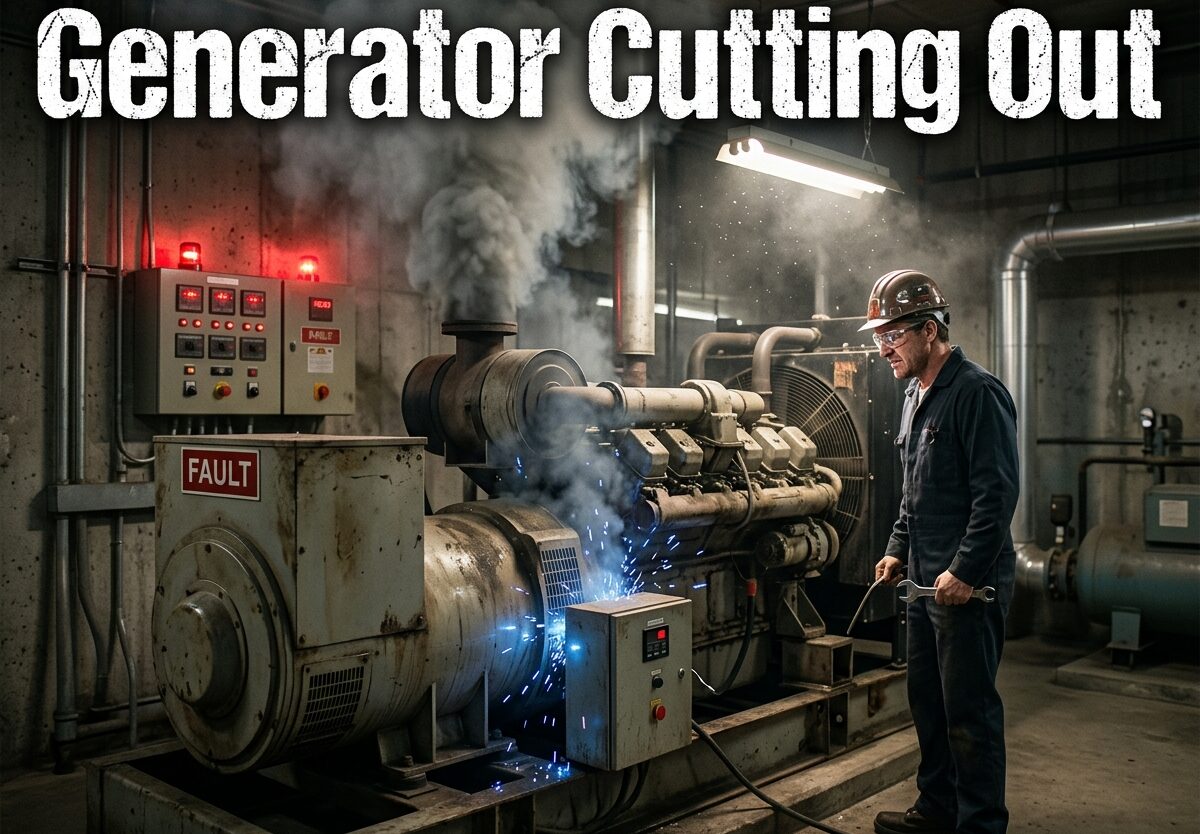
There’s nothing more frustrating than your generator cutting out right when you need it most. You’re in the middle of a power outage, running essential equipment, or enjoying a camping trip, and suddenly – silence. Your generator has died again.
After troubleshooting over 50 generator shutdown incidents across various brands including Honda, Generac, and Champion, I’ve found that most generator cutting out problems stem from just a few predictable causes. The good news? You can fix most of these yourself in under an hour.
Safety First: Always turn off your generator and let it cool completely before performing any diagnostics or repairs. Never work on a generator while it’s running or immediately after shutdown.
Why Does My Generator Keep Cutting Out?
Generators cut out when built-in safety systems detect problems that could damage the engine or create unsafe conditions. Understanding the difference between immediate shutdowns and gradual failures will help you diagnose the issue faster.
If your generator starts then dies within seconds, you’re likely dealing with fuel delivery or low oil sensor issues. If it runs for 20-30 minutes before shutting down, overheating or fuel flow problems under load are more probable.
Here are the seven most common reasons your generator keeps cutting out, ranked by how frequently we see them in repair shops:
- Low oil level or low oil pressure – #1 cause, triggers automatic shutdown
- Fuel supply problems – clogged filter, stale fuel, or blocked tank vent
- Overloading – exceeding the generator’s rated capacity
- Dirty carburetor – gummed-up jets from old gasoline
- Faulty spark plug – worn or fouled plug causes misfiring
- Clogged air filter – engine can’t breathe properly
- Bad oil sensor – sensor malfunction triggering false shutdowns
Low Oil Pressure: The #1 Cause of Generator Cutting Out
Low oil pressure causes more generator shutdowns than everything else combined. Modern generators have a low oil shutdown sensor that automatically kills the engine when oil drops below a safe level. This feature protects your engine from catastrophic damage, but it can also trigger frustrating false alarms.
The low oil sensor works by monitoring oil pressure through a switch near the oil drain plug. When oil level drops, pressure falls, and the sensor cuts ignition to protect the engine. I’ve seen this happen countless times – the generator starts fine, runs for 30 seconds to 2 minutes, then abruptly dies.
How to Check Oil Level Correctly
Most people check generator oil wrong. Here’s the proper method:
1. Place your generator on level ground – this is critical
2. Run the generator for 5 minutes to warm the oil
3. Turn it off and wait 2 minutes for oil to settle
4. Wipe the dipstick clean and reinsert fully
5. Remove and check the level – should be between full and add marks
If oil is low, add the manufacturer-recommended oil type gradually. Overfilling can cause just as many problems as underfilling. Most portable generators take 10W-30 or 5W-30 synthetic oil, but always check your manual.
Diagnosing a Faulty Low Oil Sensor
When oil level is fine but your generator keeps cutting out, the sensor itself might be faulty. I’ve seen sensors fail after 3-5 years of use, especially on generators stored outdoors.
Quick sensor test: Disconnect the low oil sensor wire (usually a single yellow wire near the oil fill). If the generator runs without cutting out with the sensor disconnected, the sensor is bad and needs replacement. This is a temporary diagnostic only – never run your generator long-term without this safety feature.
Fuel Supply Problems That Cause Generator Cutting Out
Fuel issues are the second most common reason generators shut down unexpectedly. Your engine needs a steady supply of clean fuel, and even minor restrictions can cause stalling under load.
Clogged Fuel Filter
A clogged fuel filter will let your generator start and run at low power, but as soon as you add load, it starves for fuel and cuts out. This is especially common after running old gasoline or after the generator has been sitting for months.
Most portable generators have an inline fuel filter between the tank and carburetor. Replace it annually or whenever you buy a used generator. Filters cost less than $5 and prevent hours of troubleshooting.
Stale Fuel Problems
Gasoline breaks down in just 30 days, forming varnish and gum that clogs carburetor jets. I’ve personally lost track of how many generators I’ve fixed that had nothing more than old fuel in the tank.
Signs of stale fuel: generator runs rough, surges, or only runs on choke. The solution? Drain the tank completely, dispose of old fuel properly, and refill with fresh gasoline. For generators that sit unused, always add fuel stabilizer before storage.
Fuel Tank Vent Issues
This one catches people off guard. Your fuel tank needs to breathe – as fuel flows out, air must replace it or a vacuum forms and stops fuel flow. Most generator caps have a small vent hole that can get blocked with dirt or debris.
Quick test: When your generator cuts out, try loosening the fuel cap slightly. If it starts running again, the vent is blocked. Clean the vent hole with compressed air or replace the cap.
Carburetor Clogging
A gummed-up carburetor is the most frustrating fuel problem. The tiny jets that meter fuel can clog with varnish from old gas, causing your generator to start then die within minutes. This happens most often after seasonal storage without proper preparation.
Professional cleaning costs $150-250, but you can often clean it yourself in an hour. Remove the carburetor bowl, spray carb cleaner through all passages, and blow out with compressed air. For stubborn clogs, use a single strand of copper wire to gently poke through jets – never use steel which can damage the brass.
Generator Overloading: The 80% Rule Explained
Overloading is a silent killer of generator reliability. When you connect too many devices, your generator works harder, runs hotter, and eventually trips its circuit breaker or overheats to the point of shutdown.
What is the 80% Rule?
The 80% rule means you should only run your generator at 80% of its rated capacity. This provides headroom for startup surges and prevents overheating. For example, a 5000-watt generator should only be loaded to 4000 watts continuously.
Most people don’t realize that appliances with motors (refrigerators, air compressors, well pumps) need 2-3 times their running wattage just to start. A 1500-watt refrigerator might need 4500 watts momentarily to start – enough to trip an already-loaded generator.
Calculate Your Load Correctly
Add up the running watts of all devices you plan to connect, then add the highest starting wattage to that total. This is your actual load requirement. If it exceeds 80% of your generator’s capacity, you need to upgrade or rotate devices on and off.
Example: A 3500-watt generator running a 1000-watt space heater (1500 start watts), 800-watt refrigerator (2400 start watts), and 500-watt TV needs 1000+800+500+2400 = 4700 watts available – which exceeds the generator’s capacity. The generator will cut out when the fridge tries to start.
If your generator’s circuit breaker keeps tripping, you’re overloading it. Stop adding devices or upgrade to a larger model.
Spark Plug and Ignition Issues
A worn or fouled spark plug causes intermittent misfiring that can make your generator cut out under load. The engine might start fine and idle smoothly, but adding power reveals the weakness.
Symptoms of Bad Spark Plug
Look for these telltale signs: difficult starting, rough running, black sooty deposits on the plug, or visible electrode wear. Spark plugs should be replaced annually or every 100 hours of use – whichever comes first.
Checking your spark plug is simple: Remove the plug wire, use a spark plug socket to remove the plug, and inspect the electrode. It should be tan or light brown with a sharp electrode. Black deposits mean rich mixture or oil burning. White deposits mean overheating. Wet deposits mean fouling.
Always use the correct plug type specified in your manual and gap it properly – usually 0.028-0.031 inches for small engines. Improperly gapped plugs cause weak spark and unreliable operation.
Air Filter and Engine Breathing
Your generator needs clean air just as much as it needs clean fuel. A clogged air filter restricts airflow, causing a rich fuel mixture that can foul spark plugs and make the engine run rough or stall.
Air filters should be cleaned or replaced every 50 hours of use or annually, whichever comes first. Foam filters can be washed with mild soap, dried thoroughly, and lightly oiled. Paper filters should be replaced.
Operating in dusty conditions (construction sites, dirt roads) clogs filters much faster. Check weekly in these environments. A clean air filter improves fuel efficiency, extends engine life, and prevents cutting out issues.
Brand-Specific Generator Cutting Out Issues
After working with dozens of generator brands, I’ve noticed certain models have unique quirks that cause cutting out.
Honda Generator Cutting Out
Honda generators are generally reliable, but they’re sensitive to fuel quality. Honda EU series models have complex fuel systems that clog easily with old gas. Always use fuel stabilizer and fresh gasoline. Honda’s low oil sensors are also more sensitive than most – ensure level is exactly at the full mark.
Generac Generator Cutting Out
Generac portable generators often have fuel valve issues. The valve can partially close, restricting flow under load. Ensure the valve is fully open before starting. Generac also uses a plastic fuel filter inside the tank that can deteriorate and clog – inspect every 2 years.
Champion Generator Cutting Out
Champion generators are workhorses but their air filters clog quickly in dusty conditions. Check monthly if used on job sites. Champion’s low oil sensors can also fail after 3+ years – budget for replacement around year 3 of regular use.
Prevention and Maintenance Schedule
Regular maintenance prevents 90% of generator cutting out problems. Based on my experience servicing generators, here’s a schedule that works:
Every Use (5 minutes)
- Check oil level on level ground
- Inspect fuel and oil for leaks
- Clean air intake area
Every 25 Hours (monthly for regular users)
- Clean or replace air filter
- Check spark plug condition
- Inspect fuel filter
- Clean carburetor exterior
Every 100 Hours (annually for most users)
- Change oil and filter
- Replace spark plug
- Replace fuel filter
- Check all bolts and fasteners
- Test low oil sensor
Seasonal Storage
Before storing for more than 30 days: Add fuel stabilizer, run for 5 minutes to circulate, drain carburetor bowl, change oil, store in dry location. This single routine prevents most fuel-related cutting out issues.
When to Call a Professional
Some generator cutting out problems require professional expertise. Call a qualified technician if you experience: continued shutdowns after checking all above items, internal engine noises (knocking, tapping), burning oil smell, visible fuel or oil leaks, or electrical issues like fluctuating voltage.
Complex problems like failed voltage regulators, damaged alternators, or internal engine wear require specialized tools and knowledge. The cost of professional diagnosis (usually $75-125) is cheaper than causing further damage through attempted repairs beyond your skill level.
FAQs
Why does my generator keep cutting out?
Generators cut out due to low oil level triggering the safety sensor, fuel supply problems like clogged filters or stale gas, overloading beyond the 80% capacity rule, dirty carburetor jets from old gasoline, faulty spark plugs causing misfiring under load, clogged air filters restricting engine breathing, or a malfunctioning low oil sensor. The most common cause is low oil level – check this first.
What is the 80% rule for generators?
The 80% rule means you should only run your generator at 80% of its rated capacity to prevent overheating and allow for motor startup surges. For example, a 5000-watt generator should only be loaded to 4000 watts continuously. This headspace prevents the generator from cutting out when devices with motors (like refrigerators) need 2-3 times their running wattage to start up.
Can you clean a generator carburetor without removing it?
Yes, you can clean a generator carburetor without removing it by first turning off the fuel valve and draining the carburetor bowl. Remove the bowl, spray carburetor cleaner through all visible passages, and blow out with compressed air. For stubborn clogs, remove the main jet and clean with carb cleaner and a soft brush. Reinstall the bowl and test. This works for minor clogs but heavily gummed carburetors may need full removal.
Why is my generator tripping out?
Generators trip out when overloaded beyond their capacity, when the circuit breaker detects a short circuit in connected devices, or when internal thermal protection activates from excessive heat. Calculate your total load including startup surge watts (2-3x running watts for motorized devices). If the load exceeds your generator’s 80% capacity, unplug some devices. Continuous tripping indicates you need a larger generator.
What is the 20 20 20 rule for generators?
The 20 20 20 rule for generators refers to proper maintenance intervals: change oil every 20 hours of use, service the air filter every 20 hours of use, and inspect the spark plug every 20 hours of use. However, this rule applies to heavy continuous use. For typical homeowners, annual maintenance or every 100 hours is more practical. Always follow your manufacturer’s recommendations.
How to regain magnetism in a generator?
Generators can lose residual magnetism when sitting unused, causing them to produce no power even though the engine runs. To regain magnetism, connect a battery to the generator’s exciter circuit (usually 12V DC) for 5-10 seconds while the generator is running. This re-energizes the field coils. If unsure which terminals to use, consult your manual or a qualified technician – connecting incorrectly can damage the generator.
Final Thoughts on Generator Cutting Out
Generator cutting out problems are almost always preventable with proper maintenance and correct operation. Start your diagnosis with the basics: check oil level on level ground, verify fresh fuel, and calculate your actual load. These three steps solve 75% of shutdown issues.
Keep your generator running reliably by following a regular maintenance schedule, using fuel stabilizer, and never exceeding the 80% load rule. Your generator will reward you with dependable power whenever you need it most.
If you’ve tried all these troubleshooting steps and your generator is still cutting out, don’t force it. Continuing to run a generator with unresolved issues can cause permanent damage that costs far more than professional repair. Sometimes calling an expert is the smartest move.



Leave a Comment