
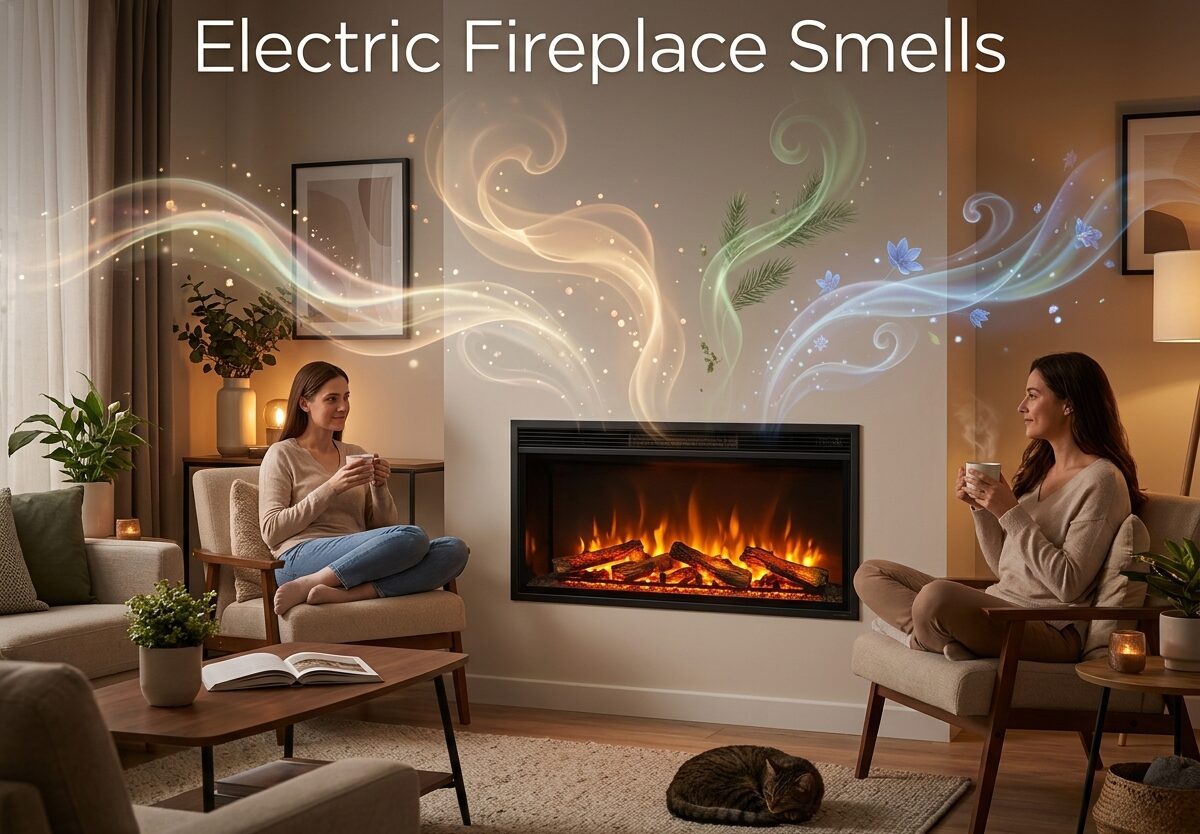
Noticing strange odors from your electric fireplace can be concerning. Electric fireplace smells range from completely normal dust burn-off to serious electrical warning signs that require immediate attention. Understanding what’s causing these odors helps you determine whether you’re dealing with a harmless first-time smell or a potential fire hazard.
I’ve researched the most common causes of electric fireplace odors, spoke with homeowners who’ve experienced these issues, and compiled safety information from electrical experts. This guide will help you identify the source of your smell and take appropriate action.
SAFETY WARNING: When to Stop Using Your Electric Fireplace
STOP USING your electric fireplace immediately if you notice:
- Fishy or urine-like odor (indicates electrical overheating)
- Sharp burning plastic smell
- Smoke or visible sparks
- Smell that gets stronger over time instead of fading
- Any smell accompanied by flickering lights or tripped breakers
These signs indicate potential electrical failure that could lead to fire. Unplug the unit and contact the manufacturer or a qualified electrician.
Is a Burning Smell from an Electric Fireplace Normal?
A burning smell from an electric fireplace can be normal under specific circumstances. When you first turn on a new unit or after months of disuse, you may notice a slight burning odor. This typically occurs when dust or manufacturing residues burn off the heating elements.
Normal burning smells should be mild and dissipate within 20-30 minutes of operation. The odor should decrease with each subsequent use. If your electric fireplace smells persist after the third or fourth use, or if the smell is sharp and chemical-like, this falls outside the range of normal operation.
The key difference between normal and concerning smells is persistence and intensity. Temporary dust burn-off produces a mild scent that fades quickly. Dangerous electrical issues produce stronger odors that intensify or remain constant during operation.
Why Does My Electric Fireplace Smell Like Burning Dust?
Dust buildup is the most common cause of electric fireplace smells. During periods of non-use, dust particles settle throughout the unit—on heating elements, in the fan assembly, and on interior surfaces. When you turn on the fireplace, this accumulated dust burns off, creating a distinct burning odor.
This phenomenon is especially common during seasonal startup. If you haven’t used your electric fireplace for several months, dust has had plenty of time to accumulate. The good news is that dust-related smells are completely harmless and temporary.
Dust-related burning smells typically resolve within the first few heating cycles. You can minimize this issue by running the fireplace for 15-20 minutes before the heating season begins, ideally with windows open for ventilation. Regular dusting of the unit’s exterior and vacuuming of accessible vents also helps reduce buildup.
New Electric Fireplace Smell: Understanding Manufacturing Residue
If you’ve recently purchased a new electric fireplace, you may notice chemical or oily smells during the first few uses. This is caused by manufacturing residues—protective coatings, oils, and assembly compounds used during production.
Manufacturers apply these materials to protect components during shipping and storage. When your new fireplace heats up for the first time, these residues burn off, creating temporary odors that can smell like chemicals, oil, or light burning plastic.
New electric fireplace smell typically lasts through the first 3-5 hours of operation. You can accelerate this process by running the unit in a well-ventilated area for extended periods initially. If chemical odors persist beyond a week of regular use, contact the manufacturer as this may indicate excessive residue or a manufacturing defect.
Electric Fireplace Smells Like Fish: The Electrical Warning Sign
A fishy odor from your electric fireplace is NEVER normal and indicates a serious electrical problem. This distinctive smell comes from heat-resistant chemicals on circuit boards and electrical components when they overheat.
When electrical wiring insulation melts or circuit boards overheat, they release compounds with a fishy or urine-like scent. This is a known electrical industry warning sign that components are failing and could cause a fire.
One Reddit user described this exact scenario: “We got a burning smell almost as if wire was burning. We have told the seller and asked them to fix it or replace it.” Unfortunately, some sellers may dismiss these concerns as “normal burn-off,” but a persistent fishy smell indicates actual electrical failure, not harmless residue burning.
If you notice fishy odors, stop using the fireplace immediately. Unplug the unit and do not attempt to repair it yourself. Contact the manufacturer for warranty service or replacement, especially if the unit is new. Electrical fires can start inside the unit where you can’t see them, making this smell a critical warning sign.
Electric Fireplace Burning Plastic Smell: Identifying the Danger
A burning plastic smell from your electric fireplace indicates melting components or materials. Unlike the mild dust-burn odor, plastic smells are sharp, acrid, and unmistakably synthetic.
Common causes include overheating internal components, melting wire insulation, or degraded plastic parts near the heating element. Extension cords can also generate plastic-burning smells when they overheat from excessive current draw.
Burning plastic smells should never be ignored. Unlike dust or manufacturing residue smells, plastic odors indicate actual material degradation. Continued operation can lead to electrical shorts, component failure, or fire.
If you smell burning plastic, turn off and unplug the fireplace immediately. Check that no foreign objects have fallen into the unit. If the smell returns when you restart the fireplace, the unit needs professional inspection or replacement.
Dirty Chimney: An Overlooked Cause for Electric Fireplace Inserts
If you’ve installed an electric insert into a previously wood-burning fireplace, chimney odors may be the actual source of smells. Dirty chimneys contain creosote, soot, and debris from previous wood fires that can produce odors when air moves through the system.
Even though your electric insert doesn’t produce smoke, it still circulates air. This airflow can carry chimney odors into your living space, making it seem like the electric unit is the source.
Solutions include professional chimney cleaning and installing a chimney cap to prevent downdrafts. In some cases, sealing the chimney flue completely may be necessary if you’re permanently converting to electric.
How to Fix Electric Fireplace Smells: Step-by-Step Solutions
Most electric fireplace odors can be resolved with proper cleaning and maintenance. Follow these steps to eliminate smells and prevent future issues.
Step 1: Identify the Smell Type
Before cleaning, categorize the odor you’re experiencing. Dust-related smells are mild and typically occur after periods of non-use. Manufacturing residue smells only affect new units. Fishy or sharp chemical smells indicate electrical problems that require professional service.
If you’re experiencing any electrical-related smells (fishy, burning plastic, sharp chemical odors), skip to Step 7. Cleaning won’t resolve these issues.
Step 2: Turn Off and Unplug the Unit
Safety first. Always turn off your electric fireplace and unplug it before performing any cleaning. Let the unit cool completely for at least 30 minutes before proceeding.
Step 3: Remove Accessible Dust and Debris
Use a vacuum cleaner with a brush attachment to remove dust from vents, the fan area, and any accessible interior surfaces. Pay special attention to the heating element area if accessible. Compressed air can help dislodge dust from tight spaces.
Step 4: Clean the Interior Components
For units with removable front panels or access covers, carefully clean the interior with a soft cloth or vacuum attachment. Avoid using water or liquid cleaners inside the unit. A dry microfiber cloth works best for dusting interior surfaces.
Step 5: Check for Foreign Objects
Inspect the fireplace thoroughly for any foreign objects that may have fallen inside. Small toys, paper, or other debris can create serious burning hazards if they contact heating elements. Use a flashlight to check all accessible areas.
Step 6: Test After Cleaning
After cleaning, plug in the unit and run it for 15-20 minutes in a well-ventilated area. Monitor for any returning odors. If smells persist after thorough cleaning, the issue may require professional service.
Step 7: When to Call a Professional
Contact the manufacturer or a qualified technician if you experience any of the following:
- Fishy or urine-like odors (electrical overheating)
- Persistent burning smells after cleaning
- Smells that get stronger over time
- Any unusual sounds accompanying odors
- Visible sparks or smoke
- Tripped circuit breakers when using the fireplace
Don’t attempt to repair internal electrical components yourself. This can void warranties and create serious safety hazards.
Extension Cord Hazards: Why You Should Never Use Them
Using an extension cord with your electric fireplace creates a serious fire hazard. Electric fireplaces draw significant power, and most extension cords cannot handle this load safely.
When extension cords are overloaded, they can overheat and melt, creating burning plastic smells and fire risks. The voltage drop from undersized cords also causes the fireplace to work harder, potentially damaging internal components.
Always plug your electric fireplace directly into a wall outlet. If you must use an extension cord temporarily, ensure it’s rated for at least 1500 watts and is a short, heavy-duty gauge (14 AWG or lower). However, even this is not recommended for permanent installation.
Preventive Maintenance: Keeping Your Electric Fireplace Odor-Free
Regular maintenance prevents most electric fireplace smells before they start. Establish a cleaning schedule based on how frequently you use your unit.
For daily users, dust the exterior weekly and vacuum accessible vents monthly. For seasonal users, perform a thorough cleaning before storing the unit and again when reinstalling it. This prevents dust accumulation that causes burning smells when you restart the fireplace.
Before the heating season begins, run your fireplace for 20-30 minutes with windows open. This allows any accumulated dust to burn off in a controlled, well-ventilated environment. It also gives you a chance to identify any concerning odors before you’re relying on the unit for heat.
Keep the area around your electric fireplace free of clutter. Don’t store items on or near the unit, and maintain at least three feet of clearance from combustible materials. This ensures proper airflow and reduces fire risks.
FAQs
Why does my electric fireplace smell like burning dust?
Dust accumulates on heating elements during periods of non-use. When you turn on the fireplace, this dust burns off creating a mild burning odor. This is normal and typically resolves within the first few heating cycles. Running the fireplace briefly with windows open before regular use can minimize this smell.
Is a burning smell from an electric fireplace normal?
A mild burning smell can be normal for new electric fireplaces or after long periods of disuse. New units may have manufacturing residues that burn off, and accumulated dust creates temporary odors when first heated. Normal smells should be mild, temporary (resolving within 20-30 minutes), and decrease with each use. Sharp persistent smells indicate problems.
What causes an electric fireplace to smell like fish?
Fishy odors indicate electrical overheating and are a serious warning sign. When electrical wiring insulation melts or circuit boards overheat, they release chemicals with a distinctive fishy or urine-like scent. This is not normal and requires immediate action. Stop using the fireplace, unplug it, and contact the manufacturer for service or replacement.
How do I fix a smell coming from my electric fireplace?
For dust-related smells, unplug the unit, let it cool, then vacuum all accessible vents and interior components with a brush attachment. Remove any foreign objects. For new units with manufacturing residue smells, run the fireplace in a well-ventilated area for several hours until the odor dissipates. If cleaning doesn’t resolve the smell, or if you notice fishy or burning plastic odors, stop using the unit and contact the manufacturer.
When should I be concerned about an electric fireplace smell?
Be concerned if the smell is fishy or urine-like (electrical overheating), sharp and chemical-like (melting components), gets stronger over time, persists after multiple uses, or is accompanied by smoke, sparks, flickering lights, or tripped breakers. These signs indicate potential electrical failure or fire hazard. Stop using the fireplace immediately and unplug it. Contact the manufacturer or a qualified electrician for inspection.
How long does new electric fireplace smell last?
Manufacturing residue smells from new electric fireplaces typically last through the first 3-5 hours of operation. The smell should decrease noticeably with each use. You can accelerate this process by running the new fireplace for extended periods in a well-ventilated area. If chemical odors persist beyond a week of regular use, contact the manufacturer as this may indicate a defect.
Can electric fireplace smells be toxic?
Most electric fireplace smells from dust burn-off or manufacturing residues are not toxic at normal levels, though proper ventilation is recommended. However, electrical burning smells (fishy or sharp plastic odors) can indicate releasing harmful chemicals from overheating components. Any persistent chemical smell should be investigated immediately. If you experience headaches, dizziness, or respiratory irritation, stop using the unit and ventilate the area.
Conclusion: Understanding Your Electric Fireplace Smells
Electric fireplace smells range from harmless temporary odors to serious warning signs. Dust-related burning smells and new-unit manufacturing residue are normal and resolve quickly. However, fishy odors, persistent burning plastic smells, or any odor that intensifies over time indicates electrical problems requiring immediate attention.
Regular cleaning and preventive maintenance can prevent most odor issues. But when in doubt, prioritize safety. Unusual smells combined with other warning signs like tripped breakers, flickering lights, or visible sparks mean you should stop using the fireplace immediately and contact a professional.
Your safety is more important than convenience. If you’re uncertain whether a smell is normal, err on the side of caution and have the unit inspected. Electric fireplaces are generally safe when properly maintained, but like any electrical appliance, they require attention when something seems wrong.



Leave a Comment