
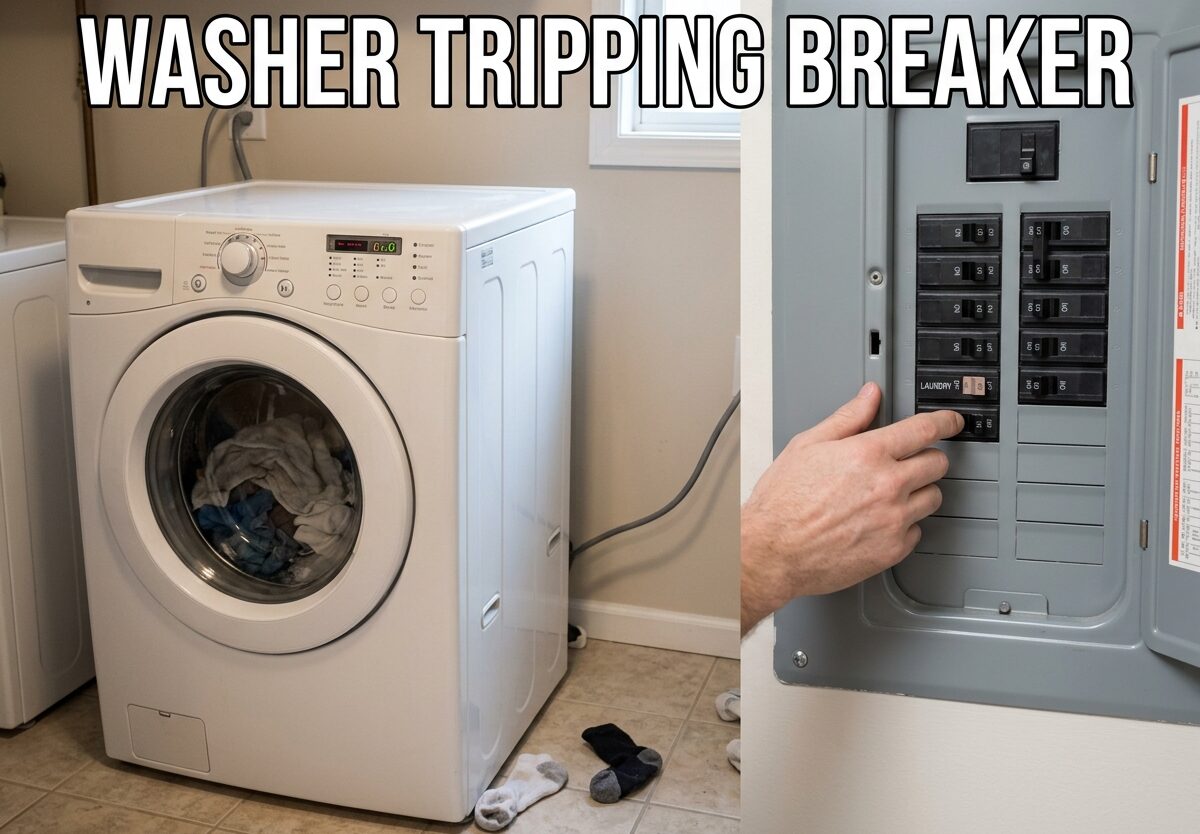
A washing machine that keeps tripping the circuit breaker is more than just annoying. It indicates an electrical problem that needs attention. The most common causes include a faulty drain pump, heating element short, overloaded circuit, motor issues, water damage to electrical components, door lock mechanism faults, or AFCI/GFCI breaker sensitivity issues.
I’ve seen this problem hundreds of times over the years. A washer tripping breaker typically happens when the appliance draws more current than the circuit can handle, or when a short circuit occurs in one of the internal components. The breaker trips to protect your home from electrical fires or damage.
In this guide, I’ll walk you through the causes, show you how to diagnose when the breaker trips during the wash cycle, and help you decide whether you can fix it yourself or need to call a professional.
Safety First: Read This Before You Begin
Before we dive into troubleshooting, I need to share some important safety warnings. Electrical issues with appliances can be dangerous, and your safety should always come first.
Never ignore a repeatedly tripping breaker. This is your home’s electrical system telling you something is wrong. Continuously resetting the breaker without addressing the cause can lead to electrical fires or damage to your washer’s electrical components.
If you notice any of these signs, stop immediately and call a professional: burning smells, visible sparks or scorch marks, the breaker won’t reset at all, or you feel uncomfortable working with electricity. Some problems are best left to licensed electricians or appliance repair technicians.
Why Is My Washer Tripping Breaker?
The question “why is my washing machine tripping my breaker” has several answers. Let me break down the seven most common causes I’ve encountered in my years of troubleshooting these issues.
1. Overloaded Circuit
An overloaded circuit is one of the most common reasons for washer tripping breaker issues. Washing machines draw significant power, especially during motor startup and spin cycles. Most washers require a dedicated 15 or 20-amp circuit.
If your washer shares a circuit with other appliances or fixtures, the combined power draw can exceed the circuit’s capacity. I’ve seen situations where a washer on the same circuit as a refrigerator or dryer causes repeated tripping. The solution might be as simple as ensuring the washer has its own dedicated circuit, or it might require an electrical panel upgrade if your home’s wiring is outdated.
2. Faulty Drain Pump
The drain pump is the number one culprit I see when diagnosing washing machine tripping breaker issues. This small motor removes water from the drum at the end of cycles, and it operates in a harsh environment filled with water, detergent residue, and sometimes debris like coins or buttons.
When drain pump seals fail, water enters the motor assembly causing a short circuit. Even without visible water intrusion, the pump windings can degrade over time, causing excessive current draw that trips the breaker. If your washer trips specifically during the drain or spin cycle, the drain pump is your prime suspect.
3. Heating Element Short
For washers with internal heaters (common in front loaders and high-efficiency machines), a failing heating element is a frequent cause of circuit breaker trips. The heating element sits in water and can develop microscopic cracks over time.
These cracks allow electricity to leak into the water, creating what’s called a “ground fault.” Even a small leak of current to ground can trip modern breakers, especially GFCI or AFCI types. Heating element issues often cause the breaker to trip during the wash cycle when the heater activates, rather than during spin or drain.
4. Motor Issues
Your washer’s main motor does the heavy work of agitating and spinning the drum. Like any motor, it can fail over time. Common motor-related causes of breaker tripping include worn motor brushes (in older models), failed capacitors, or internal winding shorts.
Motor problems often manifest gradually. You might notice the washer struggling to reach full spin speed before it starts tripping the breaker. A failing motor draws excessive current as it struggles to operate, eventually overloading the circuit. If your washer is more than 8-10 years old, motor failure becomes increasingly likely.
5. Water Damage to Electrical Components
Water and electricity don’t mix, yet your washer operates with both in close proximity. Leaks from hoses, seals, or the drum itself can allow water to reach electrical components like the motor, wiring harness, or control board.
Even small amounts of water can cause corrosion on electrical connections, leading to short circuits. I’ve seen many cases where a slow leak went unnoticed until the breaker started tripping. If you notice any dampness around your washer or water on the floor, investigate the source immediately before using the machine again.
6. Door Lock Mechanism Fault
Front-loading washers have a door lock mechanism that keeps the door securely closed during operation. This lock assembly contains electrical components that can fail and cause short circuits.
The door lock is particularly problematic because it’s located near the bottom of the door where water can accumulate during normal operation. A shorted door lock will often trip the breaker immediately when you try to start a cycle, before the drum even begins to move. This is a relatively common issue in washers 5-8 years old.
7. AFCI/GFCI Nuisance Tripping
Sometimes the problem isn’t with your washer at all, but with the type of breaker installed. AFCI (Arc Fault Circuit Interrupter) and GFCI (Ground Fault Circuit Interrupter) breakers provide important safety protections, but they can sometimes be overly sensitive to the normal electrical patterns of washing machines.
Washer motors create brief electrical arcs during normal operation, and the heating element naturally has some current leakage to ground. While usually within safe limits, these normal patterns can trigger sensitive breakers, especially older AFCI models. If your washer worked fine for years and only started tripping after a breaker replacement, or if a brand new washer trips immediately, the breaker itself might be the issue.
When Does Your Washer Trip the Breaker?
The timing of when your washer trips the breaker provides important clues about the cause. I’ve developed this cycle-stage diagnosis guide based on hundreds of service calls:
Immediately upon starting: This points to the door lock mechanism, control board, or a dead short in the wiring. The breaker trips as soon as the machine attempts to draw power.
During fill cycle: Issues with the water inlet valve or its wiring are likely culprits. The valve solenoid can short out, causing the breaker to trip when the washer attempts to fill.
During agitation/wash: If the breaker trips during the main wash cycle (especially if water is being heated), suspect the heating element or motor. The heating element often causes trips when it activates mid-cycle.
During spin: This is the most common timing for drain pump failures. The pump runs during spin to remove water, and if it’s failing or shorted, the increased load trips the breaker. Motor issues can also cause trips during high-speed spin.
During drain: A trip specifically during the drain portion of the cycle almost always indicates a failing drain pump. The pump runs continuously during drain, and any fault will become apparent.
Random timing: If the breaker trips at different points in different cycles, you may have an intermittent connection, wiring damage that moves during operation, or a breaker that’s failing and needs replacement.
How to Fix Washer Tripping Breaker: Safe Troubleshooting Steps
Now that you understand the potential causes and what the timing tells you, here are the safe homeowner-level checks you can perform. Remember: if you’re unsure at any point, it’s better to call a professional.
Step 1: Document the Pattern
Before touching anything, observe and note when the breaker trips. Does it happen at the same point in every cycle? Does it happen immediately when you press start, or only during spin? This information is incredibly valuable for diagnosis and will help any technician you might call.
Step 2: Check for Simple Issues First
Make sure your washer is plugged directly into a wall outlet, not an extension cord or power strip. These can’t handle the power draw of a washing machine and can cause nuisance tripping. Also check that the outlet itself isn’t damaged or loose.
Step 3: Inspect for Visible Problems
With the washer unplugged, look for obvious signs of trouble: water leaks, damaged cords, burn marks on the plug or outlet, or any visible damage to the washer’s cabinet. Remove the bottom panel if your model allows you to safely access the internal components for inspection.
Step 4: Eliminate the Circuit as the Cause
If possible, try plugging another high-power appliance (like a vacuum or space heater) into the same outlet. If it also trips the breaker, the problem is with your home’s wiring, not the washer. Conversely, if you can safely plug the washer into a different circuit and it works fine, you’ve isolated the issue to the original circuit.
Step 5: Check the Breaker
Sometimes the breaker itself is the problem. If your breaker is more than 15-20 years old, it may be failing or may be an outdated type that’s incompatible with modern appliances. A licensed electrician can evaluate whether breaker replacement might solve your issue.
Step 6: Consider the Age of Your Washer
Newer washers (under 5 years old) that trip breakers might indicate a defective component that’s still under warranty. Older washers (10+ years) might have multiple aging components that are failing. This context helps you decide whether repair is worth the investment.
When to Call a Professional
While some washer tripping breaker issues have simple solutions, many require professional expertise. Here’s when I recommend calling a licensed electrician or certified appliance repair technician:
If the breaker trips immediately upon reset and you can’t identify an obvious cause, stop trying. This indicates a serious short circuit that could be dangerous. If you’ve checked the simple items (outlet, power source, visible damage) and the problem persists, professional diagnosis is warranted.
When you need internal component testing, a technician with a multimeter and experience can safely test the motor, pump, heating element, and other components for shorts or excessive current draw. If your home’s electrical system is outdated or you suspect wiring issues, an electrician should evaluate your panel and circuits.
For new washers still under warranty, always use authorized service to avoid voiding your coverage. And finally, if you simply don’t feel comfortable working with electricity, there’s no shame in calling a professional—electrical safety is too important to risk.
Frequently Asked Questions
Why does my washing machine trip my breaker?
Your washing machine trips the breaker when it draws more current than the circuit can handle, or when an internal short circuit occurs. Common causes include a faulty drain pump, heating element short, motor issues, overloaded circuit, water damage to electrical components, door lock mechanism fault, or overly sensitive AFCI/GFCI breakers.
How do you fix an appliance that keeps tripping?
Start by identifying when the breaker trips during the cycle—this indicates which component might be failing. Check that the appliance is plugged directly into a wall outlet (not a power strip), inspect for visible damage or leaks, and ensure the circuit isn’t overloaded. If basic checks don’t resolve the issue, a professional should test internal components with a multimeter.
Is it dangerous to keep resetting a tripping breaker?
Yes, repeatedly resetting a tripping breaker without addressing the cause can be dangerous. The breaker is tripping to protect your home from electrical fires or damage. Ignoring this warning sign can lead to overheated wiring, electrical fires, or further damage to the appliance. Always identify and fix the underlying cause before repeated use.
Should I replace the breaker or call appliance repair?
Start by eliminating the breaker as the cause. If the breaker is more than 15-20 years old, it may be failing. If you can safely plug another high-power appliance into the same outlet without tripping, the breaker is likely fine and the washer needs repair. If you’re unsure, an electrician can test the breaker first, saving you an unnecessary appliance service call.
Why does my new washer keep tripping the breaker?
A new washer tripping the breaker immediately could indicate a manufacturing defect, incompatible breaker type (especially with older AFCI breakers), an overloaded circuit, or improper installation. Check that the washer is on a dedicated 15-20 amp circuit and plugged directly into the wall. If the problem persists, contact the manufacturer or retailer as the washer may be under warranty.
Conclusion
A washer tripping breaker is a frustrating problem, but understanding the causes makes it much less intimidating. By paying attention to when the breaker trips during the cycle, you can narrow down the likely culprit and make an informed decision about whether to attempt basic troubleshooting or call a professional.
Remember: electrical issues deserve respect and caution. The breaker is doing its job by alerting you to a problem. Whether it’s a simple fix like ensuring a dedicated circuit, or a more serious issue like a failing drain pump or heating element, addressing the problem promptly will prevent further damage and keep your home safe.
If you’re dealing with a washer that keeps tripping the circuit breaker, use this guide as your starting point. Document when the trips occur, perform the safe checks outlined above, and don’t hesitate to call a professional when needed. Your safety is worth more than the cost of a service call.


Leave a Comment