
If you’ve ever been camping next to a generator that sounds like a lawnmower running at full throttle, you already understand why a quiet portable generator matters. Whether you’re powering your RV at a campground, keeping essentials running during a home outage, or running equipment at a job site in a noise-restricted area, the decibel level of your generator makes a huge difference in your experience and your relationship with neighbors.
A quiet portable generator typically operates between 48-60 decibels at rated load—roughly the volume of a normal conversation or background music. Compare that to conventional generators that roar at 70-90 dB (equivalent to a vacuum cleaner or city traffic), and you’ll understand why campgrounds, RV parks, and residential neighborhoods increasingly have noise ordinances that restrict generator use.
In this guide, I’ll break down exactly what makes a portable generator quiet, how to interpret decibel ratings, and what features actually matter when you need power without the noise. You’ll learn about inverter technology, closed-frame designs, and the trade-offs between power output and sound levels. I’ll also cover critical safety considerations, especially carbon monoxide risks, which are often overlooked in pursuit of quieter operation.
What Makes a Generator Quiet?
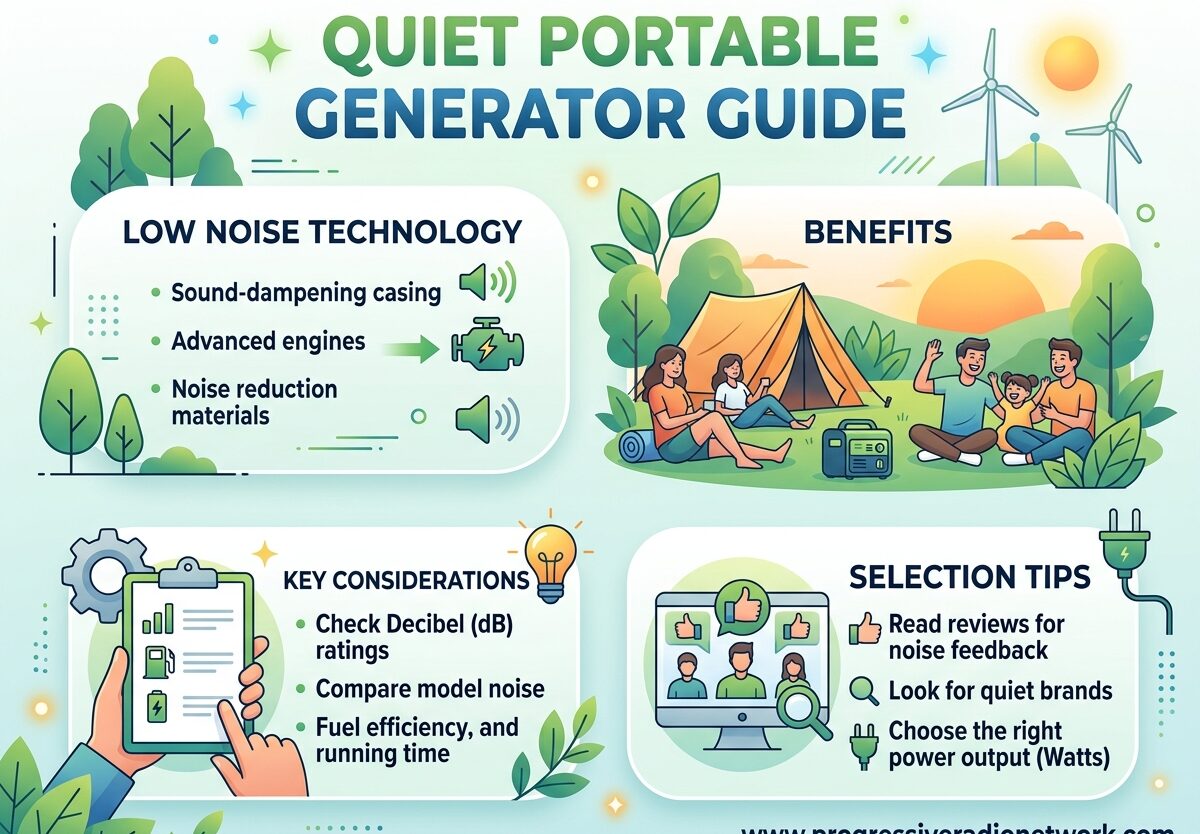
Generator noise comes from three main sources: the engine combustion itself, mechanical components (alternator, cooling fan), and exhaust. Quiet portable generators address all three through specific design choices that differentiate them from traditional open-frame models.
The most significant factor is inverter technology. Unlike conventional generators that run at a constant 3600 RPM to produce 60Hz electricity, inverter generators can vary engine speed based on electrical demand. When you’re running a few LED lights and charging phones, the engine might idle at just 2000 RPM. Crank up the air conditioner, and it ramps up accordingly. This variable speed operation alone can reduce noise by 10-15 dB compared to constant-speed generators.
Enclosed design plays a major role too. Quiet generators use fully enclosed chassis with sound-dampening materials that absorb engine noise rather than broadcasting it in all directions. The housing typically features strategic venting for cooling while minimizing sound escape. Some manufacturers add double-wall construction, acoustic foam insulation, and specially designed mufflers that reduce exhaust noise without restricting airflow.
Engine size and technology matter as well. Smaller displacement engines naturally produce less noise, though they also generate less power. Many quiet generators use overhead valve (OHV) designs with improved combustion efficiency, which reduces the sharp combustion sounds characteristic of older engines. Some models feature specialized engine mounts that absorb vibration before it can resonate through the frame and into the ground or mounting surface.
Eco throttle modes optimize the equation further. This feature adjusts engine speed in real-time based on electrical load, similar to cruise control in your car. When power demand drops, the engine slows down dramatically—often to near-idle. The result is noticeably quieter operation during periods of light electrical use, which is how most people actually use generators in camping and tailgating scenarios.
Understanding Generator Noise Levels (dB Guide)
Decibel ratings can be confusing because the scale is logarithmic, not linear. A generator rated at 60 dB isn’t just a little quieter than one at 70 dB—it’s actually 10 times less intense to the human ear. Every 10 dB reduction represents roughly half the perceived loudness. This explains why a 52 dB generator feels dramatically quieter than a 62 dB model, even though the numbers seem close.
Manufacturer dB ratings have limitations too. They’re typically measured at 23 feet (7 meters) under ideal conditions at 25% or 50% load. Real-world noise levels at your campsite or back patio will differ based on distance, load, and environmental factors. A generator rated at 58 dB might produce 65 dB at full load just 10 feet away—still quiet, but not as whisper-quiet as the spec sheet suggests.
Context helps translate these numbers into real-world expectations. At 48-52 dB, you’re looking at conversation-level noise that most people find unobtrusive even at close range. This is the range where campground neighbors might not even realize your generator is running. The 53-58 dB range is comparable to background music or a humming refrigerator—noticeable but not disruptive. Above 60 dB, generators become more intrusive, similar to a loud TV or busy restaurant conversation.
Distance dramatically affects your experience too. Because sound intensity decreases with distance squared, moving your generator just 10-15 feet farther away can make a surprising difference. At 20 feet, a 58 dB generator might register closer to 48 dB at your ears. This explains why strategic placement—while respecting safety requirements—can make even moderately-quiet generators feel whisper-quiet in practice.
The quietest portable generators on the market operate in the 48-52 dB range at quarter load, with some models approaching 45 dB at light loads. These numbers rival normal conversation levels and make nighttime operation possible without disturbing sleep. By comparison, conventional open-frame generators typically start at 68 dB and can exceed 75 dB under load—loud enough to make conversation difficult and potentially violate noise restrictions at many campgrounds.
Inverter vs Conventional Generators: Noise Comparison
The technology divide between inverter and conventional generators represents the single biggest factor in noise output. Conventional generators rely on a simple design: the engine runs at a constant 3600 RPM regardless of electrical load, producing AC power directly through an alternator. This works reliably but creates constant noise levels that don’t decrease during periods of light electrical use. Whether you’re running a single light bulb or a space heater, the engine roars at the same volume.
Inverter generators take a more sophisticated approach. They first generate AC power like conventional models, but then convert it to DC (direct current) and back to clean, stable AC power through an inverter module. This additional processing step allows the engine to speed up or slow down based on electrical demand. At light loads, the engine might idle at just 2000 RPM. As demand increases, it accelerates accordingly. The result is dramatically quieter operation during typical use scenarios, which rarely require full rated output.
The noise difference is substantial. Conventional 3000-watt generators typically produce 68-75 dB at rated load, with idle noise around 65 dB. Comparable inverter models run 52-58 dB at similar loads and can drop into the high 40s at light loads. In practical terms, this means an inverter generator at full power might be quieter than a conventional generator at half power.
Cost represents the primary trade-off. Inverter technology adds complexity and cost—expect to pay 50-100% more for equivalent wattage compared to conventional designs. For occasional home backup use where noise isn’t a critical concern, conventional generators offer better value. But for camping, RV use, or residential backup where noise ordinances apply, the inverter advantage is worth the premium.
Power quality differs too. Inverter generators produce electricity with less than 3% total harmonic distortion (THD)—clean enough to safely power sensitive electronics like laptops, phones, and medical devices. Conventional generators often produce 8-15% THD, which can cause issues with electronics over time. If you need quiet operation plus clean power for computers or medical equipment, inverter technology delivers both.
Key Features for Quiet Operation
Beyond the core inverter technology, several specific features contribute to quieter generator performance. Understanding these helps you evaluate models effectively and identify which noise-reduction elements matter most for your situation.
Closed-frame construction represents the most visible difference between quiet and conventional generators. The fully enclosed chassis serves multiple purposes: it contains noise, protects components from weather and debris, and provides a mounting surface for sound-dampening materials. Quality closed-frame designs use multi-layer construction with sound-absorbing insulation between panels. Strategic vent placement allows airflow for cooling while minimizing sound escape. Some models even feature double-wall construction with an insulating air gap between layers.
Engine size and design affect noise output significantly. Smaller displacement engines naturally produce less noise and vibration, though they also generate less power. Look for overhead valve (OHV) designs with efficient combustion—these produce sharper, less rumbling exhaust notes compared to older side-valve engines. Some premium models feature specialized engine designs like Honda’s GX series, which balance power output with reduced noise through optimized combustion chamber shapes and camshaft profiles.
Exhaust system design matters more than most buyers realize. Quiet generators feature oversized mufflers with multiple chambers and internal baffling to cancel sound waves. Some models use resonator technology that targets specific frequencies where engine noise is most prominent. The best exhaust systems reduce noise without creating backpressure that would reduce engine efficiency or increase fuel consumption.
CO detection technology deserves mention here not because it reduces noise, but because it enables safer operation in conditions where you might otherwise need to keep a noisy conventional generator farther away. Modern carbon monoxide detection systems like Honda’s CO-MINDER continuously monitor ambient CO levels and automatically shut down the generator if dangerous concentrations accumulate. This technology allows safe operation closer to living spaces than would otherwise be advisable—a crucial safety feature for camping and residential use.
Dual fuel capability offers an interesting noise reduction possibility. Propane and natural gas burn cleaner and slightly quieter than gasoline in most engines. While the difference isn’t dramatic—typically 2-3 dB at most—dual fuel generators give you the option to choose the quieter fuel when noise is a priority. Propane also has the advantage of long shelf life and stable storage, making it ideal for emergency preparedness.
Electric and remote start features don’t directly reduce noise, but they contribute to overall user experience. Pull-starting a generator can be frustrating, especially in cold weather or at odd hours. Electric start eliminates the need for repeated pull attempts, reducing overall disturbance to those around you. Remote start capability allows you to start the generator from inside your RV or home, minimizing time spent near the unit when it’s operating at its loudest during startup.
Parallel capability is worth considering for noise-sensitive applications. This feature allows you to link two smaller inverter generators together for combined output. Two 2000-watt generators connected in parallel can produce the same power as a single 4000-watt unit, but with several advantages: you can run just one generator at light loads for maximum quiet, both units are easier to transport, and you have redundancy if one unit fails. The trade-off is higher total cost compared to a single larger unit.
Best Use Cases for Quiet Portable Generators
Camping and Tailgating
Camping represents the most common application for quiet portable generators, and for good reason. Many campgrounds have strict noise ordinances that prohibit generator operation during quiet hours, typically from 10pm to 7am. Some even limit noise levels to 60 dB at the nearest property line. A quiet inverter generator running at 52-58 dB can often comply with these restrictions while still providing enough power for lights, device charging, and small appliances.
The social aspect matters too. Camping near a loud generator creates tension with neighbors and defeats the purpose of enjoying nature. Quiet generators allow you to power essentials without dominating the soundscape. Many users report that campsite neighbors don’t even realize their generator is running until they point it out.
Tailgating presents similar considerations. You need enough power for TVs, sound systems, cooking equipment, and lights, but you don’t want to be that group with the deafening generator that everyone’s complaining about. Quiet generators in the 3000-4500 watt range provide ample tailgating power while keeping conversation possible nearby.
RV Power
RV owners have unique considerations when it comes to generator selection. Built-in generators are common in larger motorhomes, but many RV owners prefer portable options for their lower cost, easier maintenance, and the ability to use them away from the RV when needed. Quiet operation is especially important in RV parks where sites are closely spaced.
RV air conditioning represents a particular challenge. A typical 13,500 BTU RV AC unit requires 2800-3500 starting watts and 1200-2000 running watts. This means you need a generator in the 3000+ watt range for AC operation, which typically produces more noise than smaller units. However, modern inverter generators in this class can still maintain reasonable noise levels in the 58-65 dB range at rated load.
Nighttime AC operation requires extra consideration. Even a 58 dB generator can disturb sleep if it’s running right outside your bedroom window. Many RV users employ a combination of strategies: positioning the generator as far away as possible (within safe limits), using sound deflecting barriers, and accepting that some noise is inevitable when running AC at night.
For RV use without AC—powering lights, water pump, refrigerator, and devices—much smaller generators suffice. A 2000-watt inverter generator running at 48-52 dB can handle these loads easily while remaining nearly unobtrusive even at close range.
Home Backup in Residential Areas
Home backup power during outages requires balancing several factors: enough wattage to run essentials, fuel capacity for extended runtime, and noise level that won’t disturb neighbors or violate local ordinances. Suburban neighborhoods often have noise restrictions that limit generator use, especially during nighttime hours.
The reality is that whole-home backup requires substantial power. Running a well pump, furnace, refrigerator, sump pump, and some lighting simultaneously can demand 5000-8000 watts. Generators in this range—even inverter models—typically produce 65-72 dB at rated load. This is quieter than conventional options (which exceed 75 dB), but still noticeable.
Strategic load management helps reduce noise requirements. By cycling appliances rather than running everything simultaneously, you can use a smaller, quieter generator. For example, run the well pump for 15 minutes to fill a pressure tank, then turn it off before starting other appliances. This approach requires more management but allows you to use a 3500-4000 watt generator in the 58-63 dB range rather than a louder 7000+ watt unit.
Placement affects neighbor relationships significantly. Position your generator as far from neighboring homes as practical while maintaining safe operation. Use barriers like fences or shrubs to deflect sound away from neighbors (but never enclose the generator or restrict airflow). Remember that noise travels differently in different weather conditions—cool, calm evenings carry sound farther than hot, humid afternoons.
Food Trucks and Outdoor Events
Food trucks, outdoor market vendors, and event organizers face unique generator challenges. You need reliable power for cooking equipment, refrigeration, point-of-sale systems, and lighting, but excessive noise can drive away customers and create complaints at event venues. Many farmers markets and street fairs have noise limits that restrict generator use.
Quiet inverter generators in the 3500-6500 watt range typically serve these applications well. This provides enough power for most food truck operations while keeping noise at conversation levels. The key is sizing appropriately—oversized generators are louder and less efficient. Calculate your actual load requirements including starting watts for motors and compressors, then add 20% buffer.
Multiple smaller generators can work better than one large unit for noise-sensitive events. One generator for cooking equipment and a separate unit for lights and POS systems allows you to run only what’s needed and position units strategically to minimize noise impact on customers.
Sound deflecting enclosures—while never restricting airflow—can help direct generator noise away from customer areas. These must be designed carefully to avoid overheating and carbon monoxide buildup, but properly engineered barriers can reduce perceived noise by 5-10 dB for those in seating areas.
How to Choose the Right Quiet Generator
Determining Your Wattage Requirements
Sizing your generator correctly is the first step in finding the right balance between power and noise. Undersized generators won’t meet your needs, while oversized units are unnecessarily loud, expensive, and fuel-inefficient. The key is understanding the difference between running watts (continuous power) and starting watts (brief surge required by motors).
Make a detailed list of everything you plan to power simultaneously. For each item, note both running and starting wattage. Appliances with motors—refrigerators, well pumps, air conditioners—require 2-3 times their running wattage for startup. Electronic devices typically have stable power draw without significant surge requirements.
Add up all running watts for items you’ll use simultaneously. Then identify the highest starting watt requirement among your appliances. Your generator needs to handle both the total running load AND the highest starting surge. For example, if your total running load is 2000 watts and your refrigerator needs 1800 starting watts, you need a generator rated for at least 3800 starting watts, even though continuous draw is much lower.
For camping and tailgating, common loads include: small refrigerator (100-200 running, 600-800 starting), microwave (800-1200 running), coffee maker (800-1500 running), LED lights (10-50 each), device charging (25-100 per device), small TV (50-150). Most camping setups work well with 2000-3500 watt generators.
Home backup requires more calculation. Essential circuits typically include: well pump (750-1500 running, 2500-4000 starting), furnace blower (400-800 running, 1200-2000 starting), refrigerator (100-200 running, 600-1200 starting), sump pump (800-1500 running, 2000-3500 starting), lighting (200-500 depending on fixtures), microwave (800-1200 running). Most essential-home setups require 5000-8000 watts, but careful load management can reduce this to 3500-5000 watts.
Prioritizing Noise Level for Your Situation
Once you’ve determined your wattage requirements, the next decision is how much to prioritize noise versus other factors like cost and fuel capacity. For some applications, quiet operation is the primary concern. For others, it’s secondary to power output or runtime.
Camping and RV use typically prioritize noise above all else. At 48-52 dB, you can run your generator at many campgrounds during restricted hours without violating noise ordinances. These ultra-quiet models tend to be smaller (1000-2200 watts) and more expensive per watt, but for camping applications, the quiet operation and easy transport justify the premium.
Job site generators often prioritize power and durability over quiet operation. Construction sites don’t have noise restrictions, and the ambient noise of tools and equipment masks generator noise anyway. For these applications, conventional open-frame generators in the 5000-8000 watt range offer better value and durability, even though they’re significantly louder.
Home backup sits in the middle. You want reasonable quiet operation to maintain good neighbor relations, but you need enough power for essential circuits. This typically means choosing a 4000-7000 watt inverter generator in the 58-68 dB range. These models are significantly quieter than conventional options but still provide enough output for essential home circuits.
Budget vs Noise Trade-offs
Generator purchasing involves balancing multiple factors, and budget inevitably plays a role. Understanding the price-noise relationship helps you make informed decisions about where to compromise and where to invest.
Inverter technology costs more. As a rough guideline, expect to pay 50-100% more for an inverter generator compared to a conventional model of similar wattage. The price premium buys you quieter operation, cleaner power, and better fuel efficiency. For noise-sensitive applications, the investment is usually worthwhile. For occasional backup power where noise isn’t critical, conventional generators offer better value.
Closed-frame design adds cost but also provides weather protection and durability beyond just noise reduction. The enclosed chassis protects components from rain, dust, and debris—potentially extending generator life. If you’ll use your generator in varied conditions, the enclosed design’s protection justifies some of the cost premium even beyond noise considerations.
Brand reputation and warranty matter too. Premium brands like Honda, Yamaha, and Generac cost more but offer better reliability, longer warranties, and better parts availability. For occasional use, a budget brand might suffice. For daily or critical applications, investing in quality usually pays dividends in reliability and resale value.
Brand Reliability and Real-World Performance
Forum discussions and owner reviews consistently highlight certain brands for quiet operation and reliability. Honda’s EU and EG series generators set the standard for quiet performance, with models like the EU2200i achieving 48-52 dB at rated load. Owners report decades of reliable service with minimal maintenance, justifying the premium pricing through longevity and resale value.
Yamaha’s EF series offers similar performance with slightly lower pricing. These models match Honda’s noise specifications and reliability record while often providing additional features like fuel gauges and longer runtime per tank. For buyers seeking Honda-level quality at a lower price point, Yamaha represents excellent value.
Westinghouse, Champion, and Generac have dramatically improved their inverter generator offerings in recent years. Models like the Westinghouse iGen series and Generac IQ series achieve 55-60 dB at competitive prices. While not as quiet as premium Japanese models, they offer excellent value and performance for most users.
Predator (Harbor Freight’s house brand) has gained a strong following for value-oriented inverter generators. The Predator 3500 and 2000 models consistently receive positive reviews for quiet operation relative to their price point. While build quality and reliability don’t match premium brands, the low price makes them attractive for occasional users and budget-conscious buyers.
Generator Placement and CO Safety
Carbon monoxide safety is non-negotiable when operating any generator, but especially when pursuing quiet operation. The natural tendency is to place generators closer to living spaces to minimize noise perception, but this increases CO risk. Understanding proper placement and CO detection systems is essential for safe operation.
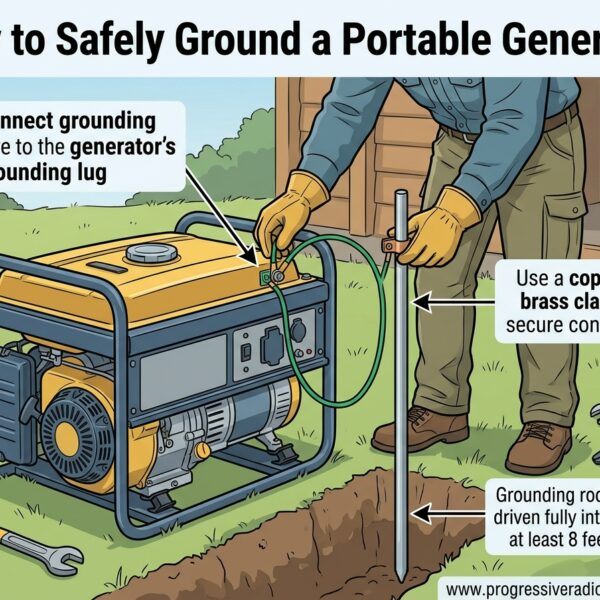
The absolute rule: never operate a generator indoors or in partially enclosed spaces. This includes garages, basements, crawl spaces, and sheds—even with doors and windows open. CO is odorless, colorless, and can accumulate to deadly levels within minutes. Every year, people die from CO poisoning due to improper generator placement during power outages.
Outdoor placement requires careful consideration. Position generators at least 20 feet from doors, windows, and vents. The exhaust should point away from living spaces. Be aware that CO can travel through openings and accumulate in adjacent structures. If you’re using a generator at an RV, ensure exhaust doesn’t point toward the RV’s windows or door.
Weather protection complicates placement but is manageable. A simple canopy or lean-to can protect the generator from rain and snow while maintaining proper ventilation. Ensure the covering doesn’t restrict airflow around the generator or trap exhaust near the unit. Some users build temporary enclosures with ventilation specifically designed to deflect noise while allowing safe CO dispersal.
CO detection technology provides an important safety layer. Modern systems like Honda’s CO-MINDER continuously monitor ambient CO levels and automatically shut down the generator if dangerous concentrations accumulate. This technology is particularly valuable for overnight operation, RV use, and any situation where the generator runs unattended for extended periods.
Install battery-powered CO detectors in your home, RV, or camping setup. These provide early warning if CO accumulates despite proper generator placement. Test detectors regularly and replace batteries according to manufacturer recommendations. CO detectors are inexpensive insurance against a deadly hazard.
Maintenance for Reliable Quiet Operation
Proper maintenance ensures your generator continues running quietly and reliably for years. Neglected generators develop mechanical problems that increase noise, reduce efficiency, and eventually cause failure. A basic maintenance routine takes little time but pays dividends in performance and longevity.
Oil changes represent the most critical maintenance task. Most generators require oil changes after the first 5-10 hours of operation, then every 50-100 hours thereafter. Check oil before every use and change it when it appears dark and contaminated. Use the manufacturer-recommended oil viscosity for your climate—typically 10W-30 for moderate temperatures and 5W-30 for cold weather operation.
Air filter maintenance affects both noise and efficiency. Dirty air filters restrict airflow, causing the engine to run richer and less efficiently. This increases fuel consumption, reduces power output, and can make the engine run louder as it struggles to breathe. Clean or replace air filters according to your manual’s recommendations, or more frequently if you operate in dusty conditions.
Fuel system maintenance prevents starting problems and poor performance. Gasoline degrades within 30-60 days, forming varnish and gum that clog carburetors. Use fuel stabilizer for any generator that will sit unused for more than a month. For long-term storage, drain the carburetor and run the engine dry, or use a fuel shut-off valve to prevent stale fuel from reaching the carburetor.
Spark plug maintenance ensures reliable starting and smooth operation. Check spark plugs annually for fouling, wear, or incorrect gap. Clean or replace as needed. Fresh spark plugs improve combustion efficiency, which reduces noise and fuel consumption while maximizing power output.
Storage considerations affect long-term reliability. Store your generator in a clean, dry location away from temperature extremes. If storing for more than a few months, drain fuel from the tank and carburetor or use fuel stabilizer. Disconnect the battery if equipped with electric start. Cover the unit to prevent dust accumulation but ensure moisture doesn’t get trapped underneath.
Annual professional service makes sense for heavily used generators or owners uncomfortable with DIY maintenance. A small engine technician can perform valve adjustments, carburetor cleaning, and other tasks beyond basic maintenance. Well-maintained generators typically provide 10-15 years of reliable service, while neglected units often fail within 5 years.
Frequently Asked Questions
What are the quietest portable generators?
The quietest portable generators are typically small inverter models in the 1000-2200 watt range from premium brands. Honda’s EU1000i and EU2200i lead the category with noise levels of 48-52 dB at rated load. Yamaha’s EF2000iS and EF2400iSHC offer similar performance. Mid-range options like the Westinghouse iGen2200, Generac iQ2000, and Predator 2000 achieve 53-58 dB while offering better value. For larger power needs, the Honda EU3000iS (55-58 dB) and Yamaha EF3000iSEB (54-57 dB) provide quiet operation in the 3000 watt class.
How many dB is considered a quiet generator?
Quiet generators typically operate between 48-60 dB at rated load, measured at 23 feet. For context, 48-52 dB is comparable to normal conversation or background music—quiet enough for campground use without disturbing neighbors. The 53-58 dB range is similar to a humming refrigerator or background TV—noticeable but not intrusive. Above 60 dB becomes increasingly disruptive, similar to a loud restaurant conversation or vacuum cleaner. For camping applications, look for models under 58 dB. Home backup generators in the 60-68 dB range are considered reasonably quiet for their size. Conventional generators typically exceed 70 dB, making them noticeably louder in all situations.
Which is the best silent generator for home?
While truly silent generators don’t exist, several models excel for home backup use. For essential circuits only (lights, refrigerator, furnace, well pump), the Honda EU3000iS (55-58 dB) or Yamaha EF3000iSEB (54-57 dB) provide 2800-3000 running watts with very quiet operation. For larger loads including central air conditioning, consider the Generac IQ3500 (59-62 dB) or Westinghouse iGen4500DFc (60-63 dB)—these 3500-4500 watt models balance reasonable quiet with enough power for most home backup needs. For whole-home power, Honda’s EU7000iS (52-58 dB) leads its class but comes at premium pricing. Budget-conscious buyers should consider the Predator 3500 or Champion 3800-Watt Dual Fuel, both offering respectable noise levels in the 60-65 dB range at competitive prices.
Is there such a thing as a silent generator?
No generator is completely silent because combustion engines inherently produce noise. However, modern inverter generators come remarkably close. The quietest models, like the Honda EU1000i at 48-52 dB, produce sound comparable to normal conversation—quiet enough that you might not notice from 20 feet away. At light loads, these generators can drop into the mid-40 dB range, approaching true silence. Battery-powered solar generators offer the only truly silent option, producing zero noise during operation. However, these have significant limitations in power capacity and runtime compared to fuel-powered generators. For most applications, a quality inverter generator in the 48-55 dB range provides quiet operation that’s effectively silent for practical purposes while delivering reliable power output that solar generators can’t match.
How far away should a generator be from the house?
Generators should be positioned at least 20 feet away from your home, with the exhaust pointed away from doors, windows, and vents. This distance is critical for carbon monoxide safety—CO is odorless and can accumulate quickly if generators are too close. Never operate a generator indoors, in a garage, or in any partially enclosed space. For RV use, maintain similar distance from the RV’s openings. Weather protection is possible with canopies or temporary shelters, but ensure proper ventilation and that exhaust doesn’t get trapped near living spaces. Remember that carbon monoxide can travel through surprisingly small openings and accumulate in adjacent structures. When in doubt, increase the distance rather than decrease it.
Are inverter generators really quieter?
Yes, inverter generators are significantly quieter than conventional models—typically 10-15 dB quieter at equivalent power output. This dramatic difference comes from variable engine speed technology. Conventional generators must run at a constant 3600 RPM regardless of electrical load, producing constant noise. Inverter generators vary engine speed based on demand, running much slower—and quieter—during light loads. At 25% load, a typical inverter generator might produce 48-52 dB while a conventional model still generates 65-70 dB. The enclosed chassis design of most inverter models further reduces noise compared to open-frame conventional generators. Real-world testing consistently shows that inverter generators are noticeably quieter to the human ear, making them the preferred choice for camping, RV use, and residential backup where noise is a concern.
Conclusion
Understanding quiet portable generator technology helps you make informed decisions whether you’re camping in a noise-restricted campground, preparing for home backup power, or running equipment at a job site. Inverter technology with variable speed engines represents the single biggest advancement in generator quiet operation, producing 48-60 dB output compared to 70+ dB from conventional models.
When choosing your quiet portable generator, start by calculating your actual wattage requirements including starting surges for motors. This prevents oversizing—which wastes money and increases noise—or undersizing, which leaves you without enough power when you need it most. Then consider how noise priority ranks against other factors like runtime, fuel capacity, and budget for your specific application.
Remember that manufacturer dB ratings are measured under ideal conditions. Real-world noise levels vary based on load, distance, and environment. Strategic placement within safety guidelines can make even moderately-quiet generators feel whisper-quiet in practice. But never compromise on carbon monoxide safety—always position generators at least 20 feet from living spaces with exhaust pointing away, and consider CO detection technology for overnight operation.
For camping and RV use where quiet operation is paramount, premium inverter models from Honda and Yamaha in the 48-55 dB range deliver the best performance despite higher pricing. Home backup applications benefit from mid-size inverter generators in the 3500-7000 watt range with noise levels under 65 dB. Job site use typically prioritizes power over quiet operation, making conventional open-frame generators more practical despite their higher noise output.
Regular maintenance ensures your generator continues running quietly and reliably for years. Oil changes, air filter replacement, and fuel system care take little time but dramatically extend generator life while maintaining optimal noise levels. Proper storage with fuel stabilization prevents problems when you need your generator most.
While truly silent generators don’t exist in the fuel-powered category, modern inverter technology comes remarkably close. At 48-52 dB, today’s quietest portable generators produce no more noise than normal conversation—quiet enough for campground use during restricted hours and backyard operation without disturbing neighbors. By understanding the technology, choosing the right size for your needs, and following safety guidelines, you can enjoy reliable power without the disruptive roar that has traditionally characterized portable generators.


Leave a Comment