
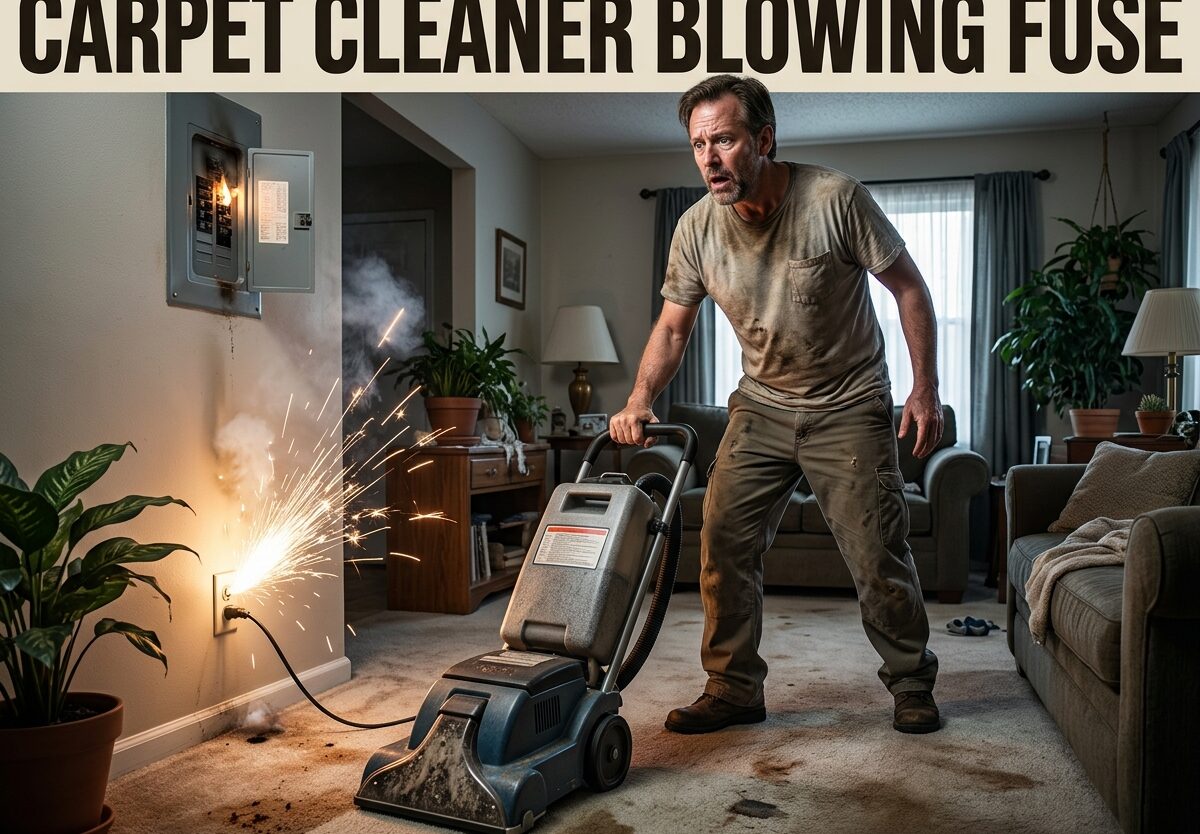
If your carpet cleaner keeps blowing fuses or tripping circuit breakers, you’re not alone. This frustrating issue affects thousands of homeowners each year, often leaving you with half-cleaned carpets and a machine that won’t stay running. In this comprehensive guide, I’ll walk you through exactly why your carpet cleaner is blowing fuses and how to fix it safely.
Whether you own a Bissell, Rug Doctor, Hoover, or Vax carpet cleaner, the underlying causes are usually similar. Understanding what’s happening inside your machine can help you decide whether to attempt a DIY repair or seek professional help. Let’s get your carpet cleaner working again.
Carpet Cleaner Blowing Fuse: Understanding the Problem
A carpet cleaner blowing fuse indicates that excessive electrical current is flowing through the device, triggering a protective safety mechanism. The fuse or circuit breaker is doing its job by cutting power to prevent potential fire hazards or further damage to your machine.
It’s important to understand the difference between a fuse and a circuit breaker. Fuses are small safety devices that contain a metal wire or strip that melts when too much current flows through it, permanently breaking the circuit. Circuit breakers, on the other hand, are switches that trip when they detect excess current and can be reset by flipping the switch back on.
When your carpet cleaner trips a breaker or blows a fuse, it’s telling you something is wrong. The three main culprits are short circuits, motor overload, or ground faults. Each of these issues causes dangerous current levels that your home’s electrical system is designed to block.
Common Causes of Carpet Cleaner Blowing Fuse
Understanding why your carpet cleaner keeps tripping the breaker starts with identifying the specific symptoms. The timing of when the breaker trips can tell you a lot about what’s wrong.
Immediate Tripping (Within Seconds)
If your circuit breaker trips the moment you turn on the carpet cleaner, you likely have a dead short circuit. This occurs when live electrical current bypasses its intended path and flows directly to ground or neutral. Common causes include damaged power cords, exposed wires inside the motor housing, or a failed on/off switch.
Delayed Tripping (30 Seconds to Several Minutes)
When the breaker trips after the machine has been running for a while, motor overload is often the culprit. As carpet cleaner motors age, bearings wear out and belts stretch, causing the motor to work harder and draw more current. This increased amperage eventually exceeds the circuit breaker’s threshold.
Intermittent Tripping
If your carpet cleaner works sometimes but trips the breaker at other times, you may have a ground fault that only occurs under certain conditions. Liquid intrusion into electrical components can cause intermittent short circuits, as can loose internal connections that make contact only when the machine vibrates in a specific way.
Arc Fault Breaker Tripping
Modern homes with AFCI (Arc Fault Circuit Interrupter) breakers may experience nuisance tripping with carpet cleaners. The carbon brushes in universal motors naturally create small sparks as they contact the commutator. AFCI breakers sometimes misinterpret these normal sparks as dangerous arc faults.
Safety First: Essential Precautions
WARNING: Electrical troubleshooting can be dangerous. If you’re not comfortable working with electricity, it’s always safer to consult a professional.
Before attempting any diagnosis or repair:
Always unplug the carpet cleaner before performing any inspection or testing. Never attempt to bypass or disable fuses, circuit breakers, or any other safety devices. If you notice any burning smell, see smoke, or feel excessive heat, stop using the machine immediately. If your home has older wiring (pre-1980s), consider having an electrician inspect your circuits before plugging in high-amperage appliances.
Never attempt to open your carpet cleaner’s motor housing while it’s still plugged in. Some internal components can hold electrical charge even after unplugging. If you’re unsure about any step in this troubleshooting guide, it’s better to err on the side of caution and seek professional help.
Step-by-Step Troubleshooting Guide
Follow these systematic steps to identify whether the problem is with your carpet cleaner or your home’s electrical system.
Step 1: Test Multiple Outlets
Try plugging your carpet cleaner into different outlets throughout your home. If the machine trips breakers in every room, the problem is almost certainly with the carpet cleaner itself. If it only trips in specific areas, you may have an overloaded circuit or faulty wiring in that part of your home.
Step 2: Inspect the Power Cord
Examine the entire length of the power cord for any visible damage. Look for cuts, abrasions, kinks, or areas where the cord has been crushed or bent sharply. Pay special attention to where the cord enters the machine body and where it connects to the plug. Even small nicks in the insulation can expose wires and cause short circuits.
Step 3: Check the Plug Prongs
Inspect the plug’s prongs for damage, corrosion, or bending. Sometimes prongs become loose in their housing or develop carbon buildup from arcing. If the plug feels warm to the touch or shows signs of melting, replace it immediately.
Step 4: Test with a Multimeter (If Comfortable)
For those familiar with electrical testing, a digital multimeter can help pinpoint the problem. Set your multimeter to continuity mode and test between the plug’s prongs. An infinite resistance reading indicates an open circuit (expected when the machine is off). A near-zero resistance reading suggests a short circuit somewhere in the machine.
Step 5: Check for Thermal Fuse Issues
Many carpet cleaners have internal thermal fuses designed to shut down the motor if it overheats. These can fail over time. If your machine starts normally but then stops after a few minutes and won’t restart until it cools down, a faulty thermal fuse may be the culprit.
Step 6: Listen for Unusual Sounds
Before the breaker trips, listen to your carpet cleaner carefully. Grinding, squealing, or rattling noises indicate bearing problems or belt issues that cause motor overload. These mechanical problems increase current draw and trip breakers.
Brand-Specific Troubleshooting Tips
While most carpet cleaners share similar electrical systems, some brands have unique features worth noting.
Bissell Carpet Cleaners
Bissell ProHeat and Big Green models often have reset buttons located on the back of the machine near the power cord. If your Bissell keeps tripping, try pressing this reset button after unplugging the machine. Many Bissell models also have separate thermal fuses for the motor and the heater, so one may fail while the other continues working.
Rug Doctor
Commercial Rug Doctor machines are known for their durability, but the powerful motor can trip residential circuits. If you’re using a commercial Rug Doctor in a home, ensure you’re on a dedicated 15-amp circuit. The reset button on Rug Doctor models is typically located on the rear panel.
Vax Carpet Cleaners
Vax machines often feature motor protection thermostats that can cause intermittent tripping. If your Vax works for a short period then stops, allow it to cool completely for 30 minutes before attempting to restart. Persistent tripping indicates a more serious issue requiring professional service.
Hoover Carpet Cleaners
Hoover PowerScrub and MaxExtract models sometimes experience tripping due to their dual-tank design. Water leakage into the motor compartment can cause ground faults. If you notice water in the wrong areas or have recently tipped the machine, allow it to dry completely before attempting to use it again.
Repair vs Replace: Making the Right Decision
When your carpet cleaner keeps blowing fuses, you’ll need to decide whether to repair or replace it. Consider these factors:
Age of the Machine
If your carpet cleaner is over 5 years old and has seen regular use, replacement may be more cost-effective than repair. Motors and internal components have a limited lifespan, and fixing one issue may reveal others shortly after.
Repair Cost vs Replacement Cost
Professional carpet cleaner repairs typically cost between $80 and $200, depending on the problem. If your machine originally cost less than $200 and needs major repairs, replacement makes more sense. For high-end commercial machines over $500, professional repair is usually worthwhile.
Severity of the Problem
Simple fixes like replacing a damaged power cord or thermal fuse are affordable DIY projects. Motor winding damage or severe short circuits usually require professional service or complete motor replacement. If you’re not comfortable with electrical repairs, professional service is always the safer choice.
If you decide it’s time for a replacement, consider affordable vacuum alternatives that can handle your cleaning needs while staying within budget.
Preventive Maintenance Tips
Regular maintenance can prevent many fuse-blowing issues and extend your carpet cleaner’s lifespan.
Always clean your carpet cleaner’s filters and tanks after each use. Clogged filters restrict airflow, causing the motor to work harder and overheat. Inspect the power cord regularly for any signs of wear, and replace it immediately if you notice damage. Avoid running over the power cord with the machine, as this can crush internal wires.
Store your carpet cleaner in a dry, temperature-controlled area. Moisture and extreme temperatures can degrade electrical components over time. For quick spot cleaning between deep cleanings or while your main carpet cleaner is being repaired, keep handheld spot cleaning vacuums on hand as a backup solution.
Frequently Asked Questions
Why does my carpet cleaner keep tripping the breaker?
Your carpet cleaner keeps tripping the breaker due to excessive current draw. The three main causes are short circuits (exposed wires touching ground), motor overload (worn bearings or stretched belts causing the motor to work harder), or ground faults (current leaking to ground due to liquid damage or insulation failure). The timing of when it trips helps diagnose the issue: immediate tripping indicates a short circuit, while delayed tripping suggests motor overload.
What would cause my fuse to keep blowing?
Fuses keep blowing when the current flowing through them exceeds their rated capacity. In carpet cleaners, this happens due to short circuits (live wires contacting ground or neutral), motor problems (worn bearings, damaged windings, or belt issues increasing resistance), ground faults (water damage or insulation breakdown), or thermal fuse failure (internal safety device malfunction). Each of these conditions allows dangerous current levels that the fuse is designed to block.
How do I stop my vacuum from tripping the breaker?
To stop your vacuum from tripping the breaker: First, test it in different outlets to confirm the problem is with the vacuum, not your home’s wiring. Inspect the power cord for damage and replace if necessary. Check for obstructions in the brush roll or hose that cause motor strain. Clean or replace filters to prevent motor overload. Listen for unusual noises indicating bearing or belt problems. If issues persist after these basic checks, the problem may be internal motor damage requiring professional repair or replacement.
Would an appliance be damaged if a fuse blows?
When a fuse blows, it actually protects the appliance from damage. The fuse sacrifices itself to break the circuit and prevent excessive current from overheating and destroying motor windings, melting insulation, or causing electrical fires. However, the event that caused the fuse to blow (such as a short circuit or motor overload) may have already caused some damage before the fuse responded. Replacing a blown fuse without addressing the underlying problem will only cause it to blow again and potentially lead to further damage.
Conclusion
Dealing with a carpet cleaner blowing fuse is frustrating, but understanding the root cause helps you make informed decisions about repair or replacement. Whether the issue is a simple power cord problem or serious motor damage, always prioritize safety and don’t continue using a machine that repeatedly trips breakers.
Regular maintenance and careful use can prevent many electrical issues. If you’re a pet owner dealing with frequent carpet cleaning, consider investing in quality vacuum cleaners for pet hair to reduce the strain on your carpet cleaner and extend its lifespan.
When in doubt, consult a professional technician who can properly diagnose and repair electrical problems. Your safety is worth more than the cost of professional service.


Leave a Comment