
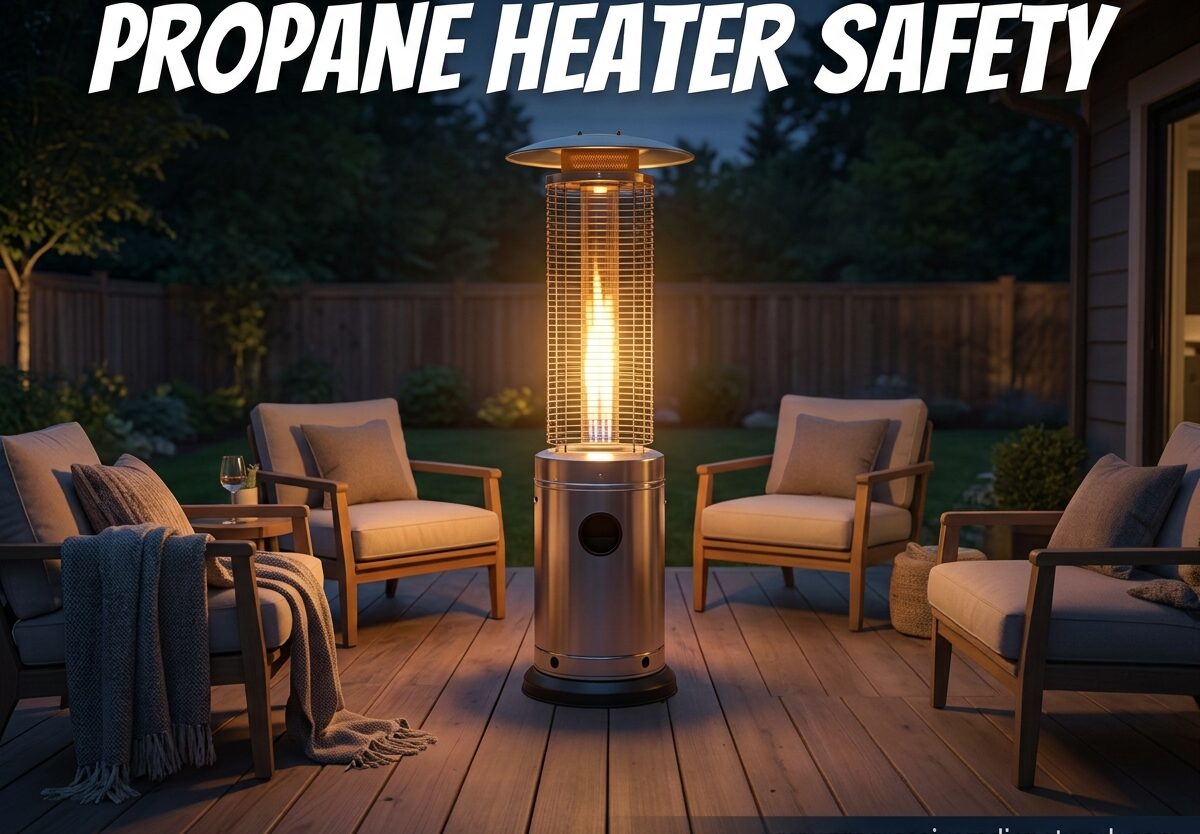
Propane heater safety is something every user needs to understand before operating these heaters indoors or in enclosed spaces. Each year, thousands of people rely on propane heaters for emergency warmth, RV heating, or supplemental garage heat, yet many don’t fully grasp the potential risks involved with improper use. I’ve spent years researching heater safety protocols and speaking with experts, and what I’ve learned is that proper propane heater safety comes down to understanding three critical elements: carbon monoxide prevention, adequate ventilation, and using the right equipment for your space.
The statistics are sobering. According to the Consumer Product Safety Commission, an average of 170 people die each year from carbon monoxide poisoning associated with portable heaters, with propane heaters being a significant contributor. What’s more concerning is that most of these incidents are preventable with proper knowledge and precautions. Whether you’re a homeowner preparing for winter storms, an RV enthusiast planning cold-weather trips, or someone using a propane heater in a workshop, understanding propane heater safety isn’t just helpful knowledge—it’s essential for protecting yourself and your family.
What I want to share with you in this guide isn’t just the standard safety warnings you’ll find on any heater manual. I’ll draw from real user experiences in the prepper and off-grid communities, insights from safety experts, and the latest research on indoor propane heater safety to give you practical, actionable information you can trust. Let me walk you through everything you need to know about using propane heaters safely.
Propane Heater Safety: Understanding the Basics
Propane heater safety starts with understanding how these heaters actually work. Propane heaters burn fuel to produce heat through combustion, a process that consumes oxygen and releases carbon monoxide, carbon dioxide, and water vapor as byproducts. This is why proper ventilation and oxygen depletion sensors are critical components of safe operation. When propane burns completely, it produces primarily water vapor and carbon dioxide. However, incomplete combustion—often caused by poor ventilation or malfunctioning equipment—produces deadly carbon monoxide.
The fundamental principle of propane heater safety is that any combustion heater needs three things to operate safely: fuel, oxygen, and proper ventilation. Remove or compromise any of these elements, and you’re creating a potentially dangerous situation. What makes propane heaters particularly appealing is their portability and efficiency—a standard 20-pound propane tank can provide 400,000 BTUs of heat, making them ideal for emergency situations or spaces where electricity isn’t available.
However, this same efficiency is what makes understanding propane heater safety so critical. The more efficiently a heater burns fuel, the more oxygen it consumes and the more byproducts it produces. This is why the distinction between indoor-rated and outdoor-only heaters isn’t just marketing—it’s a fundamental safety classification that could save your life. Indoor-rated heaters are specifically designed with safety features and emission standards that outdoor heaters simply don’t have, regardless of what you might hear from well-meaning but misinformed sources.
Carbon Monoxide: The Silent Danger
Carbon monoxide is the single greatest risk when using propane heaters indoors, making it the central focus of any propane heater safety discussion. CO is odorless, colorless, and tasteless—earning it the nickname “the silent killer.” What makes carbon monoxide particularly dangerous is how it interacts with your body. When you inhale carbon monoxide, it binds to hemoglobin in your red blood cells 240 times more readily than oxygen, effectively displacing oxygen and depriving your organs and tissues of the oxygen they need to function.
The symptoms of carbon monoxide poisoning are notoriously easy to mistake for other illnesses, which is why so many people succumb to it while sleeping. Mild exposure can feel like the flu—headache, dizziness, nausea, and fatigue. As exposure increases, symptoms progress to confusion, impaired judgment, chest pain, and eventually unconsciousness and death. What’s particularly insidious is that carbon monoxide can render you unconscious before you realize anything is wrong, especially if you’re sleeping when the poisoning begins.
CRITICAL WARNING: Never operate a propane heater without a working carbon monoxide detector. Place detectors near sleeping areas and in the same room as the heater. Test detectors monthly and replace batteries annually.
The good news is that carbon monoxide poisoning is entirely preventable with proper propane heater safety practices. The first line of defense is always adequate ventilation. The second is a properly functioning carbon monoxide detector rated for residential use. I recommend using digital-readout detectors that display CO concentrations in parts per million (ppm), as these will alert you to rising CO levels before they become dangerous, giving you time to ventilate the area and address the source.
Here’s something many people don’t realize: even indoor-rated propane heaters produce some carbon monoxide. The difference is that properly designed indoor heaters produce much lower levels and are designed to be used with adequate ventilation. The key isn’t to avoid carbon monoxide production entirely—that’s impossible with combustion—but to manage it through proper heater selection, ventilation, and detection. This is why carbon monoxide detectors are non-negotiable for any propane heater safety protocol, regardless of how “safe” the heater claims to be.
Oxygen Depletion Sensor (ODS): Your Critical Safety Feature
If there’s one technology that makes indoor propane heater safety possible, it’s the Oxygen Depletion Sensor, commonly abbreviated as ODS. This critical safety device is designed to monitor oxygen levels in the room and automatically shut off the heater if oxygen drops below approximately 19.5% (normal air is about 21% oxygen). The ODS is essentially your fail-safe protection against the dangerous drop in oxygen that occurs when combustion consumes more oxygen than ventilation can replace.
How does an ODS work? The sensor uses a thermocouple that responds to the flame’s temperature and color. When oxygen levels are normal, the flame burns hot and blue. As oxygen decreases, the flame becomes yellow and cooler. This temperature change triggers the ODS to cut off the gas supply, effectively shutting down the heater before oxygen levels become life-threatening. It’s a simple but brilliantly effective safety mechanism that has saved countless lives since it became standard equipment on indoor-rated propane heaters.
However, there’s an important limitation to understand as part of your propane heater safety knowledge: ODS sensors don’t activate until oxygen is already depleted. This means you might experience symptoms of oxygen deprivation (headache, shortness of breath, confusion) before the sensor triggers. Additionally, ODS sensors can fail or become less reliable over time, especially if the heater is dirty or poorly maintained. This is why ODS is a backup safety feature, not a replacement for proper ventilation.
Real-world users in the prepper and RV communities emphasize this point repeatedly. As one experienced user on a popular prepper forum noted, “The ODS is your last line of defense, not your first. By the time it trips, you’ve already been breathing reduced-oxygen air.” This perspective highlights why proper propane heater safety involves multiple layers of protection: adequate ventilation as your primary protection, ODS as a backup, and carbon monoxide detectors as your early warning system.
When shopping for an indoor propane heater, verifying that it has an ODS should be non-negotiable. Look for heaters specifically labeled “indoor-safe” or “for indoor use” that mention ODS technology. Avoid any indoor heater that doesn’t explicitly state it includes an oxygen depletion sensor. The extra few dollars you might save on a cheaper, ODS-free heater aren’t worth the risk to your safety.
Indoor vs Outdoor Heaters: Know the Difference
The distinction between indoor-rated and outdoor-only propane heaters is perhaps the most critical aspect of propane heater safety, yet it’s one that many people misunderstand. Outdoor propane heaters are designed for well-ventilated spaces where carbon monoxide and other combustion byproducts can dissipate harmlessly. They burn fuel at higher rates, produce more emissions, and lack the safety features required for indoor use. Using an outdoor heater indoors, even temporarily, is extremely dangerous.
Indoor-rated heaters, by contrast, are engineered with entirely different safety standards. They feature lower emissions, ODS technology, tip-over protection, and overheat shut-off systems. The combustion process is designed to be as clean as possible, and the heaters are tested and certified for use in enclosed or semi-enclosed spaces. Most importantly, indoor heaters will carry specific certifications from organizations like CSA (Canadian Standards Association) or UL (Underwriters Laboratories) indicating they meet rigorous safety standards for indoor use.
NEVER USE OUTDOOR HEATERS INDOORS: Outdoor propane heaters produce carbon monoxide at levels that can be fatal in enclosed spaces. Even with windows open, outdoor heaters should never be used inside homes, RVs, garages, or tents. The risk is simply too high.
The confusion often comes from marketing language and terminology. Some heaters are labeled “outdoor/indoor” or “vent-free,” which can be misleading. When evaluating propane heater safety, ignore vague marketing claims and look for specific certifications. A heater labeled for “indoor use” should have clear CSA or UL certification for that specific purpose. If you’re unsure whether a heater is rated for indoor use, assume it’s not—the default classification for portable propane heaters is outdoor-only unless explicitly stated otherwise.
One exception worth noting is that some heaters are rated for “indoor use with adequate ventilation” or specifically for use in “well-ventilated garages and workshops.” These are not designed for use in living spaces like bedrooms or family rooms. They’re intended for semi-enclosed areas where some ventilation is available, such as a garage with a door partially open or a workshop with windows. Understanding these distinctions is crucial for proper propane heater safety.
Ventilation Requirements: What You Need to Know
Proper ventilation is the cornerstone of propane heater safety, yet it’s one of the most misunderstood aspects of safe operation. How much ventilation do you need? The answer depends on several factors, including the heater’s BTU output, the size of the space, and how airtight the room is. As a general rule, you need approximately one square inch of ventilation opening for every 1,000 BTUs of heater output. This means a 10,000 BTU heater would require 10 square inches of open window area or equivalent ventilation.
Here’s a practical example: if you’re using a standard 18,000 BTU propane heater in a 300-square-foot room, you should have at least one window partially open (about 18 square inches of opening) to provide adequate fresh air intake. In more airtight spaces like newer RVs or well-insulated rooms, you may need additional ventilation. The key is to ensure fresh air can enter and combustion byproducts can exit. Cracking a window on the opposite side of the room from the heater creates cross-ventilation that’s most effective.
What I’ve learned from experienced users in the RV and off-grid communities is that many people underestimate their ventilation needs. One RV owner on a popular forum shared, “I used to think cracking a window an inch was enough. After experiencing headaches and nausea, I learned I needed at least 3-4 inches of window opening when running my propane heater in cold weather.” This real-world experience highlights why conservative ventilation is always the safer approach when it comes to propane heater safety.
The type of ventilation matters as much as the amount. You want fresh air entering near the floor (since propane heaters consume oxygen from lower levels) and exhaust air exiting near the ceiling. This creates a natural convection current that helps disperse combustion byproducts. Avoid blocking ventilation with furniture, curtains, or other obstacles. And never operate a propane heater in a small, completely enclosed space like a bathroom, closet, or tent—regardless of how short a time you plan to use it.
Fire Safety Precautions for Propane Heaters
While carbon monoxide gets the most attention, fire hazards are a significant component of propane heater safety. Portable propane heaters can reach surface temperatures exceeding 400°F, creating a serious fire risk if placed too close to flammable materials. The National Fire Protection Association recommends maintaining at least 3 feet of clearance around portable heaters in all directions. This means keeping furniture, curtains, bedding, papers, and any other combustible materials well away from the heater.
Proper heater placement is essential for propane heater safety. Place heaters on level, stable surfaces where they won’t be easily knocked over. Avoid placing heaters on rugs, carpets, or uneven flooring that could create instability. If you have children or pets, consider using heaters with cool-touch housing and protective screens that prevent direct contact with hot surfaces. Never place a heater where it can be easily bumped into or where children might play near it unsupervised.
The propane tank itself requires attention as part of your fire safety protocol. Propane tanks should be stored outdoors whenever possible, never in living spaces. If you must use a tank indoors (as with some indoor heater models), ensure the tank is properly secured and positioned so it won’t tip over. Check hoses and connections regularly for wear, cracks, or leaks. The classic soapy water test—applying soapy water to connections and looking for bubbles—remains one of the most effective ways to detect propane leaks.
When it comes to refueling, always turn off the heater and allow it to cool completely before connecting or disconnecting propane tanks. Never refuel a hot heater, as residual heat can ignite propane vapors. Keep a Class B fire extinguisher rated for flammable liquids and gases near your heating area. And never attempt to modify or repair a propane heater yourself—always have qualified technicians perform any repairs or modifications.
Essential Safety Features to Look For
When selecting an indoor propane heater, specific safety features should be non-negotiable components of your propane heater safety strategy. Beyond the Oxygen Depletion Sensor we discussed earlier, look for heaters with tip-over protection that automatically shuts off the unit if it’s knocked over or tilted beyond a certain angle. This is especially important in households with children, pets, or high-traffic areas where accidental tipping is more likely.
Overheat protection is another critical safety feature. This system monitors the heater’s internal temperature and shuts it down if it exceeds safe operating limits. Overheat protection prevents fires and equipment damage that could occur from blocked vents, fan failure, or other malfunctions. Combined with tip-over protection, overheat sensors provide essential backup safety systems that can prevent accidents even when you’re not actively monitoring the heater.
Certification matters tremendously for propane heater safety. Look for heaters certified by recognized testing laboratories like UL (Underwriters Laboratories), CSA (Canadian Standards Association), or ETL (Intertek). These certifications indicate the heater has been tested to specific safety standards and meets minimum requirements for construction, performance, and safety features. Avoid uncertified heaters or those with unfamiliar certification marks, as these may not meet basic safety standards.
Additional features that enhance propane heater safety include piezo push-button ignition (eliminating the need for matches or lighters), automatic low-oxygen shut-off (beyond the ODS), and cool-touch exterior housings that prevent burns from accidental contact. Some premium models include integrated carbon monoxide detectors—a valuable feature, though you should still use separate CO detectors positioned appropriately throughout your space.
When evaluating safety features, remember that more isn’t always better—but the right combination is essential. A heater with all the safety bells and whistles is only as safe as the person operating it. The best safety features complement, rather than replace, proper propane heater safety practices including adequate ventilation, CO detection, and responsible use. As one expert in the field noted, “Safety features are your backup systems, not your primary protection. Your primary protection is proper use and good judgment.”
Signs of Dangerous Operation
Recognizing when something is wrong with your propane heater is an essential propane heater safety skill. Several warning signs indicate dangerous operation that requires immediate shutdown and investigation. If you notice any of these signs, turn off the heater immediately, ventilate the area, and do not restart the heater until the problem is identified and corrected.
Yellow or orange flames instead of blue indicate incomplete combustion, which produces higher levels of carbon monoxide. A properly burning propane flame should be primarily blue with a small yellow tip. If you see significant yellow or orange coloring, especially if it’s accompanied by soot production, you have a combustion problem that needs immediate attention. This could indicate dirty burners, improper air mixture, or a failing regulator—all issues that require professional service.
Unusual odors beyond the brief smell of propane when lighting the heater warrant investigation. While propane itself is odorized with mercaptan (that rotten egg smell) for leak detection, ongoing strong odors during operation can indicate problems. A persistent propane smell suggests a leak that requires immediate action—turn off the gas supply, ventilate the area, and identify the source before restarting. Chemical or burning odors can indicate overheating components or materials near the heater that are being affected by the heat.
Soot accumulation on or around the heater is a red flag for incomplete combustion and excess carbon monoxide production. If you notice black soot deposits on the heater, nearby walls, or ceilings, shut down the heater immediately. Soot production means the heater isn’t burning cleanly and may be producing dangerous levels of carbon monoxide. This issue requires professional service before the heater can be used safely again.
Physical symptoms like headaches, dizziness, nausea, or drowsiness when the heater is running may indicate carbon monoxide exposure or oxygen depletion. These symptoms should never be ignored, even if you have carbon monoxide detectors that aren’t alarming. CO detectors have threshold limits, and some people are more sensitive to carbon monoxide than others. If you experience symptoms that improve when you leave the heated area, assume you have a ventilation or CO problem and address it before using the heater again.
Maintenance and Inspection for Long-Term Safety
Proper propane heater safety extends beyond daily operation to include regular maintenance and inspection. A well-maintained heater is a safer heater, and taking the time for routine checks can prevent problems before they become dangerous. I recommend establishing a maintenance schedule that includes daily, weekly, and annual tasks to keep your heater operating safely throughout its lifespan.
Before each use, perform a quick visual inspection of the heater and its connections. Check hoses for cracks, wear, or damage. Inspect the propane tank for signs of corrosion or damage. Ensure all connections are tight and secure. Look for any visible damage to the heater housing, vents, or protective screens. This daily inspection takes just a few minutes but can catch potential problems before they become serious.
Weekly during heating season, clean the heater according to the manufacturer’s instructions. This typically involves removing dust and debris from vents and burner areas, checking for insect nests or spider webs in burner tubes (a surprisingly common issue in seasonal use), and verifying that safety features like tip-over switches are functioning properly. Keep a log of your maintenance activities to track the heater’s condition over time and identify any developing issues.
Annually, before the heating season begins, have your propane heater professionally inspected and serviced if needed. A qualified technician can check internal components, verify proper gas pressure, clean burners thoroughly, and ensure all safety systems are functioning correctly. This annual checkup is especially important for heaters used regularly or in critical applications like emergency heating. The small cost of annual service is insignificant compared to the safety benefits and peace of mind it provides.
Proper propane tank maintenance is also essential for long-term propane heater safety. Store tanks outdoors in shaded areas, protected from direct sunlight and extreme temperatures. Never store tanks in basements, garages attached to living spaces, or other indoor areas. Keep tanks upright and secure to prevent tipping. Have tanks inspected and requalified according to the manufacturer’s schedule—typically every 10-12 years for portable tanks. Use only tanks in good condition without visible damage, rust, or corrosion.
Propane Heater Safety for Special Situations
While basic propane heater safety principles apply universally, certain situations require extra precautions and awareness. Understanding these special scenarios will help you adapt your safety practices appropriately and avoid common pitfalls that can occur in less typical use cases.
For RV use, propane heaters present unique challenges. RV spaces are smaller and more confined than typical rooms, meaning oxygen depletion and carbon monoxide buildup occur more quickly. Additionally, RVs often have multiple potential sources of carbon monoxide (refrigerators, water heaters, stoves) that compound the risk. If you use a propane heater in your RV, install multiple carbon monoxide detectors—one in the sleeping area and one near the heater—and never run the heater while sleeping without adequate ventilation. Crack roof vents or windows to create airflow, and consider using fans to circulate air.
Garage and workshop heating requires special attention to clearance distances and combustible materials. These spaces often contain flammable liquids, sawdust, chemicals, and paper products that create fire hazards around heaters. Maintain at least 3 feet of clearance in all directions, but increase this distance if storing flammable materials. Never place a heater near workbenches where sawdust or debris could be blown into the heater. Consider using heaters designed specifically for garage use, which typically have additional protection against common workshop hazards.
Emergency heating during power outages is when propane heaters are most valuable—and most risky. In these situations, people often take risks they wouldn’t normally consider, like using outdoor heaters indoors or operating heaters in bedrooms while sleeping. Establish your emergency heating plan before you need it. Have a dedicated, safe location for heater use pre-established. Ensure you have adequate ventilation options planned. Stock spare batteries for carbon monoxide detectors. Having a plan prevents desperate decisions during actual emergencies.
Tent heating for camping presents perhaps the most challenging propane heater safety scenario. The small, poorly ventilated space of a tent is fundamentally incompatible with propane heater use. While some manufacturers market “tent-safe” heaters, most safety experts recommend against using any combustion heater inside a tent. The risk of carbon monoxide accumulation is simply too high in such a confined space. If you must heat a tent, use electric heaters designed for outdoor use with proper extension cords and GFCI protection, or rely on proper cold-weather sleeping gear instead.
Propane Tank Safety: The 80/20 Rule
Understanding propane tank safety is an essential component of comprehensive propane heater safety. The “80/20 rule” is a fundamental principle of propane storage that many users aren’t familiar with but that’s critical for safe operation. This rule states that propane tanks should never be filled beyond 80% of their capacity, leaving 20% empty space for propane expansion.
Why does this matter? Propane expands significantly as temperature increases—about 17 times more than water. A tank filled to 100% capacity at cool temperatures could become dangerously overpressurized as temperatures rise, potentially causing leaks or tank rupture. The 20% headspace provides room for this expansion without creating unsafe pressure levels. This is why professional propane fillers use overflow protection devices and why you should never attempt to completely fill a tank beyond its designed capacity.
When selecting and using propane tanks for your heater, always choose tanks designed and certified for propane use. Never adapt other gas cylinders for propane use—the pressures and valve configurations are different, creating serious safety hazards. Inspect tank valves and O-rings regularly for wear or damage. Replace damaged components before using the tank. When connecting tanks to heaters, ensure connections are hand-tightened appropriately—firm but not overtightened, which can damage threads and create leak points.
Transporting propane tanks safely is another important aspect of propane heater safety. Always transport tanks upright and secured to prevent tipping. Keep tanks away from direct sunlight during transport—never leave tanks in a closed vehicle in hot weather, as temperatures can quickly reach dangerous levels. Avoid transporting tanks in the passenger compartment of vehicles when possible; the truck bed of a pickup is safer. When transporting tanks in enclosed spaces, ensure adequate ventilation and never smoke while handling propane tanks.
One final tank safety consideration: while propane tank explosions are statistically rare (despite what movies might suggest), they can occur under specific conditions. The most common cause of tank failures is exposure to fire, which can cause the tank’s pressure relief valve to activate and vent propane, creating fuel for the fire. This is why maintaining proper clearance around heaters and keeping tanks away from open flames is so important. With proper handling, storage, and use, propane tanks are safe and reliable fuel sources—but they demand respect for the potential energy they contain.
Frequently Asked Questions About Propane Heater Safety
Are indoor safe propane heaters actually safe?
Indoor-rated propane heaters with Oxygen Depletion Sensors (ODS) can be safe when used according to manufacturer guidelines and with proper ventilation. The key is choosing heaters specifically certified for indoor use by recognized organizations like CSA or UL. Never use outdoor-rated heaters indoors, regardless of temporary circumstances. Always operate indoor propane heaters with adequate ventilation and working carbon monoxide detectors.
Can you get carbon monoxide poisoning from a propane heater inside?
Yes, carbon monoxide poisoning is a serious risk when using propane heaters indoors. All combustion produces carbon monoxide, and improper ventilation or malfunctioning equipment can cause dangerous CO buildup. Symptoms include headache, dizziness, nausea, and confusion. CO is odorless and can be fatal. Always use carbon monoxide detectors when operating propane heaters, and never use heaters in poorly ventilated spaces.
Do you need ventilation when using a propane heater?
Yes, ventilation is absolutely essential when using any propane heater. Propane combustion consumes oxygen and produces carbon monoxide and other byproducts that must be vented. As a general rule, provide approximately one square inch of ventilation opening for every 1,000 BTUs of heater output. Crack windows to create cross-ventilation, and never operate propane heaters in small, enclosed spaces without adequate airflow.
How much ventilation do you need for propane heaters?
For proper propane heater safety, provide approximately one square inch of ventilation opening for every 1,000 BTUs of heater output. A 10,000 BTU heater needs roughly 10 square inches of open window area. In airtight spaces like newer RVs or well-insulated rooms, increase ventilation. Create cross-ventilation by opening windows on opposite sides of the room. When in doubt, provide more ventilation rather than less.
Are any propane heaters safe indoors?
Yes, propane heaters specifically rated and certified for indoor use are safe when operated according to manufacturer guidelines. Look for heaters with Oxygen Depletion Sensors (ODS), tip-over protection, and CSA or UL certification for indoor use. Indoor-rated heaters produce lower emissions and include safety features not found on outdoor-only models. Always verify a heater’s indoor certification before using it inside your home.
What is the likelihood of a propane tank exploding?
Propane tank explosions are statistically rare but can occur under specific dangerous conditions. Most tank failures result from exposure to fire, which can cause dangerous pressure buildup. Modern propane tanks include pressure relief valves designed to prevent catastrophic failures. With proper handling, storage, and use, propane tanks are safe. Never expose tanks to open flames or extreme heat, and always inspect tanks for damage before use.
Conclusion: Making Propane Heater Safety a Priority
Propane heater safety isn’t complicated, but it requires knowledge, attention, and respect for the potential risks involved. Throughout this guide, I’ve emphasized the three pillars of safe propane heater operation: proper ventilation, carbon monoxide detection, and using only equipment certified for your intended use. When you commit to these principles, propane heaters can provide reliable, efficient heat for emergency situations, RVs, workshops, and supplemental heating needs.
Let me recap the essential propane heater safety practices we’ve covered: Always choose heaters with Oxygen Depletion Sensors specifically rated for indoor use. Provide adequate ventilation based on your heater’s BTU output and your space’s characteristics. Install and maintain carbon monoxide detectors in appropriate locations. Never leave heaters unattended for extended periods, and never operate them while sleeping without proper precautions. Perform regular maintenance and inspections to keep your equipment functioning safely.
The investment in proper safety equipment is minimal compared to the protection it provides. A quality carbon monoxide detector costs between $20-50 but provides invaluable protection against the silent killer. The few minutes required to ensure proper ventilation before operating your heater could save lives. The annual professional inspection of your heater costs far less than emergency repairs or the potential consequences of a safety failure.
If you take nothing else from this guide, remember this: propane heater safety is about layers of protection. Ventilation is your first layer, the Oxygen Depletion Sensor is your backup, and carbon monoxide detectors are your early warning system. No single protection method is sufficient on its own—but together, they create comprehensive safety that allows you to enjoy the benefits of propane heating without unacceptable risk.
Stay warm, stay safe, and never compromise on propane heater safety. Your life and the lives of those around you depend on it.




Leave a Comment