
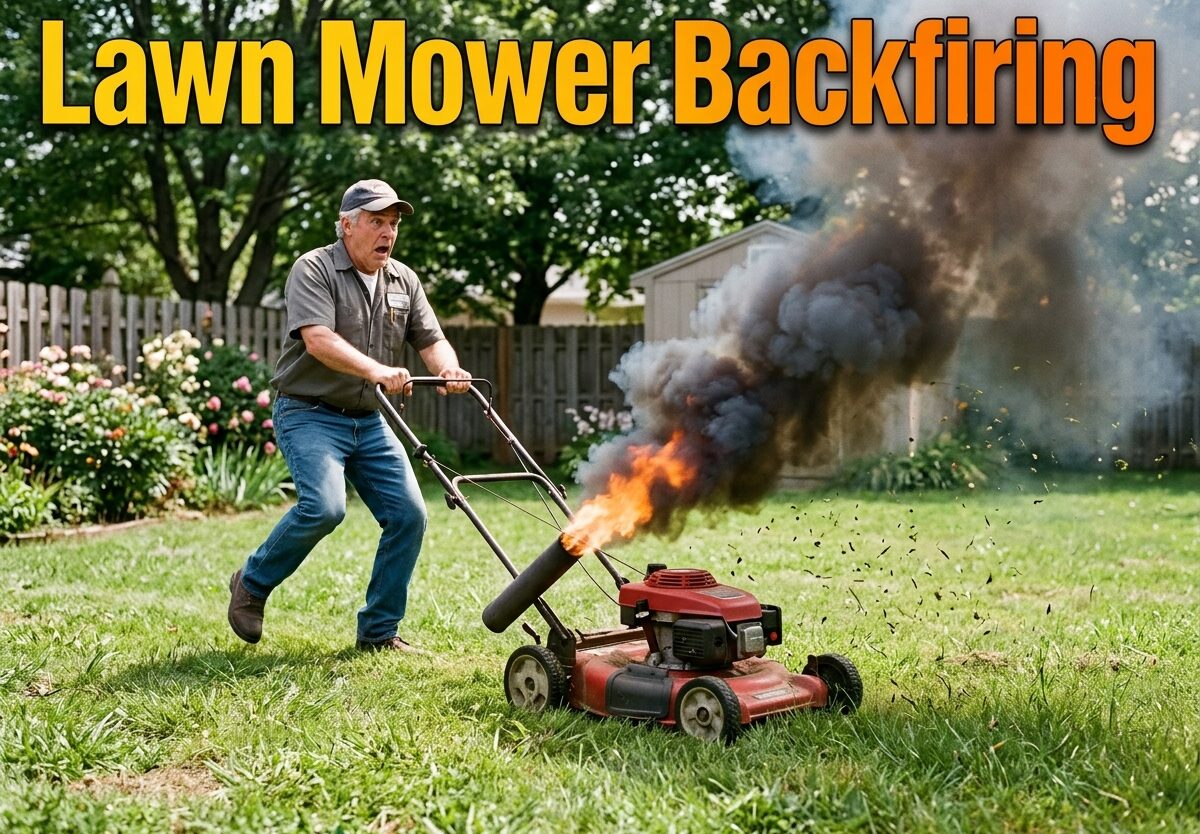
That startling bang from your lawn mower isn’t just annoying – it’s your engine telling you something needs attention. Lawn mower backfiring happens when unburned fuel ignites outside the combustion chamber, creating that characteristic loud pop or bang that can make anyone jump.
Understanding why your mower backfires matters more than you might think. The Consumer Product Safety Commission reports about 80,000 people visit hospitals annually for lawn mower-related injuries, and engine issues like backfiring can signal problems that might lead to equipment failure or safety hazards if ignored.
In this guide, I’ll walk you through exactly what causes lawn mower backfiring, how to fix each issue yourself, and what you can do to prevent it from happening again. Most of these fixes take less than 30 minutes and cost very little.
What is Lawn Mower Backfiring?
A lawn mower backfire is essentially a small explosion that happens when fuel ignites somewhere it shouldn’t. Under normal operation, your engine’s combustion chamber carefully controls when and where fuel burns. When something disrupts this process, unburned fuel can escape into the exhaust system or intake manifold and ignite there instead.
The result is that unmistakable loud bang or popping sound. Sometimes it’s a single pop, other times it’s a series of sputters. The sound can range from a mild puff to an explosive bang that reaches 100-120 decibels – loud enough to cause hearing damage with repeated exposure.
Backfiring differs from normal engine operation in one key way: timing. Normal combustion happens inside the cylinder at precisely the right moment. Backfiring happens when this timing goes wrong, either because the fuel-air mixture is incorrect, ignition timing is off, or exhaust systems aren’t functioning properly.
Six Main Causes of Lawn Mower Backfiring
After working with dozens of mowers over the years, I’ve found that most backfiring issues stem from one of six problems. Let’s tackle each one so you can identify which is affecting your mower.
1. Dirty or Clogged Air Filter
A dirty air filter is the most common culprit I see. Your engine needs a precise mix of air and fuel to run properly – typically about 14 parts air to 1 part fuel. When the air filter gets clogged with grass clippings, dirt, and debris, your engine can’t get enough air.
This creates what’s called a “rich” condition – too much fuel for the available air. The excess fuel doesn’t burn completely in the combustion chamber and instead gets pushed into the hot exhaust system, where it ignites with a bang.
The fix is straightforward: remove your air filter and hold it up to a light source. If you can’t see light through it, or if it looks gray and clogged with debris, it’s time to clean or replace it. Paper filters should be replaced, while foam filters can be cleaned with warm soapy water, dried thoroughly, and lightly oiled before reinstallation.
Check your air filter every 25 hours of operation or at least once per mowing season. A clean air filter costs less than $15 but can prevent numerous engine problems, including backfiring.
2. Old or Stale Gasoline
Gasoline doesn’t age well. Within 30 days, volatile compounds in fuel begin to evaporate, leaving behind a less combustible mixture. After 60-90 days, the fuel can become so degraded that it won’t burn properly in your small engine.
Old fuel causes backfiring because it doesn’t vaporize efficiently. Instead of creating a smooth, consistent burn in the combustion chamber, the degraded fuel ignites unevenly or not at all. Unburned fuel accumulates and eventually ignites elsewhere in the system.
Modern gasoline with ethanol blends (E10 is common) is especially problematic. Ethanol attracts moisture from the air, which leads to water contamination in your fuel system. This water-alcohol mixture burns poorly and contributes to backfiring issues.
If your mower has been sitting for more than a few months, drain the old fuel completely. You can do this by running the engine until it’s empty, or by using a siphon pump to remove gas from the tank. Refill with fresh gasoline and consider adding a fuel stabilizer if you plan to store the mower for an extended period.
3. Spark Plug Issues
Your spark plug might be small, but it plays a massive role in engine performance. A worn, fouled, or improperly gapped spark plug can cause inconsistent ignition, leading directly to backfiring problems.
Spark plugs naturally degrade over time. The electrode wears down, carbon deposits build up, and the gap can become too wide or too narrow. Any of these issues means your spark isn’t hot enough or timed correctly to ignite the fuel properly.
I recommend removing your spark plug and inspecting it carefully. Look for signs of wear on the electrode, black carbon deposits, oil fouling, or a cracked porcelain insulator. The tip should be relatively clean with a light tan or gray coloration.
Check the gap using a feeler gauge – most small engines require a gap between 0.020 and 0.030 inches, but consult your manual for the exact specification. If the plug looks worn or heavily fouled, replace it. Spark plugs cost around $3-8 and should be changed annually or every 100 hours of use.
4. Carburetor Problems
The carburetor is where the magic happens – it mixes air and fuel in precisely the right ratio before sending them to the combustion chamber. When something goes wrong here, backfiring is almost inevitable.
Carburetor issues typically fall into three categories. First, the carburetor can become clogged with varnish, gum, and debris from old fuel. This restricts fuel flow and disrupts the air-fuel mixture. Second, the adjustment screws can drift from their optimal settings over time. Third, the gaskets and seals can degrade, causing air leaks that throw off the mixture.
Symptoms of carburetor problems include difficulty starting, rough idle, the engine surging or hunting, and yes – backfiring. You might notice the backfiring happens more when the engine is under load or when you’re decelerating.
For a minor carburetor issue, try cleaning it with carburetor cleaner spray. Remove the air filter and spray directly into the carburetor throat while the engine is running. If this helps temporarily, you know the carburetor needs a thorough cleaning. For more serious issues, you may need to remove the carburetor, disassemble it, clean all passages with compressed air and carb cleaner, and replace any worn gaskets.
Many modern mowers also have an anti-afterfire solenoid on the carburetor. This small device shuts off fuel flow when you turn off the engine, preventing afterfire (that small bang you sometimes hear when shutting down). If this solenoid fails, you may experience more backfiring issues.
5. Engine Overheating
Excessive heat can cause fuel to ignite prematurely or unevenly, leading to backfiring. Your small engine is designed to operate within a specific temperature range, and several factors can push it beyond those limits.
Dirty cooling fins are a frequent culprit. The fins on your engine block are designed to dissipate heat, but when they become clogged with grass clippings, dirt, and debris, they can’t do their job effectively. I’ve seen engines run 50-100 degrees hotter than normal simply because the cooling fins were dirty.
Low oil level or degraded oil is another factor. Engine oil doesn’t just lubricate – it also helps carry heat away from internal components. When oil level is low or the oil has broken down from age and heat exposure, your engine runs hotter.
Mowing in extremely hot weather, mowing tall or wet grass, or operating the mower with dull blades can all contribute to overheating. The engine works harder under these conditions and generates more heat than the cooling system can dissipate.
To fix overheating issues, start by cleaning the cooling fins thoroughly. Use compressed air or a stiff brush to remove all debris from around the engine block. Check your oil level and change the oil if it’s dark or contaminated. Avoid mowing during the hottest part of the day and take breaks if you’re mowing large areas.
6. Flywheel Key Damage
This is one of the less common causes but an important one to understand. The flywheel key is a small metal piece that ensures proper alignment between the flywheel and the crankshaft. It’s designed to shear if you hit something solid with the mower, protecting the engine from more serious damage.
When the flywheel key shears or becomes partially damaged, the ignition timing gets thrown off. Instead of the spark firing at precisely the right moment, it fires too early or too late. This timing mismatch causes incomplete combustion and can lead to significant backfiring.
Flywheel key damage often happens after hitting a rock, stump, or other solid object. If you’ve recently had a blade-stopping impact and now experience backfiring, there’s a good chance the flywheel key is the problem.
Diagnosing this requires removing the flywheel cover and inspecting the key. The symptoms include hard starting, backfiring, and the engine seeming to fight against itself. Replacing a flywheel key is more advanced than the other fixes on this list but still manageable for most DIYers. The part typically costs less than $10, though you’ll need a flywheel puller tool to do the job.
Backfire vs Afterfire: What’s the Difference?
Many people use these terms interchangeably, but there’s an important distinction between backfire and afterfire that can help you diagnose your mower’s problem.
Backfire occurs while the engine is running. It happens when unburned fuel ignites in the exhaust system or intake manifold during normal operation. You’ll typically hear a loud bang or pop while mowing, and it may happen repeatedly.
Afterfire happens after you’ve turned off the engine. That single bang you sometimes hear a second or two after shutting down your mower? That’s afterfire. It occurs when the engine continues to draw in fuel and air briefly after shutdown, and that remaining fuel ignites in the hot exhaust system.
While the sound is similar, the causes can differ. Backfire during operation typically points to ongoing issues like dirty filters, bad spark plugs, or carburetor problems. Afterfire at shutdown is more often related to how quickly you’re shutting down the engine or issues with the fuel shut-off system.
Both conditions indicate something isn’t right with your engine, but backfire during operation is generally more concerning. It suggests an ongoing problem that needs attention, while occasional afterfire at shutdown is often less serious.
Is Lawn Mower Backfiring Dangerous?
The short answer is: it depends. Occasional backfiring is usually harmless, though it indicates your mower needs maintenance. Chronic backfiring, however, can lead to real problems.
Repeated backfiring can damage your muffler and exhaust system. I’ve seen cases where chronic backfiring blew out the entire end of a muffler or cracked exhaust manifolds. These repairs cost significantly more than addressing the root cause early.
There’s also a safety consideration. Backfiring can startle you, and if it happens while you’re near obstacles or on uneven ground, that moment of surprise could lead to accidents. The loud sound itself can damage your hearing over time – those 100+ decibel bangs aren’t something your ears were designed to handle repeatedly.
From a fire perspective, backfiring isn’t typically dangerous for gas mowers, but it can be a concern if you’re mowing near dry vegetation or have fuel leaks. Any time you have uncontrolled combustion outside the engine, there’s some risk.
If your mower backfires every time you use it, or if the backfiring is getting louder or more frequent, it’s time to address the issue. These are signs that the problem is worsening and could lead to more serious engine damage.
That said, don’t panic over an occasional pop. Most small engines will backfire once in a while, especially when starting or shutting down. The key is paying attention to patterns and addressing chronic issues promptly.
How to Prevent Lawn Mower Backfiring
Preventing backfiring is largely about consistent maintenance and good operating habits. Here’s a checklist that will keep your mower running smoothly and quietly.
Monthly during mowing season: Check your air filter and clean or replace as needed. A clean air filter is your first line of defense against engine problems.
Every 25-50 hours of use: Change your spark plug. It’s cheap insurance against a host of engine issues, including backfiring.
Every 50 hours of use or annually: Change your oil and replace the oil filter if your mower has one. Fresh oil protects your engine and helps regulate temperature.
Each time you fill up: Use fresh gasoline. If gas has been sitting in your can for more than 30 days, use it in your car instead and get fresh gas for your mower.
Before storing for winter: Run the engine dry or add fuel stabilizer to the tank. This prevents gum and varnish from building up in the fuel system.
Proper shutdown technique: When you’re done mowing, let the engine idle for 30-60 seconds before turning it off. Don’t shut it down at full throttle. This gives the engine time to cool and reduces afterfire.
Keep it clean: After each use, use a brush or compressed air to clean grass clippings from the engine cooling fins, deck underside, and air intake areas. A clean mower runs cooler and more efficiently.
Following this simple maintenance schedule will prevent most backfiring issues before they start. The small investment in time and parts pays off in reliable performance and extended engine life.
Frequently Asked Questions
How to fix a backfiring lawn mower?
Start by checking the air filter – clean or replace if dirty. Next, drain old fuel and refill with fresh gasoline. Inspect the spark plug for wear and replace if needed. If problems persist, clean the carburetor or have it professionally serviced. Most backfiring issues can be resolved with these basic maintenance steps.
What is the main cause of engine backfire?
An incorrect fuel-to-air mixture is the primary cause. This typically happens when the air filter is clogged (too much fuel), fuel has degraded (poor combustion), or the carburetor isn’t mixing fuel and air properly. These issues cause unburned fuel to ignite in the exhaust system instead of the combustion chamber.
What does it mean if your lawn mower pops?
Popping sounds indicate unburned fuel is igniting outside the combustion chamber. This usually means your engine isn’t burning fuel completely due to dirty filters, bad spark plugs, old fuel, or carburetor issues. Occasional popping is common, but frequent popping signals a maintenance need.
Does backfire mean rich or lean?
It can mean either. Backfiring through the exhaust typically indicates a rich mixture (too much fuel), while backfiring through the carburetor often means a lean mixture (too much air). Both conditions prevent proper combustion in the engine and cause fuel to ignite elsewhere in the system.
Is it bad if a lawn mower backfires?
Occasional backfiring is usually harmless and often happens during startup or shutdown. However, chronic backfiring can damage your muffler and exhaust system over time. If your mower backfires regularly, it’s signaling a maintenance need that should be addressed to prevent potential engine damage.
Does a backfire damage an engine?
Single backfires rarely cause engine damage, but repeated backfiring can harm exhaust components, blow out mufflers, and crack exhaust manifolds. It can also indicate timing problems that may worsen over time. Addressing chronic backfiring promptly prevents more expensive repairs down the road.
Conclusion
Understanding lawn mower backfiring doesn’t require a mechanics degree – just some basic knowledge of how your engine works and what to check when things go wrong. Most backfiring issues stem from simple maintenance needs that you can handle yourself in an afternoon.
If you’ve worked through these fixes and your mower is still backfiring, it might be time to consult a professional. Sometimes issues like valve problems, internal engine damage, or electrical system faults require specialized tools and expertise. There’s no shame in calling in a pro when you’ve reached your DIY comfort limit.
Have you dealt with a backfiring mower before? What was causing the problem in your case? Sharing experiences helps fellow mower owners troubleshoot their own issues more effectively. And if this guide helped you solve your backfiring problem, pass it along – you might save someone else time, money, and frustration.





Leave a Comment