
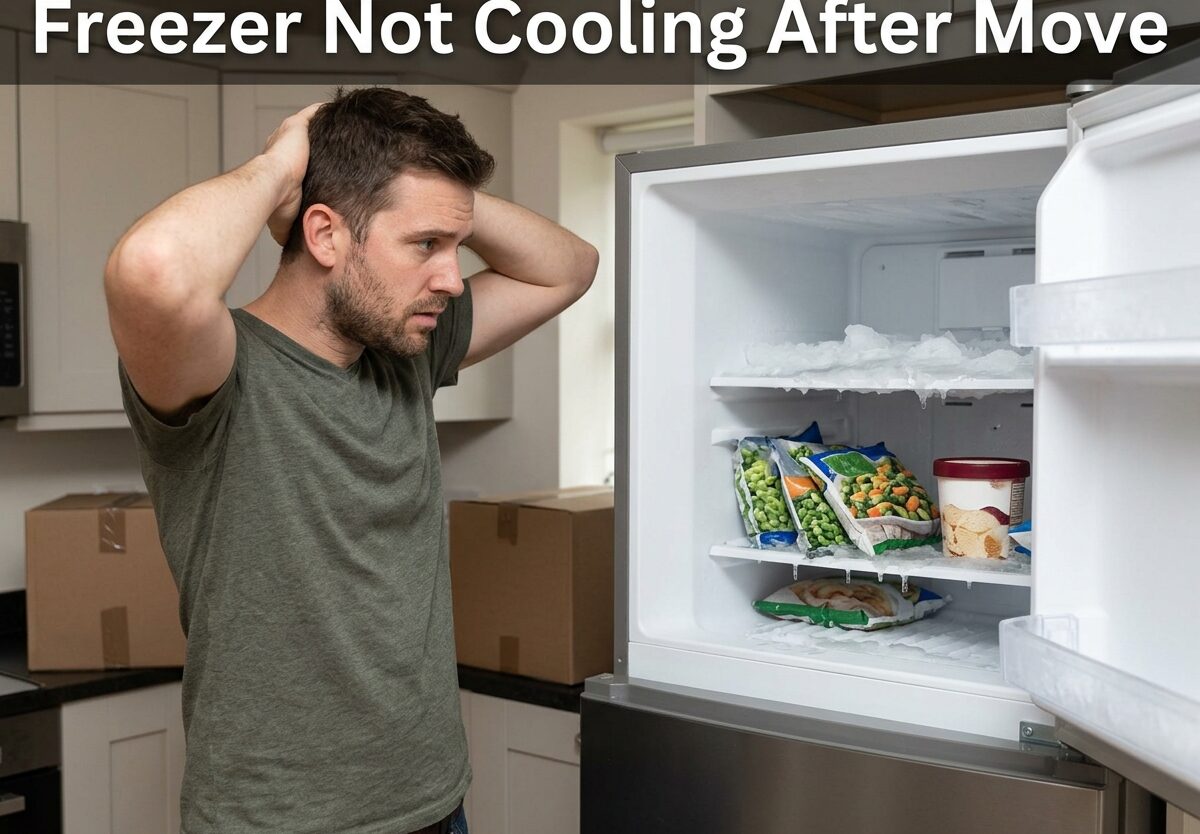
So you just moved into your new place and plugged in your freezer only to find it’s not cooling. I’ve been there myself, and it’s frustrating when you’re unpacking boxes and just want to put your food away. This is actually a common issue that happens after relocating refrigerators and freezers.
The good news is that most post-move cooling problems are temporary or easily fixable. Let me walk you through exactly what’s happening and how to get your freezer working again.
Freezer Not Cooling After Move: Understanding the Problem
When you move a freezer, the jostling and tilting during transport can disrupt the internal systems. The most common culprit is something called a refrigerant bubble. When a freezer is tilted or laid on its side during moving, the refrigerant fluid can separate from the oil and form air bubbles that block circulation.
These bubbles prevent the refrigerant from flowing properly through the compressor and coils, which means your freezer can’t remove heat effectively. Another frequent issue is compressor delay. The compressor needs time to equalize pressure after being transported, especially if it was turned off and then immediately plugged back in.
Loose electrical connections can also occur from the vibration of moving. I’ve seen cases where wires come loose at the terminal block or where the outlet itself has issues from being moved around.
How Long Should a Freezer Sit After Moving?
This is the most common question I get about moving freezers. The short answer: it depends on how the freezer was transported during your move.
If your freezer stayed upright the entire time and was moved carefully, you typically need to wait 2-4 hours before plugging it in. This gives the compressor oil time to settle back into place.
If your freezer was tilted or laid on its side at any point during the move, you should wait at least 4 hours, but ideally 24 hours before plugging it in. The longer settling period ensures all refrigerant bubbles have time to dissipate and the oil can return to the compressor.
I know it’s tempting to plug it in immediately after a long moving day, but giving it proper settling time can prevent permanent compressor damage. The extra patience now saves you from costly repairs later.
Step-by-Step Troubleshooting
If you’ve waited the appropriate settling time and your freezer still isn’t cooling properly, follow these troubleshooting steps in order. I’ve helped dozens of people work through this exact process.
Step 1: Verify the Settling Time Has Passed
First, make sure you’ve actually waited long enough. If you just plugged it in within the last few hours, give it more time. Most freezers take 4-6 hours to reach the optimal temperature after initial startup. If it was laid on its side during the move, wait the full 24 hours before assuming there’s a problem.
Step 2: Check the Power Connection
Ensure the freezer is plugged into a working outlet. Test the outlet with another device to confirm it’s providing power. Check that the power cord isn’t damaged from the move and that the plug is fully inserted into the outlet.
Listen for the compressor to click on. If you hear absolutely no sounds after 10-15 minutes, you may have a power supply issue or the compressor’s start relay has failed. A humming sound that stops quickly after starting could indicate the compressor is trying but failing to start.
Step 3: Verify Temperature Settings
It sounds basic, but check that the temperature dial or digital control is set to the correct setting. Sometimes during a move, settings can accidentally get bumped or changed. The optimal freezer temperature is between 0°F and 5°F (-18°C to -15°C).
If your freezer has a temperature display, check what it’s actually reading. If the display shows the correct temperature but food isn’t freezing, you may have a sensor issue rather than a cooling problem.
Step 4: Inspect the Condenser Coils
The condenser coils are typically located on the back or bottom of the freezer. During a move, these coils can collect dust and debris that reduce cooling efficiency. Use a vacuum or coil brush to gently clean any accumulated dust from the coils.
Dirty coils are a common cause of poor cooling performance, especially in older units. I’ve seen this simple fix resolve cooling issues that people thought were major problems.
Step 5: Clear Blocked Vents
Check the interior vents that circulate cold air. Food items or packaging can block these vents, especially after being moved around. Ensure nothing is obstructing the airflow inside the freezer compartment.
Also check the exterior vents if your freezer has them. Make sure there’s adequate clearance around the unit for proper ventilation. Most freezers need at least 2-3 inches of space on all sides for proper air circulation.
Step 6: Test the Evaporator Fan
Open the freezer door and listen for the sound of the evaporator fan running. This fan circulates cold air throughout the freezer. If you don’t hear it running, the fan may have failed or become obstructed during the move.
A frozen evaporator fan can occur if the freezer was left open during transport. In this case, you’ll need to manually defrost the freezer by turning it off and leaving the doors open for 24 hours.
How to Reset Your Freezer
Sometimes a simple reset can resolve cooling issues after a move. Here’s the proper reset procedure:
1. Unplug the freezer from the power outlet
2. Wait at least 10-15 minutes
3. Plug the freezer back in
4. Set the temperature to the desired setting
5. Wait 4-6 hours for the freezer to reach optimal temperature
This reset allows the compressor to equalize and can resolve minor electrical glitches that may have occurred during transport. I’ve seen this simple fix work multiple times for freezers that were not cooling after being moved.
Freezer Working But Fridge Warm After Move
If your freezer is working but the refrigerator section isn’t cooling, the issue is likely with the damper control or airflow between compartments. The damper controls how much cold air flows from the freezer to the fridge.
During a move, the damper can become stuck or misaligned. Check if the damper door is opening and closing properly. You may need to manually adjust it or replace it if it’s damaged.
Another possibility is a blocked airflow passage between the freezer and fridge. Ensure ice hasn’t formed in the passage, which can restrict airflow. If ice buildup is the issue, a manual defrost may be necessary.
Brand-Specific Considerations
Different freezer brands have unique characteristics when it comes to post-move issues:
Samsung: Samsung freezers are particularly sensitive to being laid on their side. The company recommends waiting 24 hours if the unit was tilted at any point. Samsung models also have a diagnostic mode you can access by pressing specific button combinations to check for error codes.
LG: LG freezers have a self-diagnostic feature that displays error codes on the digital display. If your LG freezer isn’t cooling after a move, check for error codes that indicate compressor or sensor issues.
Whirlpool: Whirlpool recommends waiting 4 hours before plugging in if the unit stayed upright during the move. If it was laid on its side, wait 24 hours. Whirlpool models often have a reset button on the control panel that can help resolve minor issues.
Frigidaire: Frigidaire freezers have a reputation for durable compressors, but the start relay is a common failure point after moving. If you hear clicking but no cooling, the start relay may need replacement.
Hisense: Hisense models are newer to the market and may have different settling time requirements than older brands. Check your specific model’s manual for post-move recommendations, as some Hisense units require longer settling periods.
When to Call a Professional
Most post-move cooling issues can be resolved with the steps I’ve outlined. However, there are situations where professional repair is necessary:
If you hear a loud humming sound followed by a click at the compressor, and this cycle repeats every few minutes, the start relay or compressor may have failed. This is a common issue after moving and typically requires professional repair.
If you’ve waited 24 hours and the freezer still shows no signs of cooling, there may be a refrigerant leak. This can occur if the freezer was dropped or damaged during transport. A professional technician will need to locate and repair the leak before recharging the system.
If you notice unusual smells, burning odors, or see any fluid leaking from the freezer, unplug it immediately and call a professional. These are signs of serious damage that could be hazardous.
Professional repair costs typically range from $150-$400 for common post-move issues like start relay replacement. Compressor replacement can cost $500 or more. If your freezer is over 10 years old and requires major repairs, you may want to consider replacement instead.
FAQ
How long does it take for a freezer to settle after moving?
If your freezer stayed upright during the move, wait 2-4 hours before plugging it in. If it was tilted or laid on its side, wait at least 4 hours but ideally 24 hours. This allows refrigerant bubbles to dissipate and compressor oil to settle properly.
How do I reset my freezer compressor?
Unplug the freezer from the power outlet and wait 10-15 minutes. Plug it back in and set the temperature to the desired setting. Wait 4-6 hours for the freezer to reach optimal temperature. This reset allows the compressor to equalize and can resolve minor electrical issues from transport.
Why is my freezer not cold after moving?
The most common causes are refrigerant bubbles from tilting during transport, compressor delay from immediate plugging, or loose electrical connections from moving vibration. Wait the appropriate settling time, check power connections, and verify temperature settings before assuming a serious problem exists.
How do I get my freezer to freeze again?
Start by waiting the proper settling time based on how the freezer was transported. Check power connections and verify temperature settings are correct. Clean condenser coils and ensure vents aren’t blocked. If issues persist, perform a reset by unplugging for 15 minutes then plugging back in.
Can moving a freezer damage it permanently?
Moving typically doesn’t cause permanent damage if the freezer was handled properly and allowed to settle before plugging in. However, being dropped or laid on its side without proper settling can cause compressor failure or refrigerant leaks. Most issues are temporary and resolve with proper troubleshooting.
Conclusion
A freezer not cooling after a move is usually a temporary issue caused by refrigerant disturbance, compressor delay, or minor connection problems. By following the settling time guidelines and troubleshooting steps I’ve outlined, most cooling issues resolve within 24 hours.
Remember to be patient with the process. Food safety is important, so if your freezer hasn’t reached proper temperature within 24-48 hours, you may need to dispose of perishable items and either continue troubleshooting or call a professional for repair.



Leave a Comment