
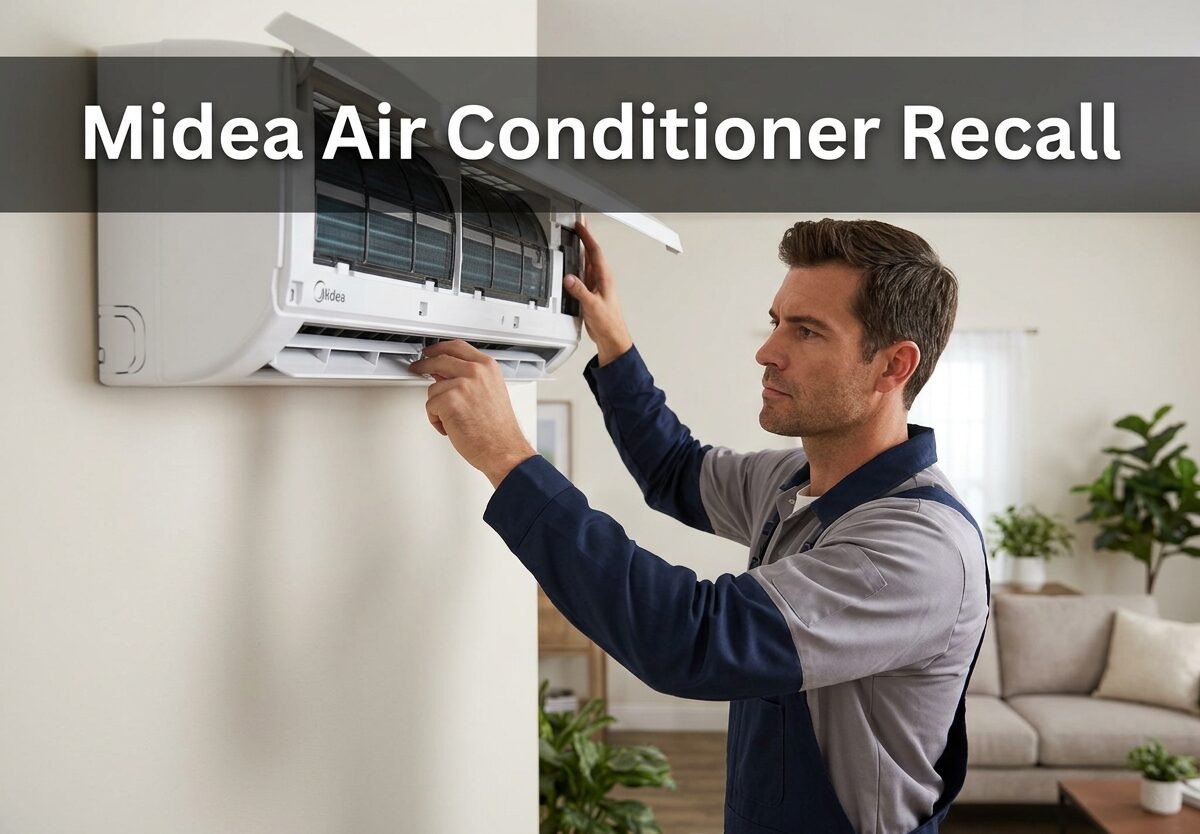
If you own a Midea U-shaped window air conditioner, you need to know about the Midea Air Conditioner Recall affecting approximately 1.7 million units sold between March 2020 and May 2025. The Consumer Product Safety Commission (CPSC) announced this voluntary recall due to a mold exposure risk that could cause respiratory health issues. This guide covers everything you need to know about which models are affected, the health risks involved, and how to get your refund or free repair kit.
What Is the Midea Air Conditioner Recall?
The Midea Air Conditioner Recall (CPSC recall number 25-320) is a voluntary safety recall affecting approximately 1.7 million U-shaped and U+ window air conditioners. These units were sold under multiple brand names including Midea, Comfort Aire, Danby, Frigidaire, Insignia, Keystone, LBG Products, Mr. Cool, Perfect Aire, and Sea Breeze between March 2020 and May 2025.
The recall was issued because water can pool inside these units instead of draining properly, creating conditions for mold growth. According to official reports, Midea has received 152 reports of mold growth and 17 reports of health incidents related to exposure. The mold can cause respiratory infections, allergic reactions, coughing, sneezing, and sore throats, particularly in those with compromised immune systems or respiratory conditions.
What makes this recall significant is the sheer number of units affected and the five-year sales period. If you purchased a U-shaped window AC during this time frame, there’s a good chance your unit is included in this recall.
Which Midea Models Are Affected by the Recall?
The Midea Air Conditioner Recall specifically targets U-shaped and U+ window air conditioners across three BTU capacities: 8,000 BTU, 10,000 BTU, and 12,000 BTU. These units are approximately 22 inches wide and 14 inches high, typically white in color, and feature a unique U-shaped design that allows windows to open while the unit is installed.
Not all Midea air conditioners are affected. The recall only covers U-shaped window units sold under 10 different brand names. Portable air conditioners, through-wall units, and traditional window ACs from Midea are not included in this recall.
Below is a complete lookup table of all affected model numbers by brand. You’ll need to locate your model number to confirm if your unit is recalled.
| Brand Name | Model Numbers Affected | BTU Capacity |
|---|---|---|
| Midea | MAP08S1WBL, MAP10S1WBL, MAP12S1WBL, U-SHaped U+, U+ Series | 8K, 10K, 12K |
| Comfort Aire | U-Shaped models sold 2020-2025 | 8K, 10K, 12K |
| Danby | U-Shaped window AC models | 8K, 10K, 12K |
| Frigidaire | U-Shaped models sold at Home Depot | 8K, 10K, 12K |
| Insignia | U-Shaped models sold at Best Buy | 8K, 10K, 12K |
| Keystone | U-Shaped window AC units | 8K, 10K, 12K |
| LBG Products | U-Shaped models | 8K, 10K, 12K |
| Mr. Cool | U-Shaped window ACs | 8K, 10K, 12K |
| Perfect Aire | U-Shaped models | 8K, 10K, 12K |
| Sea Breeze | U-Shaped window units | 8K, 10K, 12K |
How to Find Your Model Number on a Midea AC
Finding your model number is the first step to determining if your unit is affected by the Midea Air Conditioner Recall. The model number is typically located on a white or silver rating label on the unit itself.
For U-shaped window air conditioners, you can find the model number label in these locations:
- Behind the front grille – Gently pull the front grille forward (it snaps off) to reveal the label
- On the side panel – Check the left or right side of the unit for a rating label
- Inside the cabinet – Some models have the label inside the unit, visible when you remove the filter
- On the back of the unit – You may need to partially remove the unit from the window to check
The label will show the model number, serial number, and BTU capacity. Take a clear photo of this label for your records. You’ll need the model number when filing your recall claim and the serial number may also be required for verification.
Health Risks Associated with the Midea AC Mold
The primary concern driving the Midea Air Conditioner Recall is mold exposure. When water pools inside these units instead of draining properly, it creates an ideal environment for mold and bacteria growth. When the AC operates, these mold spores can circulate into your living space through the air vents.
Common health symptoms reported by affected consumers include:
- Persistent coughing – Dry, hacking cough that doesn’t resolve with typical treatments
- Frequent sneezing – Especially when the AC is running
- Sore throat – Irritation that worsens near the unit
- Nasal congestion – Stuffiness not related to allergies or illness
- Respiratory infections – Increased frequency of bronchitis or similar issues
- Allergic reactions – Itchy eyes, runny nose, skin irritation
- Headaches – Particularly when spending time near the unit
- Fatigue – Unexplained tiredness that improves when away from home
Children, elderly individuals, and those with asthma or compromised immune systems are at higher risk for complications from mold exposure. If you or family members have experienced these symptoms since installing a U-shaped AC, you should stop using the unit immediately and file a recall claim.
The CPSC has received 17 confirmed health incident reports related to these units. If you’ve experienced health issues you believe are related to your Midea AC, you should document your symptoms and consult with a healthcare provider.
What to Do If Your AC Is Affected by the Recall
If you’ve confirmed your unit is part of the Midea Air Conditioner Recall, you have two remedy options: a full or prorated refund, or a free repair kit. Here’s what you need to do next.
Step 1: Stop using the unit – If you see visible mold, smell musty odors, or have experienced health symptoms, discontinue use immediately. If you haven’t noticed issues, you can continue limited use while waiting for your remedy, but monitor for symptoms.
Step 2: Choose your remedy option – Decide between a refund or repair kit. Refunds require cutting the power cord and submitting photos. Repair kits are free and can be self-installed or installed by a technician.
Step 3: File your claim online – Visit the official recall website at mideaurecall.expertinquiry.com. You’ll need your model number, serial number, and proof of purchase if available. Claims can also be filed by calling 888-345-0256.
Step 4: Provide required documentation – Have your model/serial number photos ready. For refunds, you’ll need to submit a photo of the cut power cord. For repairs, you may need to schedule a technician visit or confirm you’ll install the kit yourself.
Step 5: Follow up – Refund processing typically takes 2-4 weeks. Repair kits ship within 1-2 weeks. Keep your claim number for tracking purposes.
Midea AC Recall Refund vs Repair: Which Option Is Better?
Choosing between a refund and repair depends on your situation, how long you’ve owned the unit, and your comfort with DIY installation. Here’s what you need to know about both options.
Refund Option: Midea offers full refunds for units purchased within the last 36 months. For older units, refunds are prorated based on purchase date. Units purchased before March 2022 may receive minimal refunds due to age. To receive a refund, you must cut the power cord and submit photos proving the unit is permanently disabled. Refunds are typically issued as e-gift cards within 2-4 weeks of claim approval.
Repair Kit Option: The free repair kit includes a drain plug and bubble level to ensure proper installation for drainage. This fixes the root cause of the pooling issue. You can install the kit yourself in about 15 minutes, or request a free technician visit if you’re not comfortable with DIY repairs. The repair kit option allows you to keep using your unit without the cord-cutting requirement.
Which to choose? If your unit is less than 2 years old, the refund may offer better value. If you’ve owned it longer or want to keep the unit, the repair kit is the better choice. Many users report that the repair kit resolves the issue completely, and newer Midea U-shaped units now being sold include this fix from the factory.
Can I Use My Midea AC During the Recall Process?
Many consumers wonder if they can continue using their AC while waiting for a refund or repair kit. The answer depends on your specific situation and whether you’ve noticed any issues.
If you’ve seen visible mold, noticed musty odors, or experienced health symptoms, you should stop using the unit immediately. These are clear signs that mold has already developed, and continued use could worsen health issues.
If you haven’t noticed any problems, limited use is generally considered safe while waiting for your remedy. However, you should monitor for symptoms and inspect the unit regularly for signs of moisture or mold growth. Running the unit on “fan only” mode periodically can help dry out any accumulated moisture.
Some users have installed temporary workarounds like tilting the unit slightly outward to improve drainage, but this is not officially recommended by Midea or the CPSC. The safest approach is to proceed with your chosen remedy as quickly as possible rather than relying on temporary fixes.
How Long Does the Midea Recall Refund Process Take?
The timeline for receiving your Midea Air Conditioner Recall remedy varies based on which option you choose and current demand.
For refunds, expect 2-4 weeks from claim approval to receive your e-gift card. The approval process itself typically takes 3-5 business days after submitting all required documentation, including the photo of your cut power cord. During peak periods, processing may take longer.
For repair kits, shipping typically takes 1-2 weeks. If you request a technician installation, scheduling may add another 1-2 weeks depending on your location and technician availability. Some users report faster processing when calling the recall hotline directly versus using the website.
There is no deadline for filing a Midea Air Conditioner Recall claim, but it’s recommended to file as soon as possible to ensure you receive your remedy before summer heat arrives. Keep your claim confirmation number and follow up if you haven’t received your remedy within the expected timeframe.
Preventing Mold in Any Air Conditioner
The Midea Air Conditioner Recall highlights a common issue with window air conditioners: moisture management. While the U-shaped design has a specific flaw, mold can develop in any AC unit under the right conditions. Here are tips for preventing mold growth in any air conditioner.
Proper installation – Ensure your unit tilts slightly downward toward the outside. This allows condensation to drain away from your home rather than pooling inside. Use a bubble level to verify the angle.
Regular cleaning – Clean or replace filters monthly during peak use. Wipe down visible interior surfaces with a mixture of water and vinegar to inhibit mold growth. Remove any visible debris from the drain pan.
Annual maintenance – At the start and end of cooling season, perform a deep clean. Remove the front grille and clean the coils with a coil cleaner. Check drain holes for clogs and clear them with a pipe cleaner or compressed air.
Monitor humidity – Use a hygrometer to monitor indoor humidity. Keep levels between 30-50% to discourage mold growth. Consider a dehumidifier in particularly humid climates.
Proper sizing – An oversized unit will cycle on and off frequently without removing enough humidity. Ensure your AC is appropriately sized for your room. The Midea U-shaped units were sometimes criticized for being oversized for typical rooms.
Following these maintenance practices can help prevent mold issues in any air conditioner, not just those affected by the recall.
Related Air Conditioner Recalls
The Midea Air Conditioner Recall is one of several AC-related recalls in recent years. If you’re checking your Midea unit, it’s worth verifying whether any other appliances in your home are affected by recalls.
Other window air conditioner recalls have affected various brands for issues including fire hazards, overheating, and electrical problems. The CPSC website maintains a searchable database of all product recalls. You can search by brand, product type, or recall number to check other appliances.
Portable air conditioners from various manufacturers have also faced recalls for fire risks. If you have portable units alongside your window AC, take a moment to verify their safety status as well.
Registering your appliances with manufacturers upon purchase ensures you’ll receive direct notification of any future recalls. Many recalls, like the Midea Air Conditioner Recall, rely on media coverage and consumer awareness to reach affected owners.
FAQ
Are all Midea air conditioners recalled?
No, only U-shaped and U+ window air conditioners sold between March 2020 and May 2025 are affected. Portable ACs, through-wall units, and traditional window ACs from Midea are not included in this recall.
How to claim Midea air conditioner recall?
File your claim online at mideaurecall.expertinquiry.com or call 888-345-0256. You’ll need your model number, serial number, and photos of the unit. For refunds, you must also submit a photo of the cut power cord.
What is the Midea AC recall about?
The Midea AC recall addresses a mold risk caused by water pooling inside U-shaped window air conditioners. The pooled water creates conditions for mold growth that can circulate into living spaces and cause respiratory issues.
Which Midea models are affected by recall?
The recall affects U-shaped and U+ window ACs with 8,000, 10,000, and 12,000 BTU capacities sold under 10 brand names: Midea, Comfort Aire, Danby, Frigidaire, Insignia, Keystone, LBG Products, Mr. Cool, Perfect Aire, and Sea Breeze.
How much is the Midea AC recall refund?
Refunds are full for units purchased within 36 months. Older units receive prorated refunds based on purchase date. Units purchased before March 2022 may receive minimal refunds due to age. Refunds are issued as e-gift cards.
Is the Midea AC recall refund or repair?
You can choose either option. The refund requires cutting the power cord and submitting photos. The repair kit includes a drain plug and bubble level for DIY or technician installation. Both remedies are free.
Can I use my Midea AC during recall?
If you see mold, smell odors, or have health symptoms, stop using immediately. If no issues are present, limited use is generally safe while waiting for your remedy, but monitor for symptoms.
What are the health risks of Midea AC mold?
Mold exposure can cause respiratory infections, allergic reactions, persistent coughing, sneezing, sore throats, nasal congestion, headaches, and fatigue. Children, elderly, and those with respiratory conditions are at higher risk.
Conclusion
The Midea Air Conditioner Recall affects approximately 1.7 million U-shaped window air conditioners sold between March 2020 and May 2025 under 10 different brand names. If you own one of these units, you should check your model number immediately and file a claim for either a refund or free repair kit through the official recall website.
While 152 mold reports and 17 health incidents may seem like a small percentage relative to 1.7 million units, the potential health risks from mold exposure are real. Respiratory infections, allergic reactions, and persistent symptoms have been reported by affected consumers. Those with compromised immune systems or respiratory conditions should be especially cautious.
Both remedy options—refund and repair kit—are free to consumers. The refund option provides compensation but requires permanently disabling your unit. The repair kit fixes the underlying drainage issue and allows continued use. Many users report that the repair kit resolves the problem completely.
To file your Midea Air Conditioner Recall claim, visit mideaurecall.expertinquiry.com or call 888-345-0256. Have your model number, serial number, and purchase information ready. With summer approaching, addressing this recall now ensures you’ll have safe, reliable cooling when you need it most.






Leave a Comment