
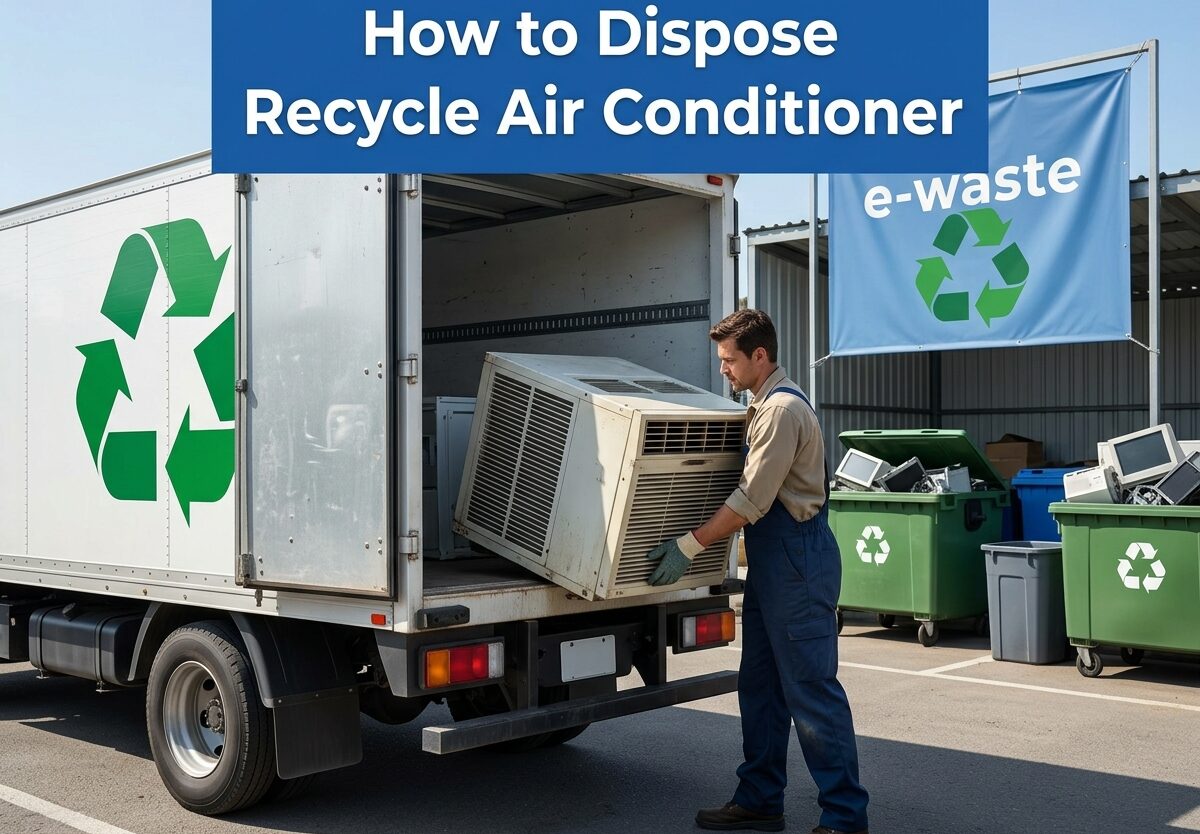
When your air conditioner reaches the end of its life, you can’t simply leave it on the curb with your regular trash. Air conditioners contain hazardous materials that require special handling by law. I’ll walk you through exactly how to legally and responsibly dispose or recycle your air conditioner in 2026.
Proper air conditioner disposal isn’t just about following regulations. It protects the environment from ozone-depleting substances and prevents harmful greenhouse gases from entering the atmosphere. The process may seem complicated, but breaking it down into clear steps makes it manageable for any homeowner or renter.
Why Proper Air Conditioner Disposal Matters
Improper disposal of air conditioning units releases refrigerants that are thousands of times more potent than carbon dioxide as greenhouse gases. A single window AC unit contains enough refrigerant to cause significant environmental damage if vented directly into the atmosphere.
The U.S. Environmental Protection Agency regulates AC disposal under Section 608 of the Clean Air Act. This federal law makes it illegal to release refrigerants into the environment during appliance disposal. Violators face fines up to $44,539 per day for non-compliance.
Beyond legal consequences, properly recycling your AC unit recovers valuable materials. Steel, aluminum, copper, and plastic components can be reclaimed and reused. Certified recyclers recover an average of 85-95% of materials from each unit, reducing the need for raw material extraction.
Hazardous Components Inside Your AC Unit
Understanding what makes air conditioners hazardous helps explain the complex disposal requirements. Your AC unit contains several regulated materials that require professional handling.
Refrigerants: The most critical component is the refrigerant inside the sealed system. Older units typically contain R-22 (Freon), a CFC that depletes the ozone layer. Newer models use R-410A, an HFC that doesn’t harm ozone but is still a potent greenhouse gas. Both types must be recovered by certified technicians using specialized equipment.
Compressor Oil: The lubricating oil inside the compressor can become contaminated with refrigerant during operation. This oil requires proper recovery and disposal as hazardous waste. A typical central AC unit contains 1-2 quarts of compressor oil that must be handled separately.
Electronic Components: Capacitors, circuit boards, and other electronics may contain heavy metals like lead, mercury, and cadmium. These materials classify AC units as electronic waste, requiring recycling through e-waste certified facilities rather than standard landfills.
Refrigerant Lines: The copper tubing connecting components contains residual refrigerant even after recovery. These lines must be cut open or processed to ensure complete refrigerant removal before the metal can be recycled.
Is It Illegal to Throw Away an Air Conditioner?
Yes, it is illegal to dispose of an air conditioner in regular trash in all 50 states. Federal law prohibits knowingly releasing refrigerants into the atmosphere, which includes leaving units uncontained at curbside or in dumpsters. Local municipalities may enforce additional restrictions on bulky appliance disposal.
The Environmental Protection Agency enforces these regulations through Section 608 of the Clean Air Act. Only technicians certified under EPA-approved programs may recover refrigerant from appliances. DIY refrigerant recovery is not permitted for homeowners without proper certification and recovery equipment.
Penalties for improper disposal vary by jurisdiction but can include substantial fines from both federal and state agencies. Some cities issue citations of $500-$1,000 for illegal appliance disposal. Beyond fines, improper disposal creates environmental harm that can’t be reversed.
I’ve seen many people resort to putting AC units in black garbage bags to avoid detection. This approach is still illegal and poses significant environmental risks. The proper disposal process exists for good reason, and following it protects both you and the environment.
Air Conditioner Disposal Options: Complete Comparison
You have several options for legally disposing of your air conditioner. The best choice depends on your budget, the AC type, and services available in your area. Here’s a breakdown of the most common disposal methods.
Household Hazardous Waste Programs: Many municipalities operate HHW facilities that accept air conditioners. These programs are often free or low-cost for residents. However, not all HHW facilities accept AC units due to refrigerant handling requirements. Call ahead to confirm they accept air conditioners and ask about any fees.
Certified E-Waste Recyclers: Electronic waste recycling facilities often accept air conditioners. These recyclers are certified to handle hazardous components and properly recover refrigerants. Look for certifications like R2, e-Stewards, or EPA-approved refrigerant recovery. Expect to pay $50-$100 for drop-off disposal.
Retailer Take-Back Programs: Some retailers offer recycling services when you purchase a new unit. Best Buy accepts up to three appliances per household per day for a $30 fee per item. Home Depot and Lowe’s typically don’t accept air conditioners due to refrigerant handling requirements, but some local stores may participate in manufacturer take-back programs.
Junk Removal Services: Companies like LoadUp, 1-800-GOT-JUNK, and local haulers will pick up your AC unit for a fee. These services handle the entire disposal process, including refrigerant recovery. Pickup typically costs $75-$150 depending on your location and the unit size. This option offers maximum convenience but at a higher price point.
Scrap Metal Buyers: Some scrap yards accept air conditioners, but only if the refrigerant has been professionally recovered. You’ll need documentation from a certified technician confirming proper recovery. Scrap value ranges from $10-$30 for a window unit to $50-$100 for a central AC condenser, minus any recovery fees you paid.
Utility Company Programs: Some electric utilities offer AC turn-in events with incentives for recycling old, inefficient units. These programs may provide bill credits or direct cash for working units. Check with your local utility company about upcoming events or ongoing recycling programs.
How to Dispose of an Air Conditioner: Step-by-Step Guide
Follow these steps to ensure your air conditioner is disposed of legally and responsibly. The process varies slightly depending on your AC type and chosen disposal method.
Step 1: Determine Your AC Type: Identify whether you have a window unit, portable AC, through-wall unit, or central air conditioner. This affects which disposal options are available and the recovery process required. Window units are the easiest to transport, while central systems may require professional disconnection.
Step 2: Check for Remaining Refrigerant: If your AC unit still contains refrigerant, you must hire a certified technician to recover it. Don’t attempt to release or recover refrigerant yourself. HVAC technicians charge $50-$150 for refrigerant recovery, depending on the unit size and refrigerant type. Ask for documentation of proper recovery for your records.
Step 3: Prepare the Unit for Transport: Clean the unit thoroughly and remove any personal items. For window units, reinstall the mounting brackets if you removed them. Secure any loose parts with tape. Cover sharp edges with cardboard or bubble wrap to prevent injury during transport.
Step 4: Choose Your Disposal Method: Based on your research, select the disposal option that works best for your situation. Consider factors like cost, convenience, and whether the unit still contains refrigerant. Schedule a pickup or plan your drop-off trip accordingly.
Step 5: Gather Required Documentation: Some facilities require proof of residency or ownership. Bring your ID and any paperwork related to the AC unit. If you had refrigerant recovered, bring the technician’s documentation. Some facilities may require you to sign a statement confirming the unit is your property and not stolen.
Step 6: Transport or Arrange Pickup: If dropping off, secure the unit properly in your vehicle. Air conditioners can be heavy—window units weigh 50-100 pounds, while central AC condensers can exceed 150 pounds. Use a hand truck or get help loading. If using a pickup service, ensure they’re certified to handle appliances with refrigerant.
Step 7: Obtain Disposal Documentation: Request a receipt or certificate of proper disposal. This documentation protects you if questions arise later about how the unit was handled. Keep this paperwork with your home records as proof of compliance with environmental regulations.
Finding Air Conditioner Recycling Services Near You
Locating legitimate AC disposal services takes some research. Many facilities advertise appliance recycling but aren’t equipped to handle refrigerant recovery. Here’s how to find reliable services in your area.
Start with your city or county’s waste management website. Most municipalities provide information on HHW facilities, bulk item pickup programs, and local recycling options. Search for “appliance recycling” plus your city name to find official programs. These government-run services are typically the most affordable and trustworthy options.
For private recyclers, search Earth911’s database or Call2Recycle’s locator tool. These directories list certified e-waste recyclers by ZIP code. Always verify that the facility accepts air conditioners specifically, as not all e-waste recyclers handle appliances with refrigerant.
When contacting potential recyclers, ask these key questions:
- Are you certified for refrigerant recovery under EPA Section 608?
- What is the fee for air conditioner disposal?
- Do you offer pickup service or only drop-off?
- What documentation will I receive?
- Do you accept my specific type of AC unit?
Red flags to watch for include facilities that don’t ask about refrigerant, offer prices that seem too good to be true, or lack proper certifications. Legitimate recyclers will ask about the refrigerant status upfront and may require proof of professional recovery before accepting the unit.
Some homeowners report success listing working AC units on platforms like Craigslist or Facebook Marketplace as “free—must pick up.” However, ensure the recipient understands the legal requirements for refrigerant recovery. You remain responsible for the unit’s proper disposal until a certified professional takes possession.
The $5000 Rule: When to Repair vs Replace Your AC
The HVAC industry uses a guideline called the $5000 rule to decide whether to repair or replace an air conditioner. If the cost of repairs multiplied by the unit’s age in years exceeds $5000, replacement typically makes more financial sense than repair.
For example, a 10-year-old unit needing $600 of repairs would equal $6000 when multiplied by its age. This exceeds the $5000 threshold, indicating replacement is the better choice. This rule accounts for declining efficiency, increasing repair frequency, and the improved efficiency of modern units.
New air conditioners have much higher SEER2 ratings than older models. Replacing a 15-year-old unit with a new one can reduce cooling costs by 20-40%. Many utilities offer rebates of $100-$500 for upgrading to high-efficiency equipment, further improving the replacement economics.
If you decide to replace your AC, factor disposal costs into your budget. Proper disposal typically costs $50-$150 depending on your chosen method. Some HVAC contractors include disposal in their installation quote, so ask about this service when getting replacement estimates.
Donation Options for Working Air Conditioners
If your air conditioner still works, consider donating it instead of recycling. Organizations like Habitat for Humanity ReStores, The Salvation Army, and local charities may accept working window units. These organizations typically have requirements about the unit’s age, condition, and efficiency.
Donation eligibility usually requires the AC to be less than 10 years old, in working condition, and reasonably clean. Some organizations accept only window units, while others may take portable ACs. Call ahead to confirm what items they currently accept and any drop-off procedures.
Donating extends the unit’s useful life and helps someone in need. You may also qualify for a tax deduction for your donation. Request a receipt documenting the item’s value and the charity’s information for your tax records. Remember that you’re still responsible for ensuring the recipient handles the unit properly when it eventually reaches end-of-life.
Selling Your Air Conditioner for Scrap Value
Some scrap metal buyers pay for air conditioners, but only after refrigerant recovery. Copper, aluminum, and steel components have recycling value. A typical window unit yields $10-$30 at scrap prices, while a central AC condenser might fetch $50-$100.
The challenge is finding a scrap yard that accepts appliances with refrigerant. Most require proof of professional recovery before purchasing the unit. This means you’ll pay $50-$150 for recovery upfront, then recoup some of that cost through scrap sale.
This option only makes financial sense if you can find free or low-cost refrigerant recovery. Some HVAC technicians will recover refrigerant for free if they can salvage other valuable components. Ask about this possibility when calling for service quotes.
FAQ
How do you dispose of an old AC?
To dispose of an old AC, you must first have a certified technician recover any remaining refrigerant. Then transport it to a certified recycler, household hazardous waste facility, or schedule pickup with a junk removal service. Never place air conditioners in regular trash or leave them curbside, as this violates federal law.
What is the $5000 rule for AC?
The $5000 rule helps decide whether to repair or replace an air conditioner. Multiply the repair cost by the unit’s age in years. If the result exceeds $5000, replacement typically makes more financial sense than repair. This accounts for declining efficiency, increasing repair frequency, and improved efficiency of modern units.
How do I get rid of my air conditioner?
Hire a certified HVAC technician to recover refrigerant first. Then choose a disposal method: drop at a household hazardous waste facility, take to a certified e-waste recycler, use a retailer take-back program, or schedule pickup with a junk removal service. Expect to pay $50-$150 for proper disposal depending on your chosen method.
What do I do with a broken air conditioner?
Broken air conditioners still require proper disposal through certified channels. If refrigerant is still present, hire a certified technician for recovery. Then take the unit to a certified e-waste recycler or household hazardous waste facility. Some scrap yards may accept units after refrigerant recovery, offering $10-$100 depending on size and materials.
Can you donate a window air conditioner?
Yes, if the unit still works and is less than 10 years old. Organizations like Habitat for Humanity ReStore, The Salvation Army, and local charities may accept working window units. Clean the unit thoroughly and call ahead to confirm they’re currently accepting AC donations. You may receive a tax deduction receipt for your donation.
How much does AC disposal cost?
Air conditioner disposal costs vary by method. Household hazardous waste programs are often free. Certified recyclers charge $50-$100 for drop-off. Retailer take-back programs cost around $30. Junk removal pickup services range from $75-$150. Scrap metal buyers may pay $10-$100 for units after refrigerant recovery, but you must pay recovery fees first.
Conclusion
Properly disposing of an air conditioner requires a few extra steps compared to regular trash, but the process is straightforward once you understand the requirements. The key is ensuring refrigerant is recovered by a certified technician before the unit reaches any disposal facility.
Start by identifying whether your AC contains refrigerant and hire a certified technician for recovery if needed. Then choose a disposal method based on your budget and convenience. Household hazardous waste programs offer the most affordable option, while junk removal services provide maximum convenience.
Remember that proper disposal protects both the environment and your legal liability. Federal penalties for refrigerant release can exceed $44,000 per violation. Following the steps outlined in this guide ensures you dispose recycle air conditioner units safely and legally in 2026.
If you’re replacing your AC, consider the $5000 rule when deciding between repair and replacement. Newer units offer significant efficiency improvements that can reduce your energy bills by 20-40%. Many utilities offer rebates that help offset disposal and replacement costs.
By taking the time to dispose of your air conditioner properly, you’re doing your part to protect the ozone layer and reduce greenhouse gas emissions. Every properly recycled AC unit prevents harmful refrigerants from entering the atmosphere and recovers valuable materials for future use.


Leave a Comment