
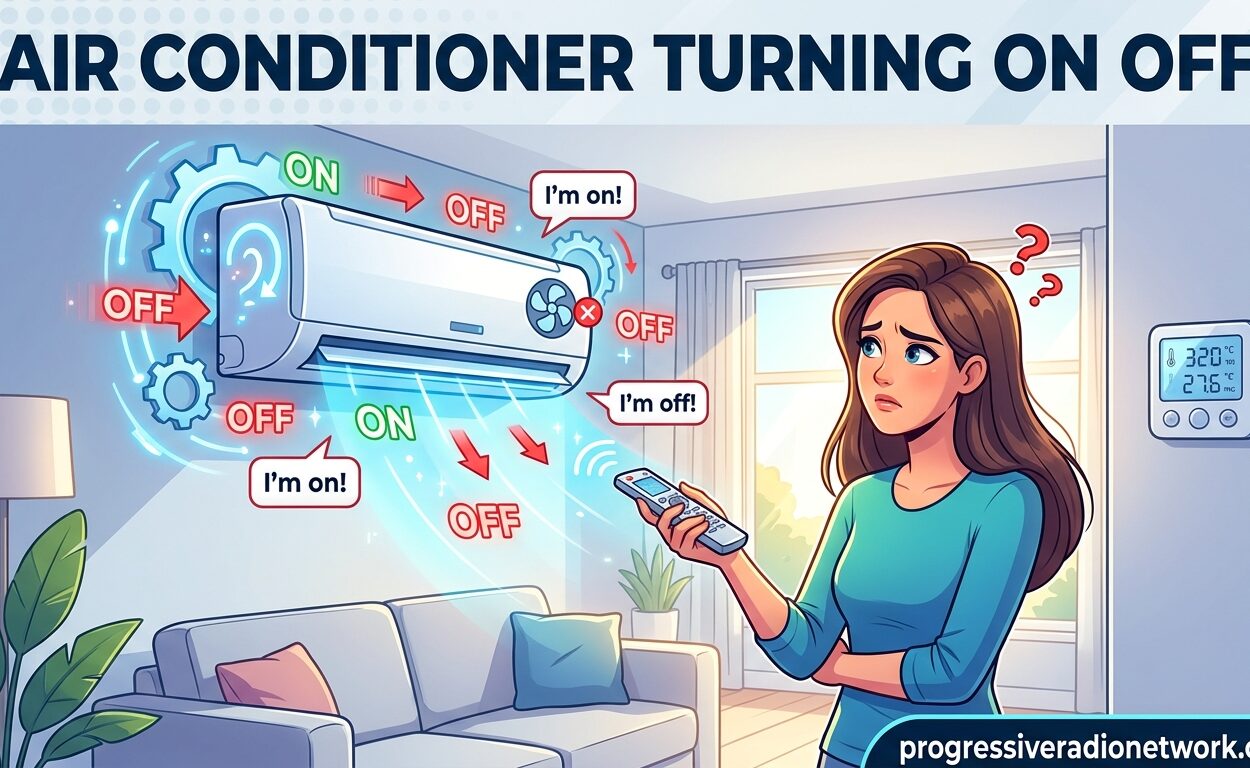
There’s nothing more frustrating than your air conditioner turning on and off repeatedly when you need reliable cooling. I’ve experienced this issue myself, and I know how concerning it can be to hear your AC unit constantly cycling without ever reaching the desired temperature.
This phenomenon is called short cycling, and it’s one of the most common HVAC problems homeowners face. When your air conditioner keeps turning on and off every few minutes instead of running normal 15-20 minute cycles, something is wrong. Short cycling not only fails to cool your home effectively but can also cause serious damage to your system over time.
In this comprehensive guide, I’ll explain why your air conditioner is turning on and off, how to diagnose the problem, and what you can do to fix it before costly repairs become necessary.
What is Short Cycling?
Short cycling occurs when your air conditioner turns on and off frequently without completing full cooling cycles. Instead of running for 15-20 minutes to properly dehumidify and cool your home, the system shuts off after just 3-10 minutes of operation.
This rapid cycling places tremendous stress on your compressor, which is the most expensive component in your HVAC system. Each startup requires a surge of power, and frequent starts can lead to premature compressor failure.
Normal AC cycling follows a predictable pattern: the unit runs until it reaches the thermostat setting, then shuts off for a period before restarting when temperatures rise. Short cycling disrupts this pattern and prevents your system from operating efficiently.
Why Short Cycling is a Problem
Short cycling causes several serious problems that go beyond just comfort issues. When your AC unit turns on and off repeatedly, it increases your energy consumption by 20-30% because startup draws more power than steady operation.
The compressor, which typically lasts 15-20 years with proper maintenance, can fail in half that time when subjected to frequent short cycling. Replacing a compressor costs between $1,500 and $3,000, making this one of the most expensive AC repairs.
Additionally, short cycling prevents proper dehumidification. Your AC needs to run long enough to remove moisture from the air. When it cycles too quickly, humidity remains high, making your home feel clammy and uncomfortable even at lower temperatures.
Normal Cycling vs. Short Cycling
Understanding the difference between normal and short cycling helps you identify problems early. A healthy air conditioner typically runs for 15-20 minutes per cycle during hot weather, with cycles lasting longer on extremely hot days.
Cycles shorter than 10 minutes indicate short cycling. If your AC turns on and off every 3-5 minutes, this is definitely problematic. The frequency matters more than the duration – cycles should happen 2-3 times per hour maximum, not 6-10 times.
Temperature swings are another indicator. Short cycling often causes inconsistent temperatures throughout your home, with some rooms remaining warm while others feel adequately cooled.
Air Conditioner Turning On Off: 6 Common Causes
Understanding why your air conditioner keeps turning on and off is the first step toward fixing the problem. Based on my research and HVAC experience, here are the six most common causes of short cycling.
1. Dirty or Clogged Air Filter
A dirty air filter is the most common cause of short cycling and the easiest to fix. When your filter becomes clogged with dust and debris, it restricts airflow through your system. This restriction causes the evaporator coil to become too cold and potentially freeze, triggering a safety shutdown.
I’ve seen this issue countless times. Homeowners forget to change their filters for months, and the reduced airflow causes all sorts of problems. The good news is this is often a simple DIY fix.
Check your filter monthly during cooling season and replace it at least every 90 days. If you have pets or allergies, you may need to change it more frequently – every 30-60 days. A clean filter ensures proper airflow and prevents many short cycling issues.
2. Thermostat Issues
Thermostat problems are another frequent cause of air conditioners turning on and off. Two main issues occur here: incorrect thermostat placement and malfunctioning thermostats.
If your thermostat is located near a heat source like direct sunlight, a lamp, or an appliance, it will think your home is warmer than it actually is. This causes the AC to short cycle because the thermostat reaches its set temperature quickly while the rest of your home remains warm.
A malfunctioning thermostat can also send incorrect signals to your AC unit. Faulty temperature sensors or wiring issues may cause the system to shut off prematurely. Sometimes the thermostat simply needs recalibration or battery replacement.
Test your thermostat by placing a separate thermometer nearby. If the readings differ significantly, your thermostat may need replacement or professional recalibration.
3. Oversized Air Conditioner
An oversized AC unit is a frustrating problem because it cannot be fixed without replacing the system. When an air conditioner is too large for your home, it cools the space quickly but doesn’t run long enough to dehumidify properly.
This is called “short capacity cycling.” The unit reaches the thermostat setting rapidly, shuts off, then restarts when temperatures rise again. This constant on-off cycling is hard on the equipment and leaves your home feeling clammy due to high humidity.
Many homeowners mistakenly believe bigger is better when it comes to air conditioning. In reality, proper sizing is critical for performance and efficiency. An oversized system may cost less upfront but will cost more in the long run through increased energy bills and reduced equipment life.
If you suspect your unit is oversized, a professional load calculation can confirm this. Unfortunately, the only real solution is replacing with a properly sized system.
4. Low Refrigerant / Freon Leak
Low refrigerant levels cause your air conditioner to short cycle due to pressure drops in the system. When refrigerant is low, the compressor struggles to maintain proper pressure and may shut off prematurely to protect itself from damage.
Refrigerant doesn’t get “used up” – low levels indicate a leak somewhere in your system. These leaks can occur in the coils, connections, or compressor. Finding and repairing refrigerant leaks requires professional equipment and EPA-certified technicians.
I’ve seen homeowners try to add refrigerant themselves, but this is dangerous and illegal for most refrigerants. Plus, simply adding more without fixing the leak is a temporary solution that will fail again.
Signs of low refrigerant include ice buildup on the refrigerant line, hissing sounds from the unit, and reduced cooling capacity despite the AC running constantly. If you notice these symptoms, call a professional HVAC technician.
5. Dirty Condenser Coils
The outdoor condenser unit needs proper airflow to release heat absorbed from your home. When the coils become dirty from dust, pollen, grass clippings, or debris buildup, the system cannot release heat efficiently.
This causes the compressor to work harder and overheat, triggering safety shutoffs. The unit may run for a few minutes, shut off to cool down, then restart – creating a short cycling pattern.
Maintaining clear space around your outdoor unit is crucial. Keep at least two feet of clearance on all sides. Trim back vegetation and remove any debris that has accumulated on or near the unit.
Professional coil cleaning annually helps prevent this issue. You can also gently hose down the exterior coils (with the unit turned off) to remove surface dirt. Be careful not to bend the delicate aluminum fins.
6. Frozen Evaporator Coil
A frozen evaporator coil is both a cause and symptom of short cycling. When the coil becomes covered in ice, airflow is restricted and the system cannot cool properly. This causes the AC to shut down until the ice melts, then restart – creating a frustrating cycle.
Several issues can cause coil freezing: dirty air filters, low refrigerant, blocked return vents, or running the AC when outdoor temperatures are too low (below 60 degrees).
If you see ice on your refrigerant lines or inside the unit, turn off your AC immediately and let it thaw. Running the system with a frozen coil can cause compressor failure – a very expensive repair.
After thawing, check and replace your air filter if dirty. Ensure all vents are open and unobstructed. If the problem persists after taking these steps, low refrigerant is likely the cause and requires professional service.
Quick Diagnosis Checklist
Before calling a professional, try these DIY diagnostic steps to identify why your air conditioner keeps turning on and off. I’ve used this checklist myself, and it often reveals simple problems you can fix yourself.
Step 1: Check your air filter. Hold it up to a light source – if you can’t see light through it, it’s time for replacement. A clogged filter is the number one cause of short cycling.
Step 2: Clear the area around your outdoor unit. Remove leaves, grass clippings, and debris. Trim back vegetation to ensure at least two feet of clearance on all sides.
Step 3: Check your thermostat placement. Is it near a heat source like direct sunlight, lamps, or electronics? Try temporarily shielding it from heat sources to see if cycling improves.
Step 4: Look at your refrigerant lines (the copper pipes connecting indoor and outdoor units). Are they covered in ice? If yes, turn off the AC and let it thaw completely before restarting.
Step 5: Check all air vents throughout your home. Ensure none are blocked by furniture, curtains, or rugs. Closed or blocked vents can cause pressure issues that lead to short cycling.
After completing these steps, turn your AC back on and observe the cycling. If it still short cycles after 30 minutes, you likely have a more serious issue requiring professional attention.
How to Fix Air Conditioner Short Cycling
The fix for your air conditioner turning on and off depends on the underlying cause. Some problems are simple DIY repairs, while others require professional HVAC expertise.
Dirty Air Filter: Replace the filter with the correct size and type for your system. Mark your calendar to check it monthly during cooling season.
Thermostat Issues: Try recalibrating your thermostat or replacing the batteries. For placement issues, consider relocating the thermostat to a more central location away from heat sources. Smart thermostats can also help optimize cycling patterns.
Dirty Condenser Coils: Turn off power to the unit, then gently spray the coils with a garden hose. For heavy buildup, professional coil cleaning with specialized cleaners may be necessary.
Refrigerant Leaks: This requires professional repair. The technician will locate the leak, repair it, and recharge the system with the correct amount of refrigerant. Costs typically range from $200 to $1,500 depending on the leak location.
Frozen Evaporator Coil: Allow the coil to thaw completely, then address the underlying cause. This is usually a dirty filter or low refrigerant. If ice returns after fixing these issues, professional service is needed.
Oversized Unit: Unfortunately, there’s no simple fix for an oversized system. The $5000 rule applies here: if the repair cost exceeds half the cost of a new system, replacement makes more sense. For short cycling caused by an oversized unit, replacement with properly sized equipment is the only permanent solution.
When to Call a Professional
Some short cycling issues require professional HVAC expertise. If you’ve tried the DIY steps above and your air conditioner keeps turning on and off, it’s time to call a technician.
Refrigerant leaks require EPA-certified technicians with specialized equipment to locate and repair safely. Never attempt to add refrigerant yourself – it’s dangerous and may be illegal depending on the refrigerant type.
Compressor issues also require professional service. If your compressor is failing, a technician can assess whether repair or replacement makes more sense. Compressor replacement typically costs $1,500-$3,000.
Electrical problems should always be handled by professionals. If you notice burning smells, tripping breakers, or flickering lights when your AC runs, turn off the system and call for service immediately.
For complex issues like thermostat wiring problems or control board failures, professional diagnosis and repair is the safest and most cost-effective approach. A qualified technician can identify the root cause and recommend the best solution.
Preventing Future Short Cycling
Regular maintenance prevents most short cycling issues. I recommend scheduling professional HVAC maintenance annually, preferably in spring before cooling season begins.
During maintenance visits, technicians clean coils, check refrigerant levels, inspect electrical connections, and identify potential problems before they cause failures. This preventive care typically costs $100-$200 but can save thousands in repairs.
Change your air filter regularly – this single task prevents the majority of short cycling issues. Set reminders on your phone or calendar to check filters monthly.
Keep your outdoor unit clean and clear throughout the season. Monthly visual inspections help you catch debris buildup early. After storms, check for damage and clear any accumulated leaves or branches.
Consider upgrading to a smart thermostat with cycle rate modulation. These advanced thermostats help prevent short cycling by optimizing run times based on your home’s specific needs.
FAQ
Why is my air conditioner shutting off by itself?
Your air conditioner may shut off by itself due to short cycling caused by a dirty air filter, thermostat issues, low refrigerant, or an oversized unit. The most common cause is a clogged air filter restricting airflow, which causes the system to overheat and shut down as a safety measure. Check and replace your filter first, then investigate other causes if the problem persists.
What is the 3 minute rule for AC?
The 3 minute rule for AC refers to the minimum time that should pass between compressor shutdown and restart. This protective delay prevents damage from trying to start the compressor against high pressure. Modern AC units have this built into their controls. If your AC is cycling more frequently than every 3-5 minutes, it’s short cycling and needs attention.
How do I reset my air conditioning unit?
To reset your air conditioning unit, first turn off the thermostat. Then locate the breaker for your AC system in your electrical panel and flip it off. Wait at least 5 minutes to allow the system to fully power down and reset. Flip the breaker back on, wait 3 minutes, then turn your thermostat back on. If the AC still doesn’t work properly after a reset, the underlying issue needs professional diagnosis.
What is the $5000 rule for AC?
The $5000 rule is a guideline for deciding whether to repair or replace an air conditioner. If the cost of repairs exceeds $5000, replacement with a new system usually makes more financial sense. This rule accounts for the fact that new systems offer improved efficiency and reliability, while extensive repairs on older units may be followed by additional failures. Always get multiple quotes and consider the age and condition of your current system.
Is short cycling bad for an AC unit?
Yes, short cycling is very bad for your AC unit. Each startup places significant stress on the compressor, which is the most expensive component. Frequent cycling can reduce compressor life by 50% or more. Short cycling also increases energy consumption by 20-30%, causes excessive wear on electrical components, and prevents proper dehumidification. If your AC is short cycling, addressing the problem promptly can prevent costly repairs and extend your system’s lifespan.
How to stop air conditioner from short cycling?
To stop air conditioner short cycling, first check and replace a dirty air filter. Ensure adequate airflow by keeping vents open and clearing the area around your outdoor unit. Verify your thermostat isn’t detecting false heat from nearby sources. If these simple fixes don’t resolve the issue, you may have low refrigerant, dirty coils, or an oversized unit requiring professional service. Addressing short cycling early prevents compressor damage and reduces energy costs.
How short is too short for an AC cycle?
AC cycles shorter than 10 minutes indicate short cycling problems. Healthy air conditioners typically run for 15-20 minutes per cycle during hot weather. If your unit turns on and off every 3-5 minutes, this is definitely too short and indicates an underlying issue. Extremely short cycles of 1-2 minutes are particularly damaging to the compressor. The frequency also matters – healthy systems cycle 2-3 times per hour maximum, not 6-10 times.
Why does my AC turn on and off every 10 minutes?
An AC turning on and off every 10 minutes is at the borderline of short cycling. While 10 minutes is better than 3-5 minute cycles, it’s still shorter than the ideal 15-20 minute cycle. This may indicate your system is slightly oversized, there’s minor airflow restriction, or your thermostat is set too low compared to outdoor temperatures. Try changing your air filter first, then consider whether recent changes to your home (like added insulation or weatherproofing) may have affected your cooling load.
Conclusion
Air conditioner turning on and off repeatedly is more than just an annoyance – it’s a sign that your system needs attention. Short cycling increases energy costs by 20-30%, damages your compressor, and prevents proper cooling and dehumidification.
Start with the simple fixes: check your air filter, clear the area around your outdoor unit, and verify your thermostat placement. These DIY steps resolve the majority of short cycling issues and cost very little to implement.
If your air conditioner keeps turning on and off after trying these solutions, don’t ignore the problem. The longer short cycling continues, the more damage occurs to your system. Contact a qualified HVAC technician to diagnose and repair the issue before it leads to costly compressor failure.
Remember that preventive maintenance is always less expensive than emergency repairs. Schedule annual professional service, change filters regularly, and address problems early. Your air conditioner will run more efficiently, last longer, and keep your home comfortable without the frustration of constant cycling.

Leave a Comment