
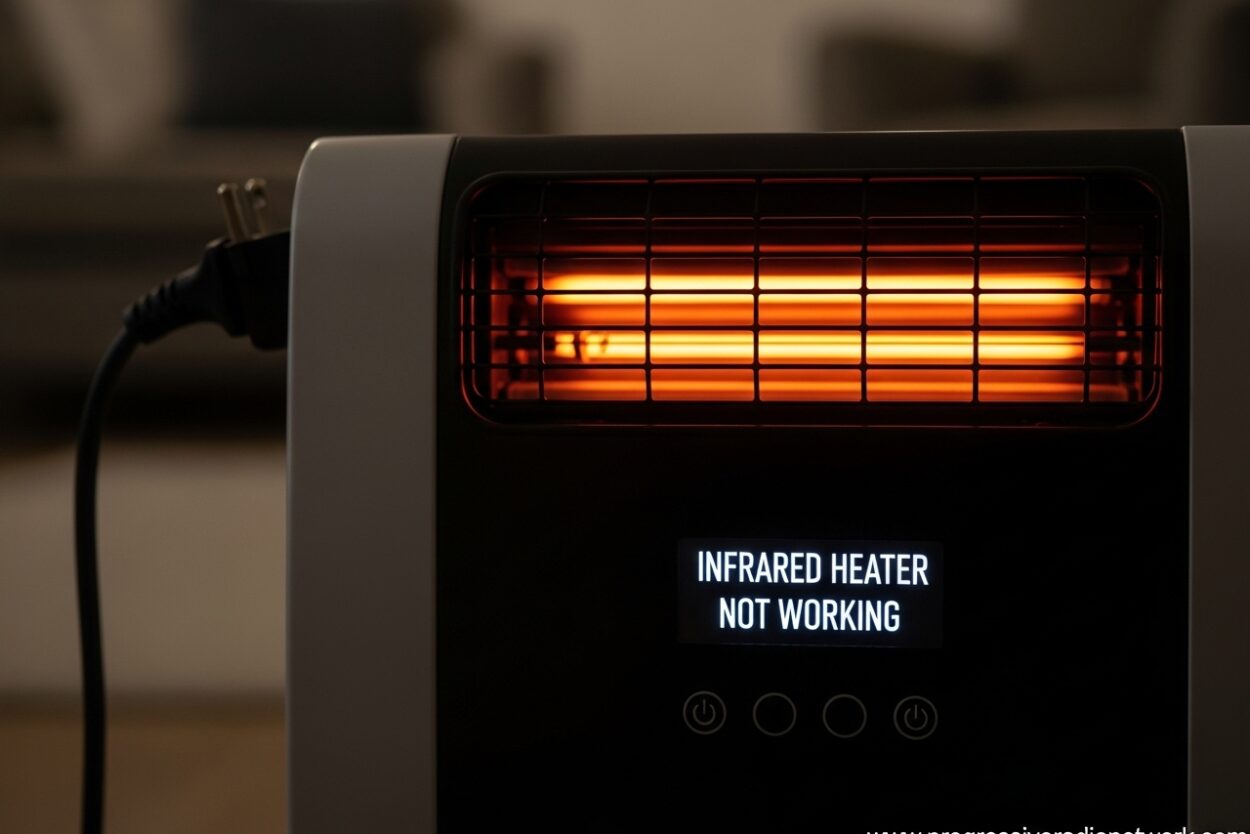
When your infrared heater stops working on a cold day, it’s frustrating and potentially concerning for your home comfort. This guide covers the most common reasons an infrared heater not working issue occurs and how to fix them safely. I’ll walk you through step-by-step troubleshooting based on real diagnostic experience with portable infrared heaters, quartz heaters, and wall-mounted infrared panels.
How to Troubleshoot an Infrared Heater Not Working
Before diving into specific problems, let’s establish a systematic approach to diagnose your infrared heater issue. This methodical process saves time and prevents unnecessary repairs.
- Verify the power source is active – Test the outlet with another device
- Check all visible connections – Inspect power cord for damage, ensure secure plug connection
- Reset the heater – Unplug for 10-15 minutes to allow thermal cut-out to reset
- Test basic functions – Power on, adjust thermostat, test timer settings
- Inspect safety features – Check tip-over switch status and indicator lights
This diagnostic sequence helps identify whether the issue is power-related, a safety feature activation, or an internal component failure. Most infrared heater problems fall into one of these three categories.
Common Infrared Heater Problems and Solutions
Understanding the specific symptom your heater exhibits helps pinpoint the root cause faster. Here are the most frequently reported issues with infrared heaters.
Heater won’t turn on at all: This typically indicates a power supply issue or a tripped safety mechanism. The heater may have a blown fuse, tripped circuit breaker, or the thermal cut-out has activated. Start by checking the outlet and power cord, then move to reset procedures.
Heater turns on but produces no heat: When the power indicator light works but there’s no warmth, the heating element has likely failed. This could be a burnt-out quartz tube, a broken carbon fiber panel, or a faulty heating element connection. In some cases, the thermostat may be set too low or malfunctioning.
Heater shuts off suddenly after running: This behavior usually indicates a safety feature has activated. The tip-over switch may be triggered, the thermal cut-out is detecting overheating, or there’s an airflow obstruction. Some models also have automatic shut-off timers that may be engaged.
Strange noises or burning smells: Unusual sounds often indicate component failure or loose internal parts. A burning smell could be dust accumulation on the heating element (normal on first use) or something more serious like electrical arcing. Immediately unplug the heater if you notice persistent unusual odors.
Remote control not working: For infrared heaters with remotes, communication failures often stem from depleted batteries, blocked infrared sensors, or pairing issues after power interruptions. Check battery contacts and ensure nothing is blocking the receiver on the heater unit.
Power Source and Outlet Verification
Power issues account for over 60% of infrared heater problems. Let’s systematically check each point in the power path.
Start by testing the outlet with a lamp or phone charger. If the outlet works, examine the power cord for any visible damage, fraying, or kinks. Damaged cords are a safety hazard and should never be used – replacement is the only safe option.
Check your home’s electrical panel for tripped circuit breakers or blown fuses. Infrared heaters draw significant power (typically 1200-1500 watts), which can trip older circuits or overloaded panels. If the breaker trips repeatedly when using the heater, you may need to relocate it to a different circuit.
For portable infrared heaters, ensure you’re using the appropriate voltage. Most residential infrared heaters require 120V, while some larger units need 240V. Using the wrong voltage will cause immediate failure or permanent damage to internal components.
Reset Button Procedures
Most infrared heaters include a reset mechanism that activates when safety thresholds are exceeded. Understanding how to properly reset your heater can resolve many common issues.
Basic Reset Procedure:
- Turn off the heater and unplug it from the wall outlet
- Wait at least 10-15 minutes to allow internal components to cool completely
- Locate the reset button (usually small and red, near the power cord entry)
- Press and hold the reset button for 3-5 seconds
- Plug the heater back in and power it on
The thermal cut-out switch is designed to protect against overheating. When activated, it interrupts power to the heating elements. This feature prevents fire hazards but can trigger unnecessarily if airflow is restricted or the heater is operated in too large a space for its wattage.
Some infrared heater models have a manual reset button on the back or bottom panel. Others reset automatically after being unplugged for a specified time. Consult your owner’s manual for model-specific reset instructions, as procedures vary between manufacturers like Dr Infrared, EdenPure, and Comfort Zone.
Thermostat and Tip-Over Switch Troubleshooting
The thermostat and tip-over switch are critical safety components that commonly cause infrared heater malfunctions. Let’s examine how to test and troubleshoot each.
Thermostat Issues: If your heater cycles on and off frequently or never reaches the set temperature, the thermostat may be malfunctioning. First, verify the thermostat is set above the current room temperature. Then try adjusting it to the maximum setting to see if the heater responds. Digital thermostats may need recalibration or battery replacement if equipped.
Tip-Over Switch Problems: The tip-over safety switch shuts off the heater if it tilts or falls. Sometimes this switch becomes overly sensitive or gets stuck in the “tripped” position. To test, place the heater on a perfectly level, hard surface. Ensure nothing is pressing against the base. If the heater still won’t stay on, the tip-over switch may need replacement by a qualified technician.
Many users report frustration with tip-over switches that activate too easily. While this can be annoying, it’s an important safety feature that prevents fires. If your heater’s tip-over switch seems overly sensitive, ensure the unit is on a flat, stable surface away from foot traffic areas.
Advanced Troubleshooting with a Multimeter
For those comfortable with electrical testing, a multimeter can help diagnose internal component failures. This approach is recommended only if you have experience with electrical systems and understand safety precautions.
Testing the Heating Element: With the heater unplugged, access the heating element terminals. Set your multimeter to measure resistance (ohms). A functional quartz heating element typically shows 20-50 ohms of resistance. If the reading shows infinite resistance (open circuit) or zero ohms (short circuit), the element has failed and needs replacement.
Checking the Thermal Fuse: Locate the thermal fuse near the heating element. It should show continuity (near zero resistance) when cold. If there’s no continuity, the fuse has blown and must be replaced with an identical rating.
Testing the Power Switch: With power disconnected, test the power switch for continuity in the “on” position. No continuity indicates a failed switch that needs replacement.
Safety Warning: Always unplug the heater before performing any internal testing. Never bypass safety features like thermal fuses or tip-over switches, as this creates serious fire and shock hazards. If you’re uncomfortable with electrical testing, consult a professional appliance repair technician.
When to Call a Professional
While many infrared heater issues are DIY-friendly, certain problems require professional expertise. Recognizing when to seek help prevents further damage and ensures your safety.
Contact a qualified technician if:
- The heater repeatedly trips circuit breakers or blows fuses
- You notice burning plastic smells or visible arcing/sparking
- The heating element tests faulty and replacement seems complex
- The unit is still under warranty and you don’t want to void coverage
- Internal component access requires disassembling sealed units
Professional repair typically costs $50-150 for most infrared heater issues. For basic models under $100, replacement may be more economical than repair. Higher-end infrared heaters, especially those with advanced features like WiFi connectivity or dual heating systems, are often worth repairing when problems arise.
Maintenance Tips to Prevent Future Issues
Preventive maintenance significantly extends your infrared heater’s lifespan and reduces the likelihood of malfunctions. Most infrared heaters last 5-10 years with proper care.
Regular Cleaning: Dust accumulation on heating elements reduces efficiency and can cause burning smells. Use compressed air to clean vents and heating elements monthly during the heating season. Always unplug the heater before cleaning and allow it to cool completely.
Proper Storage: When not in use, store your infrared heater in a cool, dry place. Avoid wrapping the cord tightly around the unit, as this can cause internal wire breakage. Use the original packaging or a protective cover to prevent dust accumulation.
Ventilation Requirements: Ensure adequate space around the heater – typically 3 feet of clearance on all sides. Infrared heaters don’t require ventilation like combustion heaters, but airflow prevents overheating and allows proper thermostat function.
Annual Inspection: Before each heating season, perform a visual inspection of the power cord, plug, and heater body for any damage. Test the heater in a well-ventilated area for 15-20 minutes before relying on it for extended use.
FAQ
What causes an infrared heater to stop working?
Most infrared heater failures stem from power supply issues, overheating safety cut-outs, or heating element failure. Common causes include tripped circuit breakers, blown fuses, activated thermal cut-out switches, damaged power cords, thermostat malfunctions, or burnt-out heating elements. Regular maintenance and proper usage significantly reduce these problems.
How do I reset my infrared heater?
To reset your infrared heater, first turn it off and unplug it from the wall outlet. Wait at least 10-15 minutes for the thermal cut-out to reset completely. Some models have a manual reset button (usually small and red) near the power cord that you should press and hold for 3-5 seconds. After the waiting period, plug the heater back in and power it on. If the heater still doesn’t work, check your circuit breaker and try a different outlet.
Why is my heater running but not kicking on?
When your infrared heater runs but produces no heat, the issue is typically a failed heating element or thermostat problem. The heating element (quartz tube or carbon fiber panel) may have burned out and needs replacement. Alternatively, the thermostat might be set too low, malfunctioning, or there’s a loose connection between the controls and heating elements. Testing the heating element with a multimeter can confirm if it’s functioning properly.
How long do infrared heaters usually last?
With proper maintenance and regular use during heating seasons, most infrared heaters last 5-10 years. Higher-quality models from reputable brands like Dr Infrared, EdenPure, or Comfort Zone often exceed this range. Factors affecting lifespan include usage frequency, operating conditions, dust accumulation, and whether the heater experiences voltage fluctuations or power surges. Regular cleaning and proper storage during off-seasons significantly extend heater longevity.
Conclusion
Troubleshooting an infrared heater not working issue doesn’t require extensive technical knowledge in most cases. By systematically checking power sources, performing proper reset procedures, and understanding how safety features function, you can resolve many common problems without professional help. Remember that safety should always come first – never bypass safety features or attempt repairs beyond your comfort level.
For persistent issues or complex internal problems, professional repair is the safest option. With proper maintenance and care, your infrared heater should provide reliable warmth for many years. The key is addressing problems early before they escalate into complete system failures that require replacement rather than repair.


Leave a Comment