
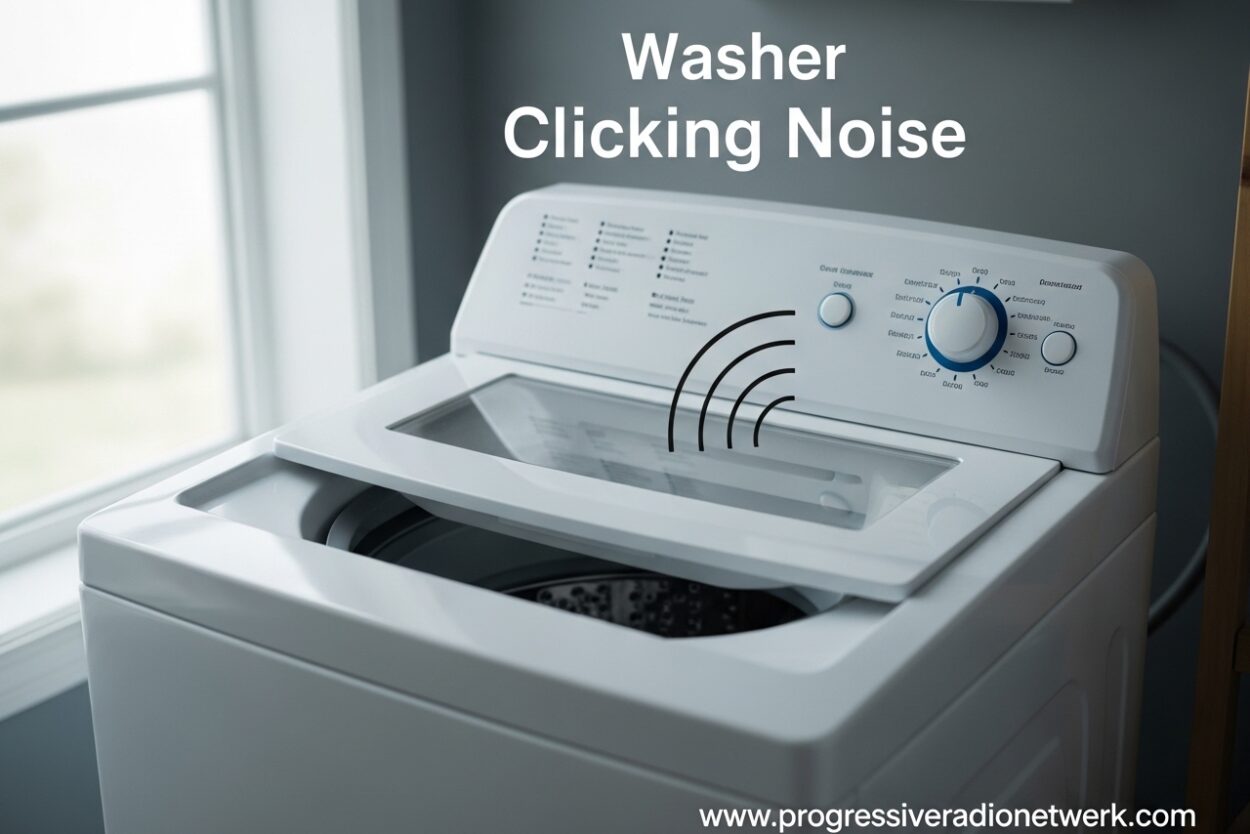
That rhythmic clicking sound coming from your washing machine can turn laundry day into a source of anxiety. I’ve been there – standing in the laundry room, wondering if my washer is about to break down completely or if it’s just a harmless sound. Understanding washer clicking noise is the first step toward resolving the issue and getting back to hassle-free laundry routines.
Most clicking sounds fall into two categories: normal operational sounds or warning signs of component failure. The key difference lies in timing, intensity, and whether the machine completes its cycles successfully. After researching hundreds of user experiences and consulting appliance repair forums, I’ve compiled everything you need to know about diagnosing and fixing washer clicking noise.
Quick Reality Check: If your washer clicks briefly at the start of a cycle and then runs normally, you’re likely hearing the lid lock engaging – a completely normal sound. However, continuous clicking during operation, clicking accompanied by failure to spin, or loud rhythmic clicking during the spin cycle indicates a problem that needs attention.
Related: If you’re dealing with appliance noise problems in other household devices, many of the same diagnostic principles apply.
What is Washer Clicking Noise?
Washer clicking noise refers to any repetitive clicking, ticking, or clacking sound that occurs during your washing machine’s operation. These sounds can range from soft ticks to loud, rhythmic clicks that echo through your laundry room. The sound typically originates from mechanical components failing to engage properly or objects interfering with normal movement.
Normal clicking occurs at the very beginning of a cycle when the lid lock mechanism engages. This usually lasts 1-3 seconds and stops once the cycle begins running. Abnormal clicking persists throughout cycles, increases in volume, or coincides with other problems like failure to spin, drain, or agitate properly.
Understanding the difference between normal and abnormal clicking is crucial because it determines whether you need immediate repairs or can continue using your machine without concern. Let me break down the most common causes so you can identify what’s happening with your specific situation.
Common Causes of Washer Clicking Noise
Based on appliance repair data and user reports from forums across the web, these are the primary culprits behind washer clicking noise. I’ll start with the most common and work toward more serious issues.
Lid Lock Mechanism (Most Common – Usually Normal)
The lid lock assembly makes a brief clicking sound when it engages at the start of a cycle. This is your washer’s safety feature ensuring the lid stays locked during operation. If you hear 1-3 clicks at cycle start and then silence, this is completely normal operation.
However, if the lid lock continuously clicks throughout the cycle or fails to engage properly (causing the washer to stop mid-cycle), the lock mechanism may be failing. A faulty lid lock typically costs $50-150 to replace and is a manageable DIY project for most homeowners with basic tools.
Foreign Objects Stuck in Drum or Pump
This is one of the most common causes of abnormal clicking. Coins, bobby pins, underwire from bras, plastic hanger pieces, and other small items can slip through drum holes and become trapped between the inner and outer tub or in the drain pump.
I’ve read numerous forum posts from users who accidentally washed a plastic hanger, only to have subsequent cycles fail with clicking sounds and drainage problems. These objects create clicking as they’re struck by rotating components and can cause serious damage if not removed promptly.
Warning Signs: Clicking combined with poor drainage, items not spinning out properly, or visible debris in the drum indicate a foreign object issue.
Clutch Assembly Failure (Top Load Washers)
The clutch assembly allows your top-load washer to transition between agitate and spin modes. When this component wears out – typically after 8-10 years of use – it can produce loud clicking or grinding sounds during the spin cycle.
Clutch failure is most common in older direct-drive Whirlpool and Maytag models. The clicking occurs as the clutch tries to engage but slips due to worn friction pads. A failing clutch typically produces clicking only during spin, not agitation.
Clutch replacement costs range from $150-300 for DIY repair or $350-600 for professional service. If your washer is over 10 years old and requires clutch replacement, you might want to consider washer replacement instead.
Motor Coupler Failure
The motor coupler connects the washer’s motor to the transmission. It’s designed to break if the transmission locks up, protecting the motor from damage. When this coupler fails, you’ll often hear clicking as the motor spins without engaging the transmission.
Motor coupler failure is common in Whirlpool-built top-load washers (including Kenmore, Roper, and Estate brands). Classic symptoms include: clicking during agitation and spin, the motor running but the tub not moving, and sometimes a burning rubber smell.
Motor coupler replacement costs $30-80 for parts if you tackle it yourself, or $200-400 for professional repair. This is considered a moderate DIY repair that takes 1-2 hours for first-timers.
Actuator Motor Issues (Newer Models)
Modern washers with electronic controls use small actuator motors to shift between modes and control various functions. Rapid clicking often indicates a failing actuator motor attempting to engage but failing.
This issue is particularly common in newer Whirlpool and Maytag models manufactured after 2015. The clicking is typically rapid (like a machine gun) and occurs when the washer attempts to shift between wash and spin modes.
Actuator replacement costs $50-120 for parts and is relatively straightforward for DIY repair. The component is usually accessible from the washer’s front panel and requires only basic tools.
Drain Pump Obstruction
A blocked drain pump can produce clicking as the impeller strikes debris. This is often accompanied by drainage issues and error codes on models with digital displays. Coins, buttons, and small clothing items frequently become lodged in the pump housing.
Cleaning the pump is usually a simple DIY task that takes 15-30 minutes. Most front-load washers have an access panel at the bottom front allowing easy pump access without moving the appliance.
Step-by-Step Troubleshooting Guide
Follow this systematic approach to identify the cause of your washer clicking noise. I’ve organized these from easiest to most complex, saving you time and potentially unnecessary repair costs.
Step 1: Determine When Clicking Occurs
Timing is your best diagnostic tool. Pay attention to exactly when you hear the clicking:
- At cycle start only: Normal lid lock engagement – no action needed
- During agitation: Possible motor coupler or transmission issue
- During spin only: Likely clutch assembly or drain pump problem
- When changing modes: Actuator motor issue (newer models)
- Constant clicking: Lid lock failure or control board issue
Document when the clicking happens and any accompanying problems like failure to spin, drain, or complete cycles. This information will help you pinpoint the cause and communicate effectively with repair technicians if needed.
Step 2: Perform a Control Reboot
Sometimes electronic glitches cause clicking sounds. A simple reset resolves these issues in many cases:
- Unplug your washer from the electrical outlet
- Wait at least 2 minutes (this allows capacitors to fully discharge)
- While unplugged, open and close the lid 6 times (this resets some lid lock mechanisms)
- Plug the washer back in
- Run a short test cycle to see if clicking persists
Several forum users reported this simple procedure resolved intermittent clicking issues that had persisted for weeks. It’s worth trying before moving on to more complex troubleshooting.
Step 3: Check for Foreign Objects
Foreign objects are the easiest and cheapest problem to fix. Here’s how to check:
For Top-Load Washers:
- Remove all laundry and inspect the drum thoroughly
- Feel around the drum’s underside for trapped items
- Check between the agitator and drum base
- Run the washer empty and listen for clicking
For Front-Load Washers:
- Clean the drain pump filter (usually located behind the bottom access panel)
- Inspect the rubber door boot for trapped items
- Check the sump hose for obstructions
If you find and remove debris, run a test cycle. Many users report that removing a single coin or bra wire resolved their clicking issue immediately.
Step 4: Inspect the Lid Lock Mechanism
Test whether the lid lock is engaging properly:
- Start a cycle and observe the lid lock light (if equipped)
- Listen for the initial clicking at start – normal
- If clicking continues, check if the lock actually engages
- Try gently lifting the lid during operation – it should remain locked
- If the lid unlocks during operation, the lock mechanism is failing
A failing lid lock will need replacement. This is a straightforward repair requiring only basic tools and typically costs $50-150 in parts.
Step 5: Test the Drain Pump
To check for drain pump issues:
- Run a drain/spin cycle only
- Listen for clicking when draining starts
- Check if water drains properly
- Access the pump filter and clean it out
- Inspect the pump impeller for damage or debris
If cleaning the filter doesn’t resolve the issue and the clicking persists, the pump itself may need replacement ($40-100 in parts).
Step 6: Check Motor Coupler (Advanced)
This step requires accessing the washer’s internal components and is recommended only for confident DIYers:
- Unplug the washer and disconnect water supply
- Access the washer’s cabinet (method varies by model)
- Locate the motor and transmission
- Inspect the rubber coupler between them
- Look for cracks, missing pieces, or rubber dust
A damaged coupler will need replacement. If you’re not comfortable with this repair, it’s time to call a professional.
Brand-Specific Issues (Whirlpool, Samsung, LG, Maytag)
Different washer brands have unique clicking noise patterns and common issues. Understanding your brand’s specific tendencies can speed up diagnosis.
Whirlpool and Maytag
Older direct-drive models are prone to motor coupler failure, producing clicking when the motor runs but the tub doesn’t move. Newer Whirlpool models with electronic controls often experience actuator motor failure, characterized by rapid clicking during mode changes. Both brands also commonly experience foreign object issues in the drain pump.
Samsung
Samsung front-load washers are known for drain pump obstructions from small items. The brand’s unique impeller design sometimes traps debris that causes clicking during drain cycles. Samsung models may also experience lid lock issues that produce repeated clicking sounds.
LG
LG washers typically feature direct-drive motors that reduce clicking issues compared to belt-driven models. However, LG machines can develop clicking from the rotor position sensor or inverter board issues. These repairs typically require professional service due to the specialized components involved.
General Electric (GE)
GE washers, especially older models, often experience transmission issues that cause clicking during spin cycles. The brand’s belt-driven designs may produce clicking when the belt tensioner is failing or when the belt itself is damaged.
DIY vs Professional Repair: Cost Comparison
Understanding repair costs helps you make informed decisions about whether to tackle repairs yourself or call a professional. Here’s what you can expect for common clicking noise causes:
| Issue | DIY Cost (Parts) | Professional Cost | DIY Difficulty |
|---|---|---|---|
| Lid Switch/Lock | $50-150 | $150-300 | Easy |
| Motor Coupler | $30-80 | $200-400 | Moderate |
| Clutch Assembly | $150-300 | $350-600 | Difficult |
| Drain Pump | $40-100 | $180-350 | Easy/Moderate |
| Actuator Motor | $50-120 | $200-350 | Easy |
| Transmission | $200-400 | $500-800 | Very Difficult |
Consider your washer’s age when deciding on repairs. If your machine is over 10 years old and needs expensive repairs like transmission or clutch replacement, replacement might be more cost-effective than repair.
Related: Looking for vacuum cleaner troubleshooting guides? Many appliance repair principles apply across different household devices.
When to Call a Professional
While many clicking noise causes are DIY-friendly, certain situations require professional expertise. Call a appliance repair technician if you experience:
- Electrical issues: Any burning smells, sparks, or tripped breakers indicate dangerous electrical problems that require immediate professional attention
- Transmission problems: Transmission repair requires specialized tools and expertise beyond most DIY capabilities
- Complex disassembly: If accessing the failed component requires removing multiple panels or components, professional service prevents further damage
- Limited mobility: Washers are heavy appliances. If you can’t safely move the machine for access, professional repair is safer
- Warranty concerns: If your washer is still under warranty, DIY repairs may void coverage. Contact the manufacturer or authorized service provider
Professional repair typically costs $150-250 for labor plus parts, but ensures proper diagnosis and repair with warranty coverage on the work performed.
Preventive Maintenance Tips
Preventing washer clicking noise is easier than repairing it. These simple maintenance steps can extend your washer’s life and prevent common clicking issues:
- Check pockets: Always empty pockets before loading laundry. Coins, keys, and small items are the leading cause of drain pump clicking
- Use garment bags: Small items like socks and delicates should go in mesh bags to prevent them from slipping into drain systems
- Monthly cleaning: Run a monthly cleaning cycle with washer cleaner to prevent buildup that can affect component performance
- Level your washer: Proper leveling reduces vibration stress on components and prevents premature wear
- Don’t overload: Overworking your washer strains the motor, clutch, and transmission, accelerating wear
- Inspect hoses: Check water inlet hoses annually for bulges or wear that could indicate internal issues
FAQ
These preventive steps apply whether you have a high-efficiency pressure washer, traditional top-load washer, or modern front-load model.
Why is my washer doing a clicking sound?
Your washer is making a clicking sound most commonly because the lid lock mechanism is engaging at the start of a cycle. This brief clicking (1-3 seconds) is normal. However, persistent clicking throughout cycles indicates problems like foreign objects in the drum, a failing clutch assembly, motor coupler failure, or a malfunctioning drain pump.
Why is my washer making a clicking sound when washing?
Clicking during the wash/agitation cycle typically indicates motor coupler failure or transmission problems. The clicking occurs as the motor attempts to engage the transmission but cannot properly transfer power. This is often accompanied by the washer not agitating properly despite the motor running.
Is it safe to use a noisy washing machine?
Brief clicking at cycle start is safe and normal. However, continuous clicking during operation should be investigated before continued use. Ignoring clicking sounds can lead to further damage – a failing motor coupler or clutch can cause complete transmission failure, turning a $200 repair into a $600+ repair or requiring washer replacement.
How to fix a ticking washing machine?
Start with the simplest fix: unplug the washer for 2 minutes, then plug back in and run a test cycle. If clicking persists, check for foreign objects in the drum and clean the drain pump filter. For persistent clicking during specific cycles, the lid lock, motor coupler, clutch, or actuator may need replacement depending on your model and when the clicking occurs.
What causes a washing machine to click during spin cycle?
Clicking specifically during the spin cycle most commonly indicates clutch assembly failure in top-load washers or drain pump obstruction. The clutch allows the transition from agitate to spin modes, and worn components create clicking as they slip. Drain pump clicking occurs when debris strikes the impeller during draining.
How much does it cost to fix a clicking washer?
Repair costs vary significantly by issue. Lid lock replacement costs $50-150 DIY or $150-300 professional. Motor coupler repair runs $30-80 DIY or $200-400 professional. Clutch assembly replacement costs $150-300 DIY or $350-600 professional. Simple foreign object removal costs nothing if you DIY. Always compare repair costs to your washer’s age and replacement cost.
Why does my washer click but won’t start?
If your washer clicks but won’t start, the lid lock mechanism is likely failing to engage properly. The clicking sound is the lock attempting to engage repeatedly without success. This safety feature prevents operation when the lid cannot be secured. Test the lid lock and replace if faulty – this is typically a $50-150 DIY repair.
Can a clicking washer cause further damage?
Yes, ignoring clicking sounds can cause progressively worse damage. A failing motor coupler can cause complete transmission failure. Foreign objects can damage the drum, pump, and seal. Continuing to run a washer with component failure can turn a minor repair into major damage requiring full washer replacement. Investigate and address clicking promptly to prevent additional damage.
Conclusion
Washer clicking noise ranges from completely normal operational sounds to warning signs of component failure. By paying attention to when the clicking occurs, checking for foreign objects, and performing basic troubleshooting, most issues can be diagnosed and resolved without professional help. Remember that brief clicking at cycle start is normal, but persistent clicking during operation warrants investigation.
Whether you’re dealing with a simple foreign object removal or facing a more serious repair like clutch or motor coupler replacement, understanding the cause gives you the knowledge to make informed decisions about repair versus replacement. For many common clicking issues, DIY repair saves hundreds of dollars compared to professional service.
Stay proactive with preventive maintenance, address clicking sounds promptly, and your washer should provide years of reliable service. If you’re ever in doubt about a repair’s complexity or your ability to complete it safely, calling a professional is always the smarter choice.
Leave a Comment