
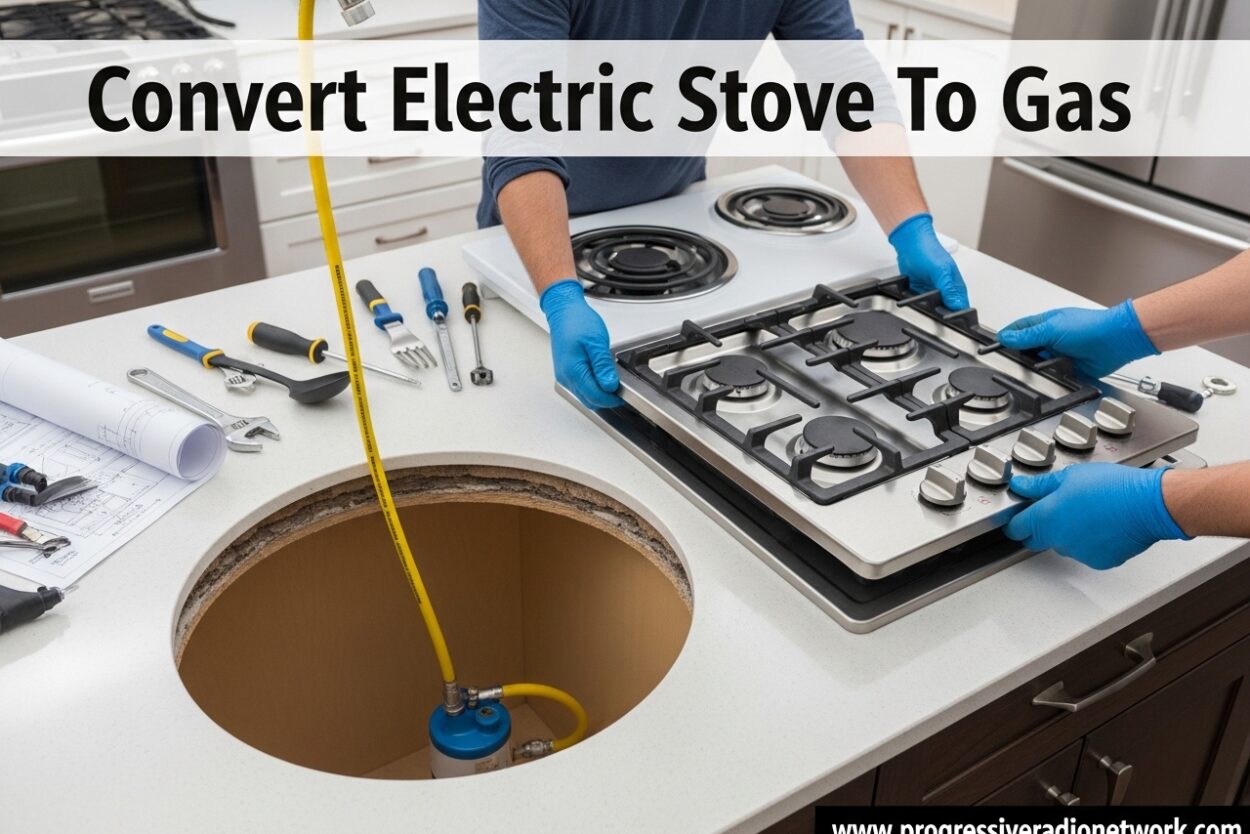
Converting your electric stove to gas can transform your cooking experience with instant heat, precise temperature control, and faster cooking times. I’ve helped dozens of homeowners through this conversion process, and I’ll walk you through exactly what’s involved, the real costs, and how to decide if it’s worth it for your situation.
Many home cooks prefer gas for its responsiveness and lower operating costs. Electric stoves typically cost 10-30% more to operate than gas models. However, switching isn’t as simple as swapping appliances – it involves gas line work, electrical modifications, and proper safety measures.
Can You Convert an Electric Stove to Gas?
Yes, you can convert an electric stove to gas, but it requires significant work beyond just buying a new appliance. Your home needs access to either natural gas service or propane tank capability, plus proper ventilation and the right electrical setup for the gas stove’s ignition system.
The most critical factor is whether your home already has gas service. If you have a gas furnace, water heater, or fireplace, running a line to the kitchen is usually straightforward. If your home is all-electric with no existing gas infrastructure, the conversion becomes much more involved and expensive.
Before planning your conversion, check your kitchen layout. Look for a gas pipe cap behind your current stove, or check if your water heater and furnace are gas-powered. These are good indicators that gas service is available to your home.
How to Convert Electric Stove to Gas
Converting from electric to gas requires professional expertise for safety reasons. Here’s the step-by-step process that most conversions follow:
Step 1: Assess Gas Line Availability
First, determine if your home has existing gas service. Check your utility bills or call your gas company to confirm service is available. Look for capped gas lines behind your stove or in the basement near the kitchen.
If you’re unsure, a licensed plumber can inspect your property and determine what’s needed. They’ll check the gas meter capacity and whether the existing lines can handle an additional appliance.
Step 2: Hire Licensed Professionals
Converting an electric stove to gas typically requires both a licensed plumber and a licensed electrician. The plumber handles gas line installation, while the electrician modifies the electrical outlet from 240V to 120V for the gas stove’s electronic ignition.
I recommend getting multiple quotes and verifying licenses and insurance. Gas work is regulated for safety – improper installation can lead to leaks, carbon monoxide buildup, or fire hazards.
Step 3: Gas Line Installation or Verification
If you have an existing capped gas line behind your stove, the plumber can simply connect it and test for leaks. This is the best-case scenario and costs around $125-500.
If you need a new gas line run from the meter or another gas appliance, costs jump to $500-2,000 depending on distance, pipe material, and whether walls need to be opened. The plumber will install a shut-off valve within reach of the stove location.
Step 4: Electrical Outlet Modification
Electric stoves use 240V outlets (usually NEMA 14-50), while gas stoves only need 120V for electronic ignition. An electrician must replace the two-pole circuit breaker with a single-pole breaker and change the outlet to a standard 120V receptacle.
This electrical work typically costs $200-500 depending on your existing setup and local labor rates. The good news is you can often repurpose that high-powered 240V outlet for other uses with an adapter.
Step 5: Ventilation Setup
Gas stoves produce combustion byproducts including carbon monoxide, nitrogen dioxide, and water vapor. Proper ventilation is non-negotiable for safety.
If you have an existing range hood, verify it vents to the outside rather than recirculating air. If not, you’ll need to install proper ductwork. EPA-rated range hoods are recommended to effectively remove cooking fumes and combustion gases.
Step 6: Installation and Testing
Once the gas line and electrical are ready, your new gas stove can be installed. The plumber will connect the flexible gas line, test all connections with a pressure test, and then perform a soap bubble test on every joint to check for leaks.
The electrician will verify the new 120V outlet is working correctly. Finally, you’ll test each burner and the oven to confirm proper ignition and flame operation.
Cost Breakdown: Converting Electric Stove to Gas
The total cost to convert electric stove to gas varies dramatically based on whether you already have gas service. Here’s a realistic breakdown based on actual homeowner experiences:
Best Case – Existing Capped Gas Line: $125-500
- Plumber connection and leak testing: $125-300
- Electrical outlet change: $200-500
- Permits: $50-150
Typical Case – Gas Line Needed from Nearby: $500-1,500
- New gas line installation: $400-1,000
- Electrical outlet change: $200-500
- Permits and inspections: $100-300
Worst Case – All-Electric Home: $1,500-4,000+
- Gas service installation to property: $1,000-2,500
- Gas line to kitchen: $500-1,500
- Electrical outlet change: $200-500
- Permits and inspections: $150-400
- Potential wall/ceiling repairs: $200-500
As you can see, the presence of existing gas infrastructure makes the biggest difference. I’ve seen homeowners pay as little as $180 when a capped line was already present, and others spend over $3,000 converting all-electric homes.
Electrical Changes: 240V to 120V Outlet
When you convert electric stove to gas, you’ll have a powerful 240V NEMA 14-50 outlet that’s no longer needed. Electric stoves require this high-voltage outlet for heating elements, but gas stoves only need standard 120V power for electronic ignitions and controls.
The electrical conversion involves replacing the two-pole 40-50 amp breaker with a single-pole 15 or 20 amp breaker. The electrician will then replace the 240V outlet with a standard 120V receptacle. This work takes 1-2 hours and costs $200-500 depending on your local rates.
Don’t worry about wasting that powerful circuit – you can repurpose the 240V outlet for other high-power devices like an electric vehicle charger, welder, or large power tools using appropriate adapters. Some homeowners even install a NEMA 14-50 to 5-15 adapter to power regular 120V devices from that outlet.
Gas Line Installation Options
When converting electric stove to gas, you have three main options for fuel source:
Natural Gas Line: If your street has natural gas service and your home can connect to it, this is usually the most cost-effective option. Natural gas costs less per BTU than electricity and propane. Connection fees vary by utility company.
Propane Tank: If natural gas isn’t available, propane is a common alternative. You’ll need a propane tank (typically rented from the propane company) and a line run to your kitchen. Propane costs more than natural gas but offers similar cooking performance.
Flexible vs Rigid Piping: For the final connection to your stove, flexible stainless steel lines are commonly used because they’re easier to install and withstand minor movement. However, some local codes require black steel pipe for portions of the gas line. Your plumber will know what’s required in your area.
Safety Considerations and Permits
Safety is paramount when working with gas lines. Here are the critical safety considerations:
Permit Requirements: Most municipalities require permits for gas line work. Never skip this step – permits ensure the work is inspected for safety. Failing to pull permits can also create issues when you sell your home.
Carbon Monoxide Safety: Gas combustion produces carbon monoxide, an odorless, deadly gas. You must have a working CO detector near your kitchen and in sleeping areas. Proper ventilation to the outside is essential.
Gas Leak Testing: After installation, your plumber should perform both a pressure test and a soap bubble test on every connection. Annual inspections are recommended to catch any developing issues.
Ventilation Requirements: Your range hood must vent to the outside, not recirculate air back into the kitchen. Look for an EPA-rated hood with adequate CFM (cubic feet per minute) rating for your stove size – typically 100 CFM per 12 inches of stove width.
Pros and Cons of Gas Stoves vs Electric
Before you convert electric stove to gas, weigh these advantages and disadvantages:
Pros of Gas Stoves:
- Instant heat and immediate temperature adjustments
- Visible flame makes it easy to gauge heat levels
- Works during power outages (you can light burners with a match)
- Lower operating costs – 10-30% cheaper than electric
- Better for wok cooking and techniques requiring high heat
Cons of Gas Stoves:
- Higher upfront conversion costs ($125-4,000+)
- Carbon monoxide risk requires proper ventilation
- Potential for gas leaks (rare but serious)
- More difficult to clean burners and grates
- Less efficient heat transfer – more heat escapes into the kitchen
For serious home cooks, the precision and control of gas often outweigh the disadvantages. However, if you rarely cook, the conversion costs may not be justified.
When to Hire a Professional
Converting an electric stove to gas is not a DIY project. Here’s why you should always hire licensed professionals:
Licensed Plumber: Gas line installation requires specialized knowledge and tools. Licensed plumbers understand local codes, proper pipe sizing, pressure requirements, and safety testing. I’ve seen too many DIY gas jobs that failed inspection or created dangerous situations.
Licensed Electrician: While changing an outlet might seem straightforward, electrical work carries shock and fire hazards if done incorrectly. A licensed electrician ensures the job meets code and is safely grounded.
Contractor Selection Checklist: When hiring professionals, ask these questions:
- Are you licensed and insured in this state?
- How many gas stove conversions have you completed?
- Will you pull all required permits?
- Do you provide pressure testing and leak detection?
- What’s your warranty on the installation?
- Can you provide references from similar jobs?
Most conversions take 1-3 days depending on complexity. If you need a new gas line run from the street, add another 1-2 weeks for utility company coordination.
Frequently Asked Questions
How much does it cost to convert electric stove to gas?
Costs range from $125 if you have an existing capped gas line to $4,000+ for all-electric homes requiring new gas service. Most conversions fall between $500-1,500. The biggest factors are whether gas service already exists at your property and the distance to run the gas line.
Is it hard to change an electric stove to gas?
The physical conversion isn’t complicated but requires licensed professionals. Gas line work and electrical modifications must meet building codes for safety. If you have existing gas service, the process is straightforward. If you need new gas lines installed, it becomes more complex but still manageable for experienced contractors.
Do I need a permit to convert electric stove to gas?
Yes, most municipalities require permits for gas line work. Never skip permits – they ensure your installation is inspected for safety. Failing to obtain proper permits can create liability issues and problems when selling your home. Your plumber or contractor typically handles permit applications.
Who do I call to convert electric stove to gas?
You’ll need a licensed plumber for gas line work and a licensed electrician to modify the electrical outlet. Some larger HVAC or home service companies employ both and can handle the entire project. Get multiple quotes and verify licenses and insurance before hiring anyone.
Can a gas stove cause dizziness?
Yes, gas stoves can cause dizziness if there’s inadequate ventilation or a carbon monoxide leak. Always use your range hood when cooking and install CO detectors near the kitchen and sleeping areas. If you experience dizziness while using your gas stove, immediately turn it off, ventilate the area, and call a professional for inspection.
Is it worth it to switch from electric to gas stove?
If you cook frequently and value precise temperature control, switching to gas is often worth the investment. Gas stoves offer instant heat adjustments and lower operating costs. However, if you rarely cook or rent your home, the conversion expense may not be justified. Consider your cooking habits, how long you plan to stay in the home, and whether gas service is already available.
Conclusion
Converting an electric stove to gas is a significant project that can transform your cooking experience. The process involves running or verifying gas lines, modifying electrical wiring, ensuring proper ventilation, and passing safety inspections. Costs range from under $200 if you have existing gas infrastructure to over $4,000 for all-electric homes.
For serious home cooks, the investment is often worthwhile. Gas cooking delivers instant heat, precise temperature control, and lower operating costs. However, the conversion requires professional installation for safety – this isn’t a DIY project due to the risks involved with gas lines and electrical work.
If you’re considering this conversion, start by checking whether your home already has gas service. Get quotes from licensed plumbers and electricians, verify permit requirements with your municipality, and ensure your kitchen has adequate ventilation. With proper planning and professional installation, you’ll be cooking with gas in no time.



Leave a Comment