
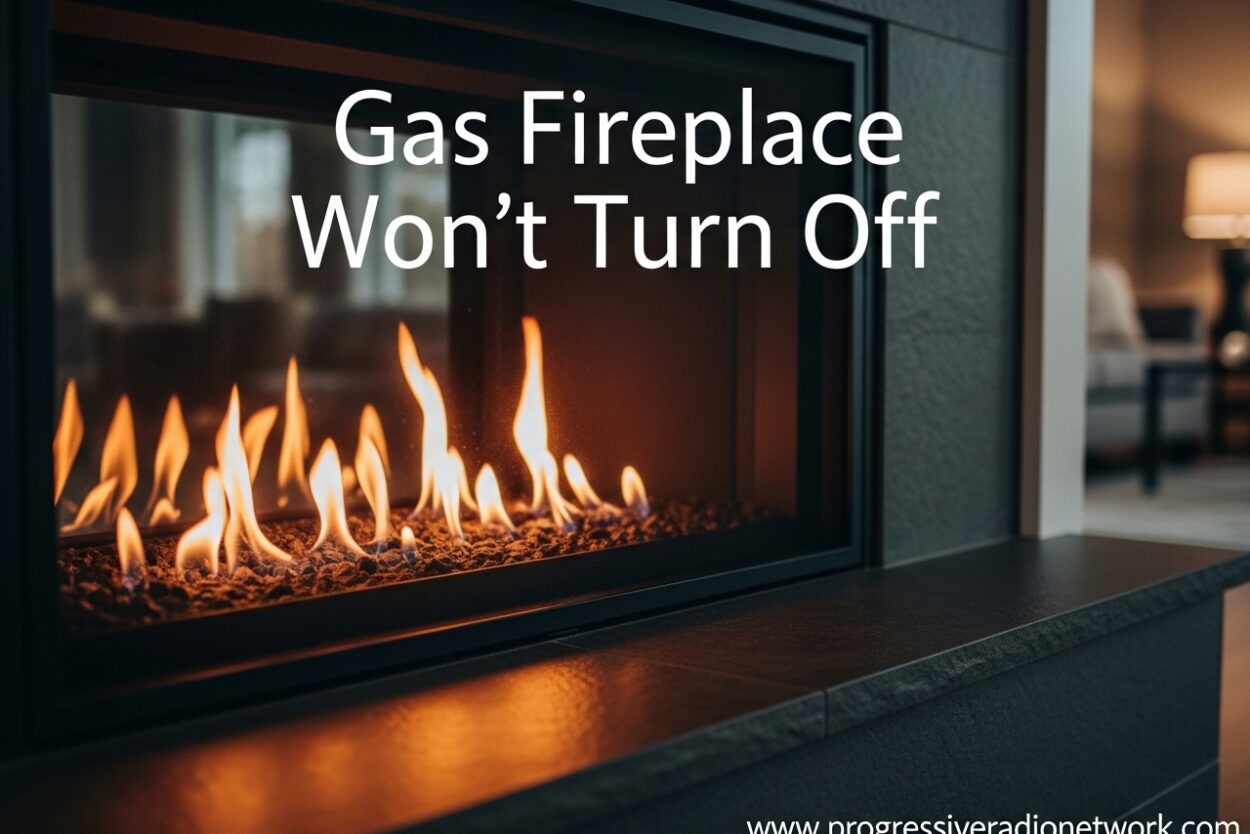
A gas fireplace that won’t turn off is more than frustrating—it’s a potential safety hazard. I’ve seen this happen countless times, usually at the worst possible moment like right before bed or when leaving the house. Understanding why your gas fireplace won’t turn off and knowing exactly what steps to take can prevent dangerous situations and potentially expensive damage.
The most important thing you need to know right now: if your gas fireplace won’t turn off, there’s likely a mechanical or electrical failure in the control system. This could be something minor like dead batteries in your remote, or something serious like a failed gas valve that requires immediate professional attention.
⚠️ URGENT SAFETY WARNING
If you smell gas, hear hissing sounds, or notice flames burning uncontrollably high:
1. DO NOT try to fix anything yourself
2. EVACUATE everyone from your home immediately
3. Call your gas company’s emergency line from outside
4. Call 911 if you suspect a gas leak or fire risk
These situations are rare but critical. Gas leaks can cause explosions or carbon monoxide poisoning. Your family’s safety is always more important than saving money on a service call.
Immediate Emergency Shutdown Steps
If your gas fireplace won’t turn off normally but there’s no gas smell or obvious danger, follow these steps RIGHT NOW to safely shut it down:
Step 1: Turn off the gas at the source. Look for the gas shut-off valve. This is typically located within 6 feet of the fireplace, either on the floor or wall nearby. Turn the valve handle perpendicular to the pipe (so it forms a “T” shape). This stops all gas flow to the fireplace immediately.
Step 2: Locate your main gas shut-off. If you can’t find or can’t reach the local valve, go to your main gas meter. There’s a shut-off valve there too. Turn it 90 degrees clockwise to cut gas to your entire home. This is the nuclear option—it stops everything including your water heater and stove—but it guarantees the fireplace is off.
Step 3: If you can’t find any shut-off valves. Call your gas company’s emergency line immediately. They can send someone out to shut off gas at the meter. Most gas companies offer this service for free in emergencies.
Once the gas is off, open windows in the room to ventilate any accumulated gas fumes. Do NOT relight the fireplace until a qualified technician has inspected and repaired it.
Why is My Gas Fireplace Still Lit After Turning Off?
This is the most common question I hear, and the answer depends on what you mean by “still lit.” If you’re seeing the small blue pilot light flame—that’s normal. Pilot lights are designed to stay on continuously so they can ignite the main burner when needed. The pilot light uses only a tiny amount of gas and is completely safe.
However, if the main burner flames are still going strong after you’ve turned off the fireplace, you have a genuine problem. This typically indicates a failed component in your fireplace’s control system. The most common culprits are a bad gas valve, stuck control dial, malfunctioning thermocouple, or electrical issue with the safety shutoff system.
Common Causes of a Gas Fireplace That Won’t Turn Off
Understanding what’s actually failing helps you communicate effectively with technicians and potentially resolve simpler issues yourself. Here are the six most common reasons your gas fireplace won’t shut off:
1. Failed Gas Valve
The gas valve is the heart of your fireplace’s operation. It controls the flow of gas to both the pilot light and main burner. When these valves fail internally, they can get stuck in the open position, allowing gas to flow continuously regardless of what position your control knob or remote indicates.
Gas valve failure is most common in fireplaces 15-20 years old. I’ve personally worked on countless units from the early 2000s where the valve has simply worn out. The internal seals degrade over time, corrosion builds up, or the valve stem gets stuck. This is a serious issue that requires professional replacement—there’s no safe DIY fix for a failed gas valve.
Signs your gas valve has failed include the fireplace running even with all controls in the “off” position, the control dial feeling loose or not clicking into positions properly, or being unable to turn the dial at all.
2. Stuck Control Dial or Knob
Many gas fireplaces have a manual control dial inside the firebox or behind a panel. Over time, these dials can get stuck due to corrosion, debris buildup, or physical damage. I’ve seen cases where homeowners forcefully try to turn a stuck dial, only to make it worse.
The problem is particularly common in older fireplaces where the valve stem hasn’t been moved in years. Sitting in one position causes the internal components to seize up. Sometimes you can free a stuck dial with penetrating oil and gentle movement—other times the entire valve assembly needs replacement.
If your dial won’t budge, don’t force it. You could break the valve stem and turn a $200 repair into a $500 one. Instead, use the emergency shut-off procedures I outlined earlier and call a professional.
3. Remote Control Battery Issues
Here’s a surprisingly common issue: dead batteries in your remote control can cause the fireplace to stay on. Many modern gas fireplaces rely on the remote to send the “off” signal. If the batteries are too weak to transmit, the fireplace never receives the command to shut down.
I’ve been called to “emergency” service calls only to find that replacing the remote batteries solved the problem immediately. Before you panic, check your remote batteries. It’s a $5 fix that could save you a $150 service call.
Most gas fireplace remotes use standard AA or AAA batteries. Some models have the battery compartment in the remote itself, while others hide it in a receiver box located near the fireplace. Check both locations and replace all batteries with fresh ones.
4. Wall Switch Malfunction
Many gas fireplaces can be operated with a wall switch similar to a light switch. These switches can fail in several ways. The switch itself might go bad, the wiring could be damaged, or there could be a loose connection somewhere in the circuit.
If your wall switch isn’t responding, try unplugging the fireplace’s power cord for 30 seconds, then plugging it back in. This resets the electronic control module and can resolve many minor glitches. If that doesn’t work, the switch or receiver may need replacement.
Wall switch issues are relatively easy and inexpensive to fix. A qualified technician can typically diagnose and repair a wall switch problem in under an hour.
5. Thermocouple or Thermopile Failure
The thermocouple and thermopile are safety sensors that detect whether the pilot light is lit. They generate a small amount of electricity from the heat of the pilot flame, which powers the gas valve and keeps it open. When these sensors fail, the valve can get stuck in whatever position it was last in.
Thermocouples are relatively inexpensive parts that can fail every 5-10 years. Thermopiles are more robust but can also malfunction, especially in dirty environments where soot buildup affects their performance.
Signs of a bad thermocouple include the pilot light going out randomly, the main burner not igniting even with the pilot lit, or in your case, the fireplace not shutting off properly. A technician can test these components with a multimeter and replace them if necessary.
6. Thermostat Interference
Some gas fireplaces are connected to wall thermostats for automatic temperature control. If your thermostat is set higher than the current room temperature, it will keep sending the “on” signal to your fireplace. Additionally, malfunctioning thermostats can send incorrect signals.
Check your thermostat settings first. Make sure it’s not set to “hold” or a high temperature. Try removing the thermostat from the wall entirely to see if the fireplace shuts off. If it does, the thermostat is your problem.
Smart thermostats can sometimes cause issues too. If your fireplace is connected to a Wi-Fi thermostat, someone might have changed the setting remotely, or the thermostat could be malfunctioning. Check your thermostat app if you have one installed.
How to Identify Your Gas Fireplace Type
Before diving into troubleshooting, it helps to know what type of gas fireplace you have. The troubleshooting approach differs between systems.
Standing Pilot System: The pilot light stays on continuously. You’ll see a small blue flame burning all the time. These systems use a millivolt generator (thermopile) powered by the pilot flame. They’re the most common type and can often operate during power outages.
Intermittent Pilot System: The pilot light only lights when you turn on the fireplace. These use electronic ignition and require electricity to operate. If the power goes out, these fireplaces won’t work at all.
Remote-Controlled vs. Manual: Some fireplaces are operated exclusively by remote control, while others have manual controls inside the firebox. Many newer models offer both options. Knowing which system you have helps narrow down potential problems.
You can usually identify your type by looking at your control setup. If you see a control knob or dial behind an access panel inside the fireplace, you have a manual system. If you only have a remote or wall switch, you likely have a remote-controlled electronic system.
Step-by-Step Troubleshooting Guide
Now that you understand the potential causes, here’s the systematic approach to troubleshooting your gas fireplace that won’t turn off:
Step 1: Check the simple stuff first. Replace remote batteries, verify thermostat settings, and ensure nothing is blocking the receiver sensor. These 5-minute checks resolve a surprising number of cases.
Step 2: Try all control methods. If you have multiple ways to control your fireplace (remote, wall switch, manual dial), try each one. Sometimes one method works even when others don’t, which helps pinpoint the problem.
Step 3: Perform a power reset. Unplug the fireplace for 30 seconds, then plug it back in. This resets electronic controls and can resolve glitches in intermittent pilot systems.
Step 4: Check the manual control valve. If your fireplace has an interior control dial, carefully try turning it to the “off” position. If it won’t move or moves but doesn’t affect the flames, you likely have valve problems.
Step 5: Use the emergency shut-off. If none of the above works, use the gas shut-off valve I described earlier. This safely stops the fireplace immediately while you decide on next steps.
Step 6: Assess your comfort level. If you’re handy with tools and understand basic gas safety, you might be comfortable checking and replacing thermocouples yourself. However, gas valve replacements and electrical work should always be left to professionals.
When to Call a Professional
There’s no shame in calling a professional—in fact, it’s often the smartest choice. Gas appliances require specialized knowledge and tools. A mistake can be deadly. Here’s when you definitely need professional help:
• The gas shut-off valve is stuck, corroded, or you can’t find it
• You smell gas at any point
• The fireplace flames are burning unusually high or yellow (not blue)
• You hear hissing sounds coming from the fireplace or gas lines
• Multiple control methods have failed
• The fireplace is over 15 years old and you’ve never had it serviced
• You’re uncomfortable working with gas appliances
Professional gas fireplace service typically costs $150-300 for a diagnostic visit. Actual repairs cost extra depending on what’s needed. A gas valve replacement runs $400-800 including parts and labor. A thermocouple replacement is much cheaper at $100-200.
Many gas companies offer free or low-cost safety inspections, especially for older units. It’s worth calling your gas company to ask if they provide this service before hiring a private technician.
Prevention and Maintenance Tips
The best way to avoid a gas fireplace that won’t turn off is through regular maintenance. Here’s what I recommend to my clients:
Annual Professional Inspection: Have your fireplace serviced annually by a qualified technician. They’ll clean the burner, check the thermocouple, inspect the gas valve, and ensure everything is operating safely. This costs around $100-150 but can prevent much more expensive repairs.
Keep It Clean: Dust and debris can interfere with sensitive components. Vacuum around the fireplace regularly, especially near air intakes and control areas. Never store flammable materials near your fireplace.
Replace Remote Batteries Yearly: Don’t wait for batteries to die completely. Replace them proactively every year, even if they seem to still work. Weak batteries can cause intermittent operation issues.
Exercise the Controls: If you have a manual control dial, turn it through all positions once a month. This keeps the valve stem from seizing up and prevents corrosion buildup.
Know Your Shut-Offs: Locate both your local fireplace shut-off valve and your main gas shut-off before you need them. Make sure all family members know where they are and how to use them. This knowledge is invaluable in emergencies.
Age Considerations: Gas fireplaces typically last 15-25 years depending on usage and maintenance. If your unit is approaching 20 years old, start planning for replacement. Newer models are much more efficient and include modern safety features that older units lack.
FAQ
What do you do when your gas fireplace won’t turn off?
First, try turning off the remote and wall switch. If that fails, locate the gas shut-off valve near the fireplace (usually within 6 feet) and turn the handle perpendicular to the pipe. As a last resort, shut off gas at your main meter. If you smell gas, evacuate immediately and call your gas company’s emergency line from outside.
How to manually turn off a gas fireplace?
Find the local shut-off valve located near the fireplace unit (usually on the floor or wall within 6 feet). Turn the valve handle 90 degrees so it’s perpendicular to the gas pipe. This stops all gas flow to the fireplace. If you can’t find this valve, go to your main gas meter and turn the valve there clockwise 90 degrees.
How to know if a thermocouple is bad in a gas fireplace?
Signs of a bad thermocouple include the pilot light going out randomly, the main burner not igniting despite the pilot being lit, or the fireplace not shutting off properly. A technician can test it with a multimeter—it should produce 25-30 millivolts when heated. Thermocouples typically fail every 5-10 years and are relatively inexpensive to replace.
Where is the reset button on my gas fireplace?
Most gas fireplaces don’t have a reset button. Instead, they use a power reset method: unplug the fireplace from the electrical outlet for 30 seconds, then plug it back in. This resets the electronic control module and can resolve many operational glitches. If your fireplace is hardwired, turn off the breaker for 30 seconds instead.
Can gas fireplaces cause headaches?
Yes, if they’re not venting properly. Malfunctioning gas fireplaces can produce carbon monoxide, which causes headaches, dizziness, and nausea. This is a serious warning sign. If you experience symptoms when the fireplace is running, turn it off immediately, open windows, and have a professional inspect both the fireplace and its ventilation system.
Is it normal for the pilot light to stay on?
Yes, this is completely normal for standing pilot systems. The small blue pilot flame is designed to stay on continuously so it can ignite the main burner when needed. Pilot lights use only a tiny amount of gas and are safe to leave on year-round. Intermittent pilot systems, which light the pilot only when needed, are the exception.
Conclusion
Dealing with a gas fireplace that won’t turn off can be stressful, but following the right steps makes it manageable. Start with immediate safety: shut off the gas at the valve if normal controls fail. Then systematically check simple issues like remote batteries and thermostat settings before assuming the worst.
Most problems fall into two categories: easy fixes you can handle yourself (batteries, settings, resets) and professional repairs (gas valves, thermocouples, electrical issues). Knowing the difference saves time, money, and potentially prevents dangerous situations.
Remember that gas appliances demand respect. If you’re ever unsure about something or smell gas, err on the side of caution. Call your gas company or a qualified technician immediately. The cost of a service call is trivial compared to the safety of your home and family.
Regular maintenance is your best defense against these problems. Annual inspections, keeping components clean, and exercising controls can extend your fireplace’s life and prevent many common issues. When in doubt, consult a professional—gas work isn’t worth risking your safety.


Leave a Comment