
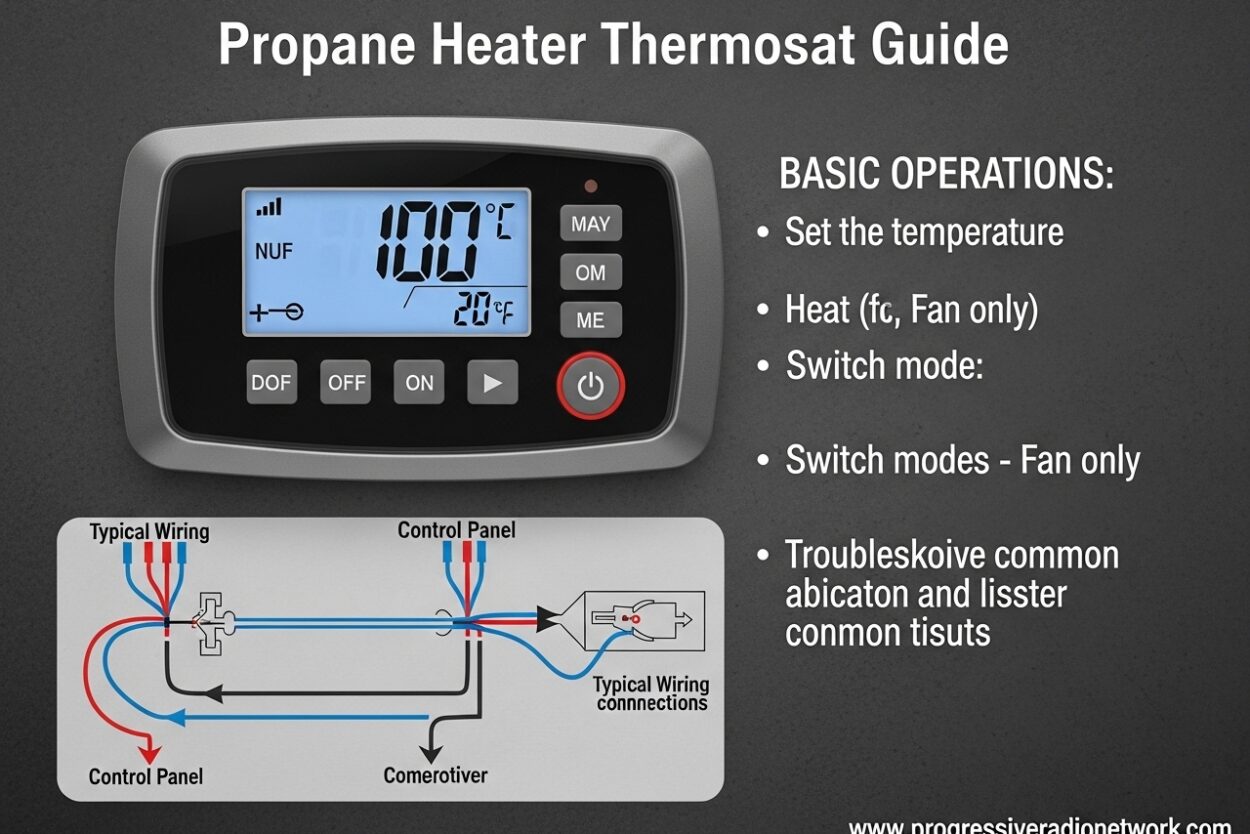
A propane heater thermostat transforms how you control heat in cabins, garages, workshops, and off-grid spaces. Instead of constantly adjusting manual knobs, a thermostat maintains your desired temperature automatically, turning the burner on and off as needed. This guide covers everything you need to know about propane heater thermostats – how they work, installation options, safety considerations, and what to look for when choosing one.
What is a Propane Heater Thermostat?
A propane heater thermostat is a temperature-sensing control device that automatically regulates your propane heater’s output to maintain a set temperature. Unlike manual controls that require constant adjustment, a thermostat monitors room temperature and cycles the heater on and off to keep your space consistently comfortable.
Modern propane heater thermostats come in several forms. Some heaters have built-in thermostat dials on the unit itself, while others connect to wall-mounted thermostats for whole-room control. Battery-operated thermostats enable off-grid operation without electricity, making them ideal for remote cabins and hunting blinds.
The thermostat works by sensing ambient temperature through a bi-metal strip or electronic sensor. When the room temperature drops below your set point, the thermostat signals the gas valve to open and ignite the burner. Once the desired temperature is reached, it closes the valve to stop fuel flow. This automatic cycling prevents overheating and reduces propane consumption compared to running at maximum output continuously.
How Propane Heater Thermostats Work
Propane heater thermostats use a simple but effective system to regulate temperature. The core components include a temperature sensor, a gas valve control, and either a mechanical or electronic control mechanism.
On mechanical thermostats, a bi-metallic coil expands and contracts with temperature changes. This physical movement opens or closes electrical contacts that control the gas valve. Electronic thermostats use digital sensors and microprocessors for more precise temperature control, often with programmable schedules and digital displays.
When your room temperature drops below the thermostat setting, the device completes an electrical circuit that opens the propane solenoid valve. Gas flows to the burner, where ignition occurs (either through a piezo spark or continuous pilot light). The heater runs until the thermostat sensor detects the room has reached the target temperature, then breaks the circuit to close the gas valve and shut off the burner.
This cycling continues automatically throughout the day. The frequency of on-off cycles depends on factors like room insulation, outside temperature, and the heater’s BTU output. Well-insulated spaces will have longer run times and fewer cycles, while poorly insulated areas cause more frequent cycling.
Benefits of Thermostat Control on Propane Heaters
Adding thermostat control to your propane heater offers several significant advantages over manual operation. Here are the key benefits you’ll experience:
- Consistent Comfort: No more waking up freezing in the middle of the night or sweating from excessive heat. The thermostat maintains a steady temperature within 2-3 degrees of your setting.
- Propane Savings: Automatic temperature regulation reduces fuel consumption by 20-40% compared to running heaters constantly on high. The heater only runs when needed, not continuously.
- Better Safety: Thermostats prevent overheating by cycling the heater off before temperatures become dangerous. Many thermostats integrate with oxygen depletion sensors for additional protection.
- Set It and Forget It: Once configured, you don’t need to manually adjust the heater throughout the day. This is especially valuable for cabins, workshops, and other spaces where you can’t constantly monitor the heat.
- Improved Sleep Quality: Stable overnight temperatures mean better rest without temperature swings that can disrupt sleep patterns.
Types of Propane Heater Thermostats
Not all propane heater thermostats are the same. Understanding the different types helps you choose the right option for your heating needs and installation situation.
Built-in Thermostats: Many modern propane heaters include integrated thermostat controls directly on the unit. These typically feature a dial with temperature markings (low to high) rather than specific degree settings. While convenient and affordable, built-in thermostats often lack precision and cycle more frequently due to their proximity to the heat source.
Wall-Mounted Thermostats: These connect to your propane heater via low-voltage wiring and mount on a wall away from the heater itself. This placement provides more accurate temperature readings since the sensor measures room temperature rather than the heat near the unit. Wall thermostats offer precise degree-by-degree control and often include programmable features for scheduling temperature changes throughout the day.
Add-On Thermostat Kits: If you have an older propane heater without thermostat capability, conversion kits like the L.B. White 09454 allow you to add thermostat control. These kits typically include a remote thermostat, wiring harness, and control module that interfaces with your existing heater. They’re an excellent upgrade option for heaters you already own.
Battery-Operated Thermostats: For off-grid applications where electricity isn’t available, battery-powered thermostats provide full temperature control without requiring household power. These use standard batteries (often AA or 9V) to power the thermostat electronics and gas valve control. Off-grid cabin owners frequently recommend these options for remote locations.
Smart/WiFi Thermostats: While less common for propane heaters, smart thermostat integration is possible with certain models. These allow remote control via smartphone apps, scheduling capabilities, and even voice assistant integration. However, most WiFi thermostats require 24V power from a transformer, which limits compatibility with many propane heaters.
Blue Flame vs Infrared Heating Technology
The type of heating technology in your propane heater affects how the thermostat functions and what kind of heat output you experience. Understanding the difference helps you choose the right heater for your space.
Blue Flame Heaters: Blue flame technology works like a central heating system. The burner produces a blue flame that heats the air directly, which then circulates throughout the room through convection. This provides even, whole-room heating that maintains consistent temperatures from floor to ceiling. Blue flame heaters pair well with thermostats because the air heated by the burner is what the thermostat measures – creating a stable feedback loop.
Infrared Heaters: Infrared heaters (also called radiant heaters) emit invisible infrared radiation that warms objects and people directly, similar to how the sun heats the earth. The air in the room doesn’t necessarily warm up significantly – instead, solid objects absorb the radiant heat and slowly release it. This makes infrared heaters ideal for spot heating or poorly insulated spaces where convection heating would be inefficient. However, thermostats may cycle more frequently with infrared heaters since the thermostat measures air temperature, which may not reflect the actual comfort level provided by the radiant heat.
Choosing Between Technologies: For well-insulated spaces where you want consistent whole-room heating, blue flame heaters with thermostats provide the best results. For drafty garages, workshops, or situations where you primarily want to heat specific areas rather than entire rooms, infrared heaters deliver more targeted warmth. Many propane heaters are available in either blue flame or infrared versions with similar BTU ratings and thermostat options.
How to Install a Thermostat on Your Propane Heater
Adding thermostat control to an existing propane heater is a manageable DIY project if you follow proper safety procedures. Here’s a step-by-step guide for installing a wall-mounted thermostat or add-on kit.
Before You Begin: Verify that your propane heater is compatible with external thermostat control. Check the owner’s manual or manufacturer specifications for thermostat wiring terminals or accessory options. Some basic propane heaters lack the necessary connections and cannot accept a thermostat.
Tools and Materials Needed:
- Thermostat kit or wall thermostat compatible with propane heaters
- Low-voltage thermostat wire (18-gauge, 2-conductor)
- Wire strippers and cutters
- Screwdriver set
- Electrical tape
- Drill and bits (for wall mounting)
- Level
Step 1: Turn Off Gas and Power
Safety first – shut off the propane supply at the tank and disconnect any electrical power to the heater. Allow the heater to cool completely if it has been running recently. Verify the gas is off by trying to ignite the heater – it should not light.
Step 2: Locate Thermostat Connections
Remove the access panel on your propane heater to locate the thermostat terminals. These are typically labeled “TH” (thermostat), “TH/TR” (thermostat/thermopile), or similar. Some heaters use a simple two-wire system, while others require specific wiring configurations. Consult your heater’s manual for the exact terminal locations.
Step 3: Choose Thermostat Location
Select a wall location for your thermostat away from direct heat sources, cold drafts, windows, or dead air spaces behind doors or furniture. The ideal placement is approximately 5 feet above floor level on an interior wall. Avoid mounting near supply registers or the heater itself, as this will cause inaccurate readings and frequent cycling.
Step 4: Run Thermostat Wire
Route the thermostat wire from the heater location to the chosen wall position. Use wire staples to secure the wire along walls and ceilings, keeping it away from heat sources and sharp edges. If you need to drill through walls for concealed wiring, ensure you’re not drilling into electrical wires or plumbing.
Step 5: Wire the Thermostat
Connect the thermostat wires to the heater’s thermostat terminals following the manufacturer’s wiring diagram. Most systems use a simple two-wire connection where polarity doesn’t matter. Strip 1/4 inch of insulation from each wire, secure them under the terminal screws, and tighten firmly. Avoid loose connections, which can cause intermittent operation.
Step 6: Mount the Thermostat
Install the thermostat wall plate using screws and anchors as needed. Use a level to ensure proper mounting – an uneven thermostat may not function correctly. Attach the thermostat body to the wall plate and install batteries if required for battery-powered models.
Step 7: Test the Installation
Restore gas and power to the heater. Set the thermostat to its highest setting and verify the heater ignites properly. Then lower the setting below room temperature to confirm the heater cycles off. Adjust the thermostat to your desired temperature and monitor operation for 15-20 minutes to ensure proper cycling. Check all connections for leaks using a propane-safe leak detection solution.
Professional Installation: If you’re uncomfortable with any step of this process, especially working with gas connections, consult a qualified HVAC technician. Improper installation can create safety hazards including gas leaks and fire risks.
Safety Considerations for Propane Heater Thermostats
Propane heaters with thermostats include essential safety features that you should understand before operating your heater. Proper safety precautions ensure worry-free operation throughout the heating season.
Oxygen Depletion Sensor (ODS): All vent-free propane heaters intended for indoor use must include an ODS. This critical safety device monitors oxygen levels in your space and automatically shuts off the heater if oxygen drops to unsafe levels. ODS activation indicates inadequate ventilation – never disable or bypass this feature. Thermostats work in conjunction with ODS to maintain both temperature and air quality.
Ventilation Requirements: Even with ODS protection, proper ventilation is essential when operating propane heaters. Follow manufacturer guidelines for minimum room size requirements and fresh air intake. Crack a window slightly when running vent-free heaters for extended periods. Never use propane heaters in completely sealed spaces or small rooms without adequate air exchange.
Tip-Over Protection: Portable propane heaters should include tip-over switches that automatically shut off the heater if it falls over. This feature prevents fires from accidental tipping. Ensure this safety mechanism is functioning properly before each heating season.
Carbon Monoxide Concerns: While properly functioning propane heaters produce minimal carbon monoxide, any combustion appliance carries some CO risk. Install a battery-powered carbon monoxide detector in any space where you operate propane heaters. Test the detector monthly and replace batteries annually.
Overnight Operation: Many users ask if it’s safe to leave a propane heater running all night. The answer depends on several factors: your heater must include ODS protection, the space must be properly ventilated, and you should have working CO detectors. For overnight operation, set the thermostat to a lower setting rather than high temperature – this reduces propane consumption while maintaining comfort. Consider using heaters specifically designed for whole-room heating rather than spot heaters for overnight use.
Gas Headaches: Some users report headaches when using propane heaters, especially in poorly ventilated spaces. This can indicate low-level CO exposure or simply high temperatures. Ensure adequate ventilation, check that your CO detector is functioning, and consider lowering the thermostat setting. If headaches persist, discontinue use and have your heater inspected by a qualified technician.
Clearance Requirements: Maintain proper clearance between your propane heater and combustible materials as specified in the owner’s manual. Typical clearances are 36 inches from the front and sides, and 6 inches from the ceiling. Never place clothing, furniture, curtains, or other flammable materials near the heater.
Common Troubleshooting Issues
Even properly installed propane heater thermostats can experience problems. Understanding common issues helps you quickly diagnose and resolve problems without unnecessary service calls.
Heater Cycles Too Frequently: If your heater turns on and off every few minutes, several factors may be responsible. First, check the thermostat location – if it’s too close to the heater or in direct sunlight, drafts, or near heat sources, it will read inaccurate temperatures. Relocating the thermostat often resolves this issue. Also verify that the heater isn’t oversized for your space – a 30,000 BTU heater in a small room will cycle rapidly regardless of thermostat placement.
Inaccurate Temperature Readings: Thermostats that don’t maintain the set temperature may need calibration. For mechanical thermostats, remove the cover and locate the calibration screw (often marked with “C” for calibration). Adjust slightly in the indicated direction and recheck accuracy. Electronic thermostats typically have a calibration option in the setup menu. Replace batteries in battery-operated models as weak batteries can cause erratic behavior.
Heater Won’t Turn On: If the thermostat calls for heat but the heater doesn’t respond, check several possibilities. Verify the propane supply is turned on and that you have fuel in the tank. Check that the heater’s pilot light is lit (if applicable). Test the thermostat by temporarily bypassing it – if the heater runs without the thermostat, the issue is with the thermostat or wiring. Inspect connections for loose wires or corroded terminals.
Heater Won’t Turn Off: This potentially dangerous condition requires immediate attention. First, try turning the thermostat to its lowest setting – if the heater continues running, the thermostat may have shorted wires or failed internal components. Immediately shut off the gas supply and disconnect the thermostat wiring. Do not operate the heater until the issue is resolved, as this indicates a serious malfunction that could lead to overheating.
Thermostat Display Blank: For electronic or battery-powered thermostats, a blank display typically indicates dead batteries or a power supply issue. Replace the batteries with fresh ones and check that any power connections are secure. If the display remains blank after battery replacement, the thermostat may have failed and require replacement.
Pilot Light Issues: Thermostats don’t directly control pilot lights, but thermostat problems can manifest as pilot issues. If the pilot goes out when the thermostat attempts to fire the main burner, the thermocouple may be weak or improperly positioned. Ensure the pilot flame envelops the thermocouple tip fully. Clean the pilot assembly if it’s clogged with debris.
Choosing the Right Propane Heater with Thermostat
When selecting a propane heater with thermostat control, several key factors determine which model best suits your needs. Consider these criteria when making your decision.
BTU Output and Room Size: Match the heater’s BTU rating to your space for optimal performance. As a general rule, you need approximately 30-40 BTU per square foot of space for well-insulated rooms, and 50-60 BTU per square foot for poorly insulated areas. A 10,000 BTU heater typically heats 300-400 square feet, while 30,000 BTU models can handle 900-1,000 square feet. Oversized heaters cycle excessively, while undersized units run continuously without reaching your thermostat setting.
Vent-Free vs. Vented: Vent-free heaters offer nearly 100% efficiency since all heat stays in your space, and they’re easy to install without venting. However, they require ODS protection and adequate room size per safety codes. Vented heaters exhaust combustion gases outside but require venting installation. Both types work effectively with thermostats – choose based on your installation capabilities and local codes.
Mounting Options: Wall-mounted heaters save floor space and work well with wall thermostats for whole-room heating. Free-standing portables offer flexibility to move heat where needed but may have less precise thermostat control due to their mobility. Consider how you’ll use the heater – permanent installations benefit from wall mounting, while occasional supplemental heating favors portable units.
Thermostat Type: Decide whether built-in thermostat control meets your needs or if you want an external wall thermostat. Built-in controls are simpler and more affordable but less precise. External thermostats offer accurate temperature control and programmable scheduling but require additional installation work. For off-grid applications, battery-operated thermostats provide essential functionality without electrical power.
Brand Reliability: Forum users consistently recommend established brands like Empire, Mr. Heater, Dyna-Glo, and Bluegrass Living for thermostat reliability. These manufacturers have proven track records for thermostat accuracy and durability. While budget brands may offer attractive prices, cheaper thermostats often suffer from calibration issues and shorter lifespan.
CSA Certification: Look for heaters certified by CSA (or other recognized testing laboratories) to ensure they meet safety standards. This certification indicates the heater and its thermostat system have undergone rigorous testing for safety and performance. Avoid uncertified products, especially for indoor use.
Blower Compatibility: Some propane heaters offer optional blowers that distribute heat more evenly and reduce temperature stratification. If you’re heating a large or irregularly shaped space, a thermostat-controlled heater with a blower option can improve comfort and reduce cycling frequency. The blower typically runs continuously when the heater is operating, circulating warm air even during burner-off cycles.
Frequently Asked Questions
Can you put a thermostat on a propane heater?
Yes, you can add a thermostat to many propane heaters. If your heater has thermostat terminals or compatible accessory ports, you can install a wall-mounted thermostat or add-on conversion kit. Options like the L.B. White 09454 thermostat kit enable retrofitting existing heaters. However, some basic propane heaters lack the necessary connections and cannot accept aftermarket thermostats – check your owner’s manual for compatibility information.
Can gas heaters cause headaches?
Gas heaters can cause headaches when operated improperly or in poorly ventilated spaces. Symptoms may indicate low-level carbon monoxide exposure or simply excessive heat. Ensure adequate ventilation when running propane heaters, install carbon monoxide detectors, and never use heaters in sealed rooms. If you experience headaches while operating a propane heater, immediately increase ventilation, check CO detector readings, and discontinue use until the cause is identified. Persistent symptoms warrant medical attention and heater inspection by a qualified technician.
Is it okay to leave a propane heater on all night?
Leaving a propane heater on all night is possible only under specific safety conditions. Your heater must include an Oxygen Depletion Sensor (ODS), the space requires proper ventilation, and you should have working carbon monoxide detectors. Set the thermostat to a moderate temperature rather than maximum to reduce cycling and fuel consumption. Never leave portable heaters unattended while sleeping, and follow all manufacturer guidelines for overnight operation. For extended overnight heating, consider direct-vent heaters designed for whole-room heating rather than spot heaters.
Can you run a heater without a thermostat?
Yes, propane heaters can run without thermostats using manual controls, but you lose significant benefits. Manual control requires constant adjustment as temperatures fluctuate, resulting in comfort swings and higher propane consumption. Without a thermostat, heaters typically run continuously at maximum output, wasting fuel and potentially overheating your space. Thermostats pay for themselves through fuel savings – estimates suggest 20-40% less propane consumption compared to manual operation. The convenience of set-it-and-forget-it operation alone justifies adding thermostat control to most propane heating applications.
How accurate are propane heater thermostats?
Propane heater thermostats typically maintain temperatures within 2-4 degrees of the set point. Mechanical thermostats generally have wider variation than electronic models. Built-in thermostats on the heater unit itself tend to be less accurate because they measure temperature near the heat source. Wall-mounted thermostats provide better accuracy since they sense room temperature away from the heater. For maximum precision, consider digital electronic thermostats with calibration features that allow fine-tuning the temperature reading.
Do propane heater thermostats require electricity?
Many propane heater thermostats do require electricity, but battery-powered options exist for off-grid applications. Standard household thermostats typically need power from the heater’s 24V transformer or batteries. For cabins, hunting blinds, and other locations without electricity, battery-operated thermostats provide full temperature control using standard batteries. Empire direct vent wall heaters are frequently recommended for off-grid use because their thermostats operate without external power. When selecting a thermostat for off-grid propane heating, verify the power requirements and battery life specifications.
Why does my propane heater only stay on high?
If your propane heater only operates on the high setting and won’t modulate to lower heat output, several causes are possible. The thermostat may be incorrectly wired or have failed connections – check that wires are securely attached to the proper terminals. The gas valve could be malfunctioning and stuck in the high-fire position. On some models, this issue indicates a defective modulating valve that requires professional repair. Additionally, undersized heaters may run continuously on high simply trying to reach an unattainable thermostat setting. Consult a qualified technician if troubleshooting doesn’t resolve the problem.
Conclusion
A propane heater thermostat transforms how you experience propane heating, delivering consistent comfort while reducing fuel consumption. Whether you choose a heater with built-in thermostat control, add a wall thermostat to an existing unit, or invest in a battery-powered model for off-grid use, the benefits make thermostat control worth the investment.
For installations involving gas connections or electrical wiring, don’t hesitate to consult a qualified technician. Professional installation ensures safe operation and reliable performance from your propane heater thermostat system. With proper setup and regular maintenance, your thermostat-controlled propane heater will provide years of efficient, comfortable heat for your cabin, garage, workshop, or any space needing reliable supplemental heating.
Leave a Comment