
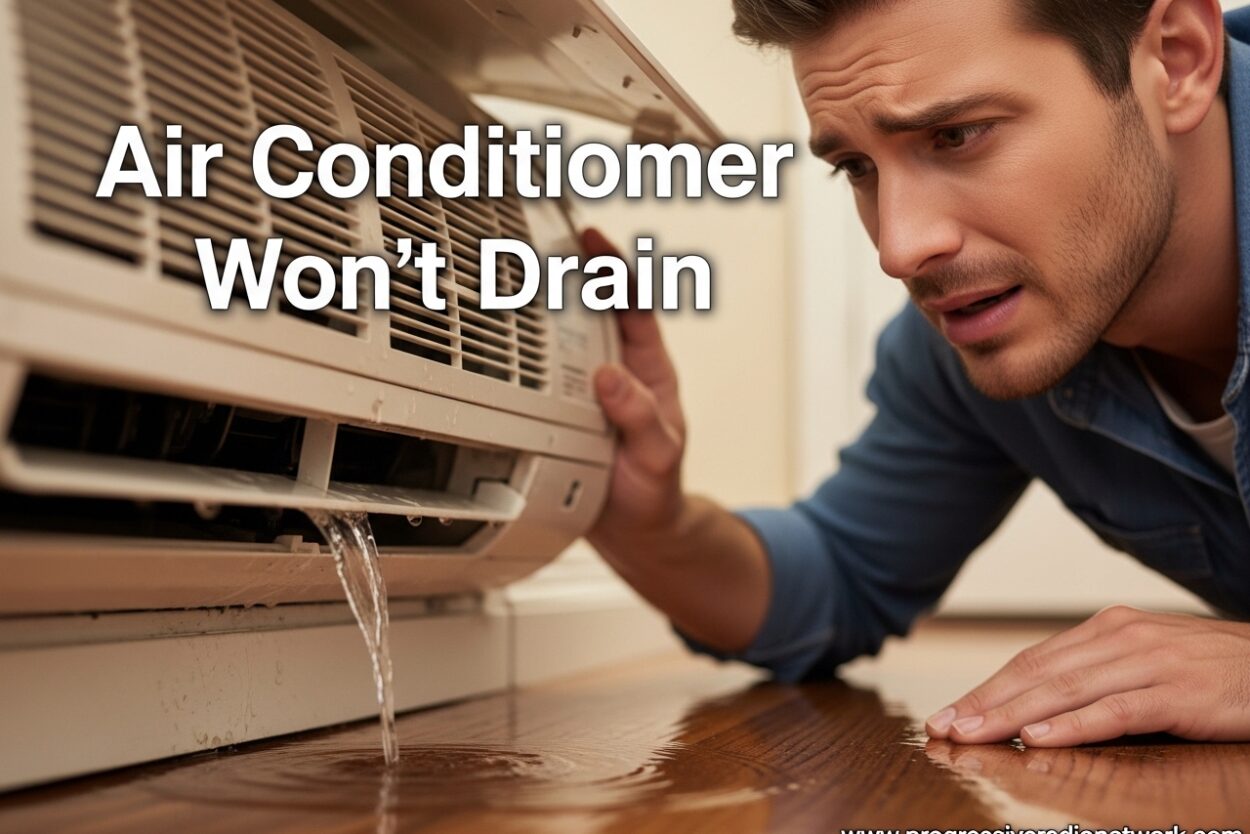
Walking through a puddle of water near your indoor AC unit or noticing that musty smell creeping through your vents? You’re dealing with a frustrating but common problem: your air conditioner wont drain properly. I’ve seen this issue hundreds of times, and the good news is that most drainage problems are simple fixes you can handle yourself without calling a pro.
When your AC stops draining, water backs up into the system instead of flowing outside. This can cause water damage to your home, create mold and mildew issues, and even trigger your AC’s safety shutdown feature. Let me walk you through exactly what’s happening and how to fix it.
What is an AC Condensate Drain Line and How Does It Work?
Understanding how your AC drainage system works makes troubleshooting much easier. Your air conditioner doesn’t just cool your home—it also removes moisture from the air. This is why you see water dripping from the outdoor unit during normal operation.
Here’s what happens: warm, humid air from your home passes over the cold evaporator coil inside your air handler. As the air cools, moisture condenses on the coil—similar to how water droplets form on a cold soda can. This water drips into a drain pan beneath the coil, then flows through a PVC pipe called the condensate drain line.
The drain line typically runs from your indoor unit to an outdoor exit point, often near your AC condenser. Gravity does most of the work, though some systems use a condensate pump to move water upward and out. When this line gets blocked, that’s when you experience the dreaded “air conditioner wont drain” problem.
5 Signs Your Air Conditioner Wont Drain
Before you start fixing anything, confirm you actually have a drainage issue. These five signs are dead giveaways that your AC drain line is clogged or malfunctioning.
1. Water dripping from your indoor unit. If you see water pooling around your air handler or furnace, or dripping from the ceiling in areas where ductwork runs, your drain line isn’t doing its job. This is the most obvious sign that water is backing up instead of flowing out.
2. Musty or moldy smells coming from vents. That distinctive dirty sock smell is algae and mold growing in your stagnant drain line. When water sits instead of flowing, microorganisms thrive. The smell circulates through your ductwork every time the AC runs.
3. Your AC system shuts down unexpectedly. Modern AC units have a float switch in the drain pan. When water rises to a dangerous level, the switch kills power to prevent overflow. If your AC works for a while then stops, this safety feature is probably activating.
4. Water damage marks on walls or ceilings. Unexplained stains or bubbling paint near your air handler or around AC vents indicate water has been overflowing. This is serious—you’re already past the prevention stage and into damage control.
5. No water dripping from the outdoor drain line. On a humid day when your AC is running, you should see a steady drip from the outdoor end of your drain line. If it’s bone dry while your AC is working hard, something is blocking the flow.
What Causes a Clogged AC Drain Line?
Knowing what clogs your drain line helps prevent future problems. The culprit is almost always biological growth.
Algae and mold love the dark, moist environment inside your PVC drain pipe. As they grow, they form a slimy layer that gradually narrows the pipe until water can’t pass. In humid climates, this can happen in just a few months.
Dirt, dust, and debris that bypass your air filter also end up in the drain pan. Over time, this sediment accumulates and combines with the algae to create a stubborn clog.
Insects and pests are another common cause. Bugs are drawn to the moisture and can build nests or die inside the line, creating blockages. I’ve even found small plants growing in drain lines that exit into garden areas.
Sometimes the issue isn’t a clog at all. If your drain line wasn’t installed with proper slope, water won’t flow naturally. Frozen evaporator coils from low refrigerant or poor airflow can also cause drainage issues that mimic a clog.
How to Unclog an AC Drain Line: Step-by-Step Guide
Ready to fix your drainage problem? This is the exact process HVAC technicians use, and it works in over 90% of cases. The whole job should take 30-60 minutes.
Tools you’ll need:
- Wet/dry vacuum (shop vac)
- Hot water
- White vinegar
- Funnel
- Stiff wire or drain brush
- Towels or rags
- Flashlight
Safety first: Always turn off power to your AC unit at the thermostat and the breaker before working on any components. Water and electricity are a dangerous combination.
Step 1: Turn off your AC system. This isn’t just about safety—running the AC while the drain is clogged will make the problem worse as more condensation forms.
Step 2: Locate the drain line access point. You’re looking for a PVC pipe, usually 3/4 to 1 inch in diameter, coming out of your indoor unit. There’s often a T-shaped vent tee with a cap near the air handler. The line exits through an exterior wall, often near the outdoor AC unit.
Step 3: Check the drain pan. Remove the access panel on your air handler and look at the drain pan beneath the evaporator coil. If it’s full of water, use towels to soak up as much as possible. This prevents overflow when you start clearing the clog.
Step 4: Use the wet/dry vacuum method. This is the most effective DIY technique. Take your shop vac outside to where the drain line exits your home. Wrap a rag around the vacuum hose to create a tight seal over the drain pipe opening. Turn on the vacuum and let it run for 2-3 minutes. The suction pulls the clog backward out of the line.
Step 5: Flush from the inside. Go back to the indoor T-vent access point (you may need to remove a plastic cap). Pour a mixture of hot water and vinegar down the line using a funnel. Use about 1 cup of vinegar followed by 2 cups of hot water. Let it sit for 30 minutes to break down any remaining algae.
Step 6: Test the drain. Turn your AC back on and let it run for 15-20 minutes. Check the outdoor drain end—you should see water dripping freely. Go back inside and verify the drain pan isn’t filling up.
Still clogged? Try using a stiff wire or plumbing snake to manually break up the blockage. Insert it carefully into both ends of the drain line to dislodge stubborn clogs. Repeat the vacuum and flushing process afterward.
Window AC Unit Drain Problems: What’s Different?
Window air conditioners have a simpler drainage system than central AC units, but they can still experience “wont drain” issues. Understanding the differences helps you troubleshoot effectively.
Window units typically drain directly out the back or bottom of the unit. Water should drip outside when the AC is running. If you see water leaking into your home from a window unit, the drainage holes are likely blocked.
The most common cause is debris blocking the rear vents. Leaves, dirt, and insect nests can clog the drain channels. Clean the back of your unit thoroughly with a vacuum and compressed air.
Improper installation is another frequent culprit. Window ACs need a slight downward tilt toward the outside to encourage drainage. If your unit is level or tilted inward, water will pool inside and eventually leak into your home. Adjust the mounting angle so the back is slightly lower than the front.
For severe window AC drainage problems, you may need to remove the unit entirely and clean the internal drain pan and channels. This is more involved than central AC maintenance but still manageable for most DIYers.
How to Prevent AC Drain Line Clogs
Preventing clogs is much easier than dealing with water damage and emergency repairs. These simple maintenance steps keep your drain line flowing freely all season long.
1. Clean your drain line monthly during cooling season. Once a month, pour 1 cup of white vinegar down the drain line access point. Let it sit for an hour, then flush with hot water. This kills algae before it can build up.
2. Change your air filters regularly. Dirty air filters allow more dust and debris to reach your evaporator coil and drain pan. Replace filters every 1-3 months, or more often if you have pets or allergies. This is the single most effective prevention step.
3. Consider a float switch installation. A float switch cuts power to your AC when the drain pan fills up, preventing catastrophic water damage. It’s a small investment that can save you thousands in repairs. Most HVAC technicians can install one in under an hour.
4. Keep the outdoor drain exit clear. Make sure plants, mulch, and debris aren’t blocking where your drain line exits your home. Maintain at least 6 inches of clearance around the opening.
5. Schedule annual professional maintenance. An HVAC technician will inspect and clean your entire drainage system during a yearly tune-up. They can catch small issues before they become big problems.
When to Call a Professional HVAC Technician
Most AC drainage problems are DIY-friendly, but some situations require professional expertise. Don’t risk causing more damage or compromising your system’s efficiency.
Call a pro if your drain line keeps clogging despite regular cleaning. Recurring clogs often indicate deeper issues like improper installation, a cracked drain pan, or problems with your condensate pump. These require diagnostic tools and expertise beyond typical homeowner skills.
Water damage is another clear sign you need professional help. If water has already damaged walls, ceilings, or flooring, address both the drainage issue and the repairs simultaneously. An HVAC technician can fix the drain while you handle restoration—or recommend contractors who can.
Hard-to-access drain lines are best left to professionals. If your drain line runs through finished walls, ceilings, or cramped crawl spaces, you risk causing damage trying to access it. Technicians have the tools and experience to work in tight spaces safely.
Expect to pay between $75 and $200 for professional drain cleaning, depending on your location and the severity of the clog. This is money well spent if it prevents water damage or system failure. Many companies offer service agreements that include annual drain maintenance.
Frequently Asked Questions
Why does my air conditioner not drain water?
Your AC drain line is likely clogged with algae, dirt, or debris. The condensate that forms during normal operation can’t flow through the blocked pipe, causing water to back up into the drain pan and potentially overflow.
What unclogs the AC drain line?
A wet/dry vacuum is the most effective DIY tool for unclogging AC drain lines. For maintenance, a mixture of hot water and vinegar helps prevent algae buildup. Commercial drain cleaners can also work but may damage PVC pipes if used too frequently.
Can I use vinegar to clean AC drain line?
Yes, vinegar is actually one of the safest and most effective cleaners for AC drain lines. Pour 1 cup of white vinegar down the drain line once a month during cooling season. It kills algae and mold without damaging your PVC pipes like harsh chemicals might.
How often should I clean my AC drain line?
Clean your AC drain line at least once a year before cooling season begins. In humid climates or if you’ve had previous clogs, monthly maintenance with vinegar is recommended. This prevents algae growth and keeps water flowing freely.
Why is my AC drain line not draining even after vacuuming?
If vacuuming doesn’t solve the problem, the clog might be deeper in the line or you could have a U-trap issue. Some AC systems have a secondary drain line that may be blocked. The problem could also be a frozen evaporator coil rather than a drain clog.
What happens if AC drain is clogged?
A clogged AC drain line can cause significant water damage. When water can’t drain properly, it overflows from the drain pan, potentially damaging ceilings, walls, and flooring. Many modern AC units have a safety switch that shuts down the system when the drain pan fills up.
Conclusion
Dealing with an air conditioner that wont drain is stressful, but it’s almost always fixable without expensive professional help. Most clogs respond well to the wet/dry vacuum method I’ve outlined, especially when combined with regular vinegar maintenance to prevent algae growth.
The key is catching drainage problems early. Watch for the warning signs: musty smells, water dripping from indoor units, or unexpected AC shutdowns. Address these symptoms promptly, and you can avoid the water damage and mold issues that make neglected drainage problems so expensive.
Stay ahead of clogs with monthly preventive maintenance during cooling season. That simple cup of vinegar and 5 minutes of attention saves countless headaches—and potentially thousands in water damage repairs. Your AC will thank you with reliable cooling and better air quality all summer long.






Leave a Comment