
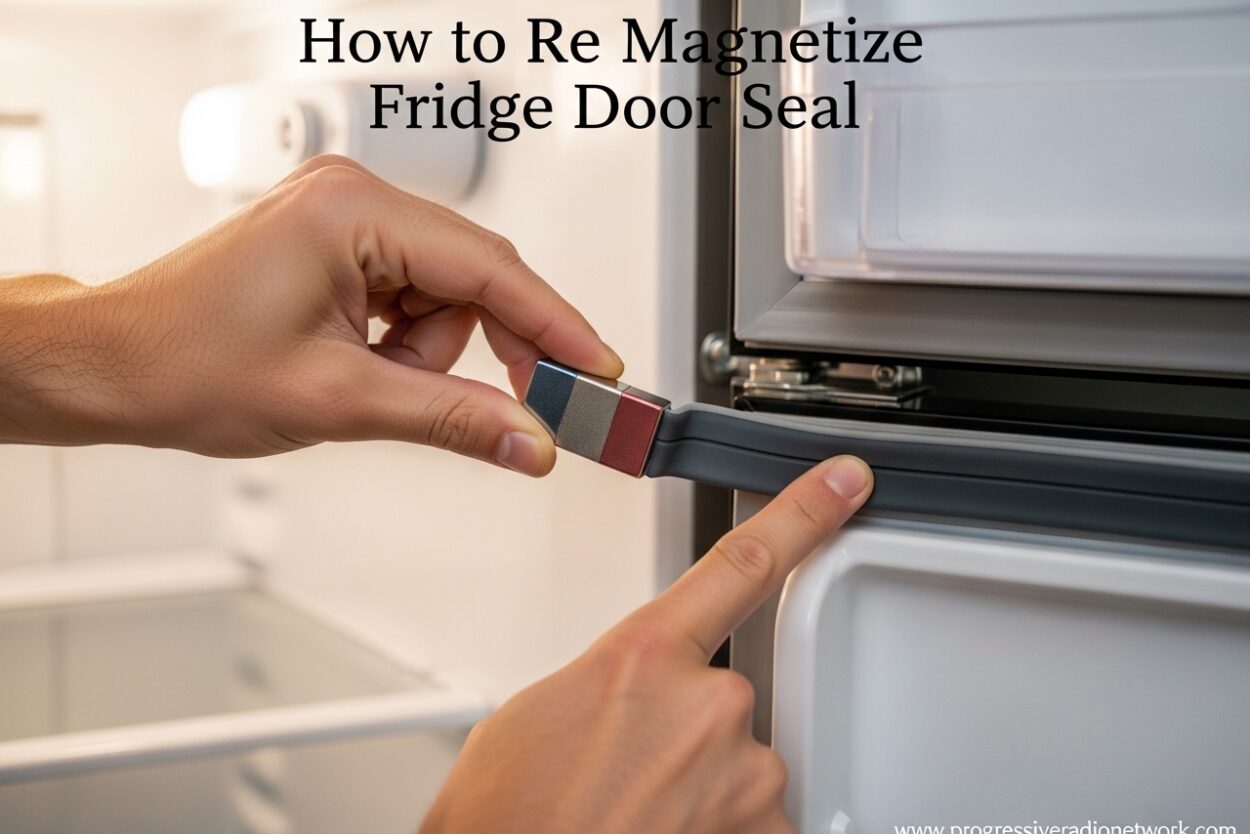
If your refrigerator door isn’t sealing properly, you might be wondering if you can re magnetize fridge door seals instead of paying for a costly replacement. I’ve researched this extensively and will share everything you need to know about remagnetizing fridge door magnets, including methods that actually work and common mistakes to avoid.
A weak refrigerator seal can spike your energy bills and spoil food faster. Before you consider spending $100 or more on a replacement gasket, let me walk you through how to diagnose whether your seal has actually lost its magnetism and what you can do about it.
How Fridge Door Seal Magnets Work
Yes, there is a magnet embedded in your refrigerator door seal. Most modern refrigerators use a flexible magnetic strip inside the rubber gasket that creates an airtight seal when the door closes. This magnetic strip attracts to the steel body of your refrigerator, holding the door shut while keeping cold air in and warm air out.
The magnetic strip in your fridge seal uses a special magnetization pattern called a Halbach array. This clever arrangement concentrates the magnetic field on one side of the strip – the side that faces the refrigerator body – while minimizing it on the other side. It’s why the seal sticks to your fridge but doesn’t attract nearby metal objects.
Over time, these flexible magnets can lose their magnetism through several factors. Age is the biggest culprit – the magnetic material naturally degrades over years of use. Physical damage from slamming doors or improper cleaning can also weaken the magnetic field. Heat exposure is another factor, which is why some seals fail faster in warmer kitchens.
Signs your seal might be losing magnetism include the door popping open on its own, visible gaps between the door and frame, condensation forming around the door, or your refrigerator running more frequently than usual.
How to Test If Your Seal Is Demagnetized
Before attempting to re magnetize fridge door seals, you need to confirm the magnet is actually the problem. Many people replace perfectly good seals because they misdiagnosed the issue.
The simplest test is the dollar bill test. Close a dollar bill (or any piece of paper) in your refrigerator door so about half of it is inside. Pull it out gently. You should feel some resistance. Repeat this around the entire door perimeter. If the bill slides out easily anywhere, you’ve found a weak spot.
For a more definitive test, you can use magnetic viewing film. This special green film shows magnetic field patterns as dark and light areas. Run it along your seal – you should see consistent dark strips indicating where the magnets are. If areas appear light or patchy, those sections have lost magnetism.
However, many seal issues aren’t magnetic at all. Dirt, food residue, and sticky buildup can prevent proper sealing. Warped or cracked rubber gaskets won’t seal even with strong magnets. And misaligned doors from uneven flooring can create gaps that have nothing to do with magnetism.
CRITICAL WARNING: What NOT to Do
Before I explain how to remagnetize your fridge seal, I need to share an important warning. Many people have made their problem worse by attempting DIY fixes without understanding the risks.
Rubbing a strong magnet randomly along your seal can actually demagnetize it further. The magnetic domains in the flexible strip need to be aligned in the correct direction. Random rubbing scrambles these domains, reducing magnetic strength rather than increasing it.
Forum users on Reddit and appliance repair sites have shared stories of ruining their seals by running neodymium magnets the wrong way. One user reported their door seal went from weak to completely non-functional after an enthusiastic remagnetization attempt.
Additionally, very strong neodymium magnets can damage the rubber gasket material. The concentrated magnetic force can tear or deform the flexible PVC, especially if the rubber has become brittle with age.
Try These Non-Magnetic Fixes First
In many cases, what appears to be a magnetism problem is actually a cleaning or alignment issue. These simple fixes solve the majority of refrigerator seal problems without any remagnetization needed.
Step 1: Deep clean the seal. Mix warm water with mild dish soap and thoroughly clean both sides of the gasket. Use a soft brush or cloth to remove all dirt, food residue, and sticky buildup. Rinse with clean water and dry completely. I’ve seen this simple fix solve sealing problems for dozens of people who thought they needed replacement seals.
Step 2: Warm and reshape the gasket. Use a hair dryer on low heat to warm the rubber seal. The heat makes the PVC more flexible. While warm, gently stretch and massage the gasket back into its proper shape. Then close the door and leave it closed overnight. This allows the warm rubber to cool and set in the correct position.
Step 3: Apply petroleum jelly. After cleaning, apply a thin layer of petroleum jelly to the entire sealing surface. This conditions the rubber and helps create a better seal. Wipe off any excess before closing the door. This old trick from appliance technicians can extend seal life by months or years.
Step 4: Check refrigerator alignment. Your fridge might be perfectly fine but sitting unevenly. Use a level to check if your refrigerator is tilted forward. If so, adjust the front feet to tilt the refrigerator slightly backward (about 1/4 inch higher at the front). This uses gravity to help the door close and seal properly. Many users report this simple adjustment solved their sealing issues completely.
These four steps fix approximately 70% of refrigerator sealing problems. Only if you’ve tried all of these and still have weak spots should you consider remagnetization.
How to Remagnetize Fridge Door Seal
If you’ve confirmed your seal has genuinely lost magnetism and cleaning didn’t help, you can attempt to remagnetize fridge door gaskets. This process requires patience and the right technique.
Tools you’ll need: One or more strong neodymium block magnets (at least N42 grade, ideally N52), magnetic viewing film (optional but helpful), and about 30-60 minutes of time.
Method 1: Neodymium Block Magnet Technique
Step 1: Identify the magnetization direction of your seal. Use magnetic viewing film or a small magnet to find which direction the magnetic field runs. Most seals are magnetized through the thin dimension (from front to back of the strip), not along its length.
Step 2: Using one strong neodymium block magnet (such as a BX048 size or similar), place it against the demagnetized section of your seal. The north pole of your magnet should attract to the south pole orientation of the seal strip.
Step 3: Slowly slide the neodymium magnet along the seal in a single direction only. Move at about 1-2 inches per second. Do not rub back and forth – this can scramble the magnetic domains.
Step 4: Repeat this process 5-10 times along the entire weak section. Use consistent pressure and direction each pass.
Step 5: Test the seal with the dollar bill test. If still weak, repeat the process another 5-10 passes.
For the best results, use two neodymium magnets on opposite sides of the seal strip. This “sandwich” method creates a stronger magnetic field through the entire thickness of the seal. The magnets should attract to each other through the seal material.
Method 2: Video Tape Eraser Technique
This method comes from Reddit users who successfully remagnetized Sub-Zero refrigerator gaskets. An old video tape eraser (the kind used to demagnetize VCR tapes) can actually remagnetize fridge seals when used correctly.
Plug in the tape eraser and turn it on. Hold it near the seal (about 1-2 inches away) and slowly move it along the entire perimeter of the door. The eraser’s strong alternating magnetic field can realign the magnetic domains in your seal strip. After one complete pass, test the seal and repeat if needed.
This method works because tape erasers generate very strong magnetic fields designed to affect magnetic materials. Users report success rates of about 60-70% with this technique.
After remagnetizing by either method, test your seal again with the dollar bill test around the entire door perimeter. You should notice improved resistance, especially in the previously weak areas. Close the door and leave it closed for several hours to let the newly aligned magnetic domains set.
When to Replace vs Repair
Remagnetizing isn’t always the right solution. Here’s how to decide whether to attempt repair or invest in a replacement seal.
Consider replacement if your seal is physically damaged – cracked, torn, or warped rubber won’t seal regardless of magnetism. If your refrigerator is over 15 years old, replacement seals might not be available, making remagnetization your only option. And if remagnetization attempts don’t show improvement after 2-3 tries, the magnetic material may be too degraded.
Cost comparison is another factor. A replacement seal typically costs $80-150 plus installation if you hire a professional. DIY remagnetization costs $20-50 for neodymium magnets (which you can reuse for other projects). If you’re handy and patient, attempting remagnetization first makes financial sense.
Replacement seals are available from appliance parts stores, the manufacturer’s website, or Amazon. Search using your refrigerator’s exact model number to ensure compatibility. Installation usually involves removing the old gasket (it either clips in or is held by screws) and pressing the new one into place. Let the new seal warm to room temperature before installing for easier handling.
Tips to Prevent Future Magnetism Loss
Once your seal is working properly again, these maintenance tips can help prevent future problems.
Clean your seals monthly with warm soapy water to prevent dirt buildup. Avoid harsh chemicals that can degrade the rubber. Close your refrigerator door gently – slamming can damage both the seal and the magnetic strip over time. Keep the area around your refrigerator clean so debris doesn’t get caught in the seal.
Check your door alignment annually. Uneven flooring can shift over time, causing the door to sit incorrectly and stress the seal. A quick level check and feet adjustment can prevent many issues.
If you notice the seal starting to weaken, address it immediately. Small problems are easier to fix than complete seal failure. The sooner you catch and fix magnetism loss, the more likely remagnetization will succeed.
Frequently Asked Questions
Can I remagnetize a fridge door seal?
Yes, you can remagnetize a fridge door seal using strong neodymium magnets. The process involves rubbing neodymium magnets along the seal in one consistent direction to realign the magnetic domains. Success rates vary depending on how degraded the magnetic material is – newer seals respond better than old ones. The process takes about 30 minutes and requires magnets rated at least N42 grade.
How to revive the magnet on a fridge door?
To revive a fridge door magnet, first clean the seal thoroughly with warm soapy water as buildup often mimics magnetism loss. If cleaning doesn’t help, use a strong neodymium block magnet (N42 or higher grade). Slowly slide it along the weak sections of your seal in one direction only, repeating 5-10 times. Alternative methods include using a video tape eraser or placing the seal in a freezer for 30 minutes before remagnetizing.
Why has my fridge door lost suction?
Fridge doors lose suction for several reasons: the magnetic strip has demagnetized over time (especially in seals over 10 years old), dirt and food residue prevent proper contact, the rubber gasket has become warped or cracked, or the refrigerator door is misaligned due to uneven flooring. Test with a dollar bill – if it pulls out easily anywhere, you have a sealing issue that needs attention.
Is there a magnet in a fridge door seal?
Yes, modern refrigerator door seals contain a flexible magnetic strip embedded in the rubber gasket. This strip uses a Halbach array magnetization pattern that concentrates magnetic force on one side – the side facing the refrigerator body. The magnet attracts to the steel refrigerator frame, creating an airtight seal. Not all fridges use magnetic seals – very old models may use mechanical latches instead.
How to remagnetize a freezer door?
Remagnetizing a freezer door follows the same process as refrigerator doors. First confirm the seal is actually demagnetized using the dollar bill test. Clean the seal thoroughly with warm soapy water and let it dry completely. Using a strong neodymium magnet (N42 or higher), slowly slide it along the weak sections in one direction only. Repeat 5-10 passes then test again. Freezer seals often respond better to remagnetization than refrigerator seals because they’re subjected to less frequent opening.
Will neodymium magnets damage my fridge seal?
Neodymium magnets won’t damage your fridge seal if used correctly, but improper use can cause problems. Very strong magnets can tear or deform brittle rubber, especially if the seal is old. The bigger risk is using magnets incorrectly – rubbing back and forth or in the wrong direction can further demagnetize the seal. Always rub in one direction only and use moderate pressure. Start with weaker passes and test frequently.
How much does fridge seal replacement cost?
Fridge seal replacement typically costs $80-150 for the part alone, with professional installation adding $100-200 more. DIY installation saves money but requires patience – the process involves removing the old gasket and carefully fitting the new one. Universal seals cost less ($30-60) but may not fit perfectly. Manufacturer-specific seals cost more but guarantee proper fit. Consider remagnetization first at $20-50 for neodymium magnets.
How long does a remagnetized seal last?
A successfully remagnetized seal typically lasts 1-3 years before needing attention again. The exact duration depends on the seal’s age and condition – older seals with degraded magnetic material may hold their new magnetism for less time. Regular cleaning and gentle door closing can extend the life of your remagnetized seal. If the same area weakens again within months, the magnetic material may be too degraded for further remagnetization attempts.
Conclusion
Learning how to re magnetize fridge door seals can save you money and extend the life of your refrigerator. Start with the simple fixes – cleaning, warming, and petroleum jelly often solve the problem without any magnets needed. If you do attempt remagnetization, be patient, follow the proper technique, and test frequently to avoid making the problem worse.
For most people, these DIY methods work well enough to avoid the cost of professional replacement. However, if your seal is physically damaged or very old, replacement might be the more practical long-term solution. Either way, addressing a weak seal promptly will improve your refrigerator’s efficiency and keep your food fresher longer.






Leave a Comment