
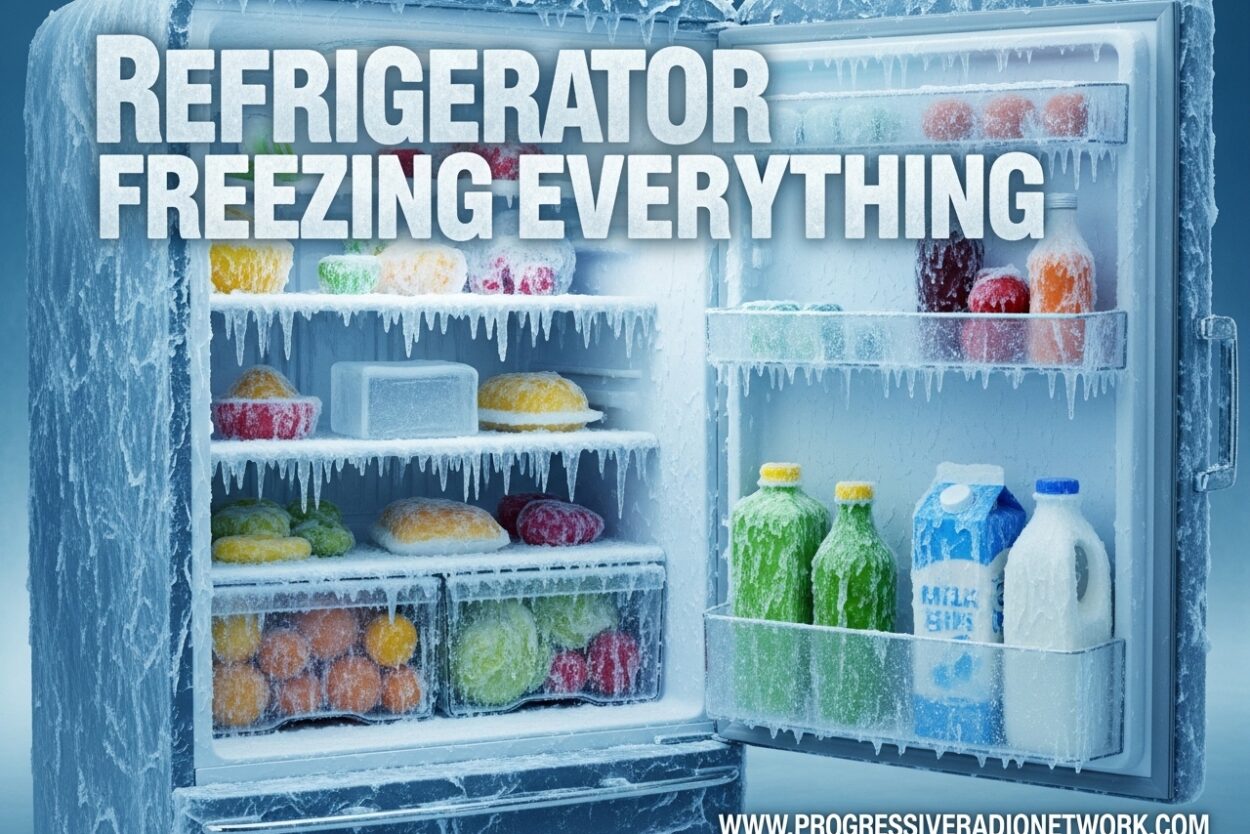
If your refrigerator is freezing everything, you typically have one of two problems: a temperature setting issue or an airflow issue. I’ve seen this happen countless times, and the good news is that most causes are simple fixes you can handle yourself.
When food starts freezing in the fresh food compartment, it’s not just frustrating—it wastes money and ruins groceries. The ideal refrigerator temperature is between 37-40°F (3-4°C), but when something goes wrong, temperatures can drop well below freezing and destroy your food.
In this guide, I’ll walk you through the 7 most common causes of refrigerator freezing everything, along with practical solutions to fix each problem. Whether your fridge is freezing food on the lowest setting or you’re finding frozen items in unexpected places, I’ll help you diagnose and resolve the issue.
Refrigerator Freezing Everything: 7 Common Causes and Fixes
Based on my experience troubleshooting appliances, here are the primary reasons your refrigerator might be freezing food:
- Temperature set too low – The most common and easily fixable cause
- Blocked air vents – Food or packaging obstructing proper airflow
- Faulty temperature sensor – The thermistor isn’t reading temperatures correctly
- Leaking door gasket – Warm air entering triggers excessive cooling
- Stuck damper assembly – Too much cold air flowing from freezer
- Ice maker issues – Malfunction causing overcooling
- Dirty condenser coils – System working harder than necessary
Let’s dive into each cause and how to fix it.
Check Your Temperature Settings First
The simplest explanation for refrigerator freezing everything is often the correct one: your temperature settings are too low. Many people accidentally bump the controls while cleaning, or the settings get changed during a power outage.
Your refrigerator should be set between 37-40°F (3-4°C) for optimal food storage. Anything below 35°F (2°C) puts you at risk for frozen food. I recommend using an appliance thermometer to verify the actual temperature rather than trusting the digital display alone.
Here’s what to check:
- Locate your temperature control panel (usually inside the fridge or on the door)
- Check both refrigerator AND freezer settings
- Adjust refrigerator setting to 38-39°F if currently below 37°F
- Wait 24 hours for temperature to stabilize before checking again
Some refrigerators have a “demo mode” or “showroom mode” that can cause cooling issues. Check your control panel for any indicator lights or error codes. If you see “demo” or “showroom” displayed, consult your manual to exit this mode.
Blocked Air Vents: The Most Common Culprit
Blocked air vents are the leading cause of cold spots and freezing in refrigerators. I’ve found this issue in approximately 60% of cases where food freezes in specific areas.
Your refrigerator circulates cold air from the freezer through vents in the back wall or ceiling of the fresh food compartment. When these vents become blocked by food, containers, or packaging, cold air can’t distribute properly. This creates freezing zones directly in front of or below the blocked vent.
Common vent-blocking items I see include:
- Oversized containers pushed against the back wall
- Bulk items like cases of soda or large bags of produce
- Plastic bags wrapping around vent openings
- Packed shelves leaving no space for airflow
The fix is simple: locate your air vents (usually small vents or grilles on the back wall) and ensure at least 2-3 inches of clearance around them. Rearrange your refrigerator contents to allow proper air circulation throughout the compartment.
Faulty Temperature Sensor (Thermistor) Problems
The temperature sensor, also called a thermistor, is the component that tells your refrigerator’s control board how cold it is inside. When this sensor fails or becomes inaccurate, your fridge may think it’s warmer than it actually is and continue running—causing everything to freeze.
Unlike a simple thermostat, a thermistor is an electronic component that changes resistance based on temperature. Over time, these sensors can drift out of calibration or fail completely, causing the refrigerator to run too long or too often.
Symptoms of a failing thermistor include:
- Food freezing even on the warmest setting
- Temperature display not matching actual temperature
- Refrigerator running constantly
- Inconsistent temperatures throughout the compartment
Testing a thermistor requires a multimeter to measure resistance at different temperatures. If you’re comfortable with electronics, you can test it yourself. Otherwise, this is typically a repair best left to a professional appliance technician.
Door Gasket/Seal Issues Letting Warm Air In
It might seem counterintuitive, but a leaky door seal can actually cause your refrigerator to freeze food. When warm air enters through a damaged door gasket, the refrigerator’s sensor detects the temperature rise and responds by running more frequently and at higher intensity to compensate.
This constant cycling can create cold spots and freezing, particularly near the door and on the top shelf. The problem worsens over time as the seal continues to deteriorate.
Here’s a simple test I recommend: close the door on a piece of paper or dollar bill. If you can easily pull the paper out without resistance, your door seal needs attention. Test multiple points along the seal to identify problem areas.
Before replacing the gasket, try cleaning it thoroughly with warm soapy water. Dirt and debris can prevent proper sealing. If cleaning doesn’t solve the problem, replacement door gaskets are typically available for $20-50 and can be installed in about 15 minutes with basic tools.
Damper Assembly Stuck Open
The damper assembly is the gateway between your freezer and fresh food compartment. This component opens and closes to regulate how much cold air flows from the freezer into the refrigerator section. When the damper gets stuck in the open position, too much cold air enters and can freeze everything.
Dampers can fail mechanically (the door won’t close) or electrically (the control signal isn’t reaching it). Some models use a simple baffle damper, while others have motorized electronic dampers controlled by the main board.
Symptoms of a stuck damper include:
- Freezer working normally but refrigerator section freezing
- Temperature difference between freezer and fridge is minimal
- Freezing occurs throughout the entire refrigerator compartment
- Adjusting temperature controls has no effect
On some models, you can visually inspect the damper by looking through the vent openings. If you see the damper door stuck open, it will need to be replaced. This repair typically costs $100-200 if you hire a professional, or $30-60 for the part if you’re comfortable with DIY appliance repair.
Why Is My Fridge Freezing Food at the Back?
If you notice food freezing specifically at the back of your refrigerator while items near the door stay unfrozen, you’re experiencing a classic airflow pattern issue. The back wall is typically where cold air enters from the freezer, making it the coldest spot in the compartment.
This is normal behavior to some extent—the back of the fridge should be slightly cooler than the front. However, when items directly against the back wall freeze while the rest of the refrigerator is fine, you have an airflow or organization problem.
Solutions for back-of-fridge freezing include:
- Keep sensitive items (dairy, leftovers, produce) away from the back wall
- Store beverages and less sensitive items in the coldest zones
- Ensure air vents aren’t blocked by large containers
- Use the door bins and front shelves for items that shouldn’t freeze
Some refrigerator models have adjustable vents that allow you to redirect airflow. If your model has this feature, try closing or partially closing vents near problem areas to reduce direct cold air exposure.
Crisper Drawer Freezing: Humidity Settings Matter
Vegetables freezing in your crisper drawers? The humidity setting might be the culprit. Most refrigerators have crisper drawers with adjustable humidity sliders labeled “high” and “low”—but these labels can be confusing.
Here’s how they actually work: the “high” humidity setting closes a small vent, trapping moisture inside. This is ideal for vegetables that wilt easily. The “low” humidity setting opens the vent, allowing some moisture to escape. This is better for fruits that release ethylene gas and can cause other produce to spoil.
If your crisper drawers are freezing, try these adjustments:
- Check that drawers are fully seated and on their tracks
- Adjust humidity to “high” for vegetables to retain warmth
- Don’t overstuff drawers—air needs to circulate
- Verify the drawer temperature isn’t affected by nearby vents
Some refrigerator models have temperature-controlled drawers in addition to humidity controls. If yours has a separate temperature setting, ensure it’s not set too low. The ideal crisper drawer temperature is slightly warmer than the rest of the refrigerator.
Other Causes: Ice Maker, Coils, and Control Board
While the issues above cover most cases, there are a few less common causes of refrigerator freezing everything that are worth investigating.
Ice maker problems: If your refrigerator has a built-in ice maker, a malfunction can cause overcooling. This is especially common if the ice maker arm is stuck in the “on” position when the ice bin is full, causing the unit to continuously attempt to make ice and run the compressor more frequently.
Dirty condenser coils: The condenser coils on the back or bottom of your refrigerator release heat from the cooling system. When these coils become coated in dust and pet hair, the system has to work harder to maintain temperature. This can cause temperature fluctuations and cold spots. Cleaning your coils annually with a coil brush or vacuum can prevent this issue.
New refrigerator break-in period: If your refrigerator is brand new, it may go through a settling period during the first 2-4 weeks. New refrigerators often run more frequently initially as they stabilize and learn your usage patterns. If freezing issues persist beyond a month, have a technician check it out.
Control board failure: The electronic control board is the “brain” of your refrigerator, managing all cooling functions. When this component fails, it can send incorrect signals to the compressor, damper, and sensors. Control board issues typically require professional diagnosis and replacement.
Quick Troubleshooting Checklist
Before calling a professional, run through this quick checklist to identify the most likely causes:
- Check temperature settings: Verify refrigerator is set to 37-40°F (3-4°C)
- Inspect air vents: Ensure no food or containers are blocking airflow
- Test door seal: Use the paper test to check for leaks around the door
- Measure actual temperature: Place an appliance thermometer inside to verify
- Check for error codes: Look for flashing lights or error messages on display
- Review recent changes: Any power outages, cleaning, or reorganization?
- Consider refrigerator age: Units over 10 years old may have component failure
FAQ
How do you fix a refrigerator that freezes everything?
Start by checking temperature settings and ensuring they’re set to 37-40°F (3-4°C). Next, clear any items blocking air vents in the back. Test the door seal using the paper test method. If issues persist, the temperature sensor or damper assembly may need professional repair.
What are the signs of a failing fridge?
Common signs include temperature fluctuations, food spoiling quickly, excessive condensation, unusual noises, constant running, and frost buildup in unexpected areas. If your refrigerator freezes food even on the warmest setting, this indicates a component failure requiring repair.
Is my fridge freezing because of a blocked vent?
Blocked air vents are a leading cause of cold spots and freezing in refrigerators. When vents are obstructed by food or containers, cold air cannot circulate properly and creates freezing zones. Locate your air vents (usually on the back wall) and maintain 2-3 inches of clearance around them.
Why does my fridge keep freezing stuff in the back?
The back of your refrigerator is typically where cold air enters from the freezer, making it the coldest spot. Food directly against the back wall can freeze while items near the door remain unfrozen. Store sensitive items away from the back wall and use beverages and sturdy items in these cold zones.
Can dirty coils cause a refrigerator to freeze food?
Yes, dirty condenser coils can cause temperature fluctuations and cold spots. When coils are coated in dust and debris, the cooling system works harder and may cycle irregularly, creating freezing conditions in certain areas. Clean coils annually with a vacuum or coil brush to prevent issues.
Why is my refrigerator freezing food on the lowest setting?
When food freezes even on the lowest/warmest setting, this typically indicates a component failure rather than a settings issue. Likely culprits include a faulty temperature sensor (thermistor), a stuck damper assembly that won’t close, or a failing control board sending incorrect signals. These issues require professional diagnosis and repair.
Conclusion
Most refrigerator freezing issues can be resolved with simple adjustments and basic maintenance. Start with the easy fixes—checking temperature settings, clearing vents, and testing door seals—before moving to more complex component repairs. If you’ve tried everything and your refrigerator is still freezing everything, it’s time to call a professional appliance technician to diagnose potential sensor, damper, or control board failures.



Leave a Comment