
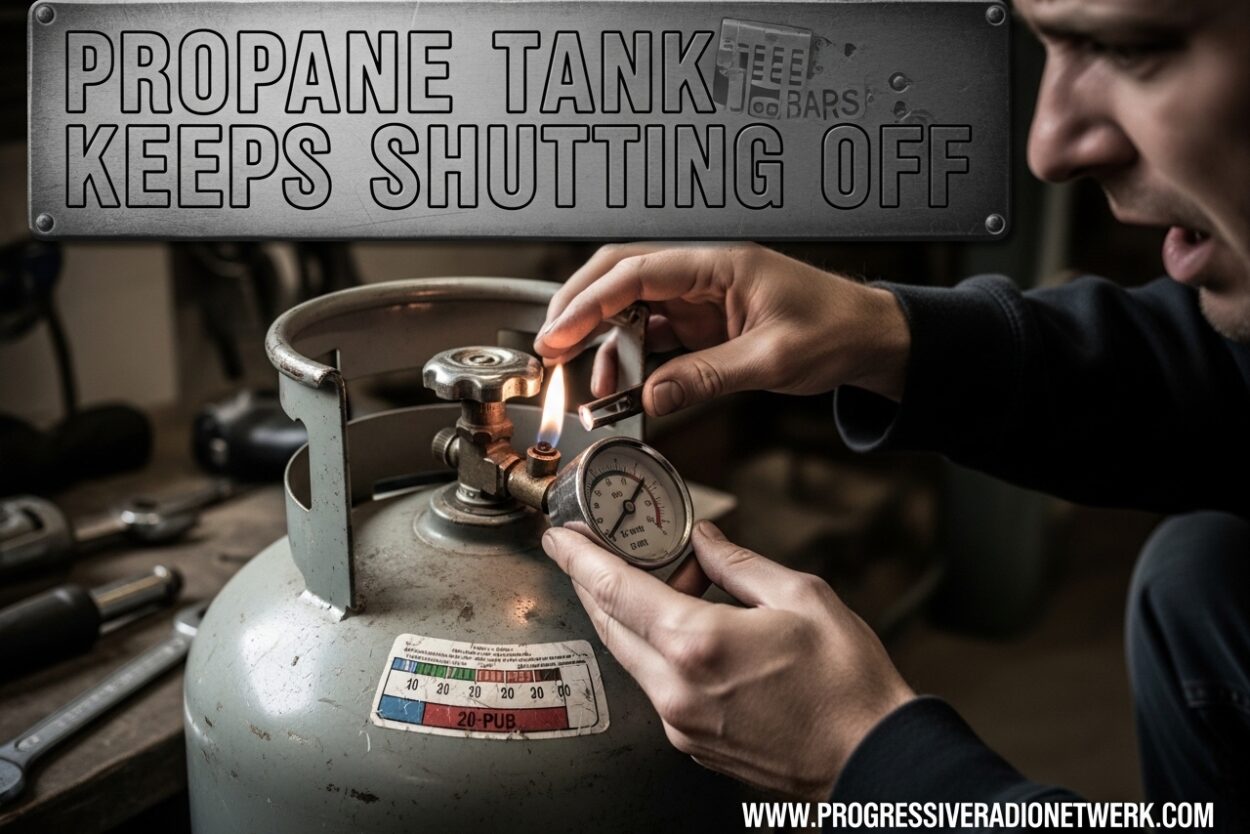
You’re grilling burgers, heating your RV, or running your patio heater when suddenly everything goes cold. The propane tank has shut off again. This frustrating problem happens to thousands of propane users every year, especially during cold weather months or when tanks are running low.
A propane tank keeps shutting off because of built-in safety features designed to protect you from gas leaks and potential explosions. The most common culprits are the excess flow valve, low propane levels affecting vapor pressure, regulator problems, or environmental factors like cold weather causing ice buildup.
After working with propane systems for over 15 years, I’ve seen every shutoff scenario imaginable. Understanding why your propane tank keeps shutting off isn’t just about fixing the problem—it’s about recognizing that your safety system is doing its job. Let me walk you through exactly what’s happening and how to get your propane flowing again safely.
Why Your Propane Tank Keeps Shutting Off
Propane tanks shut off when safety mechanisms detect conditions that could lead to dangerous situations. Your tank isn’t malfunctioning—it’s protecting you. The primary safety feature responsible for most shutoffs is the excess flow valve, which activates when it detects rapid propane flow that could indicate a leak or system failure.
The OPD (Overfill Prevention Device) valve works alongside the excess flow valve to prevent overfilling and restrict flow when necessary. These mechanical safety features have been standard on all propane tanks since 2002, and they’re incredibly reliable at their job. Unfortunately, they can sometimes trigger during normal operation, leaving you with a tank that won’t release gas.
When your propane tank keeps shutting off, it’s typically responding to one of three conditions: sudden high demand for gas, low propane levels creating vapor pressure issues, or environmental factors affecting regulator performance. Understanding which condition triggered your shutoff is the first step in resolving it.
Low Propane Tank Levels and Vapor Pressure Problems
When your propane tank runs low, the remaining liquid propane has less surface area to vaporize into gas. This creates a vapor pressure problem—your appliances need gas, but the tank can’t produce it fast enough. The pressure drops, appliances starve for fuel, and everything shuts down.
This explains why a tank that was working fine yesterday suddenly stops working today. The 80/20 rule for propane states that tanks should only be filled to 80% capacity, leaving 20% headspace for vapor expansion. However, this also means that once your tank drops below 20%, you’re in the danger zone for vapor pressure issues.
Cold weather makes this problem worse. Propane vapor pressure drops significantly in temperatures below freezing. A tank at 25% capacity might work fine at 70°F but fail completely at 30°F. I’ve seen countless RV owners confused why their propane worked perfectly in autumn but failed during their first winter trip.
Regulator Problems That Cause Shutdowns
Your propane regulator is the unsung hero of your gas system. It takes high-pressure liquid from the tank and converts it to consistent low-pressure gas for your appliances. When regulators fail, they typically cause one of two problems: either they freeze up and stop flow, or they fail to regulate pressure properly, triggering safety shutoffs.
Frozen regulators happen when moisture in the propane line expands as pressure drops through the regulator. This phase change absorbs heat, causing ice to form inside the regulator mechanism. I’ve seen regulators covered in frost within minutes of use in cold weather. The ice blocks internal passages, gas flow stops, and your appliances shut down.
Faulty regulators show different symptoms. You might notice yellow flames instead of blue, weak heat output, or appliances that work briefly then shut off repeatedly. These are all signs that your regulator isn’t maintaining proper pressure. Regulators typically last 10-15 years, but exposure to weather and moisture can shorten their lifespan significantly.
How to Burp Your Propane Tank – Step by Step
Burping a propane tank releases air that’s trapped in the gas line, which can cause the excess flow valve to activate. This simple technique resolves many shutoff issues, especially after you’ve just had your tank filled or disconnected and reconnected the line.
Step 1: Turn off all propane appliances completely. Make sure no burners or pilot lights are drawing gas.
Step 2: Close the propane tank valve by turning it clockwise until it stops. Don’t force it—these valves seal with minimal pressure.
Step 3: Disconnect the regulator hose from the tank. You’ll typically hear a small hiss as pressure equalizes—this is normal.
Step 4: Wait 30 seconds to allow any trapped air in the line to escape and the excess flow valve to reset.
Step 5: Reconnect the hose to the tank, tightening by hand only. Using tools can damage the brass fitting.
Step 6: Slowly open the tank valve by turning counterclockwise. Open it about one-quarter turn and wait 10 seconds before continuing to fully open.
This slow opening prevents the surge of gas that triggers the excess flow valve. Most shutoff issues resolve after this procedure. If your propane tank keeps shutting off after burping, move on to the full reset procedure below.
How to Reset Your Propane Tank After Safety Shutoff
When the excess flow valve activates, it requires a specific reset sequence to restore normal flow. This procedure works for both portable grill tanks and larger residential propane systems.
Step 1: Turn off all propane appliances and close their individual gas valves. This includes the main valve on your grill, furnace, water heater, or any other connected appliance.
Step 2: Close the propane tank valve completely by turning clockwise until tight.
Step 3: Disconnect the regulator from the tank. This releases pressure and allows the excess flow valve mechanism to return to its open position.
Step 4: Wait at least 2 minutes. This is crucial—the excess flow valve needs time to fully reset. Rushing this step is the most common reason reset procedures fail.
Step 5: Reconnect the regulator hose to the tank. Hand-tighten only—overtightening can damage the threads and cause future leaks.
Step 6: Open the tank valve VERY slowly. I recommend counting to 10 while turning the valve just one-quarter turn, then waiting another 10 seconds before opening the rest of the way.
Step 7: Turn on one appliance at a time, starting with the one furthest from the tank. This gradual demand increase prevents triggering the excess flow valve again.
After resetting, test each appliance individually before using multiple appliances simultaneously. If your propane tank keeps shutting off after two reset attempts, you likely have a regulator issue or genuine system problem requiring professional attention.
Cold Weather Issues and Ice Buildup
Winter creates unique challenges for propane systems. When temperatures drop below 40°F, propane vapor pressure decreases significantly. Below 20°F, you may experience reduced flow even with a full tank. The solution isn’t forcing more gas—it’s understanding how your system performs in cold conditions.
Ice on propane tanks forms for two reasons. First, atmospheric moisture condenses and freezes on cold tank surfaces. This is cosmetic and doesn’t affect performance. Second, ice can form on regulators when rapid pressure expansion cools the component below freezing. This is problematic and will cause shutoffs.
If you see frost or ice on your regulator, immediately stop using the appliance. Continued operation can damage the regulator diaphragm. Instead, allow the regulator to warm naturally, then try a gradual restart. I’ve found that keeping regulators covered with insulation or using regulator covers in winter prevents most ice-related issues.
For extreme cold applications, consider upgrading to a two-stage regulator system. These systems handle vapor pressure changes better than single-stage regulators and provide more consistent delivery in cold weather.
Other Safety Features That Trigger Shutdowns
Beyond the excess flow valve, modern propane appliances include multiple safety systems that can cause shutdowns. Thermocouples sense pilot light heat—if the pilot goes out, the thermocouple cools and cuts gas flow within seconds. This prevents unburned propane from filling your space.
Flame sensors perform similar functions in electronic ignition systems. When these sensors get dirty or fail, they can’t detect flames properly and will shut off gas even when everything is working correctly. Cleaning the sensor with fine steel wool often resolves this issue.
Tilt safety switches detect when portable heaters or grills are tipped over. If your propane tank keeps shutting off only on uneven surfaces, check for a activated tilt switch that needs manual resetting.
Some heaters include oxygen depletion sensors (ODS) that shut off operation if oxygen levels drop. These are essential safety features for indoor propane use but can trigger falsely in well-ventilated areas with strong air currents.
When to Call a Professional
Some propane problems require professional expertise. If you smell the rotten-egg odor added to propane, evacuate immediately and call your propane supplier or emergency services from a safe distance. Never attempt to locate or repair gas leaks yourself.
Call a professional if your propane tank keeps shutting off after multiple reset attempts, if you notice damage to tank valves or fittings, or if the tank itself shows signs of corrosion or damage. Professional service is also warranted for built-in propane systems with complex piping or underground tanks.
Valve replacement should never be a DIY project. Propane valves are precision components requiring special tools and expertise. Improper valve installation can create catastrophic failure risks that endanger your entire household.
Finally, if you’re experiencing repeated shutoffs on a new installation, the system may have design issues like undersized piping or improper regulator selection. A qualified propane technician can assess your entire system and recommend corrections.
FAQ
Why won’t my propane tank stay on?
Your propane tank won’t stay on because the excess flow safety valve has been triggered. This happens when gas flows too rapidly through the system, which the valve interprets as a potential leak. To fix it, turn off all appliances, close the tank valve, disconnect the regulator, wait 2 minutes, then slowly reconnect and reopen the tank valve.
How do I burp my propane tank?
To burp your propane tank, first turn off all appliances and close the tank valve completely. Disconnect the regulator hose from the tank and wait 30 seconds for trapped air to escape. Reconnect the hose by hand only, then slowly open the tank valve about one-quarter turn. Wait 10 seconds before opening the valve the rest of the way. This releases trapped air and resets the excess flow valve.
What are the signs of a faulty propane regulator?
Signs of a faulty propane regulator include yellow or orange flames instead of blue, weak heat output from appliances, hissing sounds from the regulator, frost or ice forming on the regulator during use, and appliances that work briefly then shut off repeatedly. If you notice these symptoms after ruling out tank level issues, replace your regulator.
How do I reset my propane tank?
Reset your propane tank by turning off all connected appliances and closing the tank valve. Disconnect the regulator hose from the tank and wait at least 2 minutes for the excess flow valve to reset. Reconnect the hose by hand-tightening, then slowly open the tank valve about one-quarter turn. Wait 10 seconds before continuing to open fully, then test one appliance at a time.
How to tell if a propane pressure regulator is bad?
A bad propane pressure regulator typically shows inconsistent performance. You’ll notice flames that change size or color randomly, appliances that shut off intermittently, or reduced heat output. Physical signs include frost on the regulator body or the smell of propane near the regulator. Any of these symptoms indicate you should replace the regulator immediately.
What is the 80/20 rule for propane?
The 80/20 rule for propane states that propane tanks should only be filled to 80% of their capacity, leaving 20% empty space. This headspace allows room for liquid propane to expand safely as temperatures change. Without this empty space, expanding liquid could rupture the tank or cause the relief valve to open, releasing propane into the atmosphere.
Conclusion
When your propane tank keeps shutting off, it’s almost always doing exactly what it was designed to do—protect you from potential hazards. The excess flow valve, OPD valve, and other safety features work together to ensure your propane system operates within safe parameters. Most shutoff issues resolve with simple procedures like burping the tank or performing a complete reset.
Start troubleshooting by checking your propane level—tanks below 20% capacity often cause vapor pressure issues. Then try the burping procedure followed by the full reset sequence. Cold weather users should pay special attention to regulator protection and consider two-stage regulator systems for better winter performance.
Remember that propane is flammable and potentially dangerous. If you smell gas, notice damaged components, or can’t resolve shutoff issues after multiple attempts, call a professional. Your safety is worth far more than the service call. Regular maintenance, proper tank storage, and understanding your system’s limitations will prevent most shutoff problems before they start.
Leave a Comment