
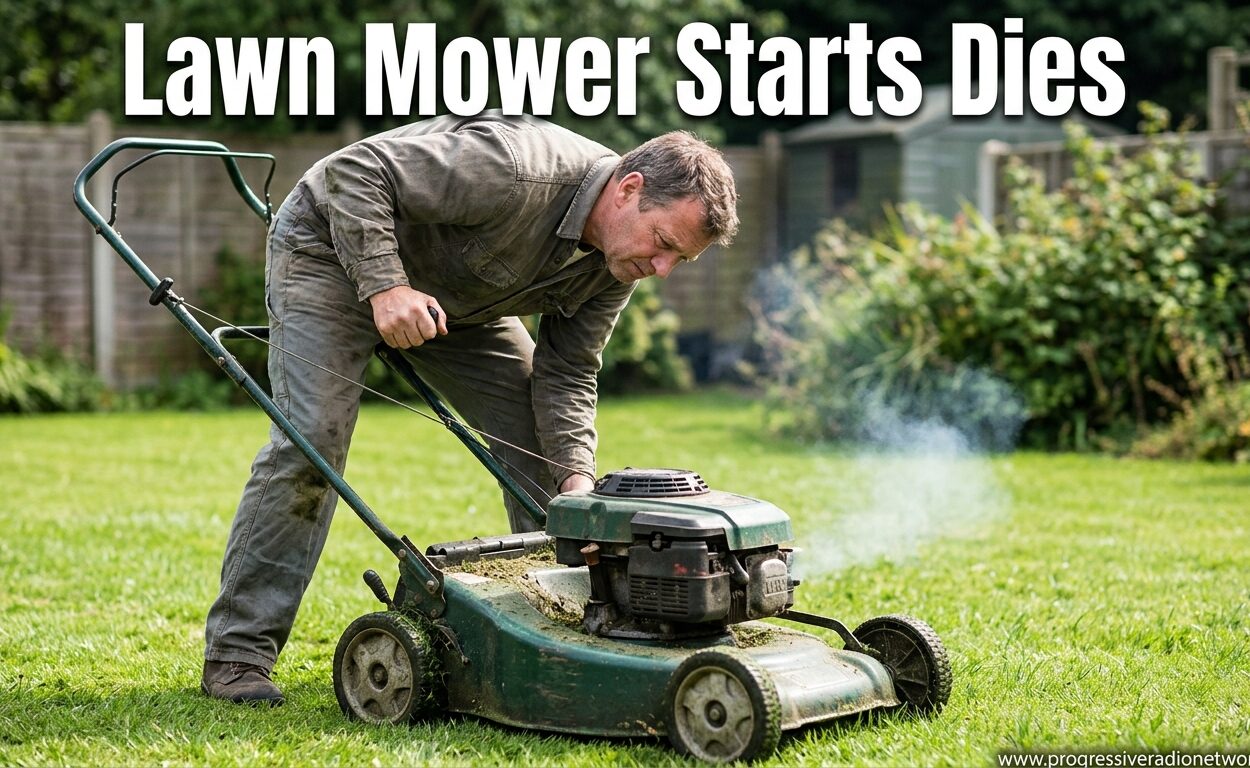
There’s nothing more frustrating than pulling the starter rope, hearing your engine roar to life, and then watching it sputter and die within seconds. This common problem – often called “lawn mower starts dies” – affects thousands of homeowners each season and can turn a simple yard chore into a weekend repair project.
Your lawn mower starts then dies because of three main system failures: fuel delivery problems (stale gas, clogged filter, dirty carburetor), air intake restrictions (dirty air filter, clogged mower deck), or ignition system issues (worn spark plug, faulty ignition coil). The good news? Most of these problems are DIY-fixable with basic tools and about an hour of your time.
Safety First: Before You Diagnose
Before diving into any repairs, I need you to follow these critical safety steps. Small engines can be dangerous if you’re not careful.
Disconnect the spark plug wire first. This prevents accidental starting while you’re working on the mower. Let the engine cool completely if you recently tried to start it – hot mufflers and engine parts can cause severe burns. Work in a well-ventilated area, especially when dealing with fuel. Wear safety glasses and gloves. And always consult your owner’s manual before attempting any repairs.
Stale or Old Fuel: The #1 Culprit
Gasoline doesn’t last forever. In fact, modern ethanol-blended fuel can start deteriorating in as little as 30 days. This is the most common reason your lawn mower starts dies.
Here’s what happens: ethanol in the fuel absorbs moisture from the air, causing phase separation. Water and gas don’t mix, so the fuel becomes contaminated. The ethanol also breaks down, creating varnish and gum deposits that clog your carburetor jets and fuel passages.
Symptoms of stale fuel include: engine runs for a few seconds then dies, rough sputtering before stalling, and difficulty restarting. The solution? Drain the old fuel completely and replace it with fresh gas. For seasonal storage, add a fuel stabilizer to prevent this issue from happening again.
Dirty Carburetor: Engine Starvation
The carburetor is the heart of your mower’s fuel system. It mixes air and fuel in the precise ratio needed for combustion. When it gets dirty, your engine can’t get the right fuel mixture.
Varnish deposits from old gas, dirt particles, and debris can clog the tiny jets and passages inside the carburetor. This restricts fuel flow, causing your engine to start on the remaining fuel in the bowl, then die when that runs out.
Signs of a dirty carburetor include: mower runs briefly then stops, black smoke from exhaust, and engine surging or hunting for the right speed.
How to Clean Your Carburetor Without Removing It
For minor carburetor issues, you can try cleaning without full removal:
Step 1: Remove the air filter cover and air filter to access the carburetor throat.
Step 2: Spray carburetor cleaner directly into the carburetor throat while working the throttle linkage.
Step 3: Let it sit for 15 minutes to dissolve deposits.
Step 4: Spray again, then try starting the mower.
Step 5: If it runs better but still has issues, you’ll need to remove the carburetor for a thorough cleaning or rebuild.
Clogged Air Filter: Engine Suffocation
Your engine needs clean air to run properly. The air filter prevents dirt and debris from entering the combustion chamber. When it gets clogged, your mower can’t breathe.
A blocked air filter restricts airflow, causing a rich fuel mixture that can foul your spark plug and cause stalling. This is especially common if you mow in dusty conditions or haven’t replaced your filter in years.
Paper filters should be replaced annually. Foam filters can be cleaned with soap and water, dried thoroughly, then lightly oiled before reinstalling. Check your filter every season – it’s a 5-minute fix that prevents countless problems.
Worn or Fouled Spark Plug: Ignition Failure
The spark plug provides the ignition spark that combusts the fuel-air mixture. When it fails, your engine can’t sustain combustion.
Spark plugs wear out over time. The electrode erodes, widening the gap beyond specification. Carbon deposits can also foul the plug, preventing proper spark. Both issues cause your mower to start briefly, then die.
Remove your spark plug and inspect it. Black carbon deposits, oil fouling, or a worn electrode mean it’s time for replacement. Most small engines use a standard plug that costs under $5. Check your manual for the correct gap setting (usually 0.030 inches) and adjust accordingly.
Fuel System Blockages: Beyond the Carburetor
Sometimes the problem isn’t the carburetor itself, but the fuel delivery system leading to it. Three common culprits cause fuel starvation.
The fuel filter can become clogged with debris from old gas or dirt from your gas can. Most push mowers have an inline filter between the gas tank and carburetor – replace it annually for best performance.
Fuel lines can crack, kink, or become blocked internally. Old rubber deteriorates, creating internal restrictions that limit fuel flow. Squeeze the fuel line – if it’s brittle or cracked, replace it.
The Fuel Cap Vent: A Hidden Cause
Here’s a problem many DIYers overlook: your gas cap needs to breathe. As fuel is consumed, air must enter the tank to replace it. The vent hole in your gas cap allows this airflow.
When this vent becomes clogged with dirt or debris, a vacuum forms in the tank as fuel is used. Eventually, this vacuum prevents fuel from flowing to the carburetor, causing your mower to die.
How to test your fuel cap vent: Loosen the gas cap slightly while the mower is running. If the engine keeps running, the vent is clogged and you need a new gas cap. This simple test takes 30 seconds and can save you hours of frustration.
Clogged Mower Deck and Blades
Your mower deck is designed to discharge grass efficiently. When grass, dirt, and debris build up underneath, it creates significant drag on the engine.
This extra load can overwhelm a small engine, causing it to stall – especially when the blades engage. Wet grass mowing makes this problem worse.
Clean your mower deck after each use. Scrape away built-up grass with a putty knife or scraper. Spray the underside with silicone lubricant to prevent future buildup. Sharp blades also reduce engine strain – sharpen or replace them at least once per season.
Other Causes: When the Usual Suspects Are Innocent
Sometimes your lawn mower starts dies for less obvious reasons. These issues are less common but worth checking if you’ve addressed the main culprits.
Low oil level or overfilled oil can cause stalling. Many modern mowers have low-oil shutdown sensors that kill the engine when oil is dangerously low. Conversely, overfilled oil can aerate (mix with air), causing the sensor to trigger falsely. Check your dipstick and maintain oil in the safe range.
The safety lever (also called the bail arm) and its cable can cause issues. This safety feature stops the engine when you release the handle. If the cable is stretched, binding, or the mechanism is sticking, it may shut down the engine unexpectedly. Lubricate the cable and check the linkage for smooth operation.
Ignition coil failure can cause intermittent spark. The coil generates the high voltage for your spark plug. When it fails, the engine may start briefly, then die as the coil heats up and fails. This requires a multimeter to test properly – if you suspect coil issues, it might be time for professional help.
Quick Diagnostic Checklist
When your lawn mower starts dies, work through this checklist in order:
1. Check the fuel – is it fresh? Smell for staleness.
2. Inspect the air filter – clean or replace if dirty.
3. Test the fuel cap vent – loosen cap while running.
4. Check the spark plug – replace if worn or fouled.
5. Inspect fuel lines and filter – replace if clogged or damaged.
6. Clean the carburetor or use carb cleaner.
7. Check oil level and safety lever operation.
FAQ
Why does my lawn mower die as soon as it starts?
Your lawn mower dies immediately after starting because of fuel starvation, air restriction, or ignition failure. The most common causes are stale gas (older than 30 days), a clogged carburetor preventing proper fuel flow, a dirty air filter suffocating the engine, or a worn spark plug that can’t sustain combustion. Start by checking your fuel freshness, then inspect the air filter and spark plug before moving to more complex carburetor issues.
How do you clean a carburetor on a lawn mower without removing it?
To clean a carburetor without removing it, first remove the air filter cover and filter to access the carburetor throat. Spray carburetor cleaner directly into the throat while working the throttle linkage back and forth. Let it sit for 15 minutes to dissolve deposits, then spray again. Attempt to start the mower – if it runs better, the cleaning helped. If problems persist, you’ll need to remove the carburetor for thorough cleaning or rebuild. This method works for minor varnish deposits but won’t fix severe clogs.
Why does my lawn mower start but not stay running?
Your lawn mower starts but won’t stay running because it’s using up the initial fuel charge in the carburetor bowl, then starving for more fuel. This indicates a fuel delivery problem. Check for clogged fuel lines, a blocked fuel filter, or a dirty carburetor with clogged jets. The fuel cap vent could also be blocked, creating a vacuum in the tank. Test this by loosening the gas cap slightly while running – if it keeps running, replace the gas cap. Stale fuel is another common cause – drain old gas and replace with fresh fuel.
How do I know if my carburetor is bad on my mower?
Signs of a bad carburetor include: the engine starts but dies within seconds (fuel starvation), black smoke from the exhaust (rich fuel mixture), rough surging or hunting for idle speed, and difficulty starting even with fresh fuel. If cleaning the carburetor doesn’t solve the problem, internal parts may be worn or damaged beyond repair. At this point, you can rebuild the carburetor with a rebuild kit (typically $15-25) or replace it entirely. Rebuilding is usually more cost-effective for mowers less than 5 years old.
Why does my mower only run when I use starting fluid?
If your mower only runs with starting fluid, this confirms a fuel system problem. Starting fluid provides its own combustible material, proving the ignition and compression systems work. However, the engine dies once the starting fluid burns off because no fuel is reaching the combustion chamber. This points to a clogged carburetor, blocked fuel line, bad fuel pump, or empty fuel tank. The carburetor is the most likely culprit – remove and clean it thoroughly, checking that all passages are clear and the float moves freely.
Can old gas really cause my mower to stall?
Yes, old gas is one of the most common causes of mower stalling. Modern ethanol-blended gasoline begins deteriorating within 30 days. The ethanol absorbs moisture from the air, causing phase separation where water and fuel separate. The ethanol also breaks down, creating sticky varnish and gum deposits that clog carburetor jets and fuel passages. Gas older than 60 days should be drained and replaced. For seasonal storage, either run the mower dry or add fuel stabilizer to a full tank before storing for more than a month.
Conclusion
The best way to avoid the “lawn mower starts dies” problem is regular maintenance. At the end of each mowing season, either run the mower dry of fuel or add stabilizer to a full tank. Change the oil annually. Replace the air filter and spark plug as needed. Clean the mower deck regularly. Keep blades sharp. These simple steps prevent 90% of starting and stalling issues.
Your lawn mower starts dies because something is preventing continuous combustion – usually fuel, air, or spark issues. By systematically checking each system and following proper maintenance, you can keep your mower running reliably all season long. Most repairs cost under $20 and take less than an hour. When in doubt, consult your owner’s manual or a professional small engine mechanic. Sometimes, investing in professional repair makes more sense than continuing to pour money into an aging machine.



Leave a Comment