
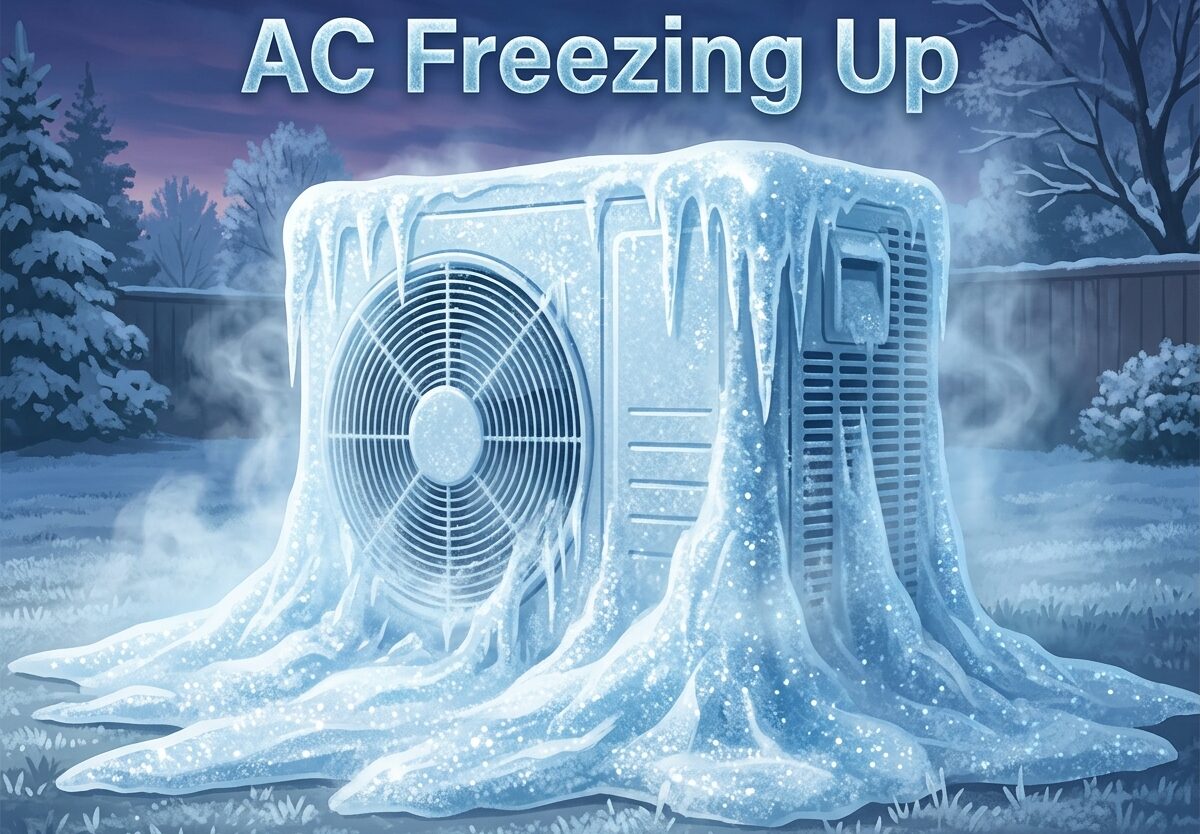
Walking into a stuffy, warm house when your AC should be cooling is frustrating. Seeing ice buildup on your unit makes it worse. AC freezing up is one of the most common problems homeowners face during cooling season.
I’ve seen this issue hundreds of times over the years. The good news is that most causes are preventable and many are fixable without calling a technician. Understanding why your AC freezes up helps you fix it faster and prevent it from happening again.
In this guide, I’ll explain exactly what causes AC freezing up, how to spot the signs early, and what steps you can take to resolve the problem safely.
How AC Units Work (And Why They Freeze)
Your air conditioner works through a simple but clever process called the refrigeration cycle. Refrigerant flows through copper coils absorbing heat from inside your home and releasing it outside.
The evaporator coil inside your home gets cold. Really cold. As warm air blows across it, heat transfers into the refrigerant. The condenser coil outside releases that heat.
Here’s where problems start. When something disrupts this process, the evaporator coil can drop below freezing. Any moisture on the coil turns to ice. More ice forms. Airflow gets blocked. More ice forms. It’s a cycle that escalates quickly.
There’s also something called the Joule-Thomson effect at play. When refrigerant expands rapidly through a small opening, temperature drops significantly. This is normal and intentional. But without proper heat absorption, that extreme cold becomes destructive instead of useful.
The 3-minute rule for AC is worth mentioning here. Your compressor should run for at least 3 minutes after starting to build proper pressure. Short cycling (frequent on-off) prevents proper operation and can contribute to freezing issues.
What Causes AC Freezing Up?
Understanding the root cause helps you fix it right the first time. Let me walk through the five most common reasons I see AC units freezing up.
Dirty or Clogged Air Filter
This is the number one cause I encounter. A dirty filter restricts airflow across your evaporator coil. Less air means less heat absorption. The coil gets too cold. Ice forms.
I’ve seen filters so clogged that the AC was literally pulling air through gaps around the edges. That’s how bad it can get. Replace your filter every 1-3 months depending on usage and filter type.
Low Refrigerant Level
Low refrigerant causes pressure to drop in the system. Lower pressure means lower temperature. The coil can get cold enough to freeze even with normal airflow.
The tricky part? Low refrigerant almost always means a leak somewhere. Simply adding more refrigerant is a temporary fix at best. The leak needs to be located and repaired.
Blocked Airflow or Closed Vents
Your AC needs a certain amount of air flowing through it to operate properly. Closed vents in multiple rooms, blocked return air grilles, or furniture obstructing registers can all reduce airflow below the minimum threshold.
I once visited a home where the homeowner had closed 80% of their vents to “save energy.” Their AC froze up within hours. The system needs to breathe.
Thermostat Issues
A malfunctioning thermostat can cause your AC to run continuously without cycling off. This constant operation, especially at night when temperatures naturally drop, can lead to freezing.
Bad thermostats can also cause the system to short cycle. The compressor turns on and off repeatedly without reaching proper operating pressure. This is hard on equipment and can contribute to freeze-ups.
Cold Outdoor Temperatures
Most residential AC units are designed to operate in outdoor temperatures above 60 degrees. Running your AC when it’s cooler outside than inside can cause the evaporator coil to freeze.
This commonly happens at night during shoulder seasons. A cool summer evening combined with continuous AC operation creates perfect conditions for ice formation.
Signs Your AC Is Freezing Up
Catching a freezing problem early prevents damage and saves you from uncomfortable heat. Watch for these warning signs.
Ice visible on the refrigerant lines outside is a clear indicator. The copper line connecting your indoor and outdoor units should never have ice on it. Frost is also a bad sign.
Reduced airflow from your vents is another symptom. As ice builds on the evaporator coil, less air can pass through. You might notice weak airflow even though the fan is running.
Water around your indoor unit or unexpected humidity changes can indicate melting ice. Some systems shut down completely when a freeze is detected.
Unusual sounds like hissing or bubbling might indicate refrigerant issues. These sounds often accompany low refrigerant problems that lead to freezing.
How to Fix AC Freezing Up
When you discover your AC is frozen, don’t panic. Follow these steps to thaw it safely and address the underlying issue.
Step 1: Turn off your AC immediately. Running a frozen system can cause serious compressor damage. Switch your thermostat to “off” or “fan only.”
Step 2: Let it thaw completely. This takes time. Plan on 1-3 hours for partial thawing and up to 24 hours for a completely frozen system. Turning on the fan setting can help circulate air and speed up the process.
Step 3: Check and replace your air filter. While the system thaws, inspect your filter. If it’s dirty, replace it. This is the easiest fix and often solves the problem.
Step 4: Inspect your vents and registers. Make sure supply and return vents are open and unobstructed. Clear away any furniture, curtains, or rugs blocking airflow.
Step 5: Check for frozen lines outside. Ice on the copper refrigerant lines typically indicates low refrigerant. This requires professional service.
Step 6: Test the system. Once everything is thawed and you’ve addressed obvious issues, try running the AC again. Monitor it closely for the first hour.
If the problem persists or you suspect low refrigerant, it’s time to call a professional.
When to Call a Professional
Some AC freezing issues you can handle yourself. Others require professional diagnosis and repair. Here’s how to decide.
Low refrigerant always requires a technician. Refrigerant handling requires special equipment and EPA certification. More importantly, the leak causing the low refrigerant needs to be found and repaired.
What about the $5000 rule for AC? This guideline suggests that if repair costs exceed 50% of replacement cost and your system is over 10 years old, replacement makes more sense. Major refrigerant leaks often trigger this decision.
Electrical issues, compressor problems, and component failures also require professional service. If you’ve addressed airflow and filter issues and the problem continues, call a technician.
Repeated freezing episodes indicate an underlying problem that won’t go away on its own. Each freeze event can damage your compressor. Don’t ignore chronic issues.
How to Prevent AC Freezing Up
Prevention is far easier than repair. These simple habits keep your AC running efficiently all season long.
Change your air filter regularly. Every 30-90 days depending on your filter type and household factors like pets and allergies. Mark your calendar if needed.
Keep your outdoor unit clean and clear. Remove debris, leaves, and vegetation from around your condenser. Clean the coils annually or have them professionally serviced.
Don’t close off more than 10-20% of your vents. Your AC is sized for your entire home, not just a few rooms. Restricting airflow too much causes problems.
Schedule annual maintenance. A technician can catch small issues before they become big problems. They’ll check refrigerant levels, clean coils, inspect electrical connections, and ensure everything is operating properly.
Consider a smart thermostat. These devices can alert you to unusual patterns and prevent excessive runtime that contributes to freezing.
Frequently Asked Questions
How do you fix an AC that keeps freezing up?
Start by turning off the AC and letting it thaw completely for 1-24 hours. Replace dirty air filters and ensure all vents are open and unobstructed. If the problem continues after addressing airflow issues, low refrigerant is likely and requires professional service.
What is the 3 minute rule for AC?
The 3 minute rule states that your AC compressor should run for at least 3 minutes after starting to build proper operating pressure. Short cycling (frequent on-off cycles) prevents the system from reaching optimal pressure and can contribute to freezing issues and compressor wear.
How to tell if AC is low on refrigerant?
Signs of low refrigerant include ice buildup on refrigerant lines, hissing or bubbling sounds, reduced cooling performance, and the evaporator coil freezing up. A technician can measure exact pressure levels to confirm low refrigerant and locate any leaks.
What is the $5000 rule for AC?
The $5000 rule suggests that if repair costs exceed 50% of replacement cost (typically around $5000) and your system is over 10 years old, replacing the unit makes more financial sense than repairing it. Major refrigerant leaks or compressor failure often trigger this decision.
Why is my AC constantly freezing up?
Constant freezing usually indicates low refrigerant from an unrepaired leak, severely restricted airflow from a clogged filter or blocked ducts, or a malfunctioning component like a blower motor or thermostat. Professional diagnosis is recommended if basic fixes don’t resolve the issue.
How long to leave an AC unit off to unfreeze?
Allow 1-3 hours for partial thawing and up to 24 hours for a completely frozen system. Running the fan setting (not cool) can help circulate air and speed up the process. Never run the AC while it’s still frozen as this can cause permanent compressor damage.
Will a bad thermostat cause AC to freeze up?
Yes, a malfunctioning thermostat can cause freezing by making the AC run continuously without cycling off, especially during cool nighttime hours. Bad thermostats can also cause short cycling where the compressor turns on and off repeatedly without reaching proper operating pressure, both of which can lead to ice formation.
Conclusion
AC freezing up is almost always preventable and usually fixable. The most common causes come down to airflow restrictions and maintenance issues that you can address yourself.
Start with the basics. Change that filter. Check your vents. Give the system time to thaw properly before testing it again. These simple steps solve most freezing problems.
Know when to call a professional. Low refrigerant, electrical issues, and repeated freezing episodes need expert attention. The $5000 rule can help you decide between repair and replacement when major problems arise.
Regular maintenance prevents most freezing issues. An annual service call combined with consistent filter changes keeps your AC running efficiently all season long. Your home stays comfortable, your energy bills stay lower, and your system lasts longer.



Leave a Comment