
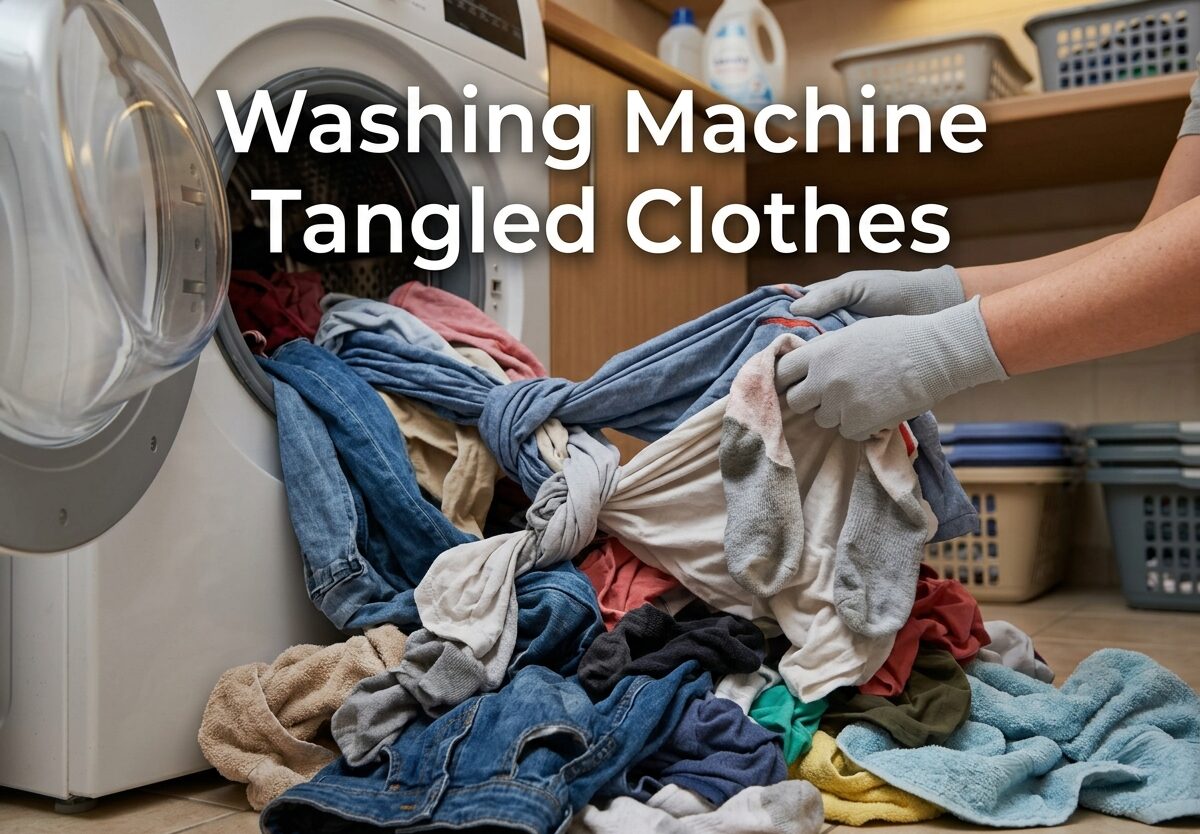
There’s nothing more frustrating than opening your washing machine and finding a knotted mess of wet laundry. I’ve dealt with washing machine tangled clothes countless times, and I know the sinking feeling of discovering favorite shirts wrapped around pants legs with deep wrinkles set in. This common problem affects everyone from laundry novices to experienced homemakers, and it causes unnecessary frustration, extended drying times, and potential fabric damage.
After researching extensively and testing different solutions in my own laundry room, I’ve discovered that preventing tangled clothes comes down to understanding why it happens and making simple adjustments to your laundry routine. In this guide, I’ll share practical solutions that actually work, saving you time and protecting your garments from unnecessary wear and tear.
Why Do My Clothes Get Tangled in the Washing Machine?
Understanding the root causes of laundry tangling is the first step toward prevention. Based on my experience and research, clothes tangle when they can’t move freely during the wash cycle. The agitation and spin movements cause garments to wrap around each other, creating knots that are difficult to untangle.
Insufficient Water Level
When your washer doesn’t use enough water, clothes can’t circulate properly. This is especially common in high-efficiency (HE) machines designed to use minimal water. Without adequate water, garments rub against each other excessively and create friction that leads to knotting. The lack of water cushioning allows fabrics to grab onto each other during agitation.
Overloading the Washer
Stuffing too many clothes into a single load is perhaps the most common cause of tangling. When the drum is overcrowded, items have zero room to move independently. They’re forced into constant contact with each other, and the spinning motion creates a ball of tangled fabric. I’ve learned that saving time with fewer, larger loads actually costs more time in untangling and ironing later.
Mixing Different Fabric Weights
Combining heavy items like jeans or towels with lightweight fabrics like t-shirts or delicates creates a tangling nightmare. The heavier pieces generate more momentum during the spin cycle and literally wrap themselves around lighter garments. This weight imbalance causes the lighter items to be pulled, twisted, and knotted around the heavier ones.
Single-Garment Loads
Surprisingly, washing only one type of garment (such as all t-shirts or all pants) actually increases tangling. Similar-shaped items tend to lock together more easily. When all pieces have similar dimensions and weights, they create a uniform mass that twists together during the spin cycle rather than moving independently.
Wrong Wash or Spin Cycle
Using high spin speeds or heavy-duty cycles for delicate fabrics forces items together aggressively. The centrifugal force during an intense spin cycle presses clothes against the drum walls and each other, creating tight knots. I’ve found that many people default to the highest settings without considering whether their laundry actually needs that level of agitation.
How to Stop Clothes From Getting Tangled in the Washing Machine
Preventing tangled clothes requires a combination of proper load management, smart sorting, and appropriate machine settings. These strategies have transformed my laundry routine from frustrating to efficient.
Load Management: The 2/3 Rule
The most effective change I’ve made is following the 2/3 full rule. Never fill your washing machine more than two-thirds full. This leaves enough space for clothes to tumble freely and prevents them from being forced together. For front-loaders, you should be able to place your hand flat against the drum above the laundry without difficulty. For top-loaders, the clothes should reach only to the top row of holes in the agitator or drum.
Sort by Fabric Weight and Type
Separate your laundry into loads with similar fabric weights. Wash heavy items like jeans, hoodies, and towels together. Group lightweight items such as t-shirts, undergarments, and delicates in separate loads. This simple sorting step prevents heavy pieces from dominating lighter ones and significantly reduces tangling. I also recommend washing bed sheets separately from clothing, as sheets tend to wrap around everything in the load.
Use Mesh Laundry Bags
Mesh laundry bags are game-changers for preventing tangling, especially for items prone to knotting. Place delicate items, lingerie, or pieces with straps and drawstrings into individual mesh bags before washing. These bags keep contained items separated from the rest of the load while still allowing water and detergent to circulate properly. I use mesh bags for anything with straps, ties, or delicate fabrics that could get caught on other garments.
Select the Right Cycle
Choose wash cycles appropriate for your fabric types. The delicate or gentle cycle uses slower agitation and shorter spin times, dramatically reducing tangling. For everyday items that don’t require heavy-duty cleaning, the permanent press cycle offers a good balance between cleaning power and fabric care. Avoid using the heavy-duty or bulky settings unless absolutely necessary, as these cycles create more aggressive movement that increases knotting.
Adjust Spin Speed
Lower your spin speed setting whenever possible. High spin speeds force clothes against the drum with significant pressure, causing them to compact and tangle. For most everyday laundry, a medium spin speed (around 800-1000 RPM) provides adequate water removal without excessive tangling. Reserve the highest spin speeds only for heavy items like towels that can withstand the force without damage.
Washing Machine Tangled Clothes: Prevention Hacks That Work
Beyond the standard prevention methods, I’ve discovered several clever hacks that make a noticeable difference in reducing laundry tangles. These simple tricks have become staples in my laundry routine.
The Plastic Bottle Trick (DIY)
Add two or three empty plastic water bottles to your wash load to create physical separation between clothes. The bottles act as buffers that prevent garments from wrapping around each other during the cycle. This DIY solution costs nothing and works surprisingly well. Simply clean empty plastic bottles and toss them in with your laundry. They’ll tumble freely between items, keeping fabrics separated and reducing tangling significantly.
Laundry Balls or Yarn Balls
Commercial laundry balls or DIY yarn balls serve a similar purpose to the plastic bottle trick. These weighted balls move between garments during the wash cycle, preventing fabrics from clumping together. Wool dryer balls can double as laundry balls, providing separation in both the washer and dryer. The constant movement of these balls creates space between items and helps clothes tumble more freely.
Wash Clothes Inside Out
Turning clothes inside out before washing reduces fabric-to-fabric friction and protects buttons, zippers, and embellishments from snagging on other garments. This simple step also helps preserve prints and colors while reducing the surface area that can grab onto other items. I make it a habit to turn everything inside out as I sort laundry, and it’s made a noticeable difference in reducing both tangling and fabric wear.
Button and Zipper Management
Close all buttons and zip all zippers before washing clothes. Open buttons and zippers act as hooks that catch on other fabrics, creating knots and pulls. A single unzipped zipper can snag multiple garments and cause significant tangling throughout the load. Taking thirty seconds to fasten closures before starting the wash prevents hours of frustration later.
Front-Load vs Top-Load: Which Causes More Tangling?
Both front-load and top-load washing machines can cause tangled clothes, but they do so in different ways. Front-loaders tumble clothes through a small pool of water, which can cause items to roll together into a tube-like bundle. Top-loaders with agitators create a different type of movement that can wrap clothes around the agitator post.
Front-load machines generally cause less tangling when properly loaded because gravity helps items tumble more freely. However, they’re more sensitive to overloading since the drum relies on gravity to move clothes. Top-load machines without agitators (impeller models) typically cause fewer tangles than traditional agitator models, but all machines benefit from the same prevention strategies outlined above.
Frequently Asked Questions
How to fix clothes tangled in a washing machine?
Remove knotted items carefully from the washer, starting with the outermost pieces. Gently pull apart the knots instead of forcing them. Shake each garment out separately before transferring to the dryer. Consider re-washing extremely tangled items on a gentle cycle with proper load size to relax the wrinkles.
Why do my clothes get twisted in the washing machine?
Clothes twist due to insufficient water level preventing proper circulation, overloading restricting movement, mixing heavy and light fabrics causing imbalance, washing single-garment types that lock together, and using high spin speeds that force items into a compact mass. The spin cycle’s centrifugal pressure presses garments against each other, creating tight knots and deep wrinkles.
How to stop clothes from getting tangled in a top-load washer?
Load only 2/3 full to allow proper agitation, mix different garment types rather than washing all shirts or pants together, use delicate or permanent press cycle instead of normal or heavy-duty, lower spin speed to medium setting, add mesh bags for items with drawstrings or straps, and consider removing the agitator if your model allows. Place bulky items like sheets around the edges of the load rather than in the center.
Final Thoughts on Preventing Laundry Tangles
Dealing with washing machine tangled clothes doesn’t have to be part of your regular laundry routine. By implementing these simple strategies—following the 2/3 full rule, sorting by fabric weight, using mesh bags, selecting appropriate cycles, and adjusting spin speeds—you can dramatically reduce tangling and save significant time on laundry day.
The plastic bottle trick and laundry ball hacks are easy, cost-effective additions that provide extra protection against knots. Combined with proper fabric care techniques like washing clothes inside out and securing buttons and zippers, these methods will keep your laundry flowing smoothly through both washing and drying cycles.
Start with one or two changes and notice the difference immediately. Your clothes will come out less wrinkled, spend less time in the dryer, and require less ironing. Most importantly, you’ll eliminate the frustration of untangling a knotted mess of wet laundry every time you do a wash.




Leave a Comment