
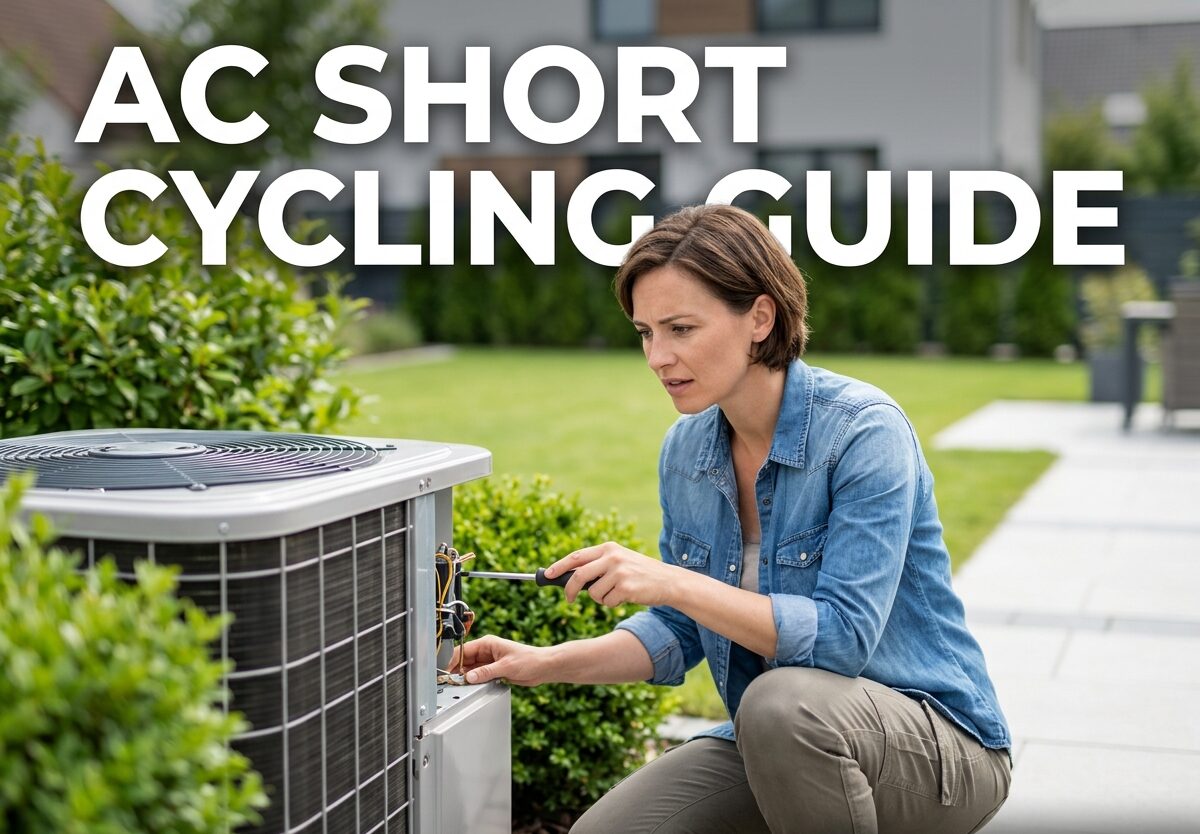
AC short cycling is one of the most frustrating problems homeowners face with their air conditioning systems. If you’ve noticed your AC turning on and off every few minutes without ever completing a full cooling cycle, you’re dealing with short cycling. This issue not only reduces comfort but can also significantly increase your energy bills and cause permanent damage to your HVAC system.
Having worked with HVAC systems for years, I’ve seen how short cycling can turn a summer day into a miserable experience. Your home never reaches the desired temperature, humidity builds up, and that constant clicking sound of the compressor starting and stopping becomes impossible to ignore. Understanding why this happens and what you can do about it is essential for every homeowner.
In this comprehensive guide, I’ll explain what AC short cycling is, what causes it, how to identify it, and most importantly, how to fix it. Whether you’re dealing with this issue right now or want to prevent it from happening in the future, this guide has everything you need.
What is AC Short Cycling?
AC short cycling occurs when your air conditioner turns on and off rapidly without completing a full cooling cycle. Instead of running for 15-20 minutes to properly cool your home and dehumidify the air, a short cycling AC might run for only 5-10 minutes before shutting down, only to restart again a few minutes later.
This rapid cycling is different from normal operation. A properly functioning air conditioner goes through complete cooling cycles that allow it to remove both heat and humidity from your home. When short cycling occurs, the compressor doesn’t run long enough to do its job effectively.
Think of it like a car in stop-and-go traffic versus highway driving. Just as constant stopping and starting wears down your vehicle’s components faster, short cycling puts excessive strain on your AC’s compressor and other critical parts.
Normal Cycling vs Short Cycling
Understanding the difference between normal operation and short cycling is crucial for diagnosing problems:
Normal AC cycling: Runs for 15-20 minutes per cycle, completes 2-3 cycles per hour on hot days, effectively removes humidity, maintains consistent temperature, turns off when thermostat is satisfied.
AC short cycling: Runs for 5-10 minutes or less, cycles 4-6+ times per hour, fails to remove humidity properly, temperature fluctuates, frequent on/off clicking sounds.
If your AC is running for less than 10 minutes at a time and cycling more than 4 times per hour, you’re likely experiencing short cycling. This pattern is a clear sign that something is wrong with your system.
How a Complete Cooling Cycle Works
A complete cooling cycle involves several stages that work together to cool your home effectively. The cycle begins when the thermostat signals the AC to start. The compressor kicks on, pressurizing refrigerant and pumping it through the system. The refrigerant absorbs heat from inside your home and releases it outside through the condenser coil.
This process takes time to work properly. The system needs to run continuously for several minutes to reach maximum efficiency. During this time, the evaporator coil gets cold enough to condense moisture from the air, which is essential for humidity control.
When short cycling interrupts this process, the AC never reaches peak efficiency. The compressor works harder during each startup (drawing 5-6 times more current than running), but never runs long enough to provide the cooling benefits you’re paying for.
AC Short Cycling: Common Causes and Why They Happen
Understanding what triggers AC short cycling is the first step toward fixing it. Based on my experience troubleshooting hundreds of systems, I’ve identified the most common causes. Let me walk you through each one so you can identify what might be affecting your system.
Dirty or Clogged Air Filters (Most Common Cause)
A dirty air filter is the number one cause of AC short cycling. I see this issue in about 60% of cases I investigate. When your air filter becomes clogged with dust, pet dander, and debris, it restricts airflow to the evaporator coil.
This restricted airflow causes the coil to get too cold and potentially freeze up. When the system detects the freezing condition, it shuts off to prevent damage. Once the coil warms up slightly, the AC restarts, beginning the short cycling pattern all over again.
The good news is this is also the easiest problem to fix. Simply checking and replacing your air filter every 1-3 months (depending on usage and filter type) can prevent this issue entirely. I recommend setting a reminder on your phone to check your filter monthly.
Low Refrigerant Levels and Leaks
Your air conditioner needs a specific amount of refrigerant to operate correctly. When refrigerant levels drop due to a leak, the system can’t absorb heat effectively. This causes pressure imbalances that trigger safety mechanisms and result in short cycling.
Refrigerant leaks are serious problems that require professional repair. Your AC doesn’t consume refrigerant like a car uses gas – if the level is low, there’s a leak somewhere in the system. Continuing to run the system with low refrigerant can cause catastrophic compressor failure.
Signs of refrigerant leaks include ice buildup on refrigerant lines, hissing sounds, reduced cooling capacity, and of course, short cycling. If you suspect a leak, call a professional HVAC technician immediately.
Oversized Air Conditioning Unit
Believe it or not, having an AC that’s too large for your home is a common cause of short cycling. Many homeowners think bigger is better, but in the HVAC world, proper sizing is critical.
An oversized unit cools your home too quickly. It reaches the thermostat setting in just a few minutes before it has time to properly dehumidify the air. The thermostat signals the system to shut off, but because humidity wasn’t removed, the home feels uncomfortable and the temperature quickly rises again, triggering another cycle.
This problem is unfortunately built into the system and can’t be easily fixed. Solutions include replacing the unit with a properly sized one, installing a zoning system, or using a variable-speed or two-stage system that can operate at lower capacity.
Thermostat Issues and Placement
Thermostat problems can cause your AC to short cycle in several ways. A malfunctioning thermostat might send incorrect signals to your AC, telling it to turn on and off at inappropriate times. This could be due to aging components, wiring issues, or calibration problems.
Thermostat placement is equally important. If your thermostat is located near a heat source (like direct sunlight, a lamp, or heat-producing electronics), it will think your home is warmer than it actually is. This causes the AC to short cycle as it tries to cool a space that’s already at the right temperature.
I’ve also seen thermostats placed directly in the path of supply vents. The cool air blowing on the thermostat tricks it into thinking the whole house is cool, leading to premature shutdown. Relocating your thermostat to a central location away from heat sources and direct airflow can solve this issue.
Electrical Component Failures
Several electrical components in your AC system can fail and cause short cycling. The most common culprits include the run capacitor, start capacitor, and contactor relay.
The capacitor stores and releases electrical energy to help start and run the compressor and fan motors. When a capacitor fails, these components can’t operate properly, causing the system to start and then quickly shut down. This is often accompanied by a humming sound when the AC tries to start.
The contactor is the switch that controls power flow to the compressor and condenser fan. When contactor contacts become pitted or welded, they can’t maintain proper electrical connection, causing intermittent operation and short cycling.
These are professional repairs that require proper diagnosis and replacement. If you suspect electrical issues, it’s best to call a qualified technician rather than attempting DIY repairs.
Frozen Evaporator Coil
A frozen evaporator coil is both a symptom and a cause of short cycling. As mentioned earlier, restricted airflow from a dirty filter can cause freezing. However, other factors like low refrigerant or blower motor problems can also lead to ice buildup.
When ice forms on the coil, it blocks airflow and reduces the coil’s ability to absorb heat. The system senses this problem and shuts down to prevent damage. Once the ice melts (which takes time), the AC restarts, creating the short cycling pattern.
If you see ice on your refrigerant lines or notice water around your indoor unit, turn off your AC immediately and let the ice melt before investigating the cause. Running the system with a frozen coil can cause serious compressor damage.
Poor Airflow and Ductwork Issues
Your AC needs proper airflow to operate correctly. Problems with your ductwork can cause pressure imbalances that lead to short cycling. Common ductwork issues include:
- Blocked or closed supply vents
- Undersized ductwork
- Leaky ducts losing conditioned air
- Too many closed registers in the home
- Collapsed or crushed duct sections
I’ve seen cases where homeowners closed off vents in unused rooms, not realizing this increases pressure in the ductwork and reduces overall system efficiency. Your AC is designed to work with a specific amount of airflow, and closing too many vents disrupts this balance.
Is AC Short Cycling Bad? Effects and Problems
Yes, AC short cycling is bad for your system, your comfort, and your wallet. Let me break down the specific problems this issue causes and why you shouldn’t ignore it.
Increased Energy Bills
Short cycling dramatically increases your energy consumption. Here’s why: your AC draws 5-6 times more power during startup than it does while running continuously. When short cycling, your system goes through this high-power startup phase multiple times per hour.
Instead of running efficiently for 20 minutes, your short cycling AC might start 4-6 times per hour. Each startup consumes massive amounts of electricity. Over the course of a cooling season, this can add hundreds of dollars to your energy bills.
I’ve documented cases where fixing a short cycling issue reduced homeowners’ cooling costs by 20-30%. The energy savings alone make addressing this problem worth your time.
Compressor Wear and Damage
The compressor is the heart of your air conditioning system, and short cycling is one of the worst things for it. Compressors are designed to run for extended periods, not to constantly start and stop.
Each startup causes significant wear on the compressor’s internal components. The rapid temperature changes and pressure fluctuations during frequent cycling degrade the compressor over time. This is why short cycling is a leading cause of premature compressor failure.
Replacing a compressor is one of the most expensive HVAC repairs, often costing $2,000-4,000 or more. In many cases, compressor failure leads to full system replacement since the cost of repair approaches the cost of a new unit.
Reduced Home Comfort
Short cycling directly impacts your comfort in several ways. First, the system never runs long enough to properly dehumidify your home. You might reach the temperature setting on your thermostat, but the air will feel clammy and uncomfortable due to high humidity.
Temperature fluctuations are another issue. Instead of maintaining a consistent temperature, your home will swing between slightly too warm and slightly too cool as the AC cycles on and off. Some areas might feel comfortable while others remain stuffy.
I’ve worked with homeowners who couldn’t understand why their home never felt comfortable despite the AC running constantly. In almost every case, short cycling was the culprit preventing proper dehumidification and even temperature distribution.
Shortened System Lifespan
A properly maintained air conditioner can last 15-20 years. However, short cycling can significantly reduce this lifespan. The constant starting and stopping accelerates wear on all system components, not just the compressor.
Electrical components, motors, bearings, and other parts all experience additional stress from frequent cycling. This cumulative damage adds up over time, leading to more frequent repairs and earlier system failure.
Think of it this way: would you expect your car to last as long if you drove it in stop-and-go traffic versus highway driving? Your AC is no different. Continuous operation is far easier on the system than constant cycling.
When Does Short Cycling Become Dangerous?
While short cycling is primarily an efficiency and comfort issue, it can become dangerous in certain situations. If short cycling is caused by an electrical problem, there’s a risk of electrical fire or component damage that could affect other electrical systems in your home.
Refrigerant leaks causing short cycling can also pose health risks. Some refrigerants can displace oxygen in enclosed spaces and cause asphyxiation in extreme cases. Additionally, refrigerant leaks release chemicals that are harmful to the environment.
If you notice any burning smells, unusual sounds, or suspect electrical issues with your AC, turn it off immediately and call a professional. Don’t attempt to diagnose or repair electrical problems yourself unless you have proper training and safety equipment.
How to Troubleshoot AC Short Cycling: Step-by-Step Guide
Before calling a professional, there are several troubleshooting steps you can take yourself. I’ve developed this systematic approach to help homeowners identify and potentially fix AC short cycling issues.
Step 1: Check and Replace Your Air Filter
Start with the easiest and most common cause. Locate your air filter (usually in the return air duct, blower compartment, or a dedicated filter slot). Hold it up to a light source – if you can’t see light through it, it’s time to replace it.
Write down the filter size printed on the frame and purchase a replacement. Most filters need to be changed every 1-3 months, but homes with pets or allergies might need monthly changes. After replacing the filter, run your AC for a few hours to see if the short cycling stops.
This simple fix resolves about 60% of short cycling cases. I’ve seen countless situations where a $15 filter replacement solved a problem that homeowners thought would require expensive repairs.
Step 2: Inspect Your Outdoor Unit
Go outside and visually inspect your condenser unit (the large metal cabinet with the fan). Check for:
- Debris blocking airflow (leaves, grass clippings, trash)
- Dirt buildup on the coil fins
- Damage to the unit or refrigerant lines
- Ice on the refrigerant lines
Clean any debris from around the unit and ensure there’s at least two feet of clearance on all sides. If the coil fins are dirty, you can gently clean them with a garden hose (turn off the power first). Never use a pressure washer as this can damage the delicate fins.
Step 3: Check Your Thermostat Settings and Location
Verify that your thermostat is set to COOL mode and the temperature is set below the current room temperature. Check the fan setting – it should be on AUTO, not ON. When set to ON, the fan runs continuously, which can sometimes mask short cycling issues.
Examine your thermostat’s location. Is it in direct sunlight? Near a heat source? Below a supply vent? If yes, the thermostat might be giving false readings. Try temporarily shading the thermostat or moving it away from heat sources to see if the cycling pattern changes.
For programmable or smart thermostats, check the programming to ensure there aren’t extreme temperature swings scheduled. Some thermostats have a swing setting that controls how much the temperature can vary before the system turns on – make sure this is set appropriately (usually 1-2 degrees).
Step 4: Check Your Vents and Registers
Walk through your home and check all supply and return vents. Make sure none are blocked by furniture, curtains, or rugs. Count how many supply vents are fully or partially closed.
At least 80% of your supply vents should be open. If you’ve closed off many rooms, try opening more vents to improve airflow. I’ve seen situations where closing too many vents caused pressure problems that led to short cycling.
Also check your return air grilles. These should never be closed or blocked as your AC needs adequate return air to operate properly. Ensure furniture or curtains aren’t blocking these essential airflow pathways.
Step 5: Look for Ice Buildup
Check the refrigerant lines at your outdoor unit. Do you see ice or frost on the copper lines? Check inside at your indoor unit or air handler – is there ice on the refrigerant lines or the evaporator coil?
If you see ice, turn off your AC immediately and switch your thermostat to FAN ONLY. This will help melt the ice by circulating room air over the coil. Don’t try to chip or scrape off the ice – you could damage the coil fins.
Once the ice has melted (this may take several hours), check your air filter and ensure nothing is blocking your return airflow. If the problem persists after replacing the filter and ensuring good airflow, you likely have low refrigerant and need professional service.
Step 6: Listen for Unusual Sounds
Pay attention to the sounds your AC makes when it tries to start. Do you hear a humming sound without the compressor starting? This could indicate a failed capacitor or compressor. Clicking sounds from the outdoor unit might point to a bad contactor.
Squealing or grinding noises suggest bearing problems in the fan motor or compressor. Bubbling or hissing sounds could indicate a refrigerant leak.
If you hear any of these unusual sounds, it’s time to call a professional. Electrical and mechanical failures require specialized tools and knowledge to diagnose and repair safely.
How to Prevent AC Short Cycling
Preventing AC short cycling is far easier and less expensive than repairing the damage it causes. Based on my experience maintaining hundreds of systems, here are the most effective prevention strategies.
Regular Filter Replacement Schedule
The single most effective prevention measure is regular filter replacement. I recommend checking your filter monthly and replacing it when dirty. Set a recurring reminder on your phone so you don’t forget.
For 1-inch filters, replacement every 1-3 months is typical. Thicker filters (4-5 inches) can last 6-12 months but still need regular inspection. Homes with pets, allergies, or high dust levels may need more frequent changes.
Keep spare filters on hand so you never have an excuse to skip a replacement. The small cost of regular filter changes (typically $15-30 each) prevents thousands of dollars in potential repairs.
Annual Professional Maintenance
Schedule professional maintenance annually, ideally in spring before peak cooling season. During a tune-up, a qualified technician will:
- Check refrigerant levels and repair any leaks
- Inspect and clean the evaporator and condenser coils
- Test electrical components and connections
- Lubricate moving parts
- Check thermostat operation and calibration
- Inspect and clean the blower motor and assembly
- Measure airflow and adjust if necessary
- Check the condensate drain system
Annual maintenance typically costs $100-200 but can prevent major repairs costing thousands. Many HVAC companies offer maintenance agreements that provide priority scheduling and discounts on repairs.
Proper Thermostat Placement
If you’re building a new home or replacing your thermostat, ensure proper placement. The ideal location is:
- On an interior wall (not exterior)
- Away from direct sunlight
- Away from heat sources (lamps, TVs, appliances)
- Not directly above or below supply vents
- Approximately 5 feet above the floor
- In a frequently used room
- Not near doors or windows
If your current thermostat is poorly located, relocating it might solve short cycling issues. While this does require running new wiring, the cost is typically reasonable and the improvement in system performance is significant.
Ensure Proper Sizing When Replacing Equipment
If you’re replacing your AC system, insist on a proper load calculation using Manual J methodology. This industry-standard calculation considers your home’s size, orientation, insulation, windows, climate, and other factors to determine the correct cooling capacity.
Many contractors still use outdated rules of thumb that lead to oversized systems. An oversized unit will short cycle from day one, never performing properly and wearing out prematurely.
I’ve worked with homeowners who replaced a properly sized 3-ton unit with a 5-ton unit because they thought bigger would be better. The result was constant short cycling, high humidity, and comfort problems. Getting the sizing right is critical for performance and longevity.
Consider Zoning or Variable-Speed Systems
For homes with specific challenges (multiple levels, large windows, varying occupancy), consider a zoning system or upgrading to a variable-speed or two-stage system. These technologies allow your AC to operate at different capacity levels based on current cooling needs.
Instead of full-blast cycling on and off, these systems can run at lower capacity for longer periods. This provides better humidity control, more consistent temperatures, and dramatically reduces cycling frequency.
While these systems cost more upfront, the improved comfort, lower energy bills, and longer equipment life make them excellent investments for many homeowners.
When to Call a Professional HVAC Technician
While DIY troubleshooting can resolve some short cycling issues, certain problems require professional expertise. Knowing when to call a technician can save you time, money, and potentially prevent further damage to your system.
Signs You Need Professional Help
Call a professional HVAC technician if you experience any of these situations:
- Short cycling continues after replacing the air filter
- You see ice on refrigerant lines or the indoor coil
- You hear unusual sounds (humming, clicking, grinding)
- Your AC won’t run at all or blows warm air
- You notice water leaks around your indoor unit
- You suspect a refrigerant leak (hissing sounds, reduced cooling)
- Your energy bills have increased significantly without explanation
- Multiple repair attempts haven’t solved the problem
- Your system is more than 10 years old and experiencing problems
These symptoms indicate problems that require specialized tools, knowledge, and possibly replacement parts that only a qualified technician can provide.
Understanding the $5000 Rule
The “$5000 rule” is a guideline many HVAC professionals use when advising repair versus replacement. If the cost of repairing your AC exceeds $5000, or if the repair cost is more than 50% of the cost of a new system, replacement often makes more economic sense.
This is particularly relevant for short cycling problems caused by compressor failure. A compressor replacement typically costs $2000-4000, which is a significant portion of a new system cost. If your AC is approaching 10+ years old and needs major repairs, investing in a new, more efficient system might be the better long-term decision.
A qualified technician can help you evaluate your options based on your specific situation, system age, repair costs, and energy efficiency improvements available with new equipment.
What to Expect During a Professional Service Call
When you call a professional for short cycling issues, expect a comprehensive diagnostic process. The technician should:
- Inspect the entire system, indoor and outdoor components
- Check refrigerant levels and test for leaks
- Measure airflow at the supply and return registers
- Test electrical components (capacitors, contactors, relays)
- Check thermostat operation and placement
- Evaluate the condition of coils and clean if necessary
- Inspect ductwork for leaks or restrictions
- Provide a written estimate for any recommended repairs
A reputable technician will explain what they find, answer your questions, and provide options rather than just trying to sell you a new system. Get multiple opinions for expensive repairs and don’t hesitate to ask questions about what’s causing the problem and your options for fixing it.
Frequently Asked Questions About AC Short Cycling
How do I stop my AC from short cycling?
Start by checking and replacing a dirty air filter, which is the most common cause. Ensure all vents are open and unblocked. Check that your thermostat is properly located and not in direct sunlight. If these steps don’t resolve the issue, you may have low refrigerant, electrical component failure, or an oversized unit – all of which require professional diagnosis and repair.
What is the $5000 rule for AC?
The $5000 rule is a guideline suggesting that if your AC repair cost exceeds $5000 or is more than 50% of a new system’s cost, replacement often makes more financial sense than repair. This rule is particularly relevant for older systems experiencing major component failure like compressor issues, where repair costs approach replacement costs.
Should I turn my AC off if it’s short cycling?
Yes, turn off your AC if you notice short cycling accompanied by ice on refrigerant lines, unusual sounds like grinding or humming, or burning smells. These symptoms indicate serious problems that can cause further damage if the system continues running. For simple short cycling without these danger signs, you can try basic troubleshooting like changing the filter, but if the issue persists after these steps, turn off the system and call a professional.
What causes an AC compressor to short cycle?
Common causes include dirty air filters restricting airflow, low refrigerant levels from leaks, an oversized unit that cools too quickly, a malfunctioning thermostat sending incorrect signals, electrical component failure (capacitor or contactor), frozen evaporator coils, or poor airflow from blocked vents or ductwork issues. The most common causes are dirty filters and low refrigerant, which together account for about 75% of all short cycling cases.
How long will a short cycling AC last?
A short cycling AC typically lasts 5-8 years before experiencing major component failure, compared to 15-20 years for a properly operating system. The constant starting and stopping accelerates wear on all components, especially the compressor. Each year of short cycling is equivalent to 2-3 years of normal operation in terms of component wear. If your AC is short cycling, addressing the issue promptly can add years to its lifespan.
Is it normal for AC to cycle every 10 minutes?
No, cycling every 10 minutes indicates short cycling. A properly functioning AC should run for 15-20 minutes per cycle and complete 2-3 full cycles per hour on hot days. Cycling more than 4 times per hour or running for less than 10 minutes per cycle indicates a problem. Normal cycling allows the system to remove both heat and humidity, while short cycling fails to adequately dehumidify your home.
Is it bad for AC to short cycle?
Yes, short cycling is harmful to your AC system. It causes excessive wear on the compressor and other components, increases energy consumption by 20-40%, prevents proper dehumidification, reduces comfort through temperature fluctuations, and can shorten system lifespan by 50% or more. Short cycling also increases the likelihood of expensive repairs and can lead to premature compressor failure, which is one of the most costly AC problems to fix.
Conclusion
AC short cycling is a frustrating problem that affects your comfort, increases your energy bills, and can significantly shorten your air conditioner’s lifespan. Whether caused by a dirty air filter, low refrigerant, thermostat issues, or an oversized unit, short cycling should never be ignored.
The good news is that many causes of short cycling are preventable with proper maintenance. Regular filter changes, annual professional tune-ups, and ensuring proper airflow and thermostat placement can keep your system running smoothly for years to come.
When troubleshooting, always start with the basics – check your filter, inspect your vents, and verify thermostat settings. If these simple steps don’t resolve the issue, don’t hesitate to call a professional. Addressing short cycling problems promptly can prevent thousands of dollars in repairs and extend the life of your system.
Your air conditioner is a significant investment in your home’s comfort. Taking care of it by preventing and addressing short cycling will ensure reliable cooling, lower energy bills, and years of comfortable summers ahead.

Leave a Comment