
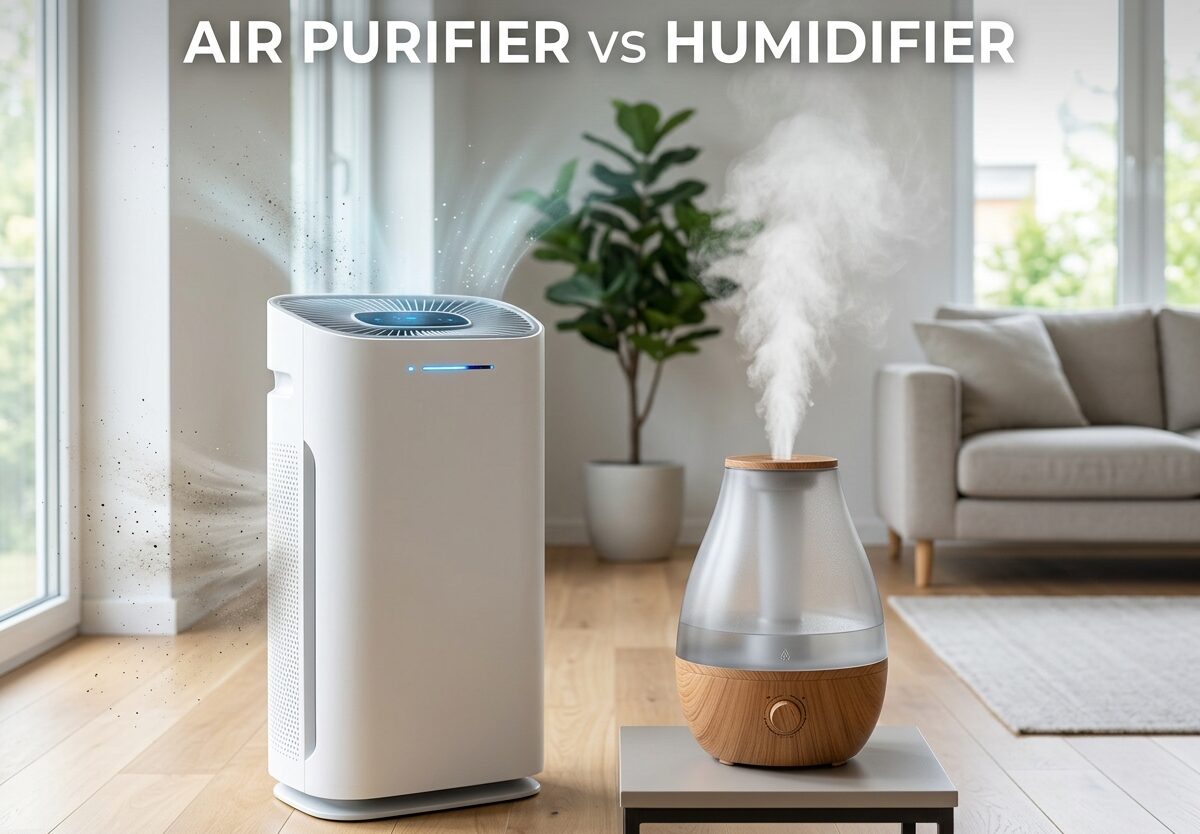
Standing in the store aisle, I’ve watched countless shoppers stare confused at two similar-looking devices. The air purifier vs humidifier debate trips up almost everyone at first. These devices look alike but solve completely different problems in your home.
An air purifier cleans your indoor air by trapping dust, pollen, pet dander, and other pollutants. A humidifier adds moisture to dry air to relieve skin irritation and respiratory discomfort. Understanding this fundamental difference determines which device will actually help you feel better.
I spent years researching indoor air quality and testing these devices in my own home. The right choice depends entirely on your specific health concerns and home environment. Let me break down exactly what each device does so you can make the best decision for your situation.
What is an Air Purifier?
An air purifier is a device designed to remove contaminants from the air in your room. It works by pulling air through a series of filters that capture particles before pushing clean air back into your space.
Most quality air purifiers use a HEPA filter as their primary defense. HEPA stands for High-Efficiency Particulate Air, and these filters capture 99.97% of particles as small as 0.3 microns. That includes dust mites, pollen, mold spores, pet dander, and even some bacteria.
Many models also include an activated carbon filter that traps odors, VOCs (volatile organic compounds), and gases. This two-stage filtration system makes air purifiers especially effective for households with allergy sufferers or pets.
Air purifiers don’t add or remove moisture from the air. They simply clean it. The purified air has the same humidity level as the room air, just without the floating particles that trigger allergic reactions and respiratory issues.
What is a Humidifier?
A humidifier adds water vapor to the air to increase humidity levels in dry spaces. When indoor air becomes too dry, typically below 30% humidity, it can cause dry skin, irritated nasal passages, scratchy throat, and worsened asthma symptoms.
Humidifiers work through different methods depending on the type. Ultrasonic humidifiers use high-frequency vibrations to create a cool mist. Evaporative humidifiers blow air through a wet wick or filter. Steam vaporizers boil water and release the warm steam into the room.
Optimal indoor humidity falls between 40-60% according to the Environmental Protection Agency. Within this range, your respiratory system works efficiently, viruses struggle to spread, and your skin stays comfortable. Humidifiers help you maintain this healthy moisture balance during dry winter months or in arid climates.
Unlike air purifiers, humidifiers don’t filter anything from the air. Their sole function is adding moisture. In fact, if you don’t clean a humidifier regularly, it can actually introduce mold and bacteria into your air, worsening the very problems you’re trying to solve.
Air Purifier vs Humidifier: Quick Comparison
The core difference comes down to what each device changes in your environment. Air purifiers remove particles from the air while humidifiers add moisture. This fundamental distinction determines which device addresses your specific concerns.
| Feature | Air Purifier | Humidifier |
|---|---|---|
| Primary Function | Removes airborne particles | Adds moisture to air |
| Best For | Allergies, asthma, odors, smoke | Dry skin, congestion, dry throat |
| Filter Type | HEPA, activated carbon, pre-filter | Water tank, wick/filter (some models) |
| Changes Humidity? | No | Yes (increases it) |
| Maintenance | Filter replacement every 6-12 months | Daily cleaning, regular descaling |
| Winter vs Summer | Use year-round as needed | Most useful in winter/dry months |
| Risk Factors | Filter replacement costs | Mold growth if not cleaned |
Health Benefits: Air Purifier vs Humidifier
The health benefits of these devices target different problems. Air purifiers excel at removing triggers that cause allergic reactions and respiratory distress. Humidifiers shine at relieving symptoms caused by dry air.
Air purifier benefits include:
- Reduced allergy symptoms from pollen, dust, and pet dander
- Fewer asthma attacks triggered by airborne irritants
- Elimination of odors from cooking, pets, and smoke
- Capture of mold spores before they can colonize
- Better sleep quality with cleaner breathing air
Humidifier benefits include:
- Relief from dry, itchy skin and chapped lips
- Soothes irritated nasal passages and sinus congestion
- Reduces snoring caused by dry throat tissues
- Faster recovery from colds and respiratory infections
- Protection for wooden furniture and musical instruments from cracking
Research shows the devices can work together for comprehensive air quality improvement. Clean air at proper humidity levels creates the healthiest indoor environment possible.
When to Choose an Air Purifier
You need an air purifier if airborne particles trigger your symptoms. I recommend air purifiers for specific situations based on testing and research.
Allergy sufferers should prioritize an air purifier. Pollen counts peak during spring and fall, but indoor allergens like dust mites and pet dander persist year-round. A HEPA air purifier captures these particles before they reach your lungs.
Asthma patients benefit significantly from purified air. Asthma triggers include dust, mold spores, pet dander, and smoke particles. Removing these irritants reduces the frequency and severity of asthma attacks.
Pet owners almost always need an air purifier. Even if you’re not allergic, pet dander floats through your home and settles on surfaces. An air purifier captures dander and reduces pet odors that ordinary cleaning can’t eliminate.
Smoke and VOC exposure requires activated carbon filtration. If someone smokes in your home, or if you live near urban areas or highways, an air purifier with carbon filtering removes harmful gases and particles that HEPA filters might miss.
Mold concerns call for air purification. While dehumidifiers address mold growth at the source, air purifiers capture airborne mold spores that spread colonies to new areas. This is crucial after water damage or in naturally damp basements.
When to Choose a Humidifier
You need a humidifier when dry air causes your symptoms. I’ve found these devices essential during winter months when heating systems strip moisture from indoor air.
Dry skin and hair signal low humidity. If your skin feels tight, itchy, or flaky especially in winter, your indoor air lacks moisture. A humidifier helps your skin retain hydration naturally without relying entirely on lotions.
Frequent nosebleeds often result from dry nasal membranes. Adding moisture to the air keeps nasal passages hydrated and prevents the cracking that leads to nosebleeds. This is especially common during winter and in arid climates.
Morning congestion and sore throat typically indicate overnight dryness. If you wake up stuffy or with a scratchy throat that improves after drinking water, a bedroom humidifier can prevent these symptoms by maintaining proper humidity while you sleep.
Baby nurseries benefit from carefully controlled humidity. Infants have more sensitive respiratory systems than adults. The American Academy of Pediatrics suggests maintaining 40-60% humidity in baby rooms for optimal comfort and health.
Voice professionals and singers need humidified air. Dry vocal cords strain more easily and affect voice quality. Many singers keep a humidifier near their practice space and even in hotel rooms when traveling to protect their instrument.
Wood furniture and instruments require humidity control. Guitars, pianos, violins, and wooden furniture can crack and warp in dry conditions. A humidifier protects these investments by maintaining stable moisture levels.
Air Purifier vs Humidifier: Using Both Together
Using both devices together creates the healthiest indoor environment possible. The air purifier removes harmful particles while the humidifier maintains comfortable moisture levels. This combination addresses multiple air quality issues simultaneously.
Placement matters when running both devices. Position them at opposite ends of the room to prevent moisture from interfering with the air purifier’s filters. I recommend placing the air purifier where air circulation is best and the humidifier away from walls and furniture to prevent moisture damage.
The ideal distance between devices is at least 6-8 feet. This spacing prevents the humidifier’s mist from directly hitting the air purifier’s filters, which could reduce filtration efficiency and potentially encourage mold growth inside the purifier.
Timing considerations affect how you run both devices. If you run them simultaneously, monitor humidity levels with a hygrometer to ensure you stay in the 40-60% range. Some users prefer running the humidifier at night and the air purifier during the day, but this depends on your specific symptoms and schedule.
Combination units offer an alternative to separate devices. Some manufacturers make 2-in-1 units that both purify and humidify. While convenient, these hybrids often sacrifice performance in one or both functions. Separate units typically provide better control and effectiveness for serious air quality concerns.
Maintenance: Air Purifier vs Humidifier
Maintenance requirements differ significantly between these devices. Understanding the upkeep involved helps you choose the option that fits your lifestyle.
Air purifier maintenance focuses on filter replacement. Pre-filters need vacuuming or replacement every 1-3 months depending on air quality. HEPA filters typically last 6-12 months with continuous use. Activated carbon filters saturate faster in homes with strong odors or smoke exposure, often needing replacement every 3-6 months.
Filter costs add up over time. Budget $50-150 annually for replacement filters depending on your model and air quality. This predictable maintenance schedule appeals to many users who prefer changing filters a few times per year rather than daily cleaning.
Humidifier maintenance requires more frequent attention. You should empty and refill the water tank daily to prevent bacterial growth. Weekly deep cleaning with white vinegar removes mineral scale and disinfects the water reservoir. Some models also need filter or wick replacement every 1-3 months.
Mold prevention is critical with humidifiers. The warm, moist environment inside your humidifier creates perfect conditions for mold and bacteria. Without regular cleaning, these microorganisms spread into your air, potentially causing more harm than the dryness you’re trying to fix.
Mineral buildup affects humidifier performance, especially if you use tap water. White dust around your humidifier indicates mineral deposits. Using distilled or demineralized water reduces this problem and extends the life of your device.
Cost and Energy Considerations
Understanding the total cost of ownership helps you budget properly for either device. Both air purifiers and humidifiers have upfront costs plus ongoing operating expenses.
Initial purchase price varies widely for both devices. Basic air purifiers start around $80-100, while premium models with smart features and larger coverage areas cost $300-600. Humidifiers generally cost less upfront, with adequate models starting at $30-50 and premium units reaching $150-300.
Electricity consumption differs between the devices. Air purifiers typically run 50-200 watts depending on fan speed. Running continuously on low setting costs approximately $5-15 monthly in electricity. Humidifiers use less power, usually 25-150 watts, costing roughly $3-10 monthly for continuous operation.
Annual operating costs include both electricity and maintenance. Air purifiers cost $80-230 yearly including electricity and filter replacements. Humidifiers cost $40-100 annually including electricity, water, and any replacement filters or wicks.
Room size affects device choice and cost. Larger rooms require more powerful devices that cost more upfront and use more electricity. Smaller spaces work well with compact, energy-efficient models. Matching device capacity to your room size prevents wasted energy and ensures effective performance.
FAQs
What is better to have a humidifier or air purifier?
Neither is universally better – they solve different problems. Choose an air purifier if you struggle with allergies, asthma, or airborne particles like dust and pet dander. Choose a humidifier if you suffer from dry skin, sinus congestion, or scratchy throat caused by dry air. Many households benefit from having both devices to address different air quality issues.
Will an air purifier help with a dry throat?
Air purifiers do not add moisture to air, so they won’t directly relieve dry throat caused by low humidity. However, if your dry throat results from irritation due to allergens, dust, or pollutants, an air purifier might help by removing these irritants. For true dry throat from dry air, a humidifier is the better choice.
What are the disadvantages of an air purifier?
Air purifiers have several drawbacks to consider. Filter replacement costs add up over time, typically $50-150 annually. They don’t affect humidity levels, so they won’t help with dry air symptoms. Some models generate noise that might disturb sensitive sleepers. Lower-quality units may produce ozone, which irritates lungs. They also only clean air that passes through the unit, so proper placement and sizing matter for effectiveness.
Is it good to sleep with an air purifier and humidifier?
Yes, sleeping with both running can significantly improve sleep quality. Clean, properly humidified air helps you breathe easier and wake without congestion or dry throat. Place devices at least 6-8 feet apart to prevent moisture from affecting the air purifier’s filters. Use a hygrometer to ensure humidity stays in the ideal 40-60% range. Choose quiet models designed for bedroom use, and run them continuously for best results.
Do I need both air purifier and humidifier?
You might benefit from both if you experience both dry air symptoms and exposure to airborne irritants. Many homes, especially in winter climates, have both dry air from heating and increased allergen exposure from closed windows. Using both together provides comprehensive air quality improvement. However, if you only have one specific problem – either dry air or airborne particles – a single device addressing that issue is sufficient.
What humidity level is ideal for home?
The ideal indoor humidity level is 40-60% according to the EPA and health organizations. Below 30% causes dry skin, irritated respiratory passages, and increased susceptibility to infections. Above 60% encourages dust mites, mold growth, and bacteria proliferation. A simple hygrometer helps you monitor levels and adjust your humidifier accordingly.
Air Purifier vs Humidifier: Making Your Choice
Choosing between an air purifier and humidifier comes down to identifying your specific problems. The Air Purifier vs Humidifier decision isn’t about which device is better overall, but which one addresses your current needs.
If airborne particles trigger your symptoms, an air purifier provides relief. Allergies, asthma, pet ownership, and concerns about smoke or VOCs all point toward air purification as the solution.
If dry air causes your discomfort, a humidifier offers help. Dry skin, congestion, scratchy throat, and winter discomfort all improve with proper humidity levels in your living space.
Many households benefit from both devices working together. Clean air at optimal humidity creates the healthiest indoor environment possible. Understanding what each device does helps you make the right choice for your specific situation.
The best investment addresses your actual problems rather than buying the most popular option. Assess your symptoms, consider your home environment, and choose accordingly. Your respiratory health will thank you for making an informed decision.



Leave a Comment